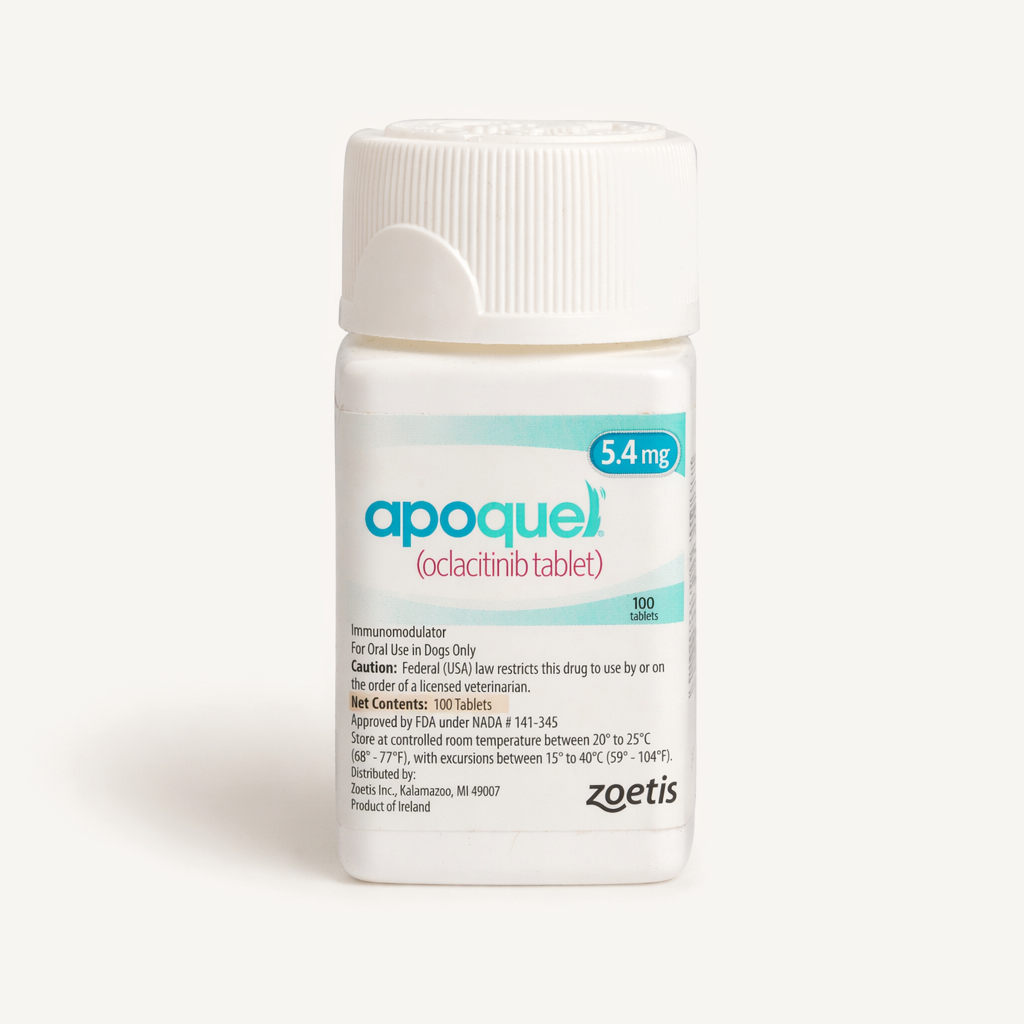
How It Works
Apoquel works by blocking Janus kinase (JAK) enzymes, which help transmit signals that cause itching and inflammation. By interrupting these pathways, Apoquel reduces the effects of inflammatory chemical messengers such as IL-31, a major contributor to itching in dogs with allergic skin disease.
Apoquel typically acts within 4 hours of the first dose. Stopping the signals also helps reduce redness and swelling of the skin.
| Quick Facts | |
|---|---|
| Common Brands | Apoquel, Apoquel Chewable |
| Drug Class | Janus kinase (JAK) inhibitor |
| Generic Status | No generic version available |
| Availability | Prescription only |
Dosing
Apoquel treatment typically involves an initial loading phase to quickly control the itching before transitioning to a sustainable maintenance level.
- Initial loading: For the first 14 days of treatment, veterinarians typically recommend two doses per day taken about 12 hours apart. A higher frequency helps to rapidly suppress the inflammatory signals that have built up in the dog’s system.
- Maintenance phase: After the initial 14 days, veterinarians usually reduce the dose to one tablet per day taken every 24 hours. The maintenance level is meant to keep the itchy sensation at bay while minimizing the medication’s impact on other parts of the immune system.
- Weight-based dosage: Apoquel is available in strengths of 3.6 mg, 5.4 mg, and 16 mg. Vets use the dog’s weight to calculate a precise milligram-per-pound ratio for their dosage.
- Administration: Apoquel tablets or chewables may be administered with or without food.
Note: Dosing information below is educational only. Your prescribing veterinarian will determine your specific dose based on your dog’s health needs. Always follow your healthcare provider’s instructions for exact dosing.
Uses
FDA-Approved Uses
Apoquel is FDA-approved for control of pruritus (itching) associated with allergic dermatitis in dogs at least 12 months of age. The drug is also FDA-approved to control atopic dermatitis in dogs 12 months or older.
Off-Label Uses
You may see Apoquel prescribed for uses that are not “FDA-approved.” This is a very common and legal practice called “off-label” prescribing, where a veterinarian uses their clinical judgment to prescribe a drug for a different (but well-researched) purpose.
Common off-label uses for Apoquel currently found in clinical research and practice include:
- Feline allergic skin disease: While Apoquel is not FDA-approved for cats, veterinary dermatologists may prescribe oclacitinib to treat severe itching in cats that have not responded to other therapies.
- Contact dermatitis: In cases where a dog has a severe reaction to a specific surface or chemical, Apoquel may be used off-label for a short duration to stop the itching while the irritant is removed.
Side Effects
Dogs generally tolerate Apoquel well, especially compared to long-term steroidal medications. However, owners should be vigilant of side effects because the medication modulates the dog’s immune response.
Common Side Effects
Common side effects from Apoquel include:
- Mild vomiting or diarrhea
- Temporary lethargy or decreased appetite
- Increased thirst and water consumption
Serious Side Effects
Serious side effects are rare, but it’s important to know what to look for if they do occur. Serious side effects from Apoquel can include:
- Increased infection risk: Since Apoquel modulates the immune system, it can make dogs more susceptible to ear infections, skin infections, and pneumonia.
- Worsening of preexisting conditions: Caution is advised for dogs with a history of cancer or parasitic skin infections like mange, as taking Apoquel can potentially lead these conditions to progress.
- Blood count changes: Changes in white blood cell counts have been reported in some dogs. Your veterinarian may recommend blood tests based on your dog’s health history and treatment plan.
- New growths: Owners are advised to monitor their dog for new lumps, bumps, or masses on the skin.
Call your vet immediately if your dog experiences any concerning or prolonged symptoms.
Pharmacist Tips
Wash Your Hands
Standard guidelines recommend washing your hands thoroughly after handling Apoquel tablets and chewables to avoid accidental human absorption.
Maintenance Drop Is Crucial
Decreasing dosage to once daily when the maintenance phase begins is vital for the dog’s long-term health.
Seasonal Treatment Is An Option
If your dog’s itchiness only occurs during high-pollen months, your veterinarian may be able to adjust the dosage to stop medication during winter months. Although it is generally safe for dogs to stop taking Apoquel without a tapering period, some animals experience rebound symptoms after quitting abruptly.
Watch For Breakthrough Itching
If your dog begins itching again after moving down to a once-daily dose, it is not advised to return to twice-daily dosing without a veterinarian’s approval. This new itching can indicate a secondary yeast or bacterial infection that requires separate treatment.
Drug Interactions
Apoquel is formulated to be compatible with a wide range of other canine medications, but interactions can still occur. Known interactions with Apoquel include:
- Immunosuppressants: The safety of using Apoquel alongside immune-system drugs like cyclosporine or corticosteroids has not been fully evaluated. Veterinarians generally avoid combining these medications.
Always give your veterinarian a complete list of all your dog’s medications, vitamins, and supplements to check for potential interactions.
FAQs
How fast does Apoquel stop my dog from scratching and chewing their paws?
Apoquel typically begins to relieve itching within 4 hours of the first dose. Owners usually see an improvement in scratching and chewing within 24 hours.
Why did my vet tell me to give this pill twice a day for the first 14 days, but then drop it to only once a day?
Apoquel is formulated for an initial high-dose loading phase, during which the medication quickly controls current itching, followed by a long-term maintenance phase with a less frequent dose. Tapering down to once-daily dosing is considered vital to protecting your dog’s long-term health.
Why is my dog suddenly itching again now that we transitioned to the once-a-day maintenance dose?
While some itching is a common side effect of dropping dosing from twice-daily to once per day, it may also indicate a secondary bacterial or yeast infection that needs separate antibiotic or antifungal treatment. A follow-up appointment with your veterinarian is advised if the itching persists.
Is it true that taking Apoquel can suppress my dog’s immune system?
Apoquel is an immunomodulator, meaning it changes how the immune system communicates. This mechanism is much more targeted compared to traditional steroids, but vets typically do not use Apoquel for dogs with serious active infections or very young puppies whose immune systems are still developing.
What is the difference between giving my dog a daily Apoquel pill versus getting the Cytopoint injection?
Apoquel is a daily tablet that inhibits itch signals via the JAK pathway. Cytopoint is an injection administered every 3 to 4 weeks that uses monoclonal antibodies to target a specific protein that triggers itchiness.
Can I cut or crush the tablet and hide it if my dog won’t swallow it?
Yes, traditional Apoquel tablets are scored with a line and can be broken in half. You can also crush and hide the tablets in your dog’s favorite food if they don’t swallow the pill willingly.
Will Apoquel cure my dog’s allergies, or just hide the symptoms?
Apoquel does not cure your dog’s allergies, but manages the symptoms by blocking itch signals. If treatment stops and the dog is exposed to the same allergen, the itching will return.
Can I give my dog their monthly flea and tick medication at the same time?
Apoquel is compatible and safe to use with most monthly flea and tick medications, as well as heartworm preventatives. Your veterinarian can provide more information about which medications work best with Apoquel.
Is it safe to stop Apoquel cold turkey when pollen season is over?
If a dog’s allergies only flare up during pollen season, their veterinarian may adjust their treatment to pause dosing during the winter months. However, owners are advised not to adjust the dosage without consulting a vet first.
Can I use this allergy pill on my cat?
No, Apoquel is only FDA-approved for dogs. Vets may prescribe Apoquel off-label to treat certain dermatitis cases in cats, but dosing requirements are different.
Is it safe to use antihistamines like Benadryl or Zyrtec at the same time as Apoquel?
It is generally considered safe for a dog to take antihistamines like Benadryl or Zyrtec at the same time as Apoquel. However, the antihistamines will likely have little to no effect on itching from atopic dermatitis.
Does my dog have to stay on this medication for the rest of their life to stay comfortable?
Many dogs safely take Apoquel for years to prevent itching. Studies have not shown significant side effects associated with long-term use, but research is ongoing. Routine blood work with your veterinarian can check for changes over time.
Comparable Medications
Apoquel, Cytopoint, Diphenhydramine, or Cyclosporine?
Apoquel is a medication used to stop and prevent itching associated with allergic and atopic dermatitis in dogs. Depending on your dog’s age and symptoms, your vet may recommend an Apoquel alternative instead. Alternatives to Apoquel include:
Cytopoint
Cytopoint is a monthly injection that works by targeting IL-31, a key protein involved in itching in dogs with allergic skin disease. Unlike Apoquel, which is given as a daily tablet and affects multiple itch and inflammation pathways, Cytopoint targets a single itch signal. It can begin working within a few days and may provide relief for a month or longer after each injection.
Diphenhydramine
Sold under the brand name Benadryl, diphenhydramine is an antihistamine that is commonly used for itchiness in dogs. However, diphenhydramine is generally not strong enough to stop the itching of atopic dermatitis. Apoquel is more effective at treating this type of itchiness.
Cyclosporine
Cyclosporine, sold under the brand name Atopica, is an immunosuppressant that helps control allergic skin disease by reducing immune system activity. Unlike Apoquel, which often begins relieving itch within hours, cyclosporine may take several weeks to reach its full effect. Vomiting, diarrhea, and other gastrointestinal side effects are also more common with cyclosporine.
We Have Apoquel in Stock. Get Yours Today!
Important: Information on this page is for educational purposes only. Prescribing decisions are made by independent, licensed providers. TelyRx operates technology-enabled pharmacies and a telehealth platform that connects patients with licensed providers. Prescriptions, when provider-approved and issued, are filled and shipped by TelyRx-affiliated pharmacies. We do not employ physicians or make prescribing decisions. Learn more about our editorial standards here.