

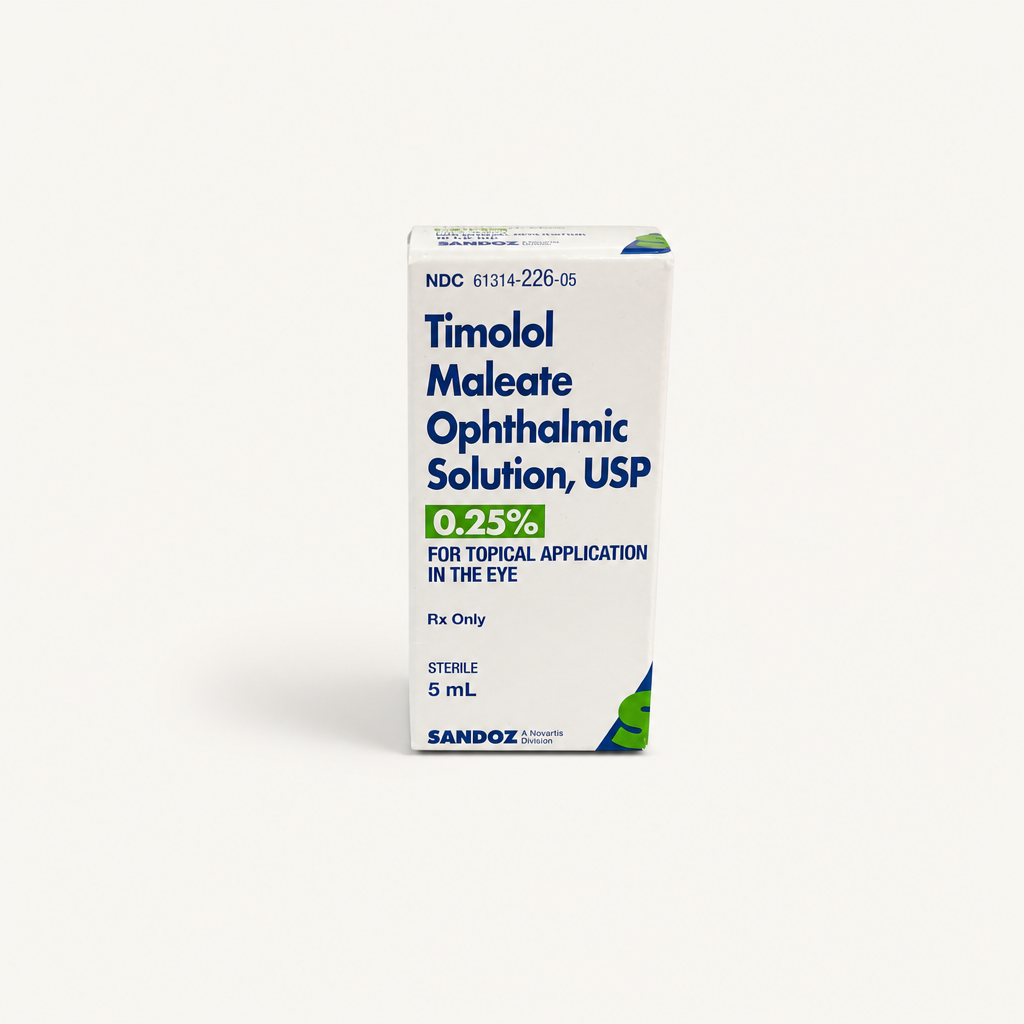
How It Works
Timolol functions by blocking beta-adrenergic receptors in the eye. This decreases the production of the fluid inside the eye, called aqueous humor.
When less of this fluid is produced, intraocular pressure goes down. Lowering this pressure can reduce the risk of optic nerve damage and vision loss.
| Quick Facts | |
|---|---|
| Common Brands | Betimol, Istalol, Timoptic, Timoptic-XE, Timoptic in Ocudose. |
| Drug Class | Ophthalmic beta-blocker |
| Generic Status | Generic is available |
| Availability | Prescription only |
Dosing
Providers typically instruct patients to apply one drop of the medication into the affected eye(s). Standard guidelines suggest this be done once or twice a day, depending on the specific formulation and the ocular pressure reduction target.
Note: Dosing information below is educational only. Your prescribing physician will determine your specific dose based on your individual health needs. Always follow your healthcare provider’s instructions for exact dosing.
Uses
FDA-Approved Uses
Timolol eye drops are FDA-approved to reduce intraocular pressure in conditions such as ocular hypertension and open-angle glaucoma.
Off-Label Uses
You may see timolol prescribed for uses that are not “FDA-approved.” This is a common and legal practice called “off-label” prescribing, where a doctor uses their clinical judgment to prescribe a drug for a different (but well-researched) purpose.
There are currently no common off-label uses for timolol eye drops.
Side Effects
Like all medications, timolol eye drops can cause side effects. Some common side effects may improve over time as you adjust to the medication. Other side effects may be serious and require medical attention.
Common Side Effects
- Blurry vision
- Burning and stinging after application
- Dry eyes
- Eye irritation
- Feeling like something is in the eye
- Headache
- Itchy eyes
- Increased tear production
- Eye redness
- Crusty eye lashes
- Heightened sensitivity to light
Serious Side Effects
Serious side effects are rare, but it’s important to know what to look for if they do occur.
- Breathing problems: Timolol eye drops may cause the muscles around the airway to tighten, leading to shortness of breath, wheezing, or chest tightness, particularly in patients with asthma or chronic obstructive pulmonary disease (COPD).
- Heart failure symptoms: Although rare, systemic absorption of timolol can cause or worsen heart failure, which can lead to shortness of breath while lying down, unusual tiredness, or swelling in the feet, ankles, and legs.
- Heart rate changes: It is possible to experience a slower than normal heart rate (bradycardia) when using timolol eye drops, which can lead to dizziness, lightheadedness, or fainting.
- Low blood pressure: Timolol eye drops may occasionally cause a drop in blood pressure levels, which can make you feel weak, confused, or dizzy.
- Severe allergic reactions: Symptoms of a serious allergy to timolol can include a skin rash, hives, swelling of the face, lips, or throat, a racing heart, and severe eye discomfort.
- Hidden symptoms of low blood sugar: For individuals with diabetes, beta-blockers can mask many of the standard symptoms of low blood sugar.
- Hidden symptoms of overactive thyroid: Side effects of timolol eye drops might mask signs of hyperthyroidism, such as a fast heart rate.
- Worseningof myasthenia gravis: In rare instances, systemic absorption can worsen symptoms like muscle weakness in people who have a condition called myasthenia gravis.
Call your doctor immediately if you experience any concerning or prolonged symptoms.
Pharmacist Tips
Wash Your Hands
Always wash your hands thoroughly before applying timolol drops to prevent bacteria from entering the eye.
Avoid Touching The Dropper Tip
Do not let the tip of the dropper touch your eye, fingers, or any other surface, as this helps keep the solution free of germs.
Remove Your Contact Lenses
If you wear contact lenses, take them out before using timolol eye drops. Wait at least 15 minutes after using the drops before putting contacts back into your eyes.
Press Near The Inner Corner Of Your Eye
After placing a drop in your eye, close your eye and press one finger lightly near the inner corner of your eye for one to two minutes. This can help the eye absorb the medication and reduce systemic absorption.
Pause Between Eye Medications
If you are prescribed multiple eye medications, wait at least five to ten minutes between each drop to give your eye time to absorb each one.
Use Consistently As Prescribed
It is difficult to tell if your intraocular pressure is improving at home, so you should use the medication as directed even if you do not immediately notice a difference in your symptoms or vision.
Don’t Modify The Bottle Tip
Do not attempt to make the hole on the bottle tip larger. The tip is designed to pre-measure each drop, and a larger hole could cause you to administer too much medication.
Drug Interactions
ertain medications and substances can interact with timolol, potentially altering how it works or increasing the risk of side effects.
- Oral beta-blockers: Taking medications like atenolol or metoprolol by mouth can increase effects on your heart rate and blood pressure when combined with timolol eye drops.
- Other beta-blocker eye drops: Standard guidelines recommend against using other beta-blocker eye drops (such as levobunolol or betaxolol) alongside timolol eye drops.
- Calcium channel blockers: Drugs like diltiazem or verapamil may have interactions with timolol eye drops.
- Heart rhythm medications: Timolol eye drops may have interactions with medications like digoxin and quinidine.
- Asthma and COPD treatments: Respiratory medications and inhalers (such as albuterol, formoterol, or salmeterol) may be affected if taken alongside timolol eye drops.
- Pain relievers: Nonsteroidal anti-inflammatory drugs (NSAIDs) like aspirin, ibuprofen, diclofenac, and naproxen may increase the risk of side effects when used at the same time as timolol eye drops.
- Antidepressants: Selective serotonin reuptake inhibitors (SSRIs), such as fluoxetine, may interact with timolol eye drops.
Always give your doctor and pharmacist a complete list of all your medications, vitamins, and supplements to check for potential interactions.
FAQs
Does this eye medication absorb into my bloodstream?
It is possible for some of the medication to be absorbed into the bloodstream, which can affect other parts of the body. For this reason, providers recommend pressing the inner corner of the eye after application. This can enhance absorption within the eye and limit systematic absorption.
Will timolol make my eyelashes grow longer like other glaucoma drops?
Timolol eye drops are not associated with eyelash growth, which can occur with some other glaucoma medications (like bimatoprost).
Why do my eyes sting or burn right after I put the drops in?
Temporary stinging or burning is a common side effect right after application of timolol eye drops.
What is the difference between the yellow cap (0.5%) and the light blue cap (0.25%) bottles?
The different color caps of timolol eye drops represent different dosage strengths, specifically the 0.5% and 0.25% solutions.
How long do I need to wait to put my soft contact lenses back in after using this drop?
Pharmacists suggest waiting at least 15 minutes after using the drops before reinserting soft contact lenses.
Why was I told to press firmly on the inner corner of my eye after applying the drop?
Pressing the corner of the eye lightly for about a minute allows the eye to absorb the drop and helps keep the medication from draining into the tear duct.
How long should I wait between using timolol and other prescription eye drops?
It is generally accepted that you should wait 5 to 10 minutes between different eye drop medications to give your eyes time to fully absorb each one.
Is it safe to use this eye drop if I am already taking a beta-blocker for my high blood pressure?
Guidance suggests that you should use caution with timolol eye drops if you are already taking an oral beta blocker. Discuss the possible interactions with your doctor.
Can I safely use over-the-counter redness drops (like Visine) while using timolol?
If you are prescribed timolol eye drops, talk to your doctor before using any over-the-counter eye products. This helps ensure they do not interfere with your prescription.
Is it normal for my vision to be slightly blurry for a few minutes after using the drop?
Blurred vision is a temporary side effect that commonly occurs right after putting in timolol eye drops.
Do I need to keep this bottle in the refrigerator?
You do not need to refrigerate timolol eye drops. They should be stored at room temperature and protected from light.
What happens if I completely forget my morning drop – do I put two drops in later?
Guidelines indicate that if you miss a dose, you can apply your timolol eye drops as soon as you remember unless it is almost time for your next dose. You should not use double or extra doses.
Should I use this drop just in the one eye that has high pressure, or do I treat both?
You should apply the drops only into the affected eye or eyes. Your healthcare provider can give directions about applying the eye drops.
Does this medication actually cure my glaucoma, or will I have to use it for the rest of my life?
Glaucoma treatment is typically continued over a long-term period to manage intraocular pressure. This treatment does not cure glaucoma, so ongoing use of the drops is usually necessary even if eye pressure improves.
Is it safe to use timolol if I am currently pregnant or breastfeeding?
It is not fully known how timolol affects an unborn baby, and the medication has the potential to pass into breast milk. For these reasons, you should consult your provider before using these drops if you are pregnant or breastfeeding.
Why does timolol sometimes leave a bitter taste in the back of my throat?
Because the tear ducts connect to the back of the throat, some medication can drain down through the tear ducts and potentially create a taste or other sensation in the throat.
Can I still use my rescue asthma inhaler safely while taking these daily eye drops?
Individuals with asthma or severe chronic obstructive pulmonary disease (COPD) are generally advised not to use timolol, as beta-blockers can cause narrowing of the airways. Discuss all respiratory conditions with your provider before using timolol eye drops.
Comparable Medications
Timolol, Latanoprost (Xalatan), Bimatoprost (Lumigan), Dorzolamide / Timolol (Cosopt), Brimonidine (Alphagan P)?
Latanoprost
From $29.99
This medication reduces eye pressure by increasing fluid drainage out from the eye.
Bimatoprost
From $129.99
This is another class of eye drop used for glaucoma. Unlike beta blockers, it may cause eyelash growth.
Dorzolamide-Timolol
From $49.95
This is a combination eye drop that includes both a beta-blocker and a carbonic anhydrase inhibitor to lower eye pressure through multiple mechanisms.
Brimonidine Eye Drops
From $27.99
This medication is an alpha-agonist used to lower intraocular pressure, offering a different mechanism of action for patients who may be advised against taking beta-blockers.
We Have Timolol Eye Drops in Stock. Get Yours Today!
Important: Information on this page is for educational purposes only. Prescribing decisions are made by independent, licensed providers. TelyRx operates technology-enabled pharmacies and a telehealth platform that connects patients with licensed providers. Prescriptions, when provider-approved and issued, are filled and shipped by TelyRx-affiliated pharmacies. We do not employ physicians or make prescribing decisions. Learn more about our editorial standards here.