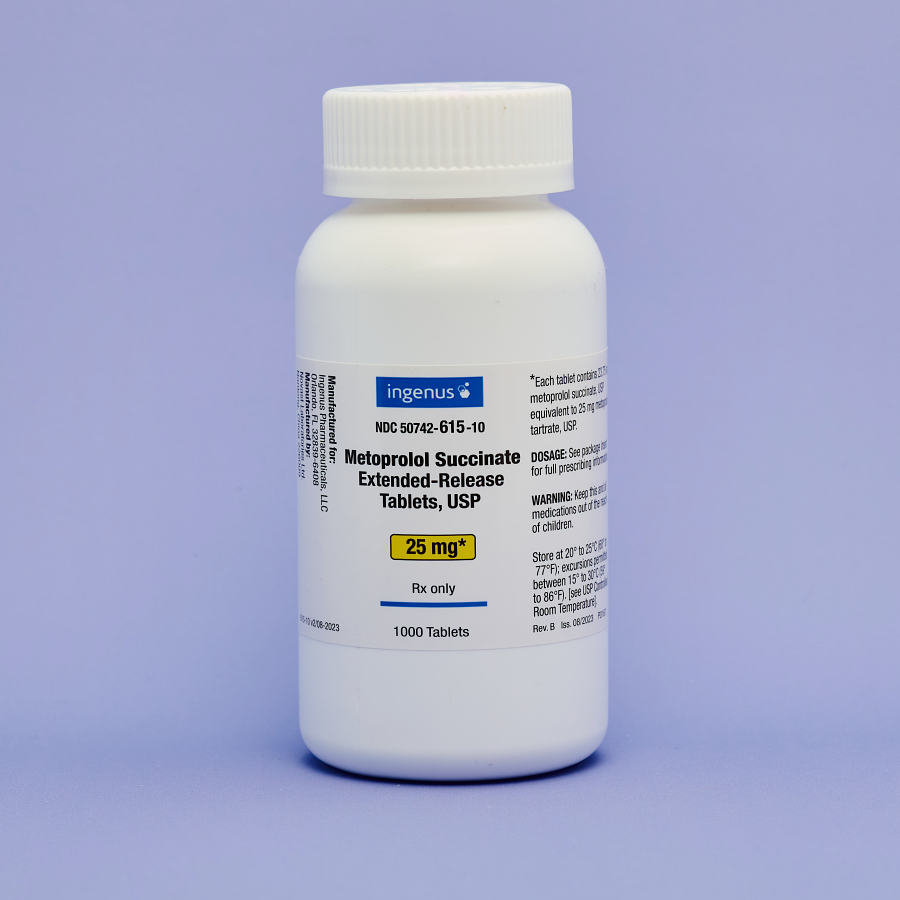
How It Works
Metoprolol succinate ER works by targeting Beta-1 receptors in the heart. Adrenaline and other hormones bond to these receptors, causing the heart to beat faster and more intensely. Metoprolol succinate works by blocking beta-1 receptors in the heart so stress hormones like adrenaline have less effect, which slows the heart rate.
Since metoprolol succinate ER is cardioselective, it exclusively targets receptors within the heart. This makes the drug well-suited to people with asthma, COPD, and other respiratory problems. For many patients, a slower heart beat also means less stress on the arterial walls and lower blood pressure. The slow-release matrix helps keep a steady level of the medication in your bloodstream throughout the day.
| Quick Facts | |
|---|---|
| Common Brands | Toprol XL, Kapspargo Sprinkle |
| Drug Class | Beta-1 selective beta-adrenergic blocking agent (beta-blocker) |
| Generic Status | Generic for Toprol XL |
| Availability | Prescription only |
Dosing
Since the human heart’s response to beta-blockers is highly variable and dependent on the patient, metoprolol succinate ER prescriptions are highly individualized. Many providers start patients on a lower dose and titrate, or gradually increase the dosage over time, based on how their heart and rest of their body responds to the medication.
- Starting dose: Standard guidelines recommend a starting dose of 25 milligrams (mg) to 100 mg per day for people treating hypertension. The starting dose for treating heart failure is typically lower, falling between 12.5 to 25 mg daily for most patients.
- Timing and consistency: Doctors generally recommend taking metoprolol succinate ER at the same time every day to maintain consistent blood levels.
- Administration: Standard guidelines recommend taking your daily metoprolol succinate ER with food to ensure consistent absorption and prevent an upset stomach.
Note: Dosing information is educational only. Your prescribing physician will determine your specific dose based on your individual health needs. Always follow your healthcare provider’s instructions for exact dosing.
Uses
FDA-Approved Uses
Metoprolol succinate ER is FDA-approved for three uses:
- Lowering blood pressure and decreasing the risk of secondary events such as stroke or kidney failure.
- Reducing the heart’s oxygen requirements for managing chronic angina pectoris, or chest pain.
- Reduce the risk of cardiovascular mortality and frequency of hospitalizations for people with stable heart failure (New York Heart Association Class II or III).
Off-Label Uses
You may see metoprolol prescribed for uses that are not “FDA-approved.” This is a very common and legal practice called “off-label” prescribing, where a doctor uses their clinical judgment to prescribe a drug for a different (but well-researched) purpose.
Common off-label uses for metoprolol succinate ER currently found in clinical research and practice include:
- Migraine prophylaxis: Some providers prescribe metoprolol succinate ER to reduce the frequency and severity of migraine headaches.
- Hyperthyroidism: The drug can manage cardiovascular symptoms associated with this condition, which is characterized by an overactive thyroid gland.
- Arrhythmias: Metoprolol may help stabilize heart rate for people with atrial fibrillation.
Get Savings Updates for Metoprolol Succinate ER
Join our mailing list for exclusive deals and more.
Side Effects
Metoprolol succinate ER, like other beta-blockers, causes the heart rate to slow down. This can produce noticeable side effects for patients, especially within the first few weeks as they adapt to the new medication.
Common Side Effects
- Fatigue and lethargy
- Dizziness
- Feelings of coldness in the hands and feet
- Mild diarrhea, constipation, or nausea
- Depression
- Vivid dreams
Serious Side Effects
Serious side effects are rare, but it’s important to know what to look for if they do occur.Serious side effects of taking metoprolol succinate ER include:
- Bradycardia: Metoprolol succinate ER can cause this condition, which occurs when the heart rate drops below 50 to 60 beats per minute.
- Worsening heart failure symptoms: Sudden weight gain, swollen ankles, increased shortness of breath, and other worsening heart failure symptoms can occur after taking metoprolol succinate ER.
- Bronchospasm: High doses of metoprolol succinate ER can cause bronchospasm, a sudden onset of wheezing and difficulty breathing.
- Hypoglycemia: For patients with diabetes, metoprolol succinate ER can mask the symptoms of hypoglycemia (low blood sugar) and make it harder for patients to detect an incoming crash.
- Severe allergy reaction: Like many other medications, metoprolol succinate ER can trigger anaphylaxis in people who are allergic to one or more of the ingredients.
Call your doctor immediately if you experience any concerning or prolonged symptoms.
Pharmacist Tips
Cut, But Don’t Crush
Metoprolol Succinate ER tablets may be halved if the prescription calls for it, but it is never advised to crush the pills. This hinders the extended-release matrix, so the levels of medication in your blood may fluctuate – not remain consistent – over a 24-hour period.
Don’t Quit Cold Turkey
It is not advised to suddenly stop taking metoprolol succinate ER unless explicitly directed to do so by your doctor. This can cause “rebound hypertension,” as well as chest pain and a higher risk of heart attack.
Same Time Each Day
Whether you take your daily dose of metoprolol succinate ER in the morning or at night, standard guidelines state day-to-day consistency is key for maintaining steady levels of the medication in your system.
Monitor Your Pulse
If your heart rate drops below 50 beats per minute, it is advised to immediately contact your healthcare provider. Learning how to check your pulse can mitigate the associated risks of this side effect.
Drink With Caution
Most providers advise to monitor your drinking while taking metoprolol succinate ER, as alcohol and the drug both lower blood pressure and consuming both simultaneously increases the risk of dizziness and injury from a fall.
Drug Interactions
Metoprolol succinate ER has been shown to interact with a wide range of other medications and substances that affect heart rhythm, blood pressure, and liver enzymes. Known interactions for metoprolol succinate ER include:
- Calcium channel blockers: Verapamil, diltiazem, and other calcium channel blockers also slow the heart, so taking one of these drugs with metoprolol succinate ER can reduce the heart rate to dangerous levels.
- Digoxin: Digoxin is often prescribed for atrial fibrillation, so taking it with metoprolol succinate ER requires close heart monitoring to ensure the heart rate doesn’t decrease too much.
- CYP2D6 inhibitors: Prozac, Paxil, and other CYP2D6 inhibitors can reduce the metabolism of metoprolol succinate ER, potentially resulting in an unhealthy buildup of medication.
- Nonsteroidal anti-inflammatory drugs (NSAIDs): Ibuprofen, naproxen, and other NSAIDs can decrease the effectiveness of beta-blockers like metoprolol succinate ER.
- Epinephrine: If a severe allergic reaction occurs, metoprolol succinate ER can interfere with the effects of an Epi-Pen.
Always give your doctor and pharmacist a complete list of all your medications, vitamins, and supplements to check for potential interactions.
FAQs
What is the difference between Metoprolol Succinate and Metoprolol Tartrate?
The difference between metoprolol succinate and metoprolol tartrate has to do with release mechanism. Metoprolol succinate is an extended-release drug, so the medication is slowly absorbed and distributed throughout the body over a longer period. Metoprolol tartrate is an immediate-release drug that takes effect more quickly and is administered multiple times per day.
Why is it important to take Metoprolol Succinate ER at the same time every day?
Healthcare providers stress the importance of taking metoprolol succinate ER at the same time every day to ensure consistent levels of the medication in your system.
Can I cut or split Metoprolol Succinate ER tablets in half?
Yes, halving metoprolol succinate ER as long as the tablet is “scored,” or manufactured with a clear center line. Each half must be swallowed whole, as crushing the tablet can interfere with the drug’s extended-release mechanism.
Does Metoprolol Succinate ER lower blood pressure immediately?
A patient’s heart rate may decrease within an hour or so of their first dose of metoprolol succinate ER, but for most people, the drug reaches its full effect within one to two weeks.
Is it better to take Metoprolol Succinate ER in the morning or at night?
Standard guidelines indicate there isn’t a specific “best time” to take metoprolol succinate ER. Rather, patients should take their dose at the same time every day and choose a time they will remember easily.
Is Metoprolol Succinate ER safe to take during pregnancy?
Metoprolol succinate ER may be prescribed to pregnant patients if their provider deems the benefits outweigh the risks, but the drug carries a risk of fetal growth restriction, neonatal hypoglycemia, slowed heart rate, or low blood pressure. Regular monitoring is needed, especially during late-term pregnancy.
Does this medication help with anxiety or stage fright?
Metoprolol succinate ER is not FDA-approved to treat anxiety or stage fright, but doctors may prescribe the drug off-label to block shaking hands, racing heart, and other physical symptoms of adrenaline.
Can I stop taking Metoprolol Succinate ER suddenly?
No, it is not recommended to stop taking metoprolol succinate ER abruptly. Quitting the drug cold turkey can result in “rebound hypertension,” chest pain, and increased risk of heart attack.
Does Metoprolol Succinate ER cause hair loss?
Hair loss is a documented but rare side effect of taking metoprolol succinate. If you experience heavy thinning, it is advised to meet with your doctor and rule out other underlying conditions and causes for the hair loss.
Can I take Metoprolol Succinate ER with food?
Yes, you can take metoprolol succinate ER with food and standard guidelines recommend doing so because this helps promote consistent absorption. Taking the drug on an empty stomach increases the risk of side effects like nausea and an upset stomach.
Does Metoprolol Succinate ER cause erectile dysfunction?
Yes, metoprolol succinate ER can cause or worsen erectile dysfunction. This is a known potential side effect of beta-blockers, though incidence varies from patient to patient.
Does Metoprolol Succinate ER interact with allergy medicines?
Yes, metoprolol succinate ER may interact with diphenhydramine (Benadryl) and other antihistamines and potentially increase side effects like dizziness. Some newer antihistamines, such as fexofenadine (Allegra) and cetirizine (Zyrtec), may have fewer interactions with metoprolol succinate ER.
What happens if I miss a dose of Metoprolol Succinate ER?
If you miss a dose of metoprolol succinate ER, it is recommended to take the dose as soon as you remember unless you are close to your next dose. It is not advised to “double up” to make up for a missed dose.
What foods should I avoid with Metoprolol Succinate ER?
While there are no “forbidden foods” associated with metoprolol succinate ER, providers generally recommend lowering your sodium intake to help reduce blood pressure. Potassium-rich salt substitutes can also pose health risks for people taking metoprolol succinate ER.
Comparable Medications
Metoprolol Succinate ER, Metoprolol Tartrate, Bisoprolol, Carvedilol, or Propranolol?
Metoprolol succinate extended-release (ER) is a medication used to stabilize heart rate and lower blood pressure for people with ongoing heart problems. While the medication is widely prescribed, your doctor may recommend a metoprolol succinate alternative instead. These options include:
Metoprolol Tartrate
From $22.99
Metoprolol tartrate is an immediate-release medication that requires multiple doses per day. Conversely, metoprolol succinate is an extended-release drug taken once daily that maintains more consistent levels of medication over a longer period.
Bisoprolol
From $27.99
Sold under the brand name Zebeta, bisoprolol is a selective beta-blocker similar in mechanism and effectiveness to metoprolol succinate ER. For many patients, the difference between the two comes down to medical history and insurance coverage.
Carvedilol
From $27.99
Carvedilol, or Coreg, is a non-selective beta-blocker. It dilates blood vessels more than metoprolol succinate and is often preferred for treating symptoms of heart failure, but the risk of dizziness is higher and the drug is typically not recommended for people with asthma.
Propranolol
From $24.99
Sold under the brand name Inderal, propranolol is a non-selective beta-blocker that affects the entire body. It crosses the blood-brain barrier more easily than metoprolol succinate and is frequently prescribed for migraines and anxiety, but used less often as a first-line treatment for heart failure.
We Have Metoprolol Succinate ER in Stock. Get Yours Today!
Important: Information on this page is for educational purposes only. Prescribing decisions are made by independent, licensed providers. TelyRx operates technology-enabled pharmacies and a telehealth platform that connects patients with board-certified licensed providers. Prescriptions, when provider-approved and issued, are filled and shipped by TelyRx-affiliated pharmacies. We do not employ physicians or make prescribing decisions. Learn more about our editorial standards here.