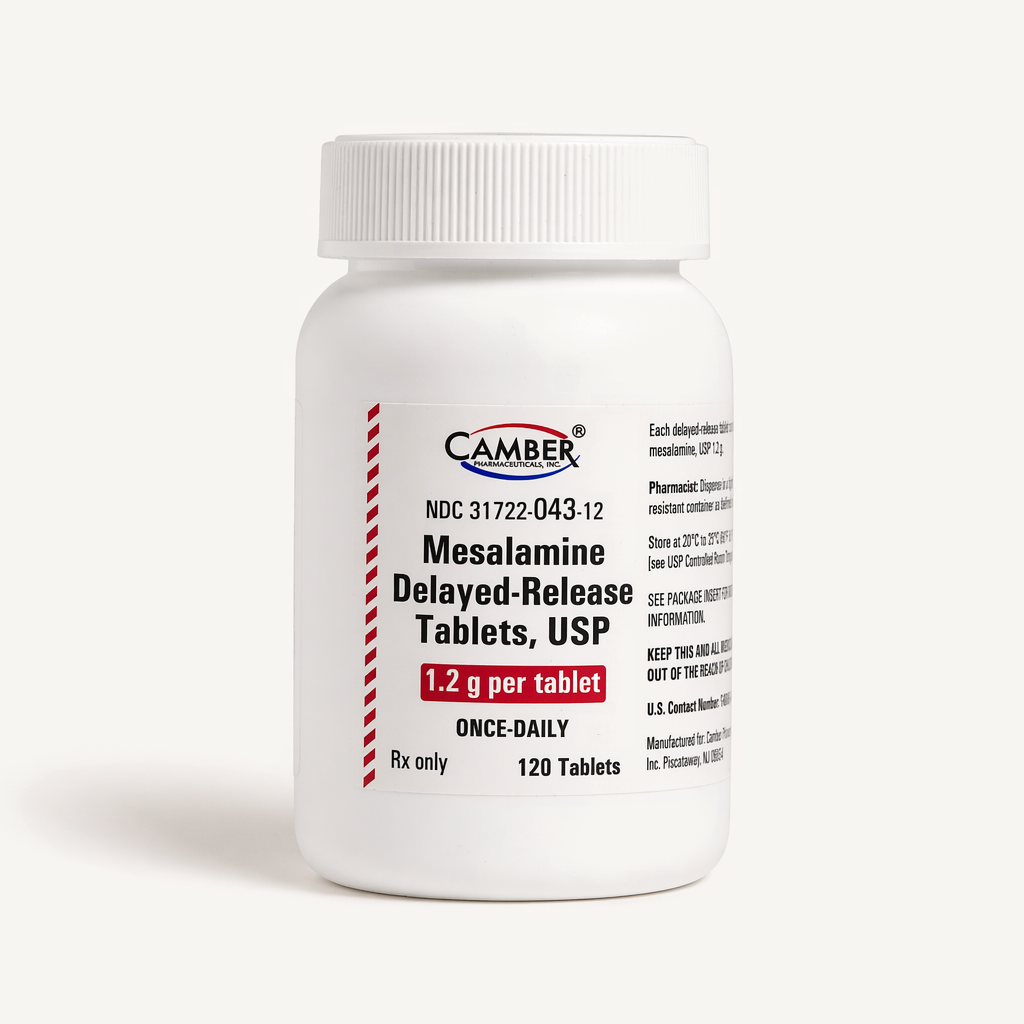
How It Works
Mesalamine is classified as an aminosalicylate. The medication works locally to decrease gut inflammation.
Mesalamine acts within the colon to inhibit the overproduction of inflammatory chemicals such as prostaglandins and leukotrienes. By reducing these levels in the large intestine, mesalamine helps calm irritated tissue and relieve the symptoms of ulcerative colitis.
| Quick Facts | |
|---|---|
| Common Brands | Apriso, Asacol HD, Delzicol, Lialda, Pentasa |
| Drug Class | Aminosalicylate (anti-inflammatory agent) |
| Generic Status | Generic is available |
| Availability | Prescription only |
Dosing
Dosages for this medication depend on the specific brand and formulation. It can also depend on whether the drug is being used for an active flare-up or to maintain disease remission.
- Asacol HD (delayed-release tablet): Typically prescribed at 1,600 mg taken three times a day for a duration of six weeks.
- Delzicol (delayed-release capsule): Commonly advised at 800 mg taken three times a day, usually for six weeks. For maintenance, the dose is generally 1,600 mg daily, divided into 2 to 4 doses.
- Pentasa (extended-release capsule): Providers generally recommend 1 g taken four times a day for up to 8 weeks.
- Apriso (extended-release capsule): For the maintenance of remission, the standard dose is 1.5 grams taken once a day in the morning.
Note: Dosing information below is educational only. Your prescribing physician will determine your specific dose based on your individual health needs. Always follow your healthcare provider’s instructions for exact dosing.
Uses
FDA-Approved Uses
Mesalamine tablets are FDA-approved for the treatment of mild or moderate ulcerative colitis. They are approved both for providing relief during active flare-ups and for ongoing maintenance therapy to prevent future flare-ups.
Off-Label Uses
You may see mesalamine tablets prescribed for uses that are not “FDA-approved.” This is a common and legal practice called “off-label” prescribing, where a doctor uses their clinical judgment to prescribe a drug for a different (but well-researched) purpose.
Providers occasionally prescribe this medication off-label to manage Crohn’s disease, which is another type of inflammatory bowel disease. However, gastroenterology guidelines do not explicitly recommend this medication for Crohn’s disease.
Get Savings Updates for Mesalamine Tablets
Join our mailing list for exclusive deals and more.
Side Effects
Like all medications, mesalamine can cause side effects. Some side effects may improve over time as your body adjusts to the medication. Other side effects may be serious and require medical attention.
Common Side Effects
- Headache
- Stomach pain
- Nausea
- Diarrhea
- Indigestion
- Dizziness
- Gas
- Back pain
- Rash
- Sore throat
Serious Side Effects
Serious side effects are rare, but it’s important to know what to look for if they do occur. Get immediate medical attention if you notice signs of these drug reactions.
- Kidney problems: The medication can cause kidney stones, cellular kidney damage, or an inflammatory condition known as tubulointerstitial nephritis (TIN). Symptoms to watch for include a sudden change in how much you urinate, blood in the urine, or severe back or side pain.
- Liver problems: In uncommon cases, patients may develop liver abnormalities or liver failure. Warning signs include yellowing of the skin or eyes (jaundice), dark urine, profound tiredness, or right-sided stomach pain.
- Severe allergic reactions: Life-threatening allergic responses can affect multiple organs. Symptoms can involve severe breathing problems, hives, a racing heart, and facial swelling.
- Heart muscle inflammation: In rare cases, the drug can affect the immune system, leading to inflammation around the heart. This typically occurs as chest pain, shortness of breath, and an irregular heartbeat.
- Mesalamine intolerance syndrome: An abnormal reaction to the drug can cause a worsening of ulcerative colitis symptoms, resulting in intense stomach cramping, bloody diarrhea, and fever.
- Severe skin reactions: Extremely rare but critical skin reactions, such as Stevens-Johnson syndrome (SJS), can occur, characterized by painful peeling skin, blisters, or severe discoloration.
Call your doctor immediately if you experience any concerning or prolonged symptoms.
Pharmacist Tips
Stay Well Hydrated
Providers recommend drinking plenty of fluids daily while taking this medication. Hydration can help prevent kidney stones from forming while taking mesalamine tablets.
Practice Strict Sun Protection
Mesalamine can make your skin more sensitive to sunlight, increasing your risk for UV damage. Providers recommend avoiding direct sun exposure, wearing hats and protective clothing, and applying high-SPF sunscreen when outdoors.
Swallow Capsules And Tablets Whole
You should not cut, crush, break, or chew these medications. Doing so can damage the specialized extended-release mechanisms. If you have trouble swallowing, speak to your provider about how to take your medication. With their guidance, some capsule brands can be carefully opened and sprinkled onto soft foods.
Watch For Ghost Tablets In Stool
You might occasionally notice empty tablet shells or parts of a capsule in your stool. This is generally harmless as the active medication has already been absorbed, but inform your healthcare provider if it becomes a frequent occurrence.
Follow Brand-Specific Food Rules
Specific brand guidelines determine how you take your medication. For example, Asacol HD is taken on an empty stomach. In contrast, Apriso, Delzicol, and Pentasa may be taken with or without food.
Store Properly
Keep your medication at room temperature and protect it from moisture. If your medicine bottle contains drying pouches, do not remove them.
Drug Interactions
Certain medications and substances can interact with mesalamine tablets, potentially altering how it works or increasing the risk of side effects.
- NSAIDs (nonsteroidal anti-inflammatory drugs): Over-the-counter pain and fever relievers such as ibuprofen (Advil, Motrin) and naproxen should generally be avoided. Taking them with mesalamine can increase stress on your kidneys and raise the risk of kidney damage.
- Immunosuppressants and cancer drugs: Medications like azathioprine (Imuran) and 6-mercaptopurine may cause dangerous blood problems when combined with mesalamine.
- Iron supplements: Because certain mesalamine tablets use iron oxide in their outer coatings, taking additional iron supplements could increase your risk of accumulating too much iron in the body.
- Antacids: Over-the-counter antacids can disrupt the coating of certain mesalamine formulations, which may affect how your body absorbs the medicine.
- Varicella virus vaccine and warfarin: Medical professionals have noted potential interactions between these substances. These interactions require your prescribing physician to adjust your dosage or monitor you carefully.
Always give your doctor and pharmacist a complete list of all your medications, vitamins, and supplements to check for potential interactions.
FAQs
What is the difference between taking mesalamine orally versus suppositories?
Oral mesalamine tablets are swallowed and are designed to slowly release the medication as they pass through the digestive tract. The design enables them to treat inflammation throughout the colon or higher up in the large intestine. Suppositories and enemas are inserted rectally to deliver the medication locally. These medications help soothe inflammation in the lower rectum.
Why did my ulcerative colitis symptoms get worse right after I started taking this medication?
In some cases, patients develop acute intolerance syndrome, which is a reaction to mesalamine itself. The symptoms of this reaction, such as intense stomach cramping, bloody diarrhea, headache, and fever, can closely mirror a severe ulcerative colitis flare-up.
Is it safe to crush or chew mesalamine pills if they are too large to swallow?
Standard medical guidelines emphasize that you should not cut, crush, break, or chew these tablets or capsules, as it disrupts their delayed-release mechanisms. If you struggle to swallow tablets, ask your provider for recommendations about the most appropriate brand, formulation, and way of taking mesalamine.
Do I need to take mesalamine on an empty stomach?
Only some brands of mesalamine tablets require you to take the medication on an empty stomach. For example, Asacol HD is taken at least one hour before or two hours after a meal. Other brands, including Apriso, Delzicol, and Pentasa, can be taken with or without food. Ask your doctor for specific guidance on how to take your prescribed mesalamine formulation.
Will mesalamine suppress my immune system?
Mesalamine is not a general immunosuppressant. It reduces inflammation locally within the gut lining.
Is it true that taking mesalamine can cause permanent hair loss?
Hair loss or thinning is not a commonly reported side effect of mesalamine. Permanent hair loss was not found to be a typical effect of this medication in clinical studies.
Can I take ibuprofen or other NSAIDs while taking this?
Healthcare providers advise against taking NSAIDs (such as ibuprofen or naproxen) when you are also taking mesalamine. Combining these medications can put additional stress on your kidneys and heighten the risk of kidney damage.
Can I take antacids alongside mesalamine pills?
Most providers recommend against taking antacids alongside mesalamine pills, particularly if you are taking the Apriso brand of tablets. Antacids change the pH level of your stomach, which can affect the delayed-release coating of the tablets and how the drug is absorbed.
Is it safe to continue taking mesalamine if I am pregnant or trying to conceive?
It is currently unknown if or how the medication might affect a pregnancy or whether it could harm an unborn baby, so risk cannot be ruled out. Discuss the potential risks and benefits with your healthcare provider if you are pregnant or planning to become pregnant.
Does this medication cure ulcerative colitis, or do I have to take it for the rest of my life?
There is currently no medical cure for ulcerative colitis. Mesalamine is used to reduce symptoms during flare-ups and keep symptoms in remission. As a result, many patients continue taking it for as long as it remains effective and the side effects are tolerable. You should ask your doctor how long they recommend you take mesalamine tablets.
Why does my urine sometimes look darker since starting this pill?
Darkened urine can sometimes be a warning sign of a liver problem and should be reported to your healthcare provider.
Mesalamine can also cause a harmless chemical reaction that turns urine reddish-brown when it comes into contact with bleach, such as the bleach in some toilet bowl cleaners.
Can I drink alcohol while taking mesalamine?
It is currently unknown if drinking alcohol directly impacts how mesalamine functions within the body. However, because alcohol can irritate the gastrointestinal tract, it is best to discuss alcohol consumption with your health care team.
Does mesalamine work for Crohn’s disease, or is it just for ulcerative colitis?
While FDA-approved specifically for ulcerative colitis, mesalamine is occasionally prescribed off-label for Crohn’s disease. Its effectiveness for Crohn’s is debated among specialists, and gastroenterology guidelines do not include mesalamine as a standard treatment for Crohn’s disease.
Will mesalamine cause weight gain or a “moon face” like prednisone does?
Mesalamine is not a steroid and does not typically cause steroid-related side effects. Weight gain was not a commonly reported side effect in clinical trials of mesalamine, though some patients do experience fluid retention that may temporarily mimic weight gain.
Comparable Medications
Mesalamine Tablets, Mesalamine Enema (Rowasa), Mesalamine Suppository (Canasa), Sulfasalazine (Azulfidine), or Prednisone / Budesonide (Uceris)?
There are several medications your doctor may prescribe instead of mesalamine tablets. Here are a few possible alternatives.
Mesalamine enema
This is a rectal liquid suspension that treats localized inflammation in the lower portions of the colon and rectum.
Mesalamine suppository
This drug is a rectal insert used to treat localized rectal inflammation.
Sulfasalazine
This is an older aminosalicylate medication that chemically combines mesalamine with a sulfa antibiotic. It may be used for inflammatory bowel disease. It has a different side effect profile than mesalamine tablets.
Prednisone / budesonide
These are prescription corticosteroids that act as systemic immunosuppressants and anti-inflammatories. They may be prescribed for severe flare-ups.
We Have Mesalamine Tablets in Stock. Get Yours Today!
Important: Information on this page is for educational purposes only. Prescribing decisions are made by independent, licensed providers. TelyRx operates technology-enabled pharmacies and a telehealth platform that connects patients with board-certified licensed providers. Prescriptions, when provider-approved and issued, are filled and shipped by TelyRx-affiliated pharmacies. We do not employ physicians or make prescribing decisions. Learn more about our editorial standards here.