

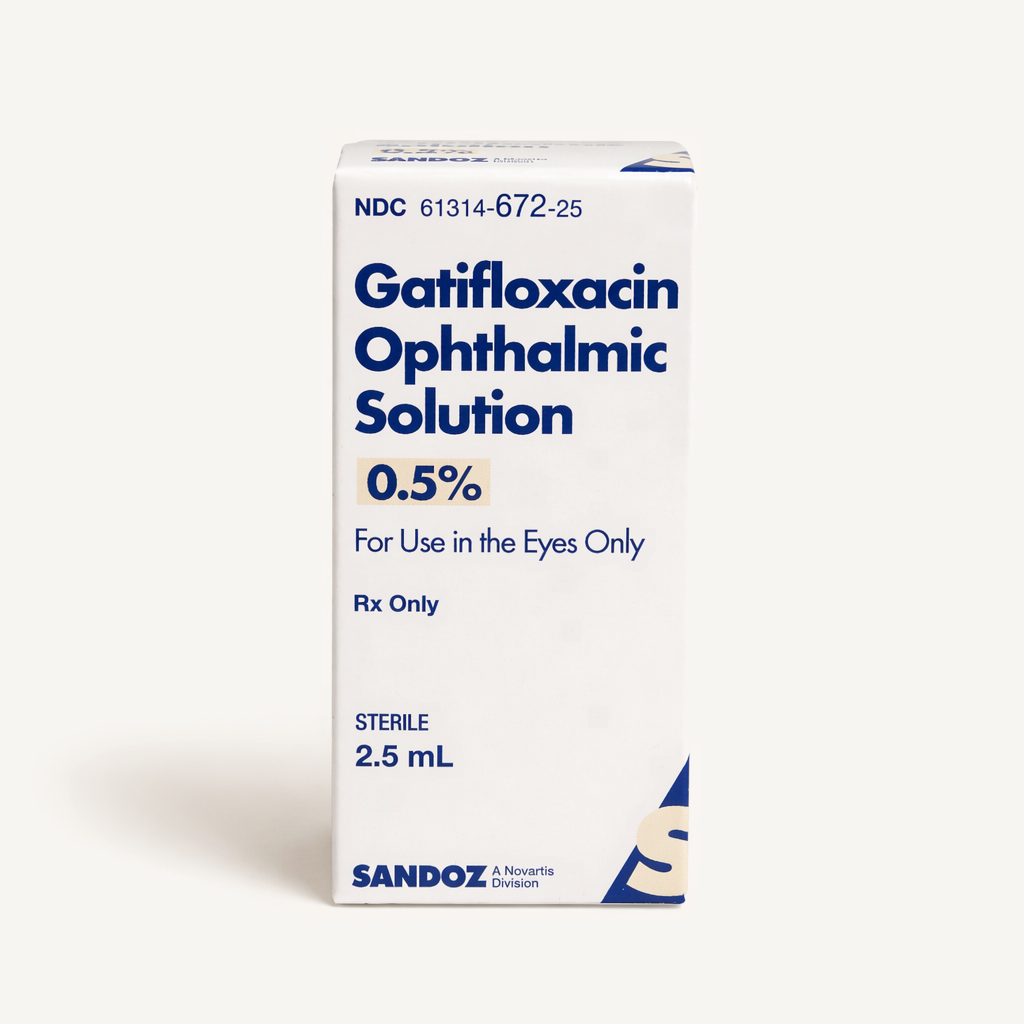
How It Works
Gatifloxacin targets the bacteria that cause the pink eye infection, blocking the proteins that the bacteria need to reproduce and repair themselves, leading to bacterial death.
It belongs to a group of medications called fluoroquinolone ophthalmic antibiotics.
| Quick Facts | |
|---|---|
| Common Brands | Zymaxid |
| Drug Class | Fluoroquinolone ophthalmic antibiotic |
| Generic Status | Generic is available |
| Availability | Prescription only |
Dosing
Standard guidelines suggest applying the drops multiple times a day for up to 7 days, depending on the severity of the infection.
A standard dosing schedule may be:
- Day 1: Apply one drop in the affected eye(s) every two hours up to eight times.
- Days 2-7: Apply one drop in the affected eye(s) two to four times daily.
Follow your doctor’s prescribed dosage schedule.
Here’s how to apply gatifloxacin eye drops:
- Wash and dry your hands before and after application.
- Gently tilt your head back and pull down your lower eyelid with your index finger to form a small pouch.
- Squeeze the prescribed number of drops into the pouch.
- Close your eye and gently press one finger to the inner corner of your eye by the nose. This helps your eye absorb the medication.
Note: Dosing information below is educational only. Your prescribing physician will determine your specific dose based on your individual health needs. Always follow your healthcare provider’s instructions for exact dosing.
Uses
FDA-Approved Uses
Gatifloxacin eye drops are FDA-approved to treat bacterial conjunctivitis (pink eye) caused by certain types of bacteria.
Off-Label Uses
You may see gatifloxacin eye drops prescribed for uses that are not “FDA-approved.” This is a very common and legal practice called “off-label” prescribing, where a doctor uses their clinical judgment to prescribe a drug for a different (but well-researched) purpose.
Doctors may prescribe gatifloxacin off-label for other bacterial eye infections or to prevent eye infections after cataract surgery.
Side Effects
Like all medications, gatifloxacin eye drops can cause side effects. Some common side effects may improve over time as your body adjusts to the medication. Other side effects may be serious and require medical attention.
Common Side Effects
- Eye irritation or pain
- Dry eye
- Eye discharge or tears
- Eye or eyelid swelling
- Worsening of eye infection
- Changes in taste
- Blurry vision
- Headache
- Bleeding under the surface of the eye
Serious Side Effects
Serious side effects are rare, but it’s important to know what to look for if they do occur. Stop using gatifloxacin eye drops and call your doctor immediately if you experience:
- Severe allergic reactions: Symptoms include swelling of the face, lips, tongue, or throat; difficulty breathing or swallowing; racing heart; severe rash or itching; and/or fever.
- Stevens-Johnson syndrome (SJS): Gatifloxacin may trigger this severe, potentially life-threatening skin reaction. Symptoms include painful red or purple skin that peels, painful watery eyes, and flat red rashes or blisters on the skin, mouth, nose, or genitals.
- Another infection: Prolonged use of gatifloxacin eye drops may lead to secondary infections with other germs, such as fungi.
Call your doctor immediately if you experience any concerning or prolonged symptoms.
Pharmacist Tips
Wash Your Hands
It’s recommended to wash your hands with soap and water before and after administering the eye drops to avoid spreading bacteria.
Avoid Contamination
Do not touch the dropper tip to your eye, eyelid, fingertips, or any other surface. This helps keep the solution sterile.
Wait 5 Minutes Before Applying Other Eye Medications
If using multiple eye drops, wait at least 5 minutes between applications to allow your eyes time to absorb each medication. If your doctor also prescribes an eye ointment, apply the gatifloxacin drops first. Wait 5 minutes to let the drops absorb, then apply the ointment.
Don’t Wear Contact Lenses During Treatment
It is generally recommended to avoid wearing contact lenses while treating an eye infection, as this can affect how quickly symptoms improve. Throw away any contact lenses you were using before starting gatifloxacin, as they may contain bacteria. Once your infection clears, start fresh with a new pair of contacts.
Stay the Course
Complete the full course of treatment, even if your symptoms begin to improve or look normal. This helps prevent the infection from returning and becoming resistant to antibiotics.
Store At Room Temperature
Gatifloxacin eye drops should be stored in a cool, dry place below 77°F (25°C). Do not freeze or refrigerate gatifloxacin ophthalmic solution.
Tell Your Provider If You’re Pregnant Or Breastfeeding
It is not known if gatifloxacin eye drops can affect pregnancy or pass into breast milk, so risk cannot be ruled out. Tell your healthcare provider if you are pregnant, breastfeeding, or planning to become pregnant.
Try To Avoid Missing A Dose
If you miss a dose of gatifloxacin eye drops, use them as soon as you remember, unless it is almost time for your next dose. In that case, skip the missed dose and apply your next dose as scheduled. Do not apply double or extra doses to make up for a missed one.
Drug Interactions
There are no expected drug interactions between gatifloxacin eye drops and other medications. However, avoid heavy drinking as alcohol can slow the immune response and make it harder to recover from infections.
Always give your doctor and pharmacist a complete list of all your medications, vitamins, and supplements to check for potential interactions.
FAQs
Why do I have to put a drop in my eye every two hours on the first day?
Providers typically recommend a higher dose on the first day (up to 8 times a day) to quickly target the bacteria causing the infection. For the following days, the dosage is usually reduced to two to four times daily.
Is it safe to wear my contact lenses while treating an eye infection with gatifloxacin eye drops?
It is generally recommended to avoid wearing contact lenses while treating an eye infection, as this can slow the improvement of your symptoms.
How long does it take for my eye to stop being swollen and crusty?
While specific timelines vary by patient, a typical treatment course of gatifloxacin eye drops lasts about 7 consecutive days. If you notice no improvement after a few days, get in touch with your healthcare provider.
What is the difference between Zymaxid (0.5%) and Zymar (0.3%)?
Both are brand names for generic gatifloxacin. Zymar is a brand that has been discontinued.
Why did my doctor tell me to throw the bottle away after the infection is gone?
Discarding the bottle helps prevent the spread of germs or bacteria that might have contaminated the solution or the dropper tip during treatment.
Can I use gatifloxacin eye drops to treat an outer ear infection?
Apply these drops only to the surface of the eye. Do not use them on any other part of the body.
Do I need to keep the bottle in the refrigerator?
Store gatifloxacin at room temperature. Do not store this medication in the refrigerator or freezer.
What should I do if the tip of the dropper touches my eyelid or eyelashes?
It is important to avoid letting the tip touch any surface to prevent contaminating the sterile solution. If the tip touches your eyelid or eyelashes, contact your healthcare provider.
Why does my vision get blurry for a few minutes after I put the drops in?
Blurry vision is a commonly reported and temporary side effect of gatifloxacin eye drops. It does not usually require medical attention.
Can I use artificial tears or allergy drops at the same time as gatifloxacin?
This is likely fine, but it’s best to check with your doctor first. Standard guidelines suggest waiting at least 5 minutes between different eye drops to give your eyes enough time to absorb each medication properly.
Can I stop using the drops early if my eye looks normal again?
No, providers typically recommend completing the full prescribed course of treatment, even if symptoms improve. Stopping early may cause the infection to return and be resistant to treatment.
Does this drug absorb into your bloodstream like oral antibiotics do?
Because it is applied directly as an eye drop, gatifloxacin ophthalmic solution generally does not absorb into the body the way oral antibiotics do.
What happens if I miss a dose?
If you miss a dose of gatifloxacin eye drops, standard guidelines suggest applying it as soon as you remember, unless it is almost time for your next dose. In that case, you can skip the missed dose and apply the next dose as scheduled. Do not use double or extra doses of gatifloxacin to make up for a missed one.
Is this medication safe to use if I am pregnant or breastfeeding?
It is currently unknown if gatifloxacin can harm an unborn baby or if it passes into breast milk, so risk cannot be ruled out. Tell your healthcare provider if you are pregnant, plan to become pregnant, or are breastfeeding.
Comparable Medications
Gatifloxacin eye drops, moxifloxacin (Vigamox / Moxeza), ciprofloxacin (Ciloxan), polymyxin B / trimethoprim (Polytrim), tobramycin (Tobrex), or erythromycin ophthalmic ointment?
There are several medications your doctor can prescribe instead of gatifloxacin eye drops. Here are a few possible alternatives below.
Moxifloxacin Eye Drops
From $39.98
A fluoroquinolone antibiotic eye drop used to treat pink eye (bacterial conjunctivitis).
Ciprofloxacin Eye Drops
From $48.99
A fluoroquinolone antibiotic eye drop or eye ointment used to treat pink eye (bacterial conjunctivitis) and corneal ulcers.
Polymyxin B and Trimethoprim
From $44.99
A combination antibiotic eye drop used to treat pink eye (bacterial conjunctivitis) and other eye infections.
Tobramycin Eye Drops
From $36.99
A fluoroquinolone antibiotic eye drop or eye ointment used to treat bacterial eye infections.
Erythromycin Ophthalmic Ointment
From $36.99
A macrolide antibiotic eye ointment used to treat eye infections (bacterial eye infections)
We Have Gatifloxacin Eye Drops in Stock. Get Yours Today!
Important: Information on this page is for educational purposes only. Prescribing decisions are made by independent, licensed providers. TelyRx operates technology-enabled pharmacies and a telehealth platform that connects patients with licensed providers. Prescriptions, when provider-approved and issued, are filled and shipped by TelyRx-affiliated pharmacies. We do not employ physicians or make prescribing decisions. Learn more about our editorial standards here.