

How It Works
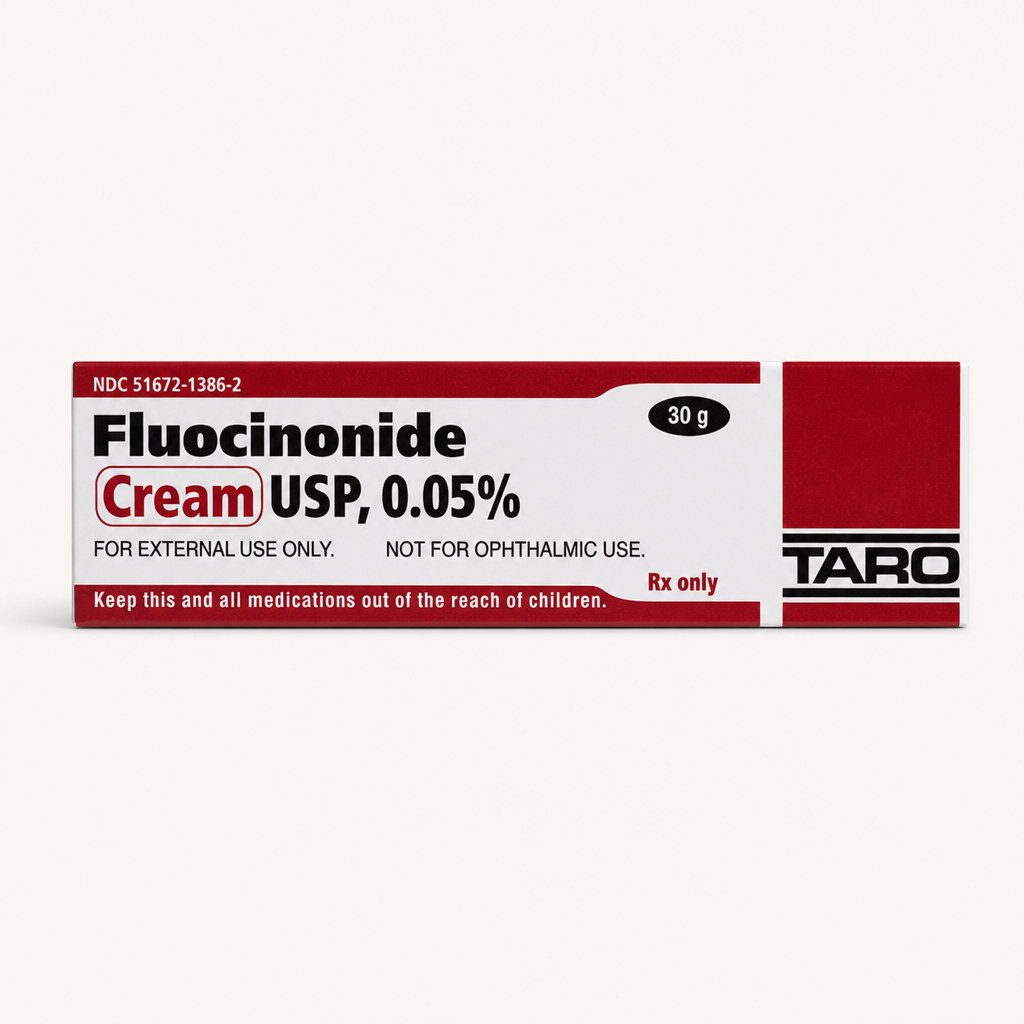
Fluocinonide works by moderating the immune response that causes certain types of skin irritation. Fluocinonide binds to glucocorticoid receptors in the skin, which helps reduce the production of inflammatory chemicals.
Fluocinonide also narrows the blood vessels in the treated area to decrease swelling. This dual action can help relieve scaling, redness, itching, and discomfort.
| Quick Facts | |
|---|---|
| Common Brands | Lidex, Lidex-E, Vanos |
| Drug Class | Topical corticosteroid |
| Generic Status | Generic is available |
| Availability | Prescription only |
Dosing
Fluocinonide is typically applied as a thin layer on affected skin.
- 0.05% formulations: Providers generally direct patients to apply the medication two to four times a day.
- 0.1% cream: Standard guidelines suggest applying fluocinonide one to two times a day.
It is generally accepted that patients should not use more than 60 grams of the medication per week, and fluocinonide should not be used for more than two consecutive weeks unless directed by a doctor.
Note: Dosing information below is educational only. Your prescribing physician will determine your specific dose based on your individual health needs. Always follow your healthcare provider’s instructions for exact dosing.
Uses
FDA-Approved Uses
Fluocinonide is FDA-approved to treat the symptoms of inflammatory skin conditions, such as plaque psoriasis, atopic dermatitis (eczema), and some allergic skin rashes.
Off-Label Uses
You may see fluocinonide prescribed for uses that are not “FDA-approved.” This is a common and legal practice called “off-label” prescribing, where a doctor uses their clinical judgment to prescribe a drug for a different (but well-researched) purpose.
A common off-label usage for fluocinonide is alopecia treatment. Corticosteroid creams like fluocinonide may be used by specialists to treat certain localized forms of hair loss.
Side Effects
Like all medications, fluocinonide can cause side effects. Some common side effects may improve over time as your body adjusts to the medication. Other side effects may be serious and require medical attention.
Common Side Effects
- Burning sensation at the application site
- Mild skin irritation
- Stinging
- Itching
- Dry skin
- Peeling or flaking skin
Serious Side Effects
Serious side effects are rare, but it’s important to know what to look for if they do occur.
- Skin thinning and damage: Prolonged application or overuse of fluocinonide can lead to fragile or thinning skin, stretch marks, spider veins, and delayed wound healing.
- Systemic hormonal effects: Using fluocinonide over large areas or under tight bandages can cause the body to absorb too much of the steroid. If this occurs, it can cause hormonal imbalances, adrenal suppression, or Cushing’s syndrome.
- Elevated blood sugar: Systemic absorption of fluocinonide may increase blood sugar levels, causing symptoms like excess thirst, frequent urination, and unexplained fatigue.
- Severe allergic reactions: Though uncommon, allergic reactions can occur and may involve severe skin rash, hives, swollen lymph nodes, or swelling of the face, lips, tongue, or throat. Seek prompt medical attention if you have signs of an allergic reaction to fluocinonide.
- Worsening skin infections: Fluocinonide can sometimes mask or worsen bacterial or fungal skin infections. In these cases, side effects may include increased redness, sudden swelling, excessive warmth, or pus at the application site.
Call your doctor immediately if you experience any concerning or prolonged symptoms.
Pharmacist Tips
Hand Washing Hygiene
Unless you are treating a skin condition on your hands, wash your hands thoroughly with soap and water both before and after applying fluocinonide. This helps prevent accidental transfer of the medication to your eyes, mouth, or other areas.
Avoid Sensitive Skin
Do not use fluocinonide on your face, underarms, or groin unless specifically instructed by your doctor. These areas have thinner skin and may be more prone to irritation.
Skip The Bandages
Do not cover, wrap, or bandage the treated area after application. Covering the skin increases the amount of medication absorbed into the bloodstream, which can heighten the risk of systemic side effects.
Monitor Your Timeline
Limit your daily use of fluocinonide to the specific prescribed duration, which is typically no more than two weeks at a time. This helps reduce the risk of skin damage from fluocinonide.
Watch For Allergic Signs
It is common to experience a slight, temporary burning sensation right after application of fluocinonide. However, if you notice a persistent rash, intense burning, or irritation that does not subside, notify your care team immediately.
Drug Interactions
Certain medications and substances can interact with fluocinonide, potentially altering how it works or increasing the risk of side effects.
- Oral corticosteroids: Using fluocinonide while taking oral steroid medications, such as prednisone, dexamethasone, or methylprednisolone, can significantly increase your total steroid exposure and elevate the risk of hormonal side effects.
- Other topical steroids: Applying multiple topical corticosteroid medications at the same time can lead to excess absorption and raise the risk of localized skin thinning or hormonal imbalances.
- Other topical skin products: Standard guidelines recommend against using other skin products, lotions, or cosmetics on the treated area unless you have already discussed the use of these products with a doctor.
Always give your doctor and pharmacist a complete list of all your medications, vitamins, and supplements to check for potential interactions.
FAQs
Why did my doctor warn me never to put this cream on my face or private parts?
The skin on your face, groin, and underarms is generally thinner and more sensitive. Because fluocinonide is a strong topical steroid, using it on these areas can make the skin prone to irritation, thinning, and other side effects.
Is fluocinonide considered a strong steroid compared to hydrocortisone?
Fluocinonide is classified as a “high-potency” or “super-potent” topical corticosteroid. It is stronger than standard over-the-counter options.
Why does the box say I shouldn’t use this for more than two weeks in a row?
Fluocinonide is not intended for long-term use. Using it for prolonged periods increases the risk of the skin becoming permanently thin, fragile, or discolored. It can also heighten the likelihood of systemic absorption and related hormonal side effects.
Can I put a Band-Aid or wrap my rash after rubbing this on?
Standard guidelines indicate that you should not bandage, wrap, or heavily seal the treated area unless explicitly instructed to do so by your doctor. Wrapping the area increases how much fluocinonide is absorbed into the bloodstream, and excess absorption can make serious side effects more likely.
Should I put my lotion on before or after I apply the fluocinonide?
Providers recommend against using other cosmetic skin products, including standard lotions, on the treated area without first speaking to your doctor. Mixing different products may alter how fluocinonide is absorbed into the skin.
Can I use fluocinonide to get rid of cystic acne?
Fluocinonide is not a treatment for acne. In some cases, fluocinonide can cause pimple-like bumps as a side effect.
Is it safe to use this medication if I am currently pregnant or breastfeeding?
It is currently unknown if topical fluocinonide affects pregnancy, harms an unborn baby, or passes into breast milk. Discuss the potential risks and benefits of this medication with your healthcare provider if you are pregnant, planning to become pregnant, or breastfeeding.
Does fluocinonide actually cure eczema?
Fluocinonide does not cure eczema. Instead, it is used to quickly address the inflammatory symptoms of eczema, including redness, swelling, and itching.
What should I avoid while using fluocinonide?
Providers indicate that you should avoid getting fluocinonide in your eyes or mouth. Avoid applying it to seemingly healthy skin or large areas of the body. Guidelines state that you should avoid covering the treated area with tight bandages and should not use this medication for longer than prescribed.
Comparable Medications
Fluocinonide vs Clobetasol (Temovate), Triamcinolone (Kenalog), Desonide (Desowen), Pimecrolimus (Elidel)?
Clobetasol Cream
From $23.99
This is a prescription-strength topical medication used as an alternative treatment for inflammatory skin conditions.
Triamcinolone
From $24.99
This is a type of topical steroid utilized to manage skin inflammation and itchiness. It is generally considered to be less potent than fluocinonide.
Desonide Cream
From $34.99
This is another prescription medication used for topical skin application.
Pimecrolimus Cream
From $169.99
This is a non-steroid topical prescription medication used to manage chronic skin conditions.
We Have Fluocinonide in Stock. Get Yours Today!
Important: Information on this page is for educational purposes only. Prescribing decisions are made by independent, licensed providers. TelyRx operates technology-enabled pharmacies and a telehealth platform that connects patients with licensed providers. Prescriptions, when provider-approved and issued, are filled and shipped by TelyRx-affiliated pharmacies. We do not employ physicians or make prescribing decisions. Learn more about our editorial standards here.