

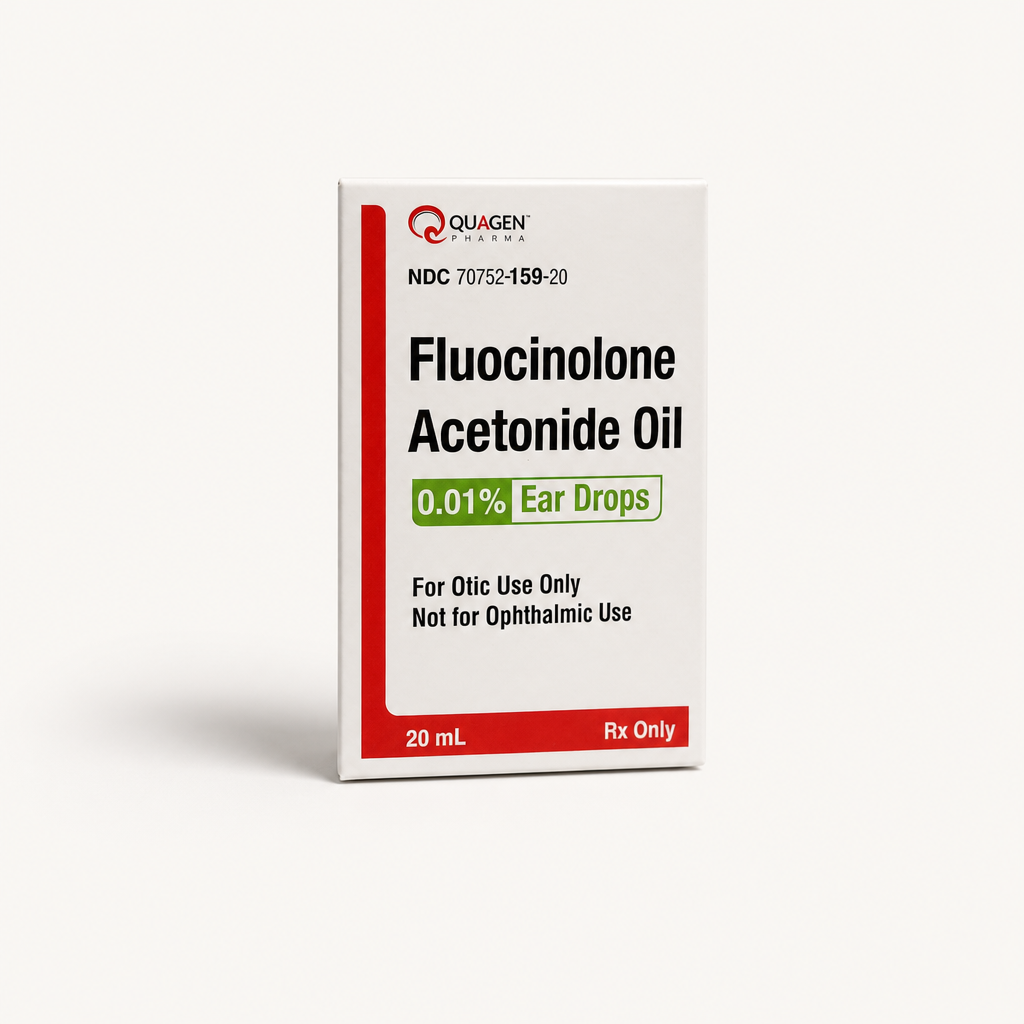
How It Works
When the skin in the ear is irritated, your body releases chemical substances that cause the area to become red, swollen, and itchy. This leads to an inflammatory flare in the ear.
Fluocinolone works through a direct biological process:
- Blocking inflammatory substances: The medication prevents the release of chemicals that cause the skin to swell and turn red.
- Easing itch: By reducing local inflammatory activity, fluocinolone lowers the chemicals in the skin that trigger the sensation of itching.
- Moisturizing: The oil base (often refined peanut oil) helps moisturize the dry, scaly skin associated with eczema, which may help ease cracking and irritation.
By reducing this localized inflammation, fluocinolone allows the skin inside the ear to heal, restoring comfort and preventing the urge to scratch, which could lead to a secondary infection.
| Quick Facts | |
|---|---|
| Common Brands | DermOtic Oil, Flac |
| Drug Class | Otic corticosteroid |
| Generic Status | Generic version available |
| Availability | Prescription only |
Dosing
The effectiveness of fluocinolone depends on application technique and following the full schedule prescribed by your doctor.
- Standard dosage: Providers typically recommend placing 5 drops in the affected ear(s) once daily.
- Duration: A standard course of treatment typically lasts 7 to 14 days.
- Head positioning: Lie on your side or tilt your head so the affected ear faces the ceiling.
- Application: Pulling the ear back and upward helps straighten the canal to allow for better treatment application. You can then squeeze the drops in and gently push the small triangular flap of skin over the ear opening to help the oil settle.
- Absorption: Providers typically suggest staying in the side-lying position for at least one minute to ensure the oil coats the canal.
- Warming the bottle: Hold the bottle in your hands for a few minutes before use to warm it. Cold drops can cause dizziness or discomfort when they hit the eardrum.
Note: Dosing information below is educational only. Your prescribing physician will determine your specific dose based on your individual health needs. Always follow your healthcare provider’s instructions for exact dosing.
Uses
FDA-Approved Uses
The FDA approves fluocinolone ear drops for chronic eczematous external otitis, or the treatment of inflammatory symptoms in the outer ear canal.
Off-Label Uses
You may see fluocinolone ear drops prescribed for uses that are not FDA-approved. This is a common and legal practice called off-label prescribing, where a doctor uses their clinical judgment to prescribe a drug for a different (but well-researched) purpose.
Fluocinolone may be prescribed off-label for the following conditions:
- Psoriasis of the ear: Specialists may use these drops to manage thick, scaly patches of psoriasis in the ear canal.
- Chronic itching (idiopathic): For cases of persistent ear itching where a clear diagnosis of eczema hasn’t been made, but inflammation is present.
Side Effects
Most people tolerate fluocinolone ear drops well, and side effects are generally limited to the site of application.
Common Side Effects
- A temporary burning or stinging sensation
- Mild ear irritation or dryness
- Temporary plugged feeling in the ear due to the oil base
- Headache or cold-like symptoms
Serious Side Effects
Serious side effects are rare, but it’s important to know what to look for if they do occur. Stop taking the medication and immediately call the doctor if you experience any of the following symptoms:
- Severe allergic reactions: It is generally advisable to seek immediate help if you experience hives, facial swelling, or difficulty breathing (especially important for those with peanut allergies).
- Skin thinning: Prolonged use can make the skin in the ear canal fragile or thin.
- Secondary infections: Using steroids for too long can sometimes allow a fungal or bacterial infection to take hold.
- Adrenal suppression: In rare cases, if used excessively, the steroid can be absorbed into the body and affect natural hormone production.
Call your doctor immediately if you experience any concerning or prolonged symptoms.
Pharmacist Tips
Peanut Allergy Alert
Most formulations of fluocinolone ear oil use refined peanut oil as a base. While the refining process removes many proteins, patients with severe peanut allergies should consult their doctor before use.
Don’t Use Swabs
Do not use a cotton swab (Q-tip) to clean the ear after applying the drops. This can push the oil and bacteria deeper into the ear or cause a scratch that leads to infection.
Check The Eardrum
If you suspect you have a ruptured or perforated eardrum, providers generally advise against using these drops unless specifically directed by an ear specialist.
Warm The Oil
Warm the bottle in your hands before use. Cold liquid entering the ear can trigger a caloric reflex, leading to temporary dizziness or vertigo.
Keep It Clean
Do not let the dropper tip touch your ear or fingers to avoid contaminating the dropper.
Drug Interactions
While only a small amount of this medication enters your bloodstream, it is still important to be aware of how it interacts with other products. Let your doctor know if you take:
- Other ear products: Ask your provider or pharmacist before using other ear drops, such as wax removers or antibiotic drops, at the same time as fluocinolone. They can advise whether and how to use them together.
- Systemic steroids: Tell your doctor if you are taking oral steroids like prednisone. The combined effect can increase the risk of systemic side effects.
- Fungal ear infections: Do not use steroid drops alone to treat a fungal ear infection, as this can worsen it. Fungal infections need antifungal treatment. Prolonged steroid use can also allow bacteria or fungi to overgrow, so contact your provider if symptoms have not improved after about a week.
Always give your doctor and pharmacist a complete list of all your medications, vitamins, and supplements to check for potential interactions.
FAQs
Why are fluocinolone ear drops prescribed for chronic ear itching but contraindicated for an active infection?
Fluocinolone is a steroid, not an antibiotic. While it can stop the immune system from causing an itch, it can reduce the ear’s ability to fight off an active bacterial or fungal infection if used incorrectly.
How does the corticosteroid in fluocinolone physically reduce inflammation and swelling within the ear canal?
The corticosteroid enters the skin cells and reduces the production of inflammatory mediators that trigger inflammation. This causes the blood vessels in the area to narrow, reducing redness and swelling.
Does the generic fluocinolone acetonide otic oil formulation contain peanut oil, and is it safe for those with peanut allergies?
Most generic and brand-name formulations (DermOtic) use refined peanut oil as the carrier for the medicine. If you have a peanut allergy, consult with your doctor before using the ear drops.
How many drops of fluocinolone should be put into the ear per scheduled dose?
Standard guidelines typically suggest 5 drops per affected ear, twice daily, though your doctor may adjust this based on the severity of your symptoms.
Is it safe to use fluocinolone ear drops if you have a ruptured eardrum?
Generally not without your provider’s guidance. Fluocinolone otic oil is intended for the outer ear canal, and it is not routinely used when the eardrum is perforated because the oil could reach the middle ear. If you have a ruptured eardrum, or think you might, talk with your provider before using these drops.
How long should you lie on your side after putting fluocinolone ear drops in for proper absorption?
It is generally recommended to keep the treated ear facing upward for about 30 to 60 seconds after instilling the drops. This helps keep the oil in the ear canal instead of running out. Follow the directions on your prescription label or from your provider.
Can prolonged use of fluocinolone ear drops trigger a secondary fungal infection?
Yes. Steroids can suppress the local immune response in the ear canal, allowing fungi (which thrive in dark, oily environments) to grow if the medication is used for too long.
Why is it recommended to warm the fluocinolone ear drop bottle in your hands for a few minutes prior to using it?
Cold oil in the ear canal can cool the balance organ next to it and cause brief, temporary dizziness. Warming the bottle in your hands for a few minutes helps avoid this. Do not heat the bottle in any other way.
Can fluocinolone ear drops be used to remove impacted earwax?
No. While the oil may slightly soften the wax, fluocinolone is a medication for inflammation. For wax removal, products like carbamide peroxide are standard.
What is the standard maximum duration for a prescribed course of fluocinolone ear drops to prevent localized skin thinning?
Providers typically suggest a course of 7 to 14 days. Longer courses increase the risk of skin thinning and should be physician-directed.
Is it safe to use a cotton swab to clean the ear canal after applying the fluocinolone drops?
No. Swabs can irritate the already sensitive skin of an eczematous ear and should be avoided.
How do fluocinolone ear drops differ from over-the-counter swimmer’s ear drops?
Over-the-counter swimmer’s ear drops usually contain alcohol or acetic acid, which dries out moisture and prevents bacterial growth.
Fluocinolone is a prescription steroid oil designed specifically to stop the immune system’s inflammatory response and soothe chronic skin conditions like eczema.
Can fluocinolone ear drops be used with prescription antibiotic ear drops?
Yes, doctors often prescribe a combination of a steroid and an antibiotic to treat cases with both inflammation and infection.
Comparable Medications
Ciprodex, Ofloxacin, or Acetic Acid?
Below are some possible alternatives to fluocinolone ear drops:
Ciprofloxacin & Dexamethasone Ear Drops
From $129.99
Ciprofloxacin/dexamethasone (Ciprodex) is a dual-action drop that combines an antibiotic and a steroid. It is used when an infection is present. Fluocinolone is a steroid-only medication, intended for chronic inflammation without active infection.
Ofloxacin Ear Drops
From $34.99
Ofloxacin is a pure antibiotic. It will kill bacteria but does not directly treat the inflammatory itch of eczema.
Acetic acid
Acetic acid (vinegar) drops are used to treat superficial infections of the outer ear canal. They make the canal more acidic, which helps stop bacteria and fungi from growing. Acetic acid does not reduce inflammation on its own, so it is often combined with hydrocortisone. It can sting or irritate inflamed skin, whereas fluocinolone oil is gentler on dry, eczematous skin but does not treat infection.
Carbamide peroxide
Debrox is strictly for earwax removal. It does not contain medication to treat skin conditions like eczema or inflammation.
We Have Fluocinolone Ear Drops in Stock. Get Yours Today!
Important: Information on this page is for educational purposes only. Prescribing decisions are made by independent, licensed providers. TelyRx operates technology-enabled pharmacies and a telehealth platform that connects patients with licensed providers. Prescriptions, when provider-approved and issued, are filled and shipped by TelyRx-affiliated pharmacies. We do not employ physicians or make prescribing decisions. Learn more about our editorial standards here.