

How It Works
The ethinyl estradiol and etonogestrel vaginal ring works by slowly releasing a combination of progestin and estrogen into the bloodstream through the vaginal tissues. These hormones prevent pregnancy by inhibiting ovulation, which means they stop the ovaries from releasing an egg during the menstrual cycle.
In addition, the hormones thicken the cervical mucus, creating a physical barrier that makes it harder for sperm to reach and fertilize an egg. The hormones also thin the lining of the uterus, so it is less likely that a fertilized egg will successfully implant and begin developing.
| Quick Facts | |
|---|---|
| Common Brands | NuvaRing, EluRyng, EnilloRing, Haloette |
| Drug Class | Progestin/estrogen combination hormonal contraceptive (CHC) |
| Generic Status | Generic is available |
| Availability | Prescription only |
Dosing
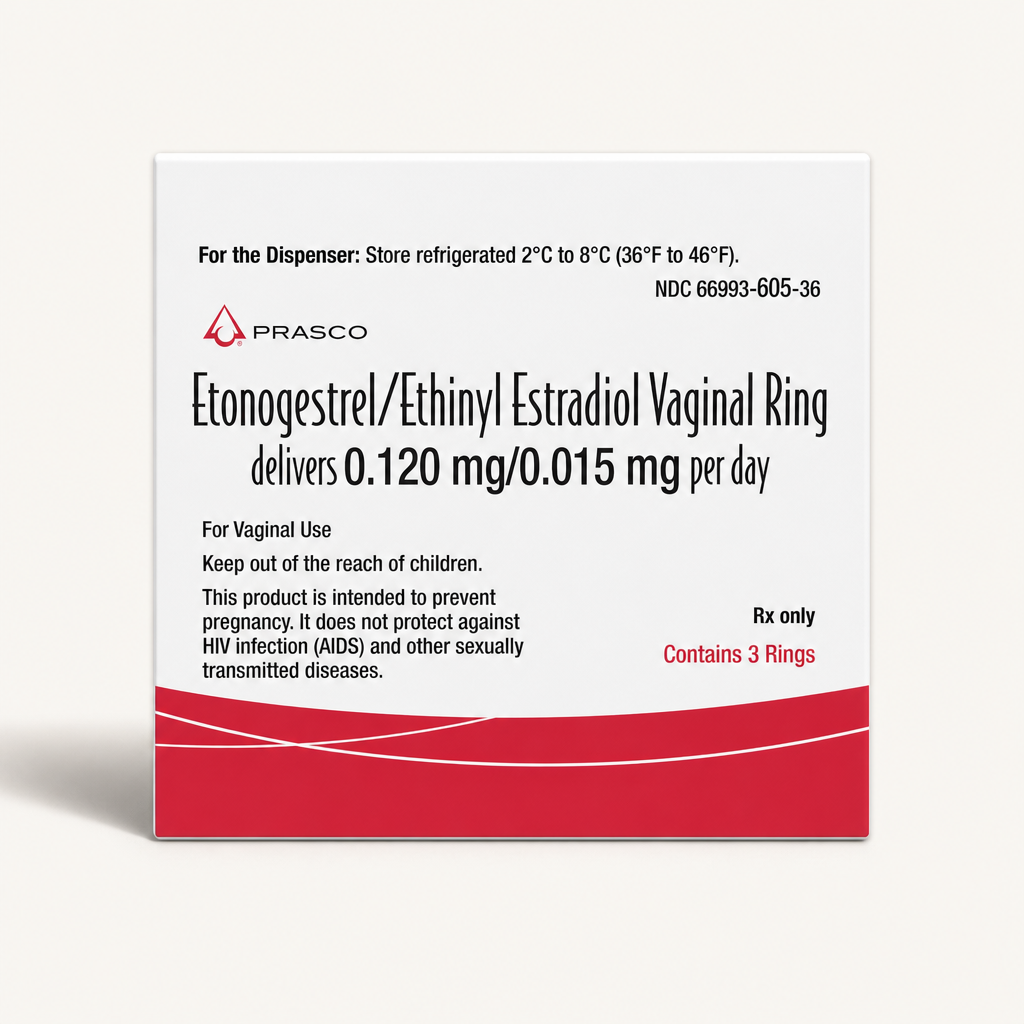
Providers typically recommend inserting one ring vaginally and leaving it in place for three continuous weeks. Each vaginal ring releases exactly 0.12 mg of etonogestrel and 15 mcg of ethinyl estradiol every day.
At the end of the third week, the ring is removed for a one-week break. During this ring-free week, individuals generally experience bleeding similar to a menstrual period.
To continue contraception, a new ring must be inserted one week after the old one was removed. Standard guidelines recommend inserting the new ring on the same day of the week and at the same time as previous insertions. This consistency establishes a steady four-week cycle.
Note: Dosing information below is educational only. Your prescribing physician will determine your specific dose based on your individual health needs. Always follow your healthcare provider’s instructions for exact dosing.
Uses
FDA-Approved Uses
The ethinyl estradiol and etonogestrel vaginal ring is FDA-approved as a form of hormonal birth control.
Off-Label Uses
You may see the ethinyl estradiol and etonogestrel vaginal ring prescribed for uses that are not “FDA-approved.” This is a common and legal practice called “off-label” prescribing, where a doctor uses their clinical judgment to prescribe a drug for a different (but well-researched) purpose.
There are currently no common off-label uses for the ethinyl estradiol and etonogestrel vaginal ring.
Side Effects
Like all medications, ethinyl estradiol and etonogestrel can cause side effects. Some common side effects may improve over time as your body adjusts to the medication. Other side effects may be serious and require medical attention.
Common Side Effects
- Vaginal discomfort, inflammation, or irritation
- Headache or migraine
- Changes in mood, mood swings, or depression
- Nausea or vomiting
- Vaginal discharge
- Weight gain
- Breast pain, discomfort, or tenderness
- Irregular menstrual cycles or spotting
- Painful menstrual periods or cramps
- Abdominal pain
- Acne
- Decrease in sexual desire
- Device-related issues (such as the ring coming out)
Serious Side Effects
Serious side effects are rare, but it’s important to know what to look for if they occur. Contact your doctor or seek medical attention if you notice signs of any severe reactions or side effects.
- Blood clots: This medication can cause a blood clot in your arteries or veins, which can occur in the legs (deep vein thrombosis), lungs (pulmonary embolism), or eyes. Signs include swelling, warmth or tenderness in one leg, shortness of breath, chest pain, a racing heart, or partial to complete vision loss.
- Heart attack or stroke: A clot near the heart or brain can lead to serious complications. Symptoms may include sudden weakness or numbness on one side of the body, sudden and severe headache, slurred speech, confusion, face drooping, or chest and arm pain accompanied by cold sweats.
- Liver or gallbladder problems: In rare instances, combined hormonal birth control can cause liver injury or gallstones. Warning signs include yellowing of the skin or eyes (jaundice), severe pain in the upper right stomach area, nausea, loss of appetite, and dark urine.
- Toxic shock syndrome (TSS): TSS is a sudden and potentially deadly bacterial infection. Symptoms can arise as a sudden high fever, vomiting, diarrhea, dizziness, muscle aches, and a sunburn-like rash, especially on the palms of the hands and soles of the feet.
- Increased blood pressure: The medication may elevate blood pressure. While increasing blood pressure is not always noticeable, large spikes can cause sudden, severe headaches, chest pain, confusion, blurry vision, or a fast heartbeat.
- Severe allergic reactions: Stop using the vaginal ring right away if you show signs of a severe allergic reaction (anaphylaxis). These signs include a skin rash or hives, as well as swelling of the face, lips, tongue, or throat that makes it difficult to breathe or swallow.
Call your doctor immediately if you experience any concerning or prolonged symptoms.
Pharmacist Tips
Establish A Routine
Setting an alarm or reminder on your phone can help you remember to remove and insert the ring at the right times.
Storage Guidelines
Store any unused vaginal rings at room temperature (between 68°F and 77°F) for up to 4 months, keeping them in their original packaging. Keep them in a cool, dry place away from direct sunlight and extreme heat.
Insertion Instructions
Always wash and dry your hands before handling the ring. To insert, press the sides together with your thumb and index finger, insert the ring into the vagina, and use your finger to gently push it up as high as comfortably possible.
Dealing With Accidental Removal
The ring may accidentally slip out during sex, when removing a tampon, or during a bowel movement. If this happens, clean the ring by gently rinsing it with cool or lukewarm water and reinsert it.
Use Backup Contraception Initially
If you are using this medication for the first time, it can take up to seven days to become effective at preventing pregnancy. Providers typically recommend using a backup barrier birth control method, like a condom, during this first week.
Be Mindful Of The Sun
Since this type of birth control can sometimes cause dark patches on sun-exposed skin, guidelines recommend wearing sunscreen and avoiding tanning beds while on this medication.
Proper Disposal
After three weeks of use, dispose of the ring by placing it back into its resealable foil pouch and tossing it in the trash. Do not flush the ring down the toilet.
Drug Interactions
Certain medications and substances can interact with the ethinyl estradiol and etonogestrel vaginal ring, potentially altering how it works or increasing the risk of side effects.
- Hepatitis C medications: Guidelines indicate that you should not use this ring if you take hepatitis C medications containing ombitasvir, paritaprevir, and ritonavir (with or without dasabuvir), due to the risk of liver injury.
- Antifungal medications: Medications used to treat fungal infections, such as fluconazole, ketoconazole, itraconazole, voriconazole, and vaginal miconazole, may have interactions with the ethinyl estradiol and etonogestrel vaginal ring.
- Seizure medications: Talk to your doctor about potential interactions with anti-seizure drugs like carbamazepine, phenytoin, topiramate, lamotrigine, oxcarbazepine, and barbiturates (such as phenobarbital).
- Antibiotics and antimicrobials: Ask your doctor about any risk of using this form of hormonal contraception. This is especially true if you are also being prescribed medications for bacterial infections, most notably rifampin, rifabutin, rifapentine, clarithromycin, and erythromycin.
- Vaginal products: Be cautious with certain vaginal products like diaphragms, female condoms, or suppositories when using the ethinyl estradiol and etonogestrel vaginal ring. It is generally recommended to avoid oil-based or silicone-based vaginal lubricants when using the ring.
- Grapefruit products: Eating grapefruit or drinking grapefruit juice can affect the levels of this medication in your body, which can raise the risk of experiencing side effects.
- Other supplements and treatments: Consult with your health care team about potential drug interactions if you take St. John’s wort, acetaminophen (Tylenol), vitamin C supplements, thyroid hormone replacement, or medications for cholesterol (such as atorvastatin or rosuvastatin).
Always give your doctor and pharmacist a complete list of all your medications, vitamins, and supplements to check for potential interactions.
FAQs
How do I properly insert the ring, and how far up does it actually need to go?
Start by thoroughly washing and drying your hands. Choose a comfortable position, such as lying down, squatting, or standing with one leg elevated. Squeeze the sides of the ring together between your thumb and index finger, then insert the folded ring into the vagina. Use your index finger to gently push it up as high as you can without causing discomfort.
Can my partner or I feel the ring during sex?
In general, most people do not actively feel the ring once it is placed inside the vagina. While it is possible for you or your partner to feel the ring during intercourse, it should not cause pain.
What exactly should I do if the ring accidentally falls out?
If the device slips out, rinse it with cool or lukewarm water and promptly reinsert it. If it remains outside the vagina for more than three hours, its effectiveness may be reduced. In that case, reinsert it and use a backup non-hormonal birth control method (like condoms) for the next seven days.
Do I have to take the ring out before having sex, or can I just leave it in?
You do not need to take out the ethinyl estradiol and etonogestrel vaginal ring during sexual intercourse. The ring is designed to remain in place continuously for three full weeks.
Can I use the ring to skip my period by immediately putting a new one in after 3 weeks?
The standard, approved dosing cycle involves leaving the ring in for three weeks and removing it for one week to allow for withdrawal bleeding. Talk to your doctor for personalized medical advice before making any changes to this standard prescribed schedule.
Why did the pharmacist tell me I need to keep my backup rings in the refrigerator?
Pharmacies are required to keep this medication refrigerated until it is dispensed to the patient. However, once you bring the rings home, it is safe to store them at room temperature for up to four months. Keep it away from direct sunlight and extreme heat.
Does this birth control ring cause weight gain?
Weight gain is a known reported side effect for some individuals who use this medication. You can ask your doctor about this side effect and any appropriate steps to prevent or address it.
How long after inserting the ring am I actually protected from getting pregnant?
If you are using this product for the first time, it can take up to seven days for the hormones to prevent pregnancy. Providers recommend using an additional non-hormonal method, such as a condom, during those first seven days of use.
Can I safely use tampons or a menstrual cup while the ring is inside me?
Yes, it is generally considered safe to use tampons while using the ethinyl estradiol and etonogestrel vaginal ring. Tampon use does not change how this type of birth control works. Guidance suggests carefully removing tampons to avoid accidentally pulling the ring out at the same time.
What happens if I forget to take the ring out after exactly three weeks?
Guidelines indicate that if you have left the device in for up to four weeks, you can remove it, take your regular one-week break, and then insert a new one. However, if it has been left in for longer than four weeks, its protective effects may have diminished. Providers recommend that you take the ring out, take a pregnancy test if you have been sexually active, and then use backup birth control for a full week after inserting a new ring.
Is it normal to have spotting while the ring is in?
Light bleeding or spotting between your regular menstrual periods is a normal side effect, especially during the first three months as your body adjusts to the hormones in the ring.
Can taking antibiotics make the ring stop working?
Certain types of antibiotics, such as rifampin, rifabutin, and clarithromycin, can interact with the ethinyl estradiol and etonogestrel vaginal ring. These interactions can lower hormone levels in your blood and reduce the ring’s effectiveness. Always consult your care team when starting a new antibiotic.
Do I need to take the ring out to clean or wash it?
You do not need to remove the ring for routine cleaning. You should only rinse it (using cool or lukewarm water) if it accidentally falls out of the vagina and you need to put it back in place.
Is it safe to use this specific birth control if I suffer from migraines?
Providers may not recommend the ethinyl estradiol and etonogestrel vaginal ring if you have migraines. Guidelines suggest that you should avoid this vaginal ring if you are over age 35 and suffer from migraines, including migraines with aura (symptoms like vision changes or trouble speaking), as this combination may increase the risk of stroke.
Can I safely use yeast infection creams while the ring is in?
Certain vaginal yeast infection treatments, such as vaginal miconazole, can interact with this medication. Check with your pharmacist or healthcare provider before using any suppositories, creams, or internal vaginal products while wearing the ethinyl estradiol and etonogestrel vaginal ring.
Comparable Medications
Ethinyl Estradiol & Etonogestrel Vaginal Ring, Levonorgestrel / Ethinyl Estradiol (Vienva), Desogestrel / Ethinyl Estradiol (Apri)?
Levonorgestrel / Ethinyl Estradiol
This is an alternative form of hormonal contraception that is taken orally as a birth control pill.
Desogestrel / Ethinyl Estradiol
This is another combination hormonal contraceptive that is administered daily as a pill.
We Have the Ethinyl Estradiol & Etonogestrel Vaginal Ring in Stock. Get Yours Today!
Important: Information on this page is for educational purposes only. Prescribing decisions are made by independent, licensed providers. TelyRx operates technology-enabled pharmacies and a telehealth platform that connects patients with licensed providers. Prescriptions, when provider-approved and issued, are filled and shipped by TelyRx-affiliated pharmacies. We do not employ physicians or make prescribing decisions. Learn more about our editorial standards here.