

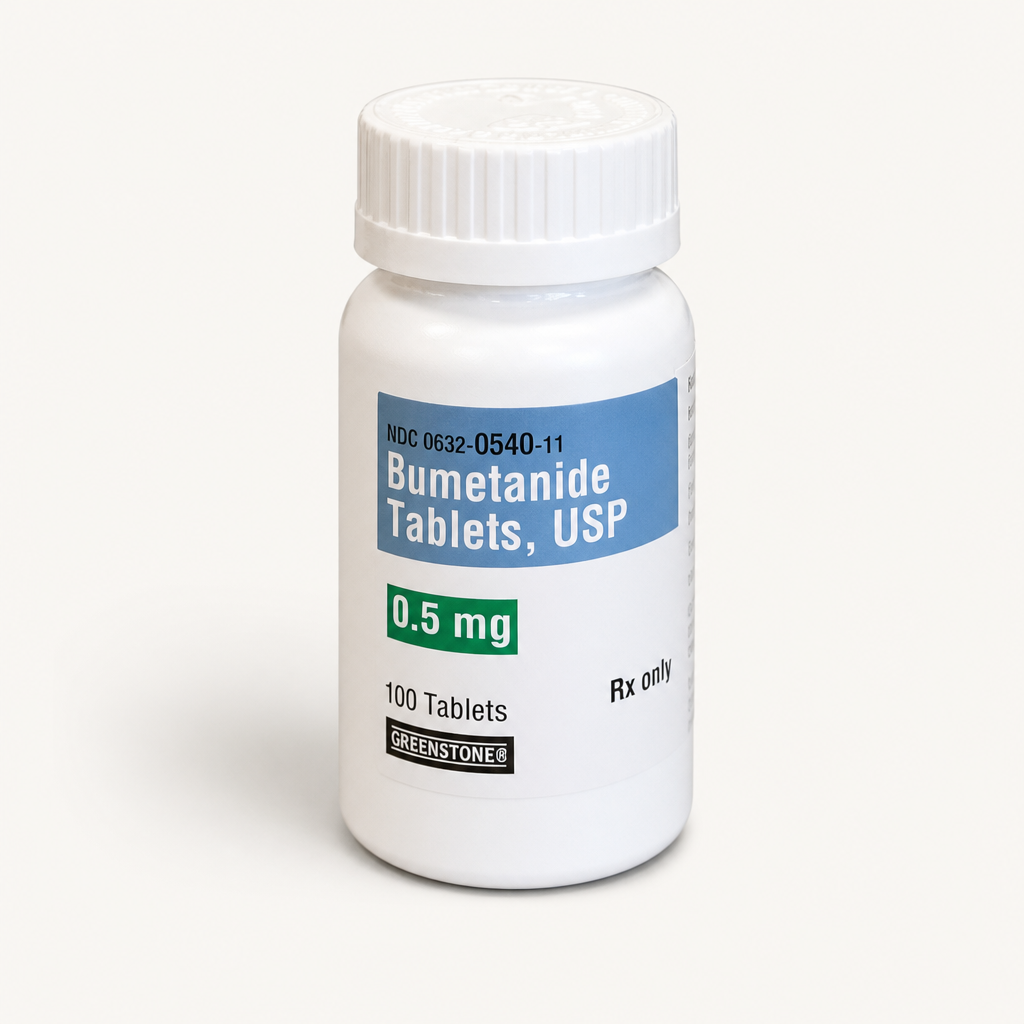
How It Works
Bumetanide works through a part of the kidney. It reduces fluid by:
- Blocking salt reabsorption: The medication prevents the kidneys from reabsorbing sodium (salt) and chloride into the bloodstream.
- Pulling water out: Because water naturally follows salt, the salt that remains in the kidney tubules pulls extra water along.
- Increasing urine production: This salt-and-water mixture is then sent to the bladder. You will notice an urge to urinate more frequently, which is the physical sign that the medication is removing the excess fluid from your tissues.
By flushing excess salt and water from your body, bumetanide reduces fluid load and therefore pressure on your heart and blood vessels.
| Quick Facts | |
|---|---|
| Common Brands | Bumex, Enbumyst |
| Drug Class | Loop diuretic |
| Generic Status | Generic version available |
| Availability | Prescription only |
Dosing
Bumetanide is available in 0.5 mg, 1 mg, and 2 mg tablets, as well as in a nasal spray formulation or as an injection delivered by a healthcare provider.
- Typical dose: Most people take 0.5-2 mg once daily. For the nasal spray, the general dosage is one 0.5mg spray per nostril.
- Timing: Providers typically recommend taking bumetanide in the morning. Because it starts working within 30 to 60 minutes and increases urination for up to 6 hours, taking it early prevents you from having to get up and use the bathroom multiple times during the night.
- With or without food: You can take bumetanide with or without food. If bumetanide tablets cause an upset stomach, taking it with a meal is generally suggested. The nasal spray and injection formulations are not likely to interact with your gastrointestinal tract.
- Consistency: It is generally advisable to take the medication at the same time each day to help keep your fluid levels stable, even if you feel well.
- Missed doses: If you miss a dose, take it as soon as you remember. However, do not take two doses at once or extra doses.
Note: Dosing information below is educational only. Your prescribing physician will determine your specific dose based on your individual health needs. Always follow your healthcare provider’s instructions for exact dosing.
Uses
FDA-Approved Uses
The FDA approves bumetanide for the treatment of edema associated with congestive heart failure, hepatic (liver) disease, and renal (kidney) disease.
Off-Label Uses
You may see bumetanide prescribed for uses that are not FDA-approved. This is a common and legal practice called off-label prescribing, where a doctor uses their clinical judgment to prescribe a drug for a different (but well-researched) purpose.
Bumetanide may be prescribed off-label for the following conditions:
- Hypertension (high blood pressure): While not a first-line treatment for blood pressure alone, it may be used off label in patients with both high blood pressure and significant fluid retention.
Side Effects
Because bumetanide is effective at removing fluid, most side effects are related to the change in your body’s water and mineral balance.
Common Side Effects
- Frequent urination
- Dizziness or lightheadedness (especially when standing up)
- Headache
- Muscle cramps or weakness
- Nausea or mild stomach upset
- Encephalopathy (in patients with pre-existing liver disease)
Serious Side Effects
Serious side effects are rare, but it’s important to know what to look for if they do occur. It’s generally accepted that you stop taking the medication and immediately call the doctor if you experience any of the following symptoms:
- Severe dehydration: Symptoms include extreme thirst, dark urine, dry skin, and confusion.
- Electrolyte imbalance: Low potassium or sodium can cause an irregular heartbeat, severe muscle pain, or seizures.
- Hearing changes: High doses can sometimes cause temporary ringing in the ears or hearing loss.
- Severe skin reactions: It is generally advisable to seek immediate medical attention if you develop a rash, peeling skin, or blisters (Stevens-Johnson syndrome).
- Low platelets: Standard guidelines typically recommend watching for unusual bruising or bleeding that won’t stop.
Call your doctor immediately if you experience any concerning or prolonged symptoms.
Pharmacist Tips
The Rise Slowly Rule
To avoid fainting or dizziness, take your time when standing up. Move slowly to give your blood pressure time to adjust.
Monitor Your Weight
Standard guidelines suggest weighing yourself every morning after using the bathroom but before eating. If you experience a sudden weight gain or loss, contact your doctor.
Sun Protection
This medication can make your skin more sensitive to sunlight. It is generally advised to wear sunscreen and protective clothing when outdoors.
Watch For Gout
Diuretics can sometimes raise uric acid levels. If you have a history of gout, providers typically suggest watching for sudden pain and swelling in your big toe or other joints.
Hydrate Safely
While the goal is to remove fluid, you should continue drinking water to stay hydrated. Ask your doctor exactly how much fluid you should drink each day, as many heart failure patients are on a specific fluid restriction.
Drug Interactions
Bumetanide can interact with several other common medications, which can either affect your kidneys or your blood pressure. Let your doctor know if you take:
- NSAIDs: These can stop bumetanide from working effectively and can increase the risk of kidney damage.
- Lithium: Bumetanide can cause lithium levels to rise to dangerous levels in the blood.
- Blood pressure pills: Taking other blood pressure medications with bumetanide can cause your pressure to drop too low.
- Digoxin: Low potassium caused by bumetanide can increase the risk of digoxin toxicity.
- Aminoglycoside antibiotics: Taking these together can increase the risk of permanent hearing damage.
Always give your doctor and pharmacist a complete list of all your medications, vitamins, and supplements to check for potential interactions.
FAQs
How long after taking an oral dose of bumetanide does the diuretic effect begin?
Most people feel the need to urinate within 30 to 60 minutes of taking the tablet. The effect usually peaks within 1 to 2 hours.
Should bumetanide be taken in the morning or at night?
In the morning. Taking it at night will likely make you wake up several times to use the bathroom, disrupting your sleep.
Does bumetanide interact with NSAIDs?
Yes. Over-the-counter pain relievers like Advil or Aleve can make bumetanide less effective and are generally not recommended for patients with heart or kidney issues.
Is bumetanide safe for those with a sulfa allergy?
It is generally advised to use caution. Bumetanide contains a sulfa component. While many people with a sulfa antibiotic allergy can tolerate it, discuss this with your doctor before starting.
Why does bumetanide include a boxed warning for water and electrolyte depletion?
Because it is potent, taking too much medication can lead to rapid water and electrolyte loss.
Why are patients taking bumetanide told to monitor their body weight daily?
Weight is the most accurate way to track fluid levels. Water weight changes much faster than fat or muscle weight. Sudden weight gain or loss is a warning sign that your fluid levels are not being controlled.
Does bumetanide interact with lithium used for bipolar disorder?
Yes. It can prevent the body from clearing lithium, which can lead to lithium poisoning. These two should only be used together under strict medical supervision.
Can taking bumetanide trigger a gout flare or elevate uric acid levels?
Yes. By removing water, the medication can cause uric acid to become more concentrated in the blood, which can lead to a painful gout attack.
Is it safe to consume alcohol while taking bumetanide?
You should generally avoid alcohol while taking bumetanide because it can increase the risk of dizziness and dehydration when combined with a diuretic.
Are potassium or magnesium supplements routinely required for patients taking daily bumetanide?
Often, yes. Because bumetanide flushes these minerals out, many patients need supplements or a specific diet to keep their levels in a safe range. Discuss any supplementation with your doctor.
Comparable Medications
Furosemide, Torsemide, or Thiazides?
Here are some potential alternatives to bumetanide:
Furosemide
From $26.99
Bumetanide is about 40 times more potent than furosemide. This means 1 mg of bumetanide provides roughly the same effect as 40 mg of furosemide. Bumetanide can be better absorbed than furosemide in patients with severe swelling.
Torsemide
From $24.99
Torsemide lasts a bit longer in the body compared to bumetanide. The choice usually depends on your specific condition and how you respond to the drugs.
Hydrochlorothiazide
From $25.99
HCTZ is a thiazide diuretic. It is much milder and is typically used for high blood pressure rather than severe fluid buildup. Bumetanide is reserved for more significant edema or other conditions.
Spironolactone
From $26.99
Spironolactone is a potassium-sparing diuretic. Unlike bumetanide, it helps the body keep potassium. Doctors can prescribe these two together to balance each other out.
We Have Bumetanide in Stock. Get Yours Today!
Important: Information on this page is for educational purposes only. Prescribing decisions are made by independent, licensed providers. TelyRx operates technology-enabled pharmacies and a telehealth platform that connects patients with licensed providers. Prescriptions, when provider-approved and issued, are filled and shipped by TelyRx-affiliated pharmacies. We do not employ physicians or make prescribing decisions. Learn more about our editorial standards here.