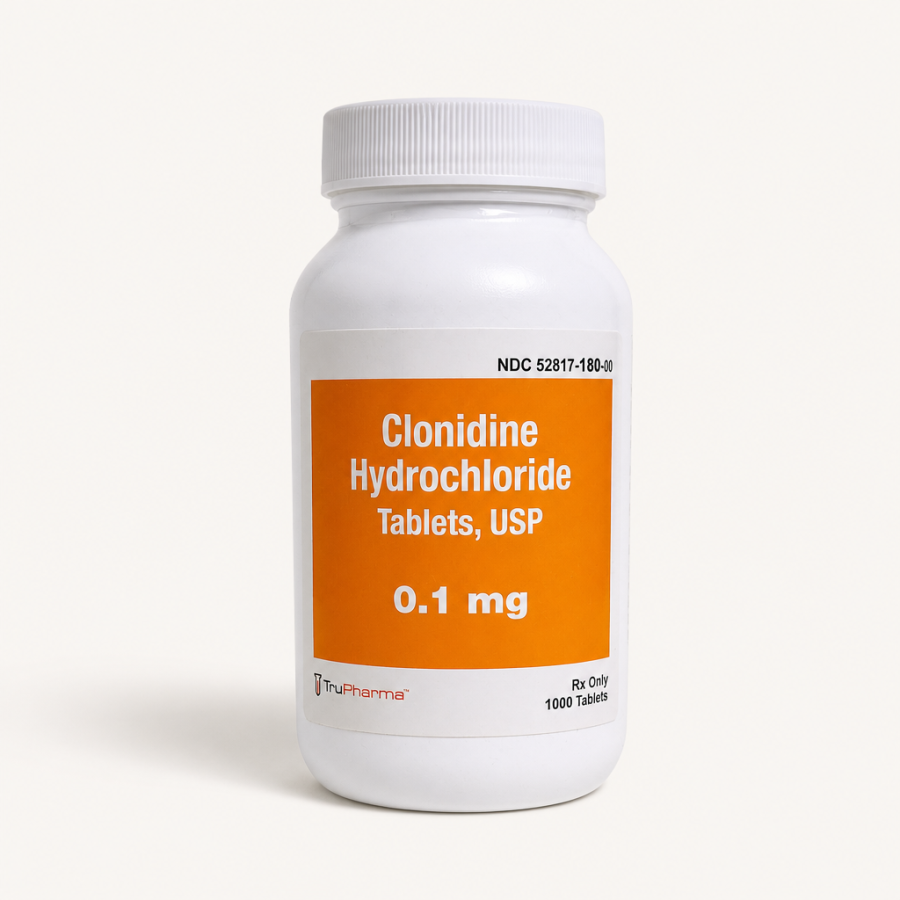
Clonidine tablets are used to lower high blood pressure by relaxing blood vessels and reducing the workload on the heart. This medication works by acting on the brain to decrease nerve signals that tighten blood vessels, helping blood flow more easily. It is often prescribed when other blood pressure medicines are not enough or as part of a combination therapy.
Clonidine tablets are a prescription medication used to manage high blood pressure, a condition that increases the risk of heart disease, stroke, and kidney problems. Unlike many blood pressure drugs that act directly on the heart or blood vessels, clonidine works in the brain by stimulating alpha-2 receptors, which reduces nerve signals that cause blood vessels to tighten. This leads to lower blood pressure and decreased strain on the heart. Because of its unique mechanism, clonidine is often used when other medications do not provide adequate control or as part of a multi-drug regimen.
Clonidine is usually taken twice daily, but patients should follow their doctor’s instructions carefully. Abruptly stopping clonidine can cause rebound hypertension, which may be severe, so any dose changes should be gradual and under medical supervision. Clonidine can cause sedation and dry mouth, so patients should be aware of these effects and avoid activities requiring alertness until they know how the medication affects them.
Clonidine Tablets Side Effects
Common side effects of clonidine include dry mouth, drowsiness, constipation, and fatigue. Some patients may experience dizziness or low blood pressure, especially when standing up quickly. Serious but less common effects include slow heart rate, severe low blood pressure, and rebound hypertension if the medication is stopped suddenly. Patients should report symptoms such as fainting, chest pain, or irregular heartbeat immediately. Regular monitoring and gradual dose adjustments help reduce these risks.
Consumer Information Use and Disclaimer
This information should not be used to decide whether or not to take this medicine or any other medicine. Only a healthcare provider has the knowledge and training to decide which medicines are right for you. TelyRx does not endorse any medicine as safe, effective, or approved for treating any patient or health condition. This is only a limited summary of general information about the medicine’s uses from the patient education materials and is not intended to be comprehensive. This limited summary does NOT include all information about the possible uses, directions, warnings, precautions, interactions, adverse effects, or risks that may apply to this medicine. This information is not intended to provide medical advice, diagnosis or treatment and does not replace information you may receive from your healthcare provider. For a more detailed summary of information about the risks and benefits of using this medicine, please review the entire patient education information you receive with the medication.
Company Reviews
200,000+ Patients Served
★★★★★
Service is quick and reliable
The service is quick and reliable. I appreciate the fast delivery and the quality of the products. Highly recommend!
Joy H, 34
✓Verified
★★★★★
Quick accurate delivery
Expedited quick accurate delivery. And LEGIT. And a relief for meds I need to live. Thank you for making this process so easy.
Fred C, 44
✓Verified
★★★★★
Quick delivery and fair prices
Quick delivery and fair prices. The ordering process was straightforward and the customer service was excellent throughout.
JP D, 61
✓Verified
★★★★★
Fast, courteous, effective
Fast, courteous, effective service. Everything arrived on time and as expected. Will definitely use again.
Tina A, 45
✓Verified
How TelyRx Works
It's as Easy as 1, 2, 3
1: Request Your Medication
Find your medication and customize your order
2: Doctors Review Online
A licensed provider checks your request within hours
3: TelyRx Pharmacy Delivers
Fast, discreet shipping from our U.S.-based pharmacies
Clonidine Tablets Prices
Save Time and Money
Quantity
Price
0.1 MG Tablets / 60 tablets
Save $10.00
$29.99
$0.50 a tablet
0.2 MG Tablets / 60 tablets
Save $5.00
$34.99
$0.58 a tablet
0.3 MG Tablets / 60 tablets
$39.99
$0.67 a tablet
0.1 MG Tablets / 180 tablets
Save $39.99
$79.98
$0.44 a tablet
0.2 MG Tablets / 180 tablets
Save $29.99
$89.98
$0.50 a tablet
0.3 MG Tablets / 180 tablets
Save $19.99
$99.98
$0.56 a tablet
The TelyRx Difference
Healthcare Shouldn't Be Complicated
Others
100% online
No appointments, memberships, or questionnaires
Doctor reviews your request within hours
Doctor fee per order, not product
Delivery within one business day
Provides 24/7 pharmacist support
Other Treatments - Placeholder
Company FAQs
What to Know About TelyRx
What is TelyRx and how does it work?
TelyRx.com is a digital platform that connects you with a provider allowing you to seek a prescription for medications via telehealth. Once you receive a prescription and the order is processed, TelyRx pharmacy delivers your medications directly to your doorstep through mail or courier services.
Is it safe to order medications online?
Reputable pharmacies like TelyRx prioritize safety and adhere to strict quality standards. We connect you with a licensed healthcare professional to help you get a valid prescription. We verify the prescription and provider before we ship prescription medications. To minimize risk, we carry only non-controlled substances. Additionally, we have encrypted payment systems and maintain your privacy by protecting your personal information.
How long does it take to receive my order?
The delivery time will vary based on the shipping method you choose. We can get it there as soon as next day depending on when your order is placed. We provide an estimated delivery time frame during the checkout process.
How do I get prescribed a medication if my doctor is not in the TelyRx system?
TelyRx offers a quick and easy way to obtain a prescription by using telehealth. Your doctor doesn't need to be in the TelyRx system. The providers who use our site review the information that you certify is accurate, and then, relying on that information write a prescription for medicine that helps with what you're going through, if they deem it appropriate to do so in their professional judgement.
How can I transfer my prescription from my doctor?
TelyRx provides patients with a telehealth service that allows a patient to receive a prescription upon approval from of the healthcare professionals that have partnered with us. We also offer the opportunity to for a physician to write a prescription through our platform so ask them to partner with us! If you have a paper prescription, it needs to be scanned and uploaded in the TelyRx system we will take the transfer from there.