
Last year saw record numbers of Americans traveling during the holidays, with almost 82 million traveling for Thanksgiving and 122 million traveling for Christmas, according to estimates from AAA. No doubt at least somewhat related to the surge in holiday travel, the flu caused about 51 million illnesses in a single season, according to the CDC.
Holiday travel brings busy airports and packed schedules, making it easy to catch a respiratory virus like the flu, COVID-19, or the common cold. These illnesses often spike during the winter months. But they’re not the only way you might get sick during holiday travel, as anyone who’s dealt with headaches or unwelcome GI issues can attest.
Learn how to give yourself the gift of health this holiday season and seven strategies that will keep you feeling merry — in body and spirit — all season long.
Jab Before You Jingle
Vaccinations protect you before your bags are even packed. Health officials typically recommend getting a seasonal flu shot and an updated COVID-19 vaccine in the fall. That’s because it generally takes the body a few weeks to build up immunity after receiving a vaccine. If possible, try to schedule your vaccines well before any holiday travel.
Because viruses are always mutating, these vaccines are reformulated each year to try to target newer or more prevalent strains. While vaccines may not prevent every single infection, they can make symptoms significantly less severe if you do catch the flu or COVID-19.
For adults 75 or older, or those over 50 with chronic health conditions, an RSV vaccine may also be recommended to provide additional protection during the holiday season.
Pack Your Pharmacy (In Case Santa Brings The Sniffles)
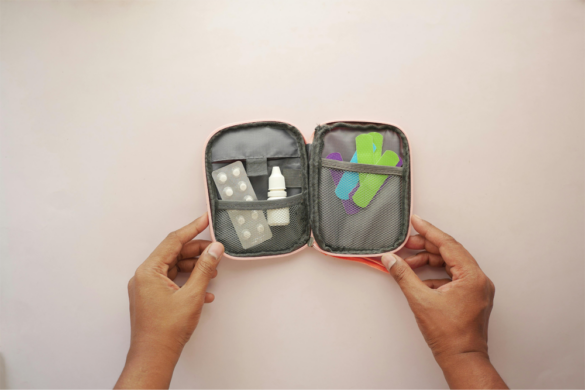
If you don’t already have a travel first-aid kit, the holidays are the perfect time to put one together. That way, if you do get sick, you’ll have what you need on hand, sparing you the trouble of searching for a pharmacy nearby. Consider packing the following wellness items:
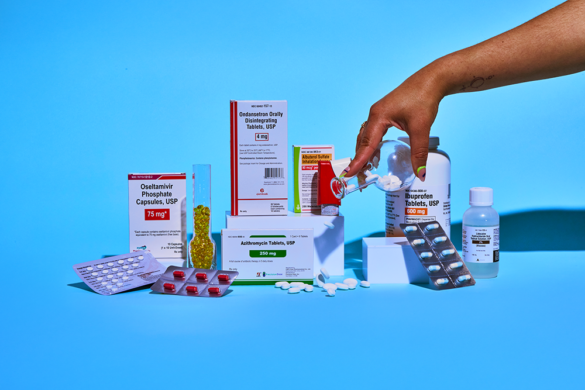
- Tamiflu (oseltamivir): If you think you may have the flu, a provider may prescribe this prescription flu medication that can significantly reduce both the intensity and duration of your flu symptoms. It works best when you take it within the first two days.
- Cold medicine: Cough suppressants, oral decongestants, and saline nasal sprays can help manage congestion and sore throats.
- Allergy medicine: Traveling introduces unfamiliar allergens, such as indoor dust or your nephew’s new cat. Packing antihistamines can help manage unexpected allergy flare-ups.
- Medicated tissues: Tissues infused with lotion or soothing ingredients may prevent raw, irritated skin around your nose from any holiday sniffles.
- Gastrointestinal relief: Bring antacids for upset stomachs and indigestion. You’ll be grateful for them after the Thanksgiving feast.
- Epinephrine (EpiPen): If you have severe allergies to specific foods or insect stings, always pack your EpiPen. Even if you know how to avoid triggers at home, things can be very different when you’re away.
- Basic first aid: Be sure to pack bandages, antibacterial wipes, and a thermometer to monitor for fever.
Ready to add some medications to your travel kit?
Wash Your Hands To Give Germs the Cold Shoulder
Properly washing your hands is one of the most effective things you can do to prevent yourself from getting sick. Viruses and germs may survive on surfaces for several days, meaning you can easily pick them up from touching your airplane armrests, hugging your young niece, or browsing products at the mall on Black Friday. By regularly and thoroughly washing your hands, you prevent these innocent moments from turning into a holiday cold or flu.
Here’s the right way to wash your hands, according to the CDC:
- Wet your hands with clean, running water.
- Apply soap and scrub the backs of your hands, between your fingers, and under your nails.
- Keep scrubbing for at least 20 seconds.
- Rinse your hands with clean water.
- Dry your hands with a clean towel or air dryer.
Here a few more tips to keep in mind to keep your hands germ-free:
- Wash your hands before preparing or eating food, and immediately after using the restroom or touching garbage.
- If soap and water are unavailable, use an alcohol-based hand sanitizer containing at least 60% alcohol.
- To further reduce your exposure to people who may be sick, wear a face covering over your mouth and nose in crowded spaces.
Balance Your Plate, Save Your Stomach
Holiday tables are often set with thick gravies, roasted meats, and sweet pies. Let’s not forget all those cookies you made “for Santa,” either. While these rich foods are all certainly delicious, they can wreak havoc on your gut — especially when you consume them in large amounts, as people often do during the holidays.
High-calorie, high-fat foods are notorious for slowing down digestion, which may lead to heartburn, bloating, and sluggish bowels. Holiday stress (like what to get your picky relative for Christmas) and the sudden change in your diet can cause conditions like irritable bowel syndrome (IBS) or acid reflux to flare up.
This doesn’t mean you can’t indulge during the holidays. Just remember that a little moderation can go a long way. Balancing your plate when you can will keep your digestive system happy. Try these tips:
- Choose fiber-rich foods, such as roasted vegetables and whole grains, to prevent constipation and promote a healthy microbiome.
- Fill your plate with nutrient-dense veggies and lean proteins first. Then add smaller portions of sweets or rich casseroles.
- Incorporate immunity-supporting foods into your holiday recipes, such as eggs, fruits, leafy greens, onion, garlic, and turmeric.
- Make healthy swaps that still satisfy your sweet tooth, such as a plate of your favorite berries and a smaller slice of pie.
Eggnog Responsibly

It turns out the cold and flu aren’t the only thing that peaks during the holiday season. Alcohol consumption does too, according to research.
A celebratory cocktail may seem harmless, but drinking heavily can negatively affect your body’s ability to fight off illness. Excessive alcohol consumption disrupts the delicate balance of bacteria in your gut. This imbalance can erode the protective mucus lining of the stomach, leading to inflammation and indigestion. What’s more, drinking alcohol can be dehydrating, increasing your risk of headache and stomach issues.
Follow these tips to protect your digestive and immune health during the holidays:
- Drink in moderation.
- Alternate alcoholic beverages with water.
- Opt for a merry mocktail instead.
Walking in a Wellness Wonderland
While cleaning the dishes can feel like a workout, resist the urge to plop back down on the sofa after your holiday feast. Staying active during holiday travel can help prevent illness in a variety of ways:
- Physical activity helps health overall, which in turn aids the body in fighting illness. But it can also help move bacteria out of your lungs, reducing your chances of catching a cold or flu.
- Light exercise after a heavy meal, such as a brisk walk, may stimulate digestion and reduce bloating and constipation.
- Exercise releases endorphins, which can help you manage holiday-related stress.
Try these easy holiday exercise ideas:
- Take a quick walk around the block or apartment complex after you eat.
- Park further away when you go to the mall or grocery store.
- Go for an evening stroll to view holiday decorations.
- Challenge your family to a plank or push-up contest.
Sleep Tight For a Silent (and Healthy) Night
Just like Santa needs his reindeer, your immune system needs regular, high-quality sleep. While you’re off in dreamland, your body’s busy at work producing immune cells and proteins called cytokines. Together, these help your immune system fight infection and inflammation. Without sufficient sleep, your body can’t produce as many of them, making you significantly more likely to get sick (or sicker) after exposure to a common cold virus.
How much sleep is enough? Most adults require seven to nine hours of sleep to feel recharged. However, traveling and sleeping in unfamiliar environments (like your in-law’s couch) can disrupt normal sleep patterns, increasing your risk of infection.
Here’s how to get enough shuteye while away from home:
- Pack earplugs and a sleep mask to block out unfamiliar noises and lights in guest bedrooms or hotels.
- Turn off electronic devices at least 30 minutes before bedtime to relax your mind.
- Stop consuming heavy meals, caffeine, or alcohol past the afternoon.
- Consider taking sleep supplements if you struggle to adjust to a different time zone.
Doctor’s Orders, Delivered (No Sleigh Required)
Sometimes, despite taking every precaution, you can still get sick during your travels. But don’t worry; you don’t have to turn into the Grinch while sitting in a crowded urgent care clinic. Instead of stressing out over where and how to get a prescription when you’re away from home, you can easily access treatment online with a trusted digital pharmacy platform like TelyRx. Here’s how it works:
- After browsing the TelyRx catalog of FDA-approved medications for cold, flu, heartburn, and more, you can select your desired medication and complete a health attestation.
- If you need a new prescription, TelyRx arranges that for you. An independent provider licensed in your state reviews your information to ensure the medication is safe for you.
- If approved, the provider issues a new prescription and one of TelyRx’s pharmacies fulfills your order and ships your medication directly to you.
Your Next Steps
Getting sick during holiday travel can ruin any mood, but with a bit of preparation, you can take steps to avoid being knocked out with a cold or upset stomach. Remember these tips to support your immune system this season:
- Get your flu and COVID-19 vaccines.
- Bring your travel medication and first aid kit.
- Wash your hands and pack hand sanitizer.
- Balance your plate and your beverage consumption.
- Squeeze in some light exercise when you can.
- Gift yourself a good night’s sleep.
If an unexpected illness disrupts your trip, visit TelyRx to explore your treatment options. With FDA-approved medication shipped right to your door, you can get back to enjoying the season as soon as possible.
Research & References
Diaz, A. (2025). Nearly 82 Million Americans Projected to Travel over Thanksgiving. AAA. https://newsroom.aaa.com/2025/11/aaa-thanksgiving-travel-forecast-2025/
Diaz, A. (2025). Year-End Holiday Travel Expected to Set New Record. AAA. https://newsroom.aaa.com/2025/12/aaa-year-end-holiday-travel-forecast/
Centers for Disease Control and Prevention (CDC). (2026). About Estimated Flu Burden. https://www.cdc.gov/flu-burden/php/about/index.html
Centers for Disease Control and Prevention (CDC). (2024). About Handwashing. https://www.cdc.gov/clean-hands/about/index.html
Centers for Disease Control and Prevention (CDC). (2024). About Sleep. https://www.cdc.gov/sleep/about/index.html
Centers for Disease Control and Prevention (CDC). (2026). How to have healthier Holidays in 1-2-3!. https://www.cdc.gov/healthy-weight-growth/about/healthier-holidays-in-1-2-3.html
Feuth, T. (2024). Interactions between sleep, inflammation, immunity and infections: A narrative review. Immunity, Inflammation and Disease, 12(10), e70046. https://doi.org/10.1002/iid3.70046
Kushnir, V., & Cunningham, J. A. (2014). Event-specific drinking in the general population. Journal of Studies on Alcohol and Drugs, 75(6), 968–972. https://doi.org/10.15288/jsad.2014.75.968
Lewis, A., Philip, K. E. J., Lound, A., Cave, P., Russell, J., & Hopkinson, N. S. (2021). The physiology of singing and implications for ‘Singing for Lung Health’ as a therapy for individuals with chronic obstructive pulmonary disease. BMJ Open Respiratory Research, 8(1), e000996. https://doi.org/10.1136/bmjresp-2021-000996
Malesza, I. J., Malesza, M., Walkowiak, J., Mussin, N., Walkowiak, D., Aringazina, R., Bartkowiak-Wieczorek, J., & Mądry, E. (2021). High-Fat, Western-Style Diet, Systemic Inflammation, and Gut Microbiota: A Narrative Review. Cells, 10(11), 3164. https://doi.org/10.3390/cells10113164
MedlinePlus. (2026). Exercise and immunity. https://medlineplus.gov/ency/article/007165.htm
MedlinePlus. (2026). Oseltamivir. https://medlineplus.gov/druginfo/meds/a699040.html
Pormohammad, A., Zarei, M., Ghorbani, S., Mohammadi, M., Razizadeh, M. H., Turner, D. L., & Turner, R. J. (2021). Efficacy and Safety of COVID-19 Vaccines: A Systematic Review and Meta-Analysis of Randomized Clinical Trials. Vaccines, 9(5), 467. https://doi.org/10.3390/vaccines9050467
Sarkar, D., Jung, M. K., & Wang, H. J. (2015). Alcohol and the Immune System. Alcohol Research: Current Reviews, 37(2), 153–155. https://pmc.ncbi.nlm.nih.gov/articles/PMC4590612/
Singh, D. N., Bohra, J. S., Dubey, T. P., Shivahre, P. R., Singh, R. K., Singh, T., & Jaiswal, D. K. (2023). Common foods for boosting human immunity: A review. Food Science & Nutrition, 11(11), 6761–6774. https://doi.org/10.1002/fsn3.3628
Singh, K. K., Ghosh, S., Bhola, A., Verma, P., Amist, A. D., Sharma, H., Sachdeva, P., & Sinha, J. K. (2024). Sleep and Immune System Crosstalk: Implications for Inflammatory Homeostasis and Disease Pathogenesis. Annals of Neurosciences, 32(3), 196–206. https://doi.org/10.1177/09727531241275347
Trombetta, C. M., Kistner, O., Montomoli, E., Viviani, S., & Marchi, S. (2022). Influenza Viruses and Vaccines: The Role of Vaccine Effectiveness Studies for Evaluation of the Benefits of Influenza Vaccines. Vaccines, 10(5), 714. https://doi.org/10.3390/vaccines10050714
You, M. (2023). Role of Physical Activity in the Prevention and Treatment of Influenza: A Review. Sports Medicine – Open, 9(1), 115. https://doi.org/10.1186/s40798-023-00660-x
Zhang, P. (2022). Influence of Foods and Nutrition on the Gut Microbiome and Implications for Intestinal Health. International Journal of Molecular Sciences, 23(17), 9588. https://doi.org/10.3390/ijms23179588