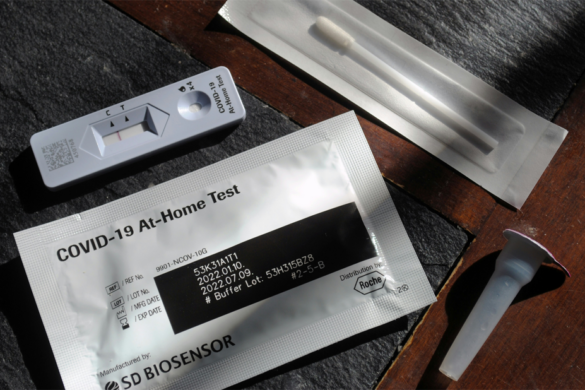




If you’re reading this, chances are you — or someone you care about — just got hit with a wave of chills, body aches, and fever. Hello, flu (although it’s also possible you have COVID, RSV, or bronchitis, as they all share similar symptoms).
The flu (short for influenza) is a highly contagious respiratory illness caused by viruses that affect the nose, throat, and lungs. Around 8% of Americans get the flu every year. While most people recover fully, the flu can be an exhausting and uncomfortable experience.
That’s why you’re probably wondering how long your misery will last, and more importantly, what to expect in the days to come. Understanding the typical day-by-day progression of flu symptoms can help you mentally prepare, manage your discomfort, and know when you ought to seek medical care.
In this guide, we break down the general timeline of flu symptoms for the 2026-2027 season, as well as share steps you can take at each stage to find relief.
Caught The Flu? What To Expect Next
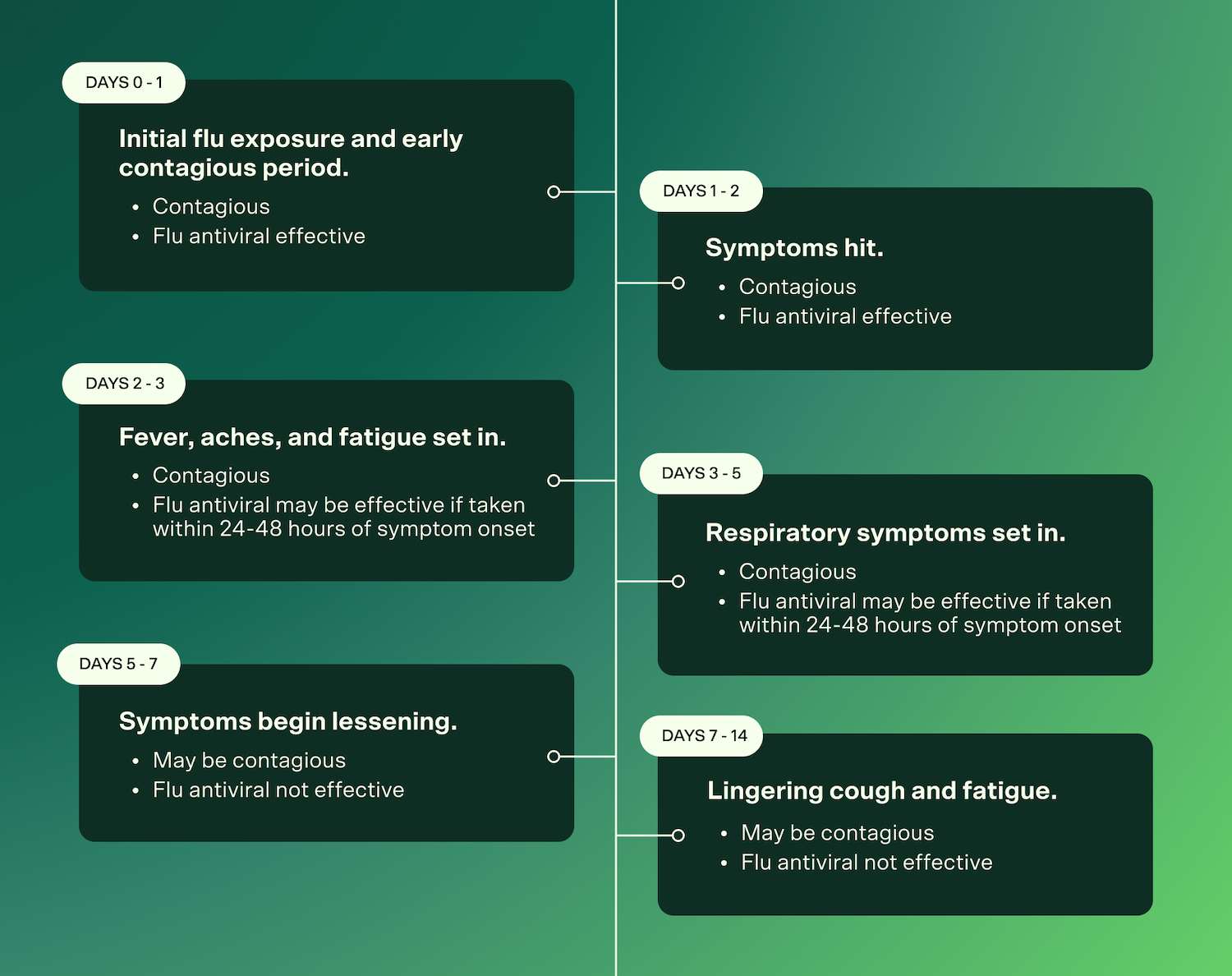
People typically catch the flu when an infected person coughs, sneezes, or talks near them, propelling tiny, virus-laden droplets into the air. These droplets can be inhaled into your mouth or nose. It’s also possible to get the flu by touching a contaminated surface and then touching your own eyes, nose, or mouth.
Some flu seasons are worse than others, and everyone’s immune system is a little bit different. That said, most flu symptoms progress through a fairly predictable cycle. The standard duration of a flu lasts up to two weeks, from the day you’re first exposed to when your symptoms finally end.
| Phase | Contagious? | Flu Antiviral Effective? | |
| Days 0-1 | Exposure and early contagious period | Yes | Yes |
| Days 1-2 | Symptoms hit | Yes | Yes |
| Days 2-3 | Fever, aches, and fatigue set in | Yes | Maybe (if taken within 24-48 hours of symptom onset) |
| Days 3-5 | Respiratory symptoms set in | Yes | Maybe (if taken within 24-48 hours of symptom onset) |
| Days 5-7 | Symptoms begin lessening | Maybe | No |
| Days 7-14 | Lingering cough and fatigue | Maybe | No |

Days 0-1: Exposure and Early Contagiousness
- Contagious: Yes
- Return to School/Work: Not recommended
The earliest stage of the flu, or Day 0, is the point of exposure. In other words, when you first come into contact with the virus. At this stage, the virus has just entered your system and is beginning to multiply within your nasal passages and throat. The incubation period for influenza averages about two days, but it can last up to four days.
What makes this stage particularly tricky is that people typically feel asymptomatic. At this point, you are usually unaware that you have been infected and are about to get sick. However, despite feeling fine, you are already contagious at this stage. People can spread the flu up to one day before they experience any symptoms themselves.
What You Can Do
You may not have any symptoms at this stage, so what you do next will depend on whether you know you’ve been exposed to the virus. If a family member, friend, or coworker has just come down with the flu and you’ve been in close contact, it’s advisable to monitor for symptoms and take precautions to reduce the chance of spreading infection if you become sick.
Here’s what to do:
- Wash your hands often with soap and water.
- Avoid contact with others so you don’t spread the flu.
- Monitor yourself for any symptoms.
- Stock up on cold meds early so you’ll be ready if symptoms do hit.
- Get medication like oseltamivir (Tamiflu) as soon as possible.
- Contact your healthcare provider to discuss preventative measures if you’re in a high-risk group, such as if you are pregnant, age 65 or older, or have severe obesity (BMI 40 or higher), diabetes, a weakened immune system, or chronic heart, lung, or kidney problems.

Days 1-2: Onset of Symptoms
- Contagious: Yes
- Return to School/Work: Not recommended
Feel like you went from feeling perfectly fine to feeling incredibly sick? That’s a hallmark sign you have the flu. Unlike the common cold, the flu comes on fast. You might go to bed feeling fine, but wake up feeling terrible. Or, you might wake up feeling normal, but as the day goes on, you’re suddenly hit with symptoms like:
- Fever
- Muscle or body aches
- Chills
- Weakness or fatigue
- Headache
Even though it doesn’t feel like it, this sudden onset of symptoms is a good thing. It’s caused by your immune system launching an aggressive response to the virus.
What You Can Do
You can manage symptoms at home with plenty of rest and over-the-counter fever and pain relievers. This can be a good option if you have mild to moderate symptoms and you’re in generally good health. However, it may take much longer for the virus to run its course.
If you’d like to experience relief sooner, another option is to take a prescription flu antiviral. These medications can reduce both the severity of your symptoms and the amount of time you feel sick:
- Oseltamivir (Tamiflu)
- Xofluza
- Zanamivir (Relenza)
- Peramivir (Rapivab)
These flu medications are most effective when you start taking them within 24 to 48 hours after symptoms begin. It’s recommended to act quickly if you want to get Tamiflu or another antiviral to treat your symptoms. These medications are especially recommended for people with severe flu symptoms or those at higher risk of developing flu-related complications. Complications can include pneumonia, sinus infections, and ear infections. People who are pregnant or age 65 or older are among those at higher risk for serious flu complications.

Days 2-3: Pain and Discomfort Symptoms
- Contagious: Yes
- Return to School/Work: Not recommended
By the time you reach Days 2 and 3, the virus has fully taken hold and may have started to spread from your upper respiratory tract into your lower respiratory tract. This phase is often described as the worst stage of the flu, when symptoms are at their most intense. You’re also most contagious during this time. Here’s what to expect:
- A high fever and intense chills
- A dry, persistent cough (thanks to the spread of the virus into your airways)
- Severe muscle and body aches that make it hard to get out of bed
- Serious fatigue as your body fights off the virus
What You Can Do
These symptoms are your body’s way of telling you that you need to rest so that it may exert more energy combating the virus. If you’re still within the first 48 hours of your symptoms starting, there’s still time to begin an antiviral medication like Tamiflu or Xofluza.
If that window has passed, you can still feel better with the help of non-prescription medicines and at-home remedies. Those taking antiviral medication may find additional relief from the following remedies as well:
- Over-the-counter (OTC) pain relievers and fever reducers: Ibuprofen and acetaminophen can help lower your fever and relieve body aches.
- Rest: The more you can sleep or lie down, the better.
- Fluids and electrolytes: Stay hydrated by drinking plenty of fluids, or eating fluid-rich foods like chicken noodle soup. Research shows it may actually help with the flu.
- Heated blankets: A heated blanket can help keep you warmer if you have the chills.

Days 3-5: Respiratory Symptoms
- Contagious: Yes
- Return to School/Work: Not recommended
Once you’ve pushed through the initial wave of fever and body aches, full-body flu symptoms generally begin to shift to respiratory symptoms, including:
- Coughing
- Sneezing
- Sore throat
- Stuffy or runny nose
These symptoms change as the inflammation spreads throughout your nasal passages, trachea, and bronchi. Coughs may develop at this phase, or turn wetter and produce mucus. You may also find yourself developing a hoarse voice.
What You Can Do
At this point, a flu antiviral will not be as effective, but it may still help reduce the length of your flu. Ask your healthcare provider if it might still be a good treatment option for you.
During this stage of the flu, your focus should shift to soothing your respiratory tract:
- Consider OTC decongestants, cough suppressants, cough drops, and throat sprays.
- Calm your sore throat with warm liquids, like tea with honey.
- Avoid smoking or drinking alcohol.
- Continue to rest as much as you can.
- Ease coughing with a humidifier to add moisture to the air.

Days 5-7: Easing of Symptoms
- Contagious: Maybe, but reducing
- Return to School/Work: Maybe
By Days 5 through 7, most people reach a turning point as the immune system shifts from defending itself against the flu to recovering from the flu. During this stage, you’ll likely still feel unwell, but should notice a significant improvement in symptoms. For example, you should no longer have a fever and experience less congestion.
What You Can Do
Beginning antiviral treatment at this stage is not effective. Instead, it is recommended to focus on symptom management techniques that gave you relief, such as drinking warm tea, using a humidifier, and resting. At this stage, per CDC guidelines, you may also be well enough to return to work or school when both of the following are true for at least 24 hours:
- Your symptoms have continued to get better.
- You have stayed fever-free without taking any fever-reducing medications.
It is still recommended to exercise some caution, especially if you work closely with high-risk groups, like older adults or pregnant women. Consider wearing a N95 mask and keeping a safe distance from others for the first few days.
If you feel ready to resume exercising, it’s best to take it slow. Your body is still recovering and can tire easily, so stick to gentler workouts like long walks instead of HIIT training.

Days 7-14: Lingering Symptoms
- Contagious: Maybe, but reducing
- Return to School/Work: Maybe
The majority of flu symptoms come and go within 8 days, but there are a few that can continue to stick around for a few weeks, like coughing and fatigue. As long as your symptoms are getting better and you’ve been fever-free without the use of medication for at least 24 hours, you should be safe to return to work or school. While your lingering symptoms persist, continue keeping a safe distance from other people and make sure to cover your mouth when sneezing or coughing. You can still be contagious for up to seven days after your symptoms first appeared.
If your symptoms haven’t gotten better, or if your fever has returned, contact a healthcare provider. The flu can cause complications like pneumonia or lead to another infection. These can become serious if not treated quickly.
What You Can Do
Now that you’re on the mend, do not force yourself to jump back into a normal routine too quickly. Focus on the following:
- Continue taking OTC medications as needed for cough or other lingering symptoms.
- Get a good night’s sleep.
- Keep drinking plenty of fluids.
- Eat nourishing foods.
- Gradually increase the intensity of your exercise.
How Long Is The Flu Contagious?
People with the flu are most contagious during the first three days of illness, according to the CDC. You may be contagious up to one day before symptoms begin and up to seven days after they’ve begun. People with weakened immune systems may be contagious for longer periods.
If you live or work closely with others, it’s recommended to be cautious as long as you’re still symptomatic, even if seven days have passed since you first got sick. Cover your mouth while coughing, sneeze into a tissue or your elbow, wash your hands often, and consider wearing a mask. It’s also a good idea to disinfect any surfaces you touch regularly.
When To Take Antiviral Flu Treatment
Timing is everything when it comes to prescription antiviral flu medications. For these medications to be most effective, they should be started within the first 1 to 2 days (or 24 to 48 hours) after your symptoms begin. When taken within this window, antivirals can shorten the flu, make your symptoms less intense, and potentially reduce the risk of complications.
These drugs include:
- Oseltamivir (Tamiflu)
- Xofluza
- Zanamivir (Relenza)
- Peramivir (Rapivab)
If you’re unsure if you have the flu, an at-home flu test may help detect the flu and guide your next steps.
Getting Flu Treatment Fast & Easy
To work well, flu antivirals need to be taken ASAP, ideally, within 24 to 48 hours of your first symptoms. With such a short window, there may not be time to wait for your primary care physician to have an appointment available. That’s where a digital pharmacy platform like TelyRx can help.
Online platforms often allow asynchronous prescription approval. For example, if you need a Tamiflu prescription, you may submit a request through TelyRx at any time. Within 16 hours, a provider licensed in your state will review your order and if approved, write a new prescription that TelyRx fills and ships to your door.
When considering any digital pharmacy platform, look for platforms that meeting the following criteria:
- Have LegitScript certification
- Use U.S. pharmacies
- Require prescriptions from licensed providers
- Offer U.S.-based support
- Prescribe FDA-approved medications
- Don’t have hidden fees or subscriptions
TelyRx holds LegitScript certification; operates two pharmacies in Clearwater, Florida and Irving, Texas; works with licensed providers in 48 states; has a catalog of 500+ FDA-approved medications for more than 60 conditions, and provides clear upfront pricing.
Your Next Steps
The flu is often a draining, multi-day ordeal, but knowing what to expect can make the process more bearable. From the sudden onset of symptoms to the lingering fatigue that can last for days, the virus demands that you slow down, rest, and prioritize your recovery.
Remember that early action is your best defense against the flu. If you experience a sudden fever or body aches, contact a healthcare provider immediately to see if an antiviral medication is right for you. Otherwise, focus on rest, hydration, and not getting other people sick. By giving your body the time and care it needs, you can weather the various stages of the flu and get back to feeling like yourself again.
Research Sources
Babizhayev, M., & Deyev, A. (2012). Management of the Virulent Influenza Virus Infection by Oral Formulation of Nonhydrolized Carnosine and Isopeptide of Carnosine Attenuating Proinflammatory Cytokine-Induced Nitric Oxide Production. American Journal of Therapeutics, 19(1), e25-e47. https://doi.org/10.1097/MJT.0b013e3181dcf589
Boktor, S. W., & Hafner, J. W. (2023). Influenza. StatPearls – NCBI Bookshelf. https://www.ncbi.nlm.nih.gov/books/NBK459363/
Centers for Disease Control and Prevention (CDC). (2026). About Influenza. https://www.cdc.gov/flu/about/
Centers for Disease Control and Prevention (CDC). (2026). Flu: What To Do If You Get Sick. https://www.cdc.gov/flu/takingcare/
Centers for Disease Control and Prevention (CDC). (2024). Pink Book Chapter 12: Influenza. https://www.cdc.gov/pinkbook/hcp/table-of-contents/chapter-12-influenza.html
Centers for Disease Control and Prevention (CDC). (2024). Signs and Symptoms of Flu. https://www.cdc.gov/flu/signs-symptoms/index.html
Centers for Disease Control and Prevention (CDC). (2026). Treating Flu with Antiviral Drugs. https://www.cdc.gov/flu/treatment/antiviral-drugs.html
Gaitonde, D. Y., Moore, F. C., & Morgan, M. K. (2019). Influenza: Diagnosis and Treatment. American Family Physician, 100(12), 751–758. https://www.aafp.org/afp/2019/1215/p751
MedlinePlus. (2024). Flu. https://medlineplus.gov/ency/article/000080.htm