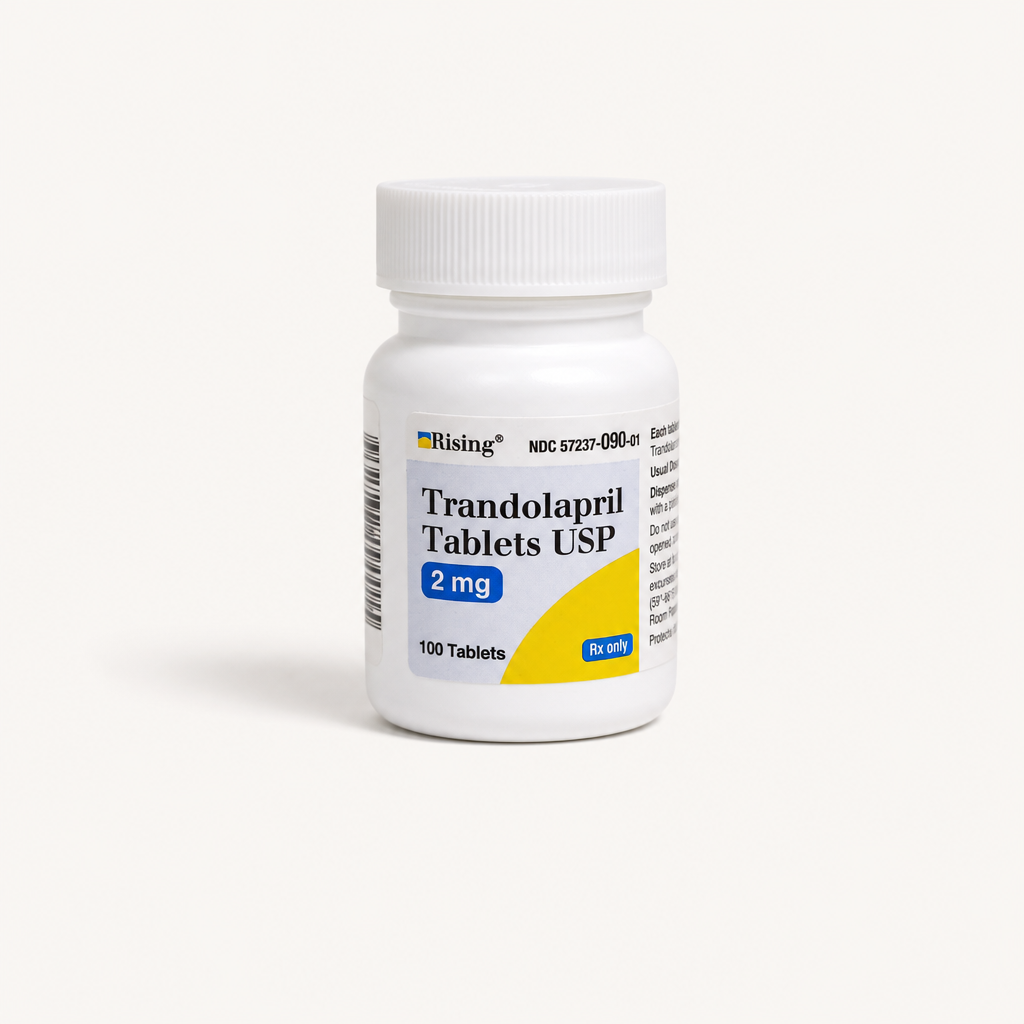
How It Works
Trandolapril works by blocking the angiotensin-converting enzyme (ACE). Your body naturally produces angiotensin I, a largely inactive amino acid peptide, which ACE converts into angiotensin II, a vasoconstrictor that causes blood vessels to narrow. By blocking the ACE, trandolapril helps keep the blood vessels dilated and relaxed.
By dilating blood vessels and increasing the space for blood to flow, the medication reduces pressure on the arterial walls. This means the heart does not need to pump as forcefully to move blood through the body.
| Quick Facts | |
|---|---|
| Common Brands | Mavik (largely discontinued) |
| Drug Class | Angiotensin-converting enzyme (ACE) inhibitor |
| Generic Status | Generic version available |
| Availability | Prescription only |
Dosing
Many patients begin taking trandolapril at a lower dose to allow their body time to adjust to the change in blood pressure. Providers may titrate or increase the dosage as needed.
- Hypertension: The typical starting dose for trandolapril for high blood pressure is 1 mg once daily. Based on the patient’s response, their provider may increase the dosage to 2 mg or 4 mg per day.
- Post-heart attack: Doctors usually begin post-heart attack patients at a dose of 0.5 mg to 1 mg per day. As long as the patient tolerates the medication, their provider may titrate their dose up to 4 mg per day.
- Consistency: Per standard guidelines, patients are advised to take trandolapril at the same time each day to maintain steady medication levels in their systems.
- Administration: Guidelines suggest swallowing the tablet whole with water, but it can be taken with or without food.
Note: The dosing information below is for educational purposes only. Your prescribing physician will determine your specific dose based on your individual health needs. Always follow your healthcare provider’s instructions for exact dosing.
Uses
FDA-Approved Uses
Trandolapril is FDA-approved to lower blood pressure in people with hypertension, either as standalone therapy or in combination with other medications like thiazide diuretics.
The drug is also FDA-approved to reduce the risk of death or hospitalization for patients who show signs of heart failure or left ventricular dysfunction after a heart attack.
Off-Label Uses
You may see trandolapril prescribed for uses that are not “FDA-approved.” This is a very common and legal practice called “off-label” prescribing, where a doctor uses their clinical judgment to prescribe a drug for a different (but well-researched) purpose.
Common off-label uses for trandolapril currently found in clinical practice and research include:
- Diabetic nephropathy: Providers may prescribe trandolapril to protect kidney function in people with diabetes, as ACE inhibitors can reduce protein leakage in the kidneys.
- Chronic kidney disease: Trandolapril is frequently recommended to slow the progression of chronic kidney disease in non-diabetic patients with protein in their urine.
- Stable coronary artery disease: Some providers may use trandolapril in certain cardiovascular management strategies for patients with stable coronary artery disease. Some providers use trandolapril to reduce the risk of future cardiovascular events in people with known arterial blockages, even if they do not have heart failure.
Side Effects
Most trandolapril side effects are mild, and will gradually diminish as the patient adapts to their new medication.
Common Side Effects
Common side effects from taking trandolapril include:
- Dry cough
- Dizziness and lightheadedness
- Fatigue
- Mild diarrhea, indigestion, or nausea
Serious Side Effects
Serious side effects are rare, but it’s important to know what to look for if they do occur. Serious side effects from taking trandolapril can include:
- Angioedema: Trandolapril has been associated with this serious reaction, which involves rapid swelling of the face, lips, tongue, and throat. This can be a life-threatening emergency if swelling blocks the airway.
- Hyperkalemia: Trandolapril can cause the body to retain potassium, which can lead to unhealthy hyperkalemic levels. Symptoms include muscle weakness, nausea, and an irregular heartbeat.
- Kidney impairment: While trandolapril is protective of the kidneys, it may cause a sudden decline in kidney function. This is especially common in people with pre-existing renal artery stenosis.
- Liver toxicity: In rare cases, taking trandolapril can lead to liver toxicity. Key signs include jaundice (yellowing) of the skin and eyes, and elevated liver enzymes.
Call your doctor immediately if you experience any concerning or prolonged symptoms.
Pharmacist Tips
Stand Up Slowly
Since trandolapril lowers blood pressure, it can cause dizziness if you stand up too quickly. It is advisable to stand slowly from a sitting or lying position, especially during the first couple of weeks of treatment.
Watch For The ACE Cough
ACE inhibitors like trandolapril are associated with a persistent dry cough. Rather than using cough syrup to treat this side effect, patients are advised to talk to their doctor about switching to a different type of medication.
Stay Hydrated
Lack of hydration can increase the risk of your blood pressure dropping too low or cause kidney strain. While on trandolapril, it is recommended to stay fully hydrated throughout the day to prevent these side effects.
Monitor Blood Pressure At Home
A log of your blood pressure readings at home can be a valuable resource for your provider and help them determine your optimal trandolapril dosage.
Avoid Salt Substitutes
Many salt substitutes swap sodium for potassium. As trandolapril can already increase potassium retention, taking the drug alongside these salt substitutes can lead to dangerous levels
Drug Interactions
As a medication processed in the kidneys, trandolapril can interact with a wide range of other drugs and other substances. Known interactions with trandolapril include:
- Potassium supplements: Taking trandolapril with potassium pills or potassium-sparing diuretics can significantly increase the risk of unhealthy potassium buildup and heart rhythm issues.
- Nonsteroidal anti-inflammatory drugs (NSAIDs): Common NSAID pain relievers like ibuprofen and naproxen can interfere with trandolapril’s ability to lower blood pressure and increase the risk of kidney damage.
- Lithium: Trandolapril can increase the levels of lithium in your blood, potentially leading to toxicity.
- Entresto: Per standard guidelines, patients are advised to wait at least 36 hours after stopping trandolapril before starting Entresto. Taking these heart failure medications too closely together greatly increases the risk of angioedema.
Always give your doctor and pharmacist a complete list of all your medications, vitamins, and supplements to check for potential interactions.
FAQs
What time of day should I take trandolapril?
Many providers recommend taking trandolapril in the morning to help manage blood pressure throughout the day. However, taking this medication consistently at the same time each day is more crucial to effective treatment than taking it at a certain time of day.
Do I need to take this pill with a meal?
No, standard guidelines for trandolapril state the drug may be taken with or without food. If you experience nausea or gastrointestinal discomfort after taking the medication on an empty stomach, timing your next dose with a light meal or snack may help you avoid these side effects.
Is it normal to feel dizzy or lightheaded when standing up during the first week of taking this?
Yes, it is normal to feel dizzy or lightheaded after standing up when you take trandolapril, especially during the first week of treatment. These side effects indicate your body is adjusting to the new blood pressure. If you still feel dizzy or lightheaded after a few weeks of taking the drug, a follow-up appointment with your provider is recommended.
Can I cut or split this tablet in half?
Standard guidelines recommend swallowing the trandolapril tablet whole to ensure the medication is properly absorbed and released within your body. It is not recommended to split it in half.
What should I do if I forget my morning dose?
If a patient forgets their morning trandolapril dose, standard guidelines suggest taking the tablet as soon as they remember. If it is almost time for their next dose, they are advised to skip the missed dose and resume treatment
Is it safe to eat high-potassium foods while taking this?
Per standard guidelines, moderate intake of foods such as bananas and oranges is generally considered safe for healthy people taking trandolapril. However, avoid consuming large quantities of potassium-rich food, taking potassium supplements, or using potassium-based salt substitutes without first talking to their provider.
Is it safe to drink alcohol while taking trandolapril?
Alcohol can lower blood pressure, so drinking while taking trandolapril can enhance the drug’s effects and lead to a steep blood pressure drop. Limited or no alcohol intake while on trandolapril is generally recommended.
Will I experience a rebound spike in blood pressure if I run out of pills?
Trandolapril does not cause a pronounced rebound effect after discontinuing use, but quitting the drug abruptly can still lead your blood pressure to return to its pre-treatment levels and pose a risk to your cardiovascular health.
Comparable Medications
Trandolapril, Lisinopril, Losartan, Valsartan, or Sacubitril/Valsartan?
Trandolapril is a prescription-strength ACE inhibitor medication used to lower blood pressure in people with hypertension and manage symptoms to reduce the risk of death or hospitalization in people with heart failure. Other drugs also serve these purposes, so your provider may recommend an alternative to trandolapril based on factors like your age, medical history, and severity of symptoms. Trandolapril alternatives include:
Lisinopril
From $24.99
Like trandolapril, lisinopril is an ACE inhibitor primarily used to lower blood pressure. Lisinopril is fat-soluble, potentially allowing the drug to penetrate deeper into tissues and the vascular wall than trandolapril, which is processed in the kidneys. This means lisinopril can offer a longer duration of action in some patients.
Losartan
From $24.99
Both losartan and valsartan are both angiotensin II receptor blockers (ARBs), meaning they lower blood pressure by inhibiting production of angiotensin II without targeting the angiotensin-converting enzyme (ACE). ARBs, such as losartan and valsartan, are generally associated with a lower risk of cough than ACE inhibitors like trandolapril.
Sacubitril / Valsartan Tablets
From $79.99
This combination drug is sold under the brand name Entresto and used to manage advanced heart failure. It contains a different type of inhibitor. Standard guidelines caution patients not to take Entresto within 36 hours of their last trandolapril dose, as taking both drugs together significantly increases the risk of angioedema.
We Have Trandolapril in Stock. Get Yours Today!
Important: Information on this page is for educational purposes only. Prescribing decisions are made by independent, licensed providers. TelyRx operates technology-enabled pharmacies and a telehealth platform that connects patients with licensed providers. Prescriptions, when provider-approved and issued, are filled and shipped by TelyRx-affiliated pharmacies. We do not employ physicians or make prescribing decisions. Learn more about our editorial standards here.