How It Works
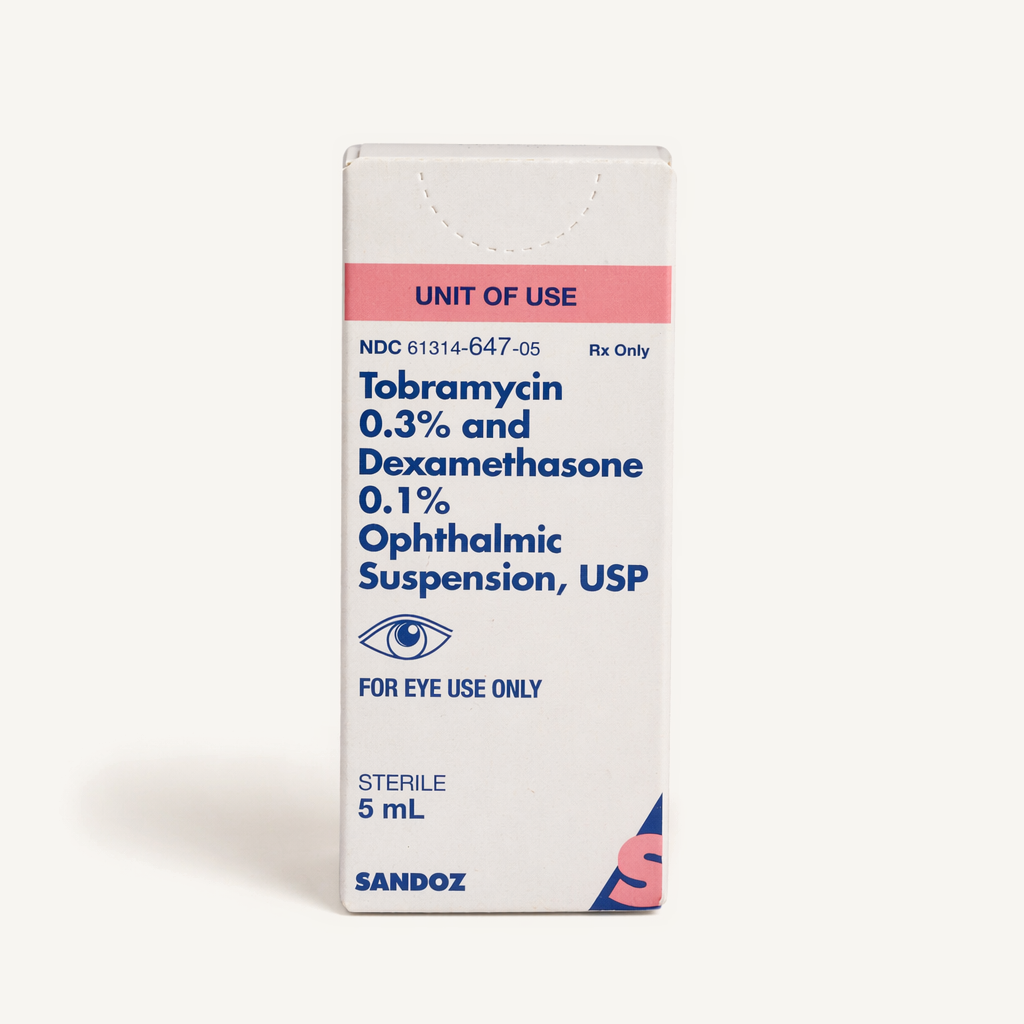
Tobramycin and dexamethasone eye drops operate through two mechanisms:
- Tobramycin: This drug is a bactericidal antibiotic, meaning it kills bacteria outright rather than simply impeding their growth. The medication enters bacterial cells and binds to 30S ribosomal subunits, thereby disrupting the cell’s ability to synthesize essential proteins and eventually leading to cellular death.
- Dexamethasone: This drug is a synthetic steroid that mimics the body’s natural anti-inflammatory hormones. It inhibits prostaglandins, leukotrienes, and other substances the body releases to promote inflammation. By calming the overactive immune response in the eyes, dexamethasone reduces dilation (or redness) of blood vessels and fluid accumulation, which causes swelling.
| Quick Facts | |
|---|---|
| Common Brands | TobraDex, TobraDex ST |
| Drug Class | Aminoglycoside antibiotic/corticosteroid combination |
| Generic Status | Generic version available |
| Availability | Prescription only |
Dosing
Tobramycin and dexamethasone eye drops are liquid suspensions. Proper administration is essential for effective treatment.
- Standard frequency: For mild to moderate infections, providers typically prescribe one or two drops every 4 to 6 hours in each affected eye. For more severe infections, the dose may be increased to one or two drops every 2 hours during the first 24 to 48 hours of treatment. Once symptoms begin to improve, the dosing frequency is usually reduced.
- Preparation: Per standard guidelines, patients are advised to shake the bottle vigorously before each application. This helps ensure you receive a uniform dose.
- Punctual occlusion: After applying the drop, press the inside corner of your eye for a minute. This helps prevent medication from draining into the tear duct.
- Course length: Standard guidelines advise completing the full course of medication, even if symptoms clear up within days of starting treatment. The full course is needed to prevent bacterial resistance.
Note: Dosing information below is educational only. Your prescribing physician will determine your specific dose based on your individual health needs. Always follow your healthcare provider’s instructions for exact dosing.
Uses
FDA-Approved Uses
Tobramycin and dexamethasone eye drops are FDA-approved for the following:
- Bacterial ocular infections caused by bacteria susceptible to tobramycin
- Doctors prescribe a corticosteroid for steroid-responsive inflammatory conditions when a bacterial infection is present or there is a risk of infection.
- Post-operative inflammation reduction for people who have undergone cataract or refractive surgery.
Off-Label Uses
You may see tobramycin and dexamethasone eye drops prescribed for uses that are not “FDA-approved.” This is a very common and legal practice called “off-label” prescribing, where a doctor uses their clinical judgment to prescribe a drug for a different (but well-researched) purpose.
Common off-label uses for tobramycin and dexamethasone eye drops currently found in clinical practice and research include:
- Blepharitis: The eye drops may be recommended off-label to treat eyelid inflammation from blepharitis.
- Stye management: Styes usually resolve with heat, but providers may recommend a combination of tobramycin and dexamethasone to reduce localized swelling and treat the underlying staphylococcal infection.
- Post-cataract surgery inflammation and infection prevention: Although treatment plans vary, doctors may use tobramycin/dexamethasone eye drops after cataract surgery to help control inflammation and reduce the risk of bacterial infection during the healing process.
Side Effects
Patients typically tolerate tobramycin and dexamethasone eye drops well for the short duration of their treatment cycle, but issues can still occur.
Common Side Effects
Common side effects of using tobramycin and dexamethasone eye drops include:
- Transient vision blurring for 1-3 minutes after application
- Local stinging or burning at the application site
- Mild itching or swelling of the eyelid margin
Serious Side Effects
Serious side effects are rare, but it’s important to know what to look for if they do occur. Serious side effects from using tobramycin and dexamethasone eye drops can include:
- Intraocular pressure spikes: Prolonged use of these eye drops and other medications with dexamethasone can increase fluid pressure. If not monitored, this can lead to glaucoma.
- Cataract formation: Long-term steroid use can cause clouding in the eye’s natural lens.
- Secondary fungal infection: Prolonged use of antibiotic-steroid eye drops can increase the risk of fungal eye infections. The steroid may reduce the eye’s natural immune defenses, while the antibiotic can alter normal bacterial populations, allowing fungi or other organisms to grow.
- Corneal thinning: In individuals predisposed to corneal thinning, using steroids can expedite this process.
Call your doctor immediately if you experience any concerning or prolonged symptoms.
Pharmacist Tips
Don’t Touch The Dropper
Do not let the eye dropper touch their eye, eyelashes, or fingers. This precaution prevents the bottle from becoming contaminated.
Avoid Contacts During Infection
Do not wear contact lenses while you have an active eye infection because this can exacerbate the infection.
Be Safe With Contact Lenses
The preservative in the eye drops can damage contact lenses. If the infection has cleared but you continue to use the drops, wait at least 15 minutes after application before you re-insert your lenses.
Proper Storage Is Key
Store the bottle at room temperature.
Be Cautious With Visual Effects
Since tobramycin and dexamethasone eye drops can cause blurred vision for a few minutes after application, avoid driving or operating machinery until you regain full vision.
Drug Interactions
The likelihood of systemic absorption for tobramycin and dexamethasone eye drops is low, especially if you practice the punctual occlusion technique during administration. However, interactions can still occur. Known interactions with tobramycin and dexamethasone eye drops include:
- Other ophthalmic drops: If you use multiple eye drop medications, wait 15 to 20 minutes between applications. This delay ensures the second drop does not wash out the first.
- Nonsteroidal anti-inflammatory drug (NSAID) eye drops: Using steroidal and nonsteroidal anti-inflammatory eye drops together may slow corneal surface healing.
- Aminoglycoside sensitivity: If you have experienced an allergic reaction to gentamicin or amikacin in the past, you may have a cross-sensitivity to tobramycin.
Always give your doctor and pharmacist a complete list of all your medications, vitamins, and supplements to check for potential interactions.
FAQs
Why is the liquid inside this specific bottle thick and milky white?
Tobramycin and dexamethasone eye drops are a liquid suspension, meaning solid particles of medication are floating in the liquid. A milky appearance is normal. This is also why shaking the bottle is required before each use.
How long should I wait before putting my contact lenses back in after a pink eye infection clears up?
Standard guidelines suggest waiting at least 24 to 48 hours after pink eye symptoms have completely disappeared and you have finished your medication course to reinsert your contact lenses. Putting the lenses back in too early can trap bacteria against the cornea and exacerbate the infection.
Is it normal for my vision to be extremely blurry for a few minutes immediately after putting this in my eye?
Yes, blurry vision for 1 to 3 minutes after application is a common side effect of using tobramycin and dexamethasone eye drops. The suspension has a high viscosity and forms a film around your eyes that can cloud vision until natural blinking wipes it away.
Should I store this medication in the refrigerator?
Refrigerating tobramycin and dexamethasone eye drops is not required. Per standard guidelines, storing the medication anywhere in the house with a room temperature of 46 to 77 degrees Fahrenheit is sufficient.
Is it safe to continue using this combination drop if I discover I am pregnant or actively breastfeeding?
There is limited data regarding the effects of tobramycin and dexamethasone eye drops on pregnant and breastfeeding patients, so risk cannot be ruled out. Consult with your healthcare provider for guidance before beginning any medication if you are pregnant, breastfeeding, or planning to become pregnant.
How long does it take for tobramycin/dexamethasone to clear up a pink eye infection?
Many patients see a significant reduction in pink eye symptoms within 48 hours of beginning their tobramycin and dexamethasone eye drop treatment. However, bacteria may still be present after the 2-day mark, so patients are advised to complete the full course.
Comparable Medications
Tobramycin and Dexamethasone Eye Drops, Tobrex, TobraDex ST, or Zylet?
Tobramycin and dexamethasone eye drops are a combination, prescription-strength medication that treats and prevents bacterial eye infections. Based on factors like your medical history and the severity of your symptoms, your doctor may recommend an alternative medication. Tobramycin and dexamethasone alternatives include:
Tobramycin Eye Drops
From $36.99
This medication contains tobramycin as its only active ingredient. It is used for simple eye infections with minimal swelling. Doctors typically prefer tobramycin and dexamethasone eye drops for infections with severe redness, pain, or swelling.
TobraDex ST
TobraDex ST contains the same active ingredients as TobraDex but uses a different formulation and concentration. Despite containing less dexamethasone, it delivers similar steroid levels within the eye, allowing it to provide comparable anti-inflammatory effects while improving suspension consistency and dosing.
Loteprednol/tobramycin
This combination medication is a soft steroid designed to be broken down in the body more quickly. It is less likely to increase eye pressure than TobraDex.
We Have Tobramycin and Dexamethasone Eye Drops in Stock. Get Yours Today!
Important: Information on this page is for educational purposes only. Prescribing decisions are made by independent, licensed providers. TelyRx operates technology-enabled pharmacies and a telehealth platform that connects patients with licensed providers. Prescriptions, when provider-approved and issued, are filled and shipped by TelyRx-affiliated pharmacies. We do not employ physicians or make prescribing decisions. Learn more about our editorial standards here.