How It Works
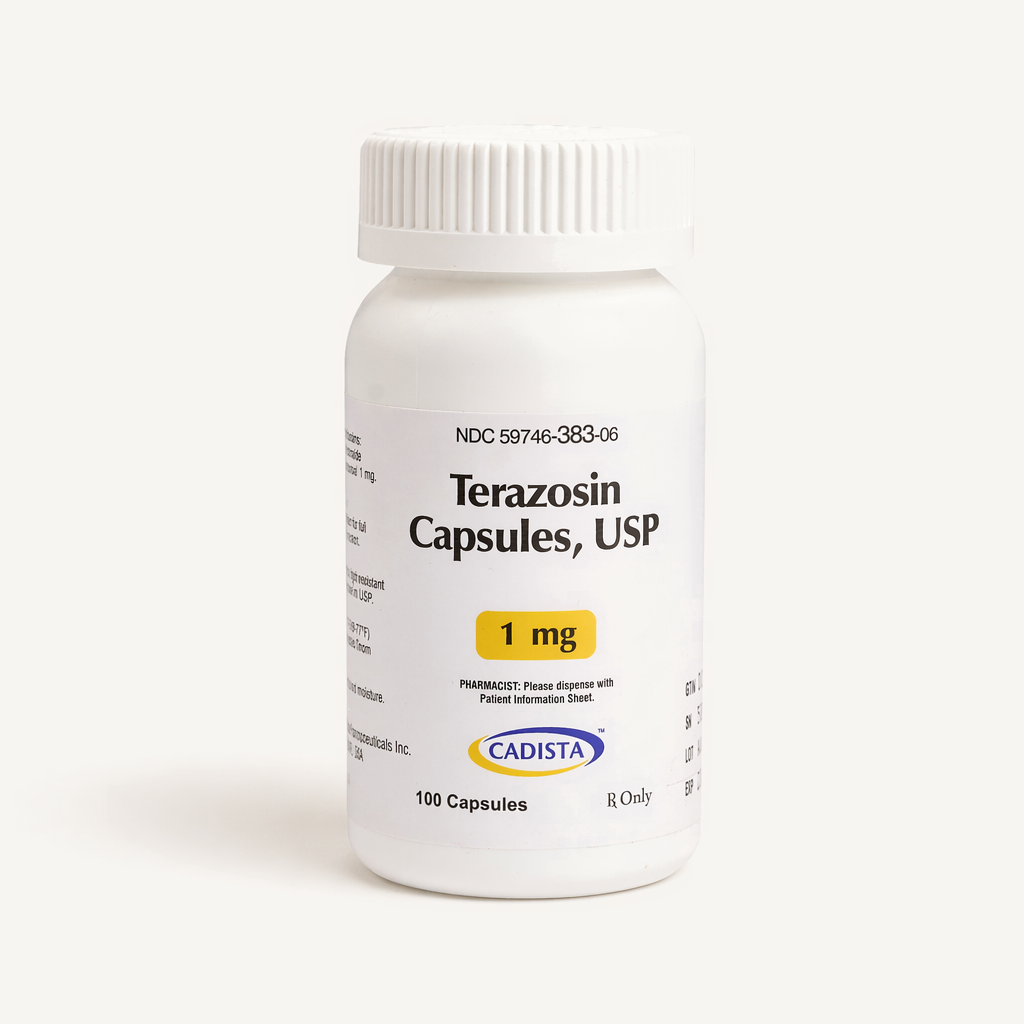
Terazosin works by blocking alpha-1 receptors in the smooth muscle walls of blood vessels and in the muscle tissue of the prostate and bladder.
For people with BPH, terazosin binds to alpha-1 receptors in the prostate and bladder, signaling the muscles to relax. In a normal state, urine flows freely from the bladder through the urethra. When the prostate gland enlarges, it can compress against the urethra and weaken urinary flow. Terazosin helps reduce the compression.
To treat hypertension (high blood pressure), terazosin blocks signals from alpha-1 receptors telling blood vessels to constrict. Blood vessels widen, reducing resistance and allowing blood to flow freely which helps lower blood pressure.
| Quick Facts | |
|---|---|
| Common Brands | Hytrin, Tezruly |
| Drug Class | Selective alpha-1 adrenergic receptor antagonist (alpha-1 blocker) |
| Generic Status | Generic version available |
| Availability | Prescription only |
Dosing
Many patients begin taking terazosin capsules at a lower dose, which is gradually titrated (increased) over time based on their response to the medication. The slow progression allows the patient’s body to adapt and reduces the risk of side effects.
- Initial dose: Standard guidelines suggest a starting dose of 1 mg per day, taken at bedtime. The timing of this first dose is considered critical for patient safety due to the risk of low blood pressure and falls when initiating therapy.
- BPH maintenance: To manage prostate-related symptoms, providers generally titrate patients up to 2, 5, or 10 mg per day. It can take up to 6 weeks before patients notice improvements to their urinary flow.
- Hypertension maintenance: The typical range for hypertension maintenance is 1 to 5 mg of terazosin per day. Some patients may require higher doses.
Note: Dosing information below is educational only. Your prescribing physician will determine your specific dose based on your individual health needs. Always follow your healthcare provider’s instructions for exact dosing.
Uses
FDA-Approved Uses
Terazosin capsules are FDA-approved to treat the signs and symptoms of an enlarged prostate in male patients. The drug is also FDA-approved to treat high blood pressure, either alone or in combination with other antihypertensive medications such as diuretics or beta-blockers.
Off-Label Uses
You may see terazosin capsules prescribed for uses that are not “FDA-approved.” This is a very common and legal practice called “off-label” prescribing, where a doctor uses their clinical judgment to prescribe a drug for a different (but well-researched) purpose.
Common off-label uses for terazosin capsules currently found in clinical research and practice include:
- Ureteral stones: Terazosin can help relax the ureter to make ureteral stones (kidney stones) easier to pass.
- Female urinary retention: Some providers may prescribe terazosin to female patients experiencing difficulty emptying their bladder due to muscle spasms or neurological conditions.
Side Effects
As with any medication that alters blood pressure and muscle tension, terazosin carries a risk of various side effects which may be more pronounced as the body adapts to the new drug.
Common Side Effects
Common side effects from taking terazosin capsules include:
- Dizziness and lightheadedness
- Nasal congestion
- Headache and fatigue
- Peripheral edema with swelling in the hands, ankles, or feet
- Blurred vision
Serious Side Effects
Serious side effects are rare, but it’s important to know what to look for if they do occur. Serious side effects from taking terazosin can include:
- Fainting: Terazosin can cause a sudden drop in blood pressure that can lead to fainting and loss of consciousness. This is especially common after the first dose or a dosage increase.
- Priapism: In rare cases, terazosin can lead to a painful erection that lasts more than 4 hours. This is considered a medical emergency and, if not treated, can lead to permanent tissue damage.
- Intraoperative floppy iris syndrome: This condition can occur during cataract or glaucoma surgery. Patients who are planning eye surgery should speak to their doctor if they are taking terazosin or another alpha-blocker.
- Tachycardia: Terazosin may lead to an increased heart rate, sometimes felt as a racing or pounding heartbeat.
Call your doctor immediately if you experience any concerning or prolonged symptoms.
Pharmacist Tips
Don’t Stop and Restart Without Doctor Approval
If a patient stops taking terazosin for several days, standard guidelines caution they should not take their previous dose after resuming their treatment. Instead, they are advised to contact their provider, who may recommend restarting the medication at the initial 1 mg dose.
Follow First Dose Protocols
Per standard guidelines, patients are advised to take their first dose before bed to ensure personal safety if a sudden drop in blood pressure occurs. The same suggestion applies to taking the capsule after subsequent dosage increases.
Get Up Slowly
Terazosin can cause a drop in blood pressure, which can make you feel lightheaded if you stand up quickly. This increases your risk of fainting and injury from a fall. Getting up slowly can mitigate these risks.
Be Careful With Alcohol
Alcohol can enhance the effects of terazosin, leading to a sudden drop in blood pressure and increasing your risk of fainting. Limited alcohol intake is recommended when taking terazosin, especially when first starting the medication.
Consistency Is Key
Terazosin can be taken with or without food, according to clinical guidelines, but taking the capsule at the same time every night helps ensure a steady level of medication in your body during the 24-hour cycle.
Drug Interactions
Terazosin can interact with other medications and substances that affect blood pressure or muscle relaxation. Known interactions with terazosin include:
- Erectile dysfunction (ED) medications: PDE-5 inhibitors such as sildenafil (Viagra) and tadalafil (Cialis) are vasodilators. When taken with terazosin, they may cause additive hypotension and increase the risk of adverse effects.
- Other antihypertensive medications: Taking terazosin alongside other hypertension medications such as beta-blockers, ACE inhibitors, and diuretics can cause blood pressure to drop too low. Careful medical monitoring is recommended in these instances.
- Nonsteroidal anti-inflammatory drugs (NSAIDs) and cold medicines: Some over-the-counter NSAIDs and cold medicines contain decongestants that raise blood pressure. Taking these medications can counteract the effects of terazosin.
Always give your doctor and pharmacist a complete list of all your medications, vitamins, and supplements to check for potential interactions.
FAQs
Why should I take my first dose right before I get into bed?
The first dose of terazosin can cause a significant drop in blood pressure. Standard guidelines recommend taking this dose before bedtime to ensure personal safety and reduce the risk of injury from a fall.
Will taking this medication shrink my enlarged prostate?
No, terazosin does not shrink an enlarged prostate. The medication relaxes muscles in the prostate and bladder to improve urinary flow. Providers will recommend a different medication if shrinking the prostate is a long-term treatment goal.
Why am I constantly congested since starting terazosin?
Nasal congestion is a known side effect of terazosin. The medication relaxes blood vessels in the nasal mucosa, which can cause the lining of the nose to swell and lead to a stuffy feeling.
Can I safely take Viagra or Cialis while taking a daily terazosin pill?
Speak with your doctor before taking Viagra or Cialis alongside a daily terazosin pill. Combining these medications can lead to a significant drop in blood pressure and fainting, so doctors typically prescribe both at low doses if they must be taken together.
What is the difference between taking terazosin and Flomax?
Flomax, a brand-name version of generic tamsulosin, is more selective for receptors in the prostate than terazosin. This means it has less effect on overall blood pressure, so doctors usually prefer terazosin for hypertension and BPH.
Does taking this medication cause sudden weight gain?
Weight gain is a less common side effect of terazosin. If slight gain occurs, this may be due to fluid retention. Patients who experience significant weight gain while taking terazosin are advised to speak with their doctor.
Can taking terazosin cause “dry orgasms” (retrograde ejaculation)?
Retrograde ejaculation, or “dry orgasms,” is a more common side effect with other alpha-blockers like tamsulosin. However, terazosin can also cause changes in ejaculation.
Can I take terazosin on an empty stomach?
Yes, clinical guidelines state terazosin can be taken with or without food. If taking the capsule on an empty stomach leads to nausea or an upset stomach, timing your dosage with a light meal or snack can help mitigate these issues.
What happens if I forget to take this for a few days?
If you miss your terazosin dose for several days, a double dose is not recommended. Patients are advised to contact their doctor about the next steps, as resuming their most recent dose can lead to a severe drop in blood pressure.
Is it safe to take ibuprofen cold medicine like Sudafed while on this pill?
Caution is advised when taking ibuprofen cold medicine alongside terazosin capsules. Decongestants like Sudafed can raise blood pressure and counteract the effects of terazosin.
Can women take terazosin for blood pressure?
Yes, women can take terazosin for blood pressure with their doctor’s approval. The drug is widely known for treating BPH, a condition exclusive to the male prostate, but it is also considered an effective antihypertensive for men and women.
Comparable Medications
Terazosin Capsules, Tamsulosin, Finasteride, Lisinopril, Amlodipine, Sildenafil or Tadalifil?
Terazosin is a prescription-strength medication primarily used to lower blood pressure in adults with hypertension, and relax muscles to promote normal urinary flow for men with BPH. Your doctor may recommend this medication or an alternative to terazosin capsules based on your medical history and nature of symptoms. Terazosin alternatives include:
Tamsulosin
From $27.99
Sold under the brand name Flomax, tamsulosin is selective for the prostate but rarely used to treat blood pressure. It is less likely than terazosin to cause fainting, but carries a risk of other side effects such as retrograde ejaculation. Providers typically recommend terazosin capsules for patients who want to manage high blood pressure and treat BPH.
Finasteride
From $24.99
Finasteride, which is sold under the brand name Proscar, blocks hormones to shrink the prostate over the course of several months. This differs from terazosin's mechanism of relaxing muscles in the prostate and bladder. Doctors may prescribe these medications together as dual-action treatment for BPH.
Lisinopril
From $24.99
Lisinopril, or Zestril, is an ACE inhibitor medication. However, lisinopril does not address BPH symptoms. Terazosin may be introduced into the drug regimen if lisinopril and other drugs have not been effective, or if the patient has BPH in addition to hypertension.
Amlodipine
From $27.99
Amlodipine is a calcium channel blocker used to treat hypertension. It works by relaxing blood vessels, but does so through a different chemical pathway than terazosin. Amlodipine does not treat BPH.
Sildenafil and Tadalafil
These drugs, known by the respective brand names Viagra and Cialis, are both used to manage erectile dysfunction. Tadalafil is also FDA-approved to treat BPH. However, doctors do not usually recommend either of these drugs for high blood pressure. Combining them with terazosin increases the patient's risk of hypotension, or low blood pressure.
We Have Terazosin Capsules in Stock. Get Yours Today!
Important: Information on this page is for educational purposes only. Prescribing decisions are made by independent, licensed providers. TelyRx operates technology-enabled pharmacies and a telehealth platform that connects patients with licensed providers. Prescriptions, when provider-approved and issued, are filled and shipped by TelyRx-affiliated pharmacies. We do not employ physicians or make prescribing decisions. Learn more about our editorial standards here.