How It Works
Ramelteon belongs to a class of medications called melatonin receptor agonists. It works by mimicking the natural effects of melatonin and binding to brain receptors that regulate your sleep-wake cycle. By activating these receptors, ramelteon facilitates the natural onset of sleep.
Because ramelteon does not broadly depress the central nervous system like other sleeping pills, it helps people fall asleep with a lower risk of side effects like next-day grogginess.
| Quick Facts | |
|---|---|
| Common Brands | Rozerem |
| Drug Class | Hypnotic, melatonin receptor agonist |
| Generic Status | Generic is available |
| Availability | Prescription only |
Dosing
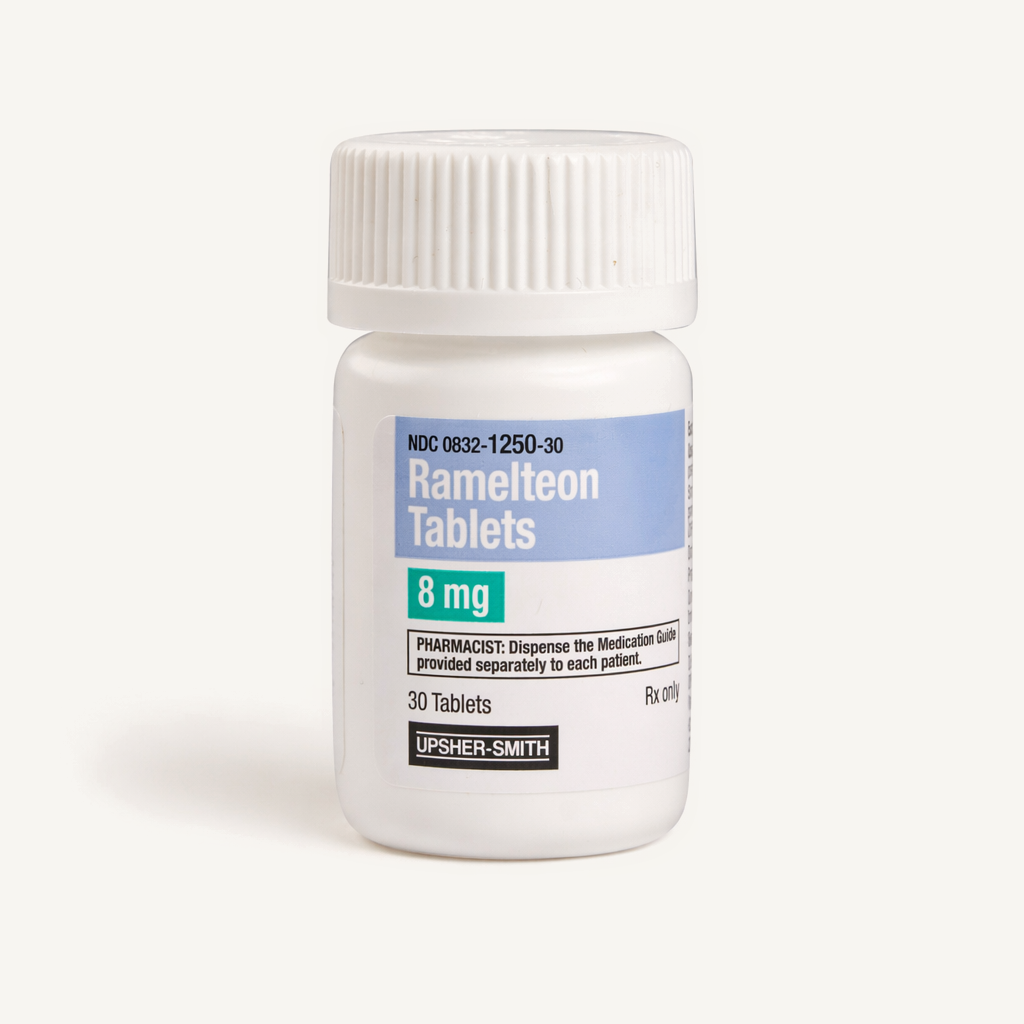
Ramelteon comes in 8 mg tablets. The recommended dose is 1 tablet taken by mouth about 30 minutes before bedtime. A dose should not be taken with or immediately following a high-fat meal.
Note: Dosing information below is educational only. Your prescribing physician will determine your specific dose based on your individual health needs. Always follow your healthcare provider’s instructions for exact dosing.
Uses
FDA-Approved Uses
Ramelteon is FDA-approved to treat sleep-onset insomnia (difficulty falling asleep).
Off-Label Uses
You may see ramelteon prescribed for uses that are not “FDA-approved.” This is a very common and legal practice called “off-label” prescribing, where a doctor uses their clinical judgment to prescribe a drug for a different (but well-researched) purpose.
There are currently no common off-label uses for ramelteon.
Side Effects
Like all medications, ramelteon can cause side effects. Some common side effects may improve over time as your body adjusts to the medication. Other side effects may be serious and require medical attention.
Common Side Effects
- Sleepiness
- Dizziness
- Fatigue
- Nausea
- Worsened sleep problems
Serious Side Effects
Serious side effects are rare, but it’s important to know what to look for if they do occur. Stop using ramelteon and call your doctor immediately if you experience:
- Severe allergic reactions: Symptoms include swelling of the face, lips, tongue, or throat; difficulty breathing or swallowing; and/or severe rash or itching.
- Complex sleep behaviors: Ramelteon may cause you to perform certain activities while not fully awake, which can be dangerous. These activities may include sleepwalking, sleep driving, making phone calls, or preparing and eating food.
- Mood and behavior changes: Sleep medications, including ramelteon, have been associated with mood changes, hallucinations, worsening depression, and suicidal thoughts or behaviors. These effects are uncommon, and ramelteon has not shown a higher risk signal compared to other insomnia medications in clinical studies.
- Decreased alertness: Ramelteon can affect your alertness and coordination the next day. It’s recommended to avoid driving or doing other tasks that require focus until you know how the medication affects you.
- Hormonal changes: Ramelteon may alter certain hormone levels, such as lowering testosterone levels or increasing prolactin levels. These changes have generally been mild and were not associated with reproductive or hormonal disorders in clinical studies. However, contact your healthcare provider if you experience symptoms such as missed menstrual periods, nipple discharge, unexpected breast growth, difficulty becoming pregnant, or changes in sex drive.
Call your doctor immediately if you experience any concerning or prolonged symptoms.
Pharmacist Tips
Take Your Dose 30 Minutes Before Bed
Once you take it, avoid other activities and focus only on getting ready for bed to minimize the risk of accidents or unusual behaviors.
Swallow Tablets Whole
It is recommended not to break, crush, or chew them.
Avoid Fatty Meals Before Your Dose
If possible, take the tablet on an empty stomach. Eating high-fat meals shortly before or with your dose can affect how your body absorbs the medication.
Practice Good Sleep Hygiene
Create a sleep-friendly environment. Once you take your dose, turn down the lights, power down electronics, and get relaxed.
Only Take A Dose If You Have Time For A Full Night’s Sleep
If you don’t get enough sleep, you may feel less coordinated or alert the next day.
Avoid Alcohol
Drinking alcohol is not recommended when taking ramelteon, as it can increase your risk of serious side effects, including complex sleep behaviors and impaired alertness or coordination.
Prepare For Possible Drowsiness
It’s recommended to avoid driving, operating heavy machinery, or performing tasks requiring intense coordination until you know exactly how ramelteon affects you and you feel entirely awake the next day.
Contact Your Provider If You Still Experience Insomnia After 7–10 Days
If ramelteon isn’t helping you fall asleep, it’s possible your insomnia has another cause and may require a different treatment.
Store At Room Temperature
Ramelteon should be stored at 68°F to 77°F (20°C to 25°C) in a cool, dry place away from light.
Tell Your Provider If You’re Pregnant Or Breastfeeding
It is not known if ramelteon can affect pregnancy or pass into breast milk, so risk cannot be ruled out. Tell your healthcare provider if you are pregnant, breastfeeding, or planning to be. They can advise you on whether you should keep taking the medication.
Try To Avoid Missing A Dose
If you miss a dose of ramelteon, do not take it unless you have time for a full night’s sleep. Return to your normal dosing schedule the following night. Do not take double or extra doses of ramelteon to make up for a missed one.
Drug Interactions
Certain medications and substances can interact with ramelteon, potentially altering how it works or increasing the risk of side effects. For example:
- Fluvoxamine: This medication is contraindicated with ramelteon and should not be taken together. Fluvoxamine can significantly increase ramelteon levels in the body, which may increase the risk of side effects.
- Other medications that cause sleepiness or dizziness: Combining ramelteon with medications for sleep, anxiety, or pain relief can compound these effects.
- Antifungal medications: Ketoconazole and fluconazole can increase the amount of ramelteon in your blood, which may increase the risk of side effects.
- Rifampin: This antibiotic can decrease the amount of ramelteon in your blood and reduce its effectiveness.
- Donepezil: This medication can increase ramelteon levels in your blood. Your healthcare provider may recommend closer monitoring for side effects.
- Doxepin: This medication can increase ramelteon levels in your blood. Your healthcare provider may recommend closer monitoring for side effects.
- Alcohol: Alcohol may increase the sedative effects of ramelteon and worsen alertness, coordination, and reaction time. Avoid drinking alcohol while taking ramelteon.
Always give your doctor and pharmacist a complete list of all your medications, vitamins, and supplements to check for potential interactions.
FAQs
What is the difference between prescription ramelteon and over-the-counter melatonin?
Both ramelteon and melatonin help regulate the body’s sleep-wake cycle by acting on melatonin receptors in the brain. Over-the-counter melatonin supplements work by increasing the amount of melatonin available to activate these receptors. Ramelteon works differently by directly binding to and activating specific melatonin receptors (MT1 and MT2), helping signal to the body that it is time to sleep.
Unlike melatonin supplements, ramelteon is FDA-approved and manufactured to meet strict standards for quality, safety, and consistency. Providers generally advise against taking ramelteon and melatonin together, as doing so may increase the risk of side effects.
Why isn’t this medication classified as a “controlled substance” like Ambien or Lunesta?
Unlike traditional sedative-hypnotics, ramelteon does not depress the central nervous system to force sleep. Instead, it works by mimicking melatonin, your body’s natural sleep hormone. Clinical studies indicate ramelteon has little to no potential for abuse, addiction, or dependence.
Why can’t you take this pill right after eating a high-fat meal?
Taking the medication with, or directly after, a high-fat meal significantly slows the digestive absorption process. If the medication is absorbed slowly, it will take longer for you to feel sleepy.
Will this medication help me stay asleep all night, or does it just help me fall asleep?
Ramelteon is specifically formulated and FDA-approved to treat sleep-onset insomnia, meaning it is designed to help you fall asleep more easily. It is generally not considered a primary treatment for sleep maintenance (trouble sleeping through the night).
How many minutes before I want to be asleep should I actually take ramelteon?
Standard guidelines suggest taking the tablet 30 minutes before you intend to go to sleep.
Can I stop taking this cold turkey without experiencing “rebound” insomnia?
Yes. Because ramelteon is not habit-forming, studies show that people typically do not experience withdrawal symptoms or “rebound” insomnia when they stop taking the medication. However, it’s recommended to consult your doctor before changing your medication routine.
Will taking this pill leave me feeling groggy or hungover the next morning?
Ramelteon is designed to facilitate natural sleep without causing the next-day grogginess commonly associated with traditional sleeping pills. However, some individuals may still experience mild fatigue or dizziness the next day. Taking the medication without allowing for a full night’s rest increases the likelihood of next-day drowsiness.
Is it safe to drink alcohol before taking this sleep aid?
No. It is highly recommended to avoid alcohol while taking ramelteon. Mixing the two can dangerously increase sedation, diminish coordination, and increase the risk of experiencing complex sleep behaviors or worsened depression.
Can this medication mess with my natural hormone levels, like testosterone or prolactin?
In some cases, ramelteon has been associated with changes in certain hormone levels. Studies found increases in prolactin levels primarily in women, while mild decreases in testosterone were observed mainly in older men. These changes were generally reversible after stopping the medication and often did not cause noticeable symptoms.
However, hormone-related side effects can occur and may include missed menstrual periods, decreased libido, or unexpected nipple discharge. If you experience any of these symptoms or have concerns about hormone changes while taking ramelteon, speak with your healthcare provider.
What happens if I take the pill but then force myself to stay awake?
Fighting the medication’s effects can be unsafe. It impairs your alertness and coordination, increasing the risk of falls or accidents. Additionally, staying awake increases the chances of experiencing hallucinations or engaging in complex sleep behaviors.
Will ramelteon cause me to sleepwalk in the middle of the night like other sleeping pills do?
While considered a rare side effect, complex sleep behaviors — including sleepwalking, sleep-driving, and preparing food while asleep — have been reported by people taking ramelteon. If this occurs, contact your healthcare provider immediately.
Does this medication lose its effectiveness or build up a “tolerance” if I use it every single night for months?
Clinical trials lasting up to 1 year have demonstrated that ramelteon maintains its efficacy over the long term. It is not generally known to build the tolerance seen with controlled sedative-hypnotics. Unlike some sleep medications that are labeled for short-term use, the FDA labeling for ramelteon does not specify a maximum duration of treatment.
Is it safe to take this if I have severe sleep apnea, COPD, or other nighttime breathing problems?
Ramelteon does not appear to cause the respiratory depression seen with some other sleep medications. Clinical studies in patients with mild to moderate obstructive sleep apnea and mild to severe COPD did not show worsening of breathing-related measurements after use.
However, ramelteon has not been adequately studied in patients with severe obstructive sleep apnea, and the FDA labeling does not recommend its use in this population. If you have severe sleep apnea or another significant breathing disorder, discuss the risks and benefits with your healthcare provider before starting treatment.
Comparable Medications
Ramelteon, zolpidem (Ambien), eszopiclone (Lunesta), melatonin, Belsomra, or trazodone?
There are several medications your doctor can prescribe instead of ramelteon. Here are a few possible alternatives below.
Zolpidem
A prescription sleep aid that works by slowing activity in the brain to promote sleep. It tends to work more quickly than ramelteon but carries a greater risk of next-day drowsiness, sleep-related behaviors, and dependence.
Eszopiclone
A prescription sleep medication that helps with both falling asleep and staying asleep. Compared with ramelteon, it may provide stronger sedative effects but is more likely to cause next-day drowsiness and an unpleasant taste.
Melatonin
Melatonin is an over-the-counter supplement that increases levels of the body's natural sleep hormone. Ramelteon works on the same sleep-wake pathway but is a prescription medication that directly and more potently activates specific melatonin receptors.
Belsomra
Belsomra works by blocking orexin, a chemical involved in wakefulness. Unlike ramelteon, which primarily helps with falling asleep, Belsomra can help with both falling asleep and staying asleep. However, Belsomra is a controlled substance and may carry a greater risk of next-day drowsiness.
Trazodone
An antidepressant that is sometimes prescribed off-label for insomnia because of its sedating effects. Unlike ramelteon, it was not specifically developed to target the body's natural sleep-wake cycle and may be more likely to cause next-day grogginess.
We Have Ramelteon in Stock. Get Yours Today!
Important: Information on this page is for educational purposes only. Prescribing decisions are made by independent, licensed providers. TelyRx operates technology-enabled pharmacies and a telehealth platform that connects patients with licensed providers. Prescriptions, when provider-approved and issued, are filled and shipped by TelyRx-affiliated pharmacies. We do not employ physicians or make prescribing decisions. Learn more about our editorial standards here.