How It Works
Nifedipine ER belongs to a class of medications known as calcium channel blockers (CCBs). It works by relaxing and widening the blood vessels. This makes it easier for blood to flow throughout the body, which lowers blood pressure. It also helps more oxygen get delivered to the heart, which helps ease the symptoms of chest pain (angina).
| Quick Facts | |
|---|---|
| Common Brands | Procardia XL |
| Drug Class | Calcium channel blocker (CCB) |
| Generic Status | Generic is available |
| Availability | Prescription only |
Dosing
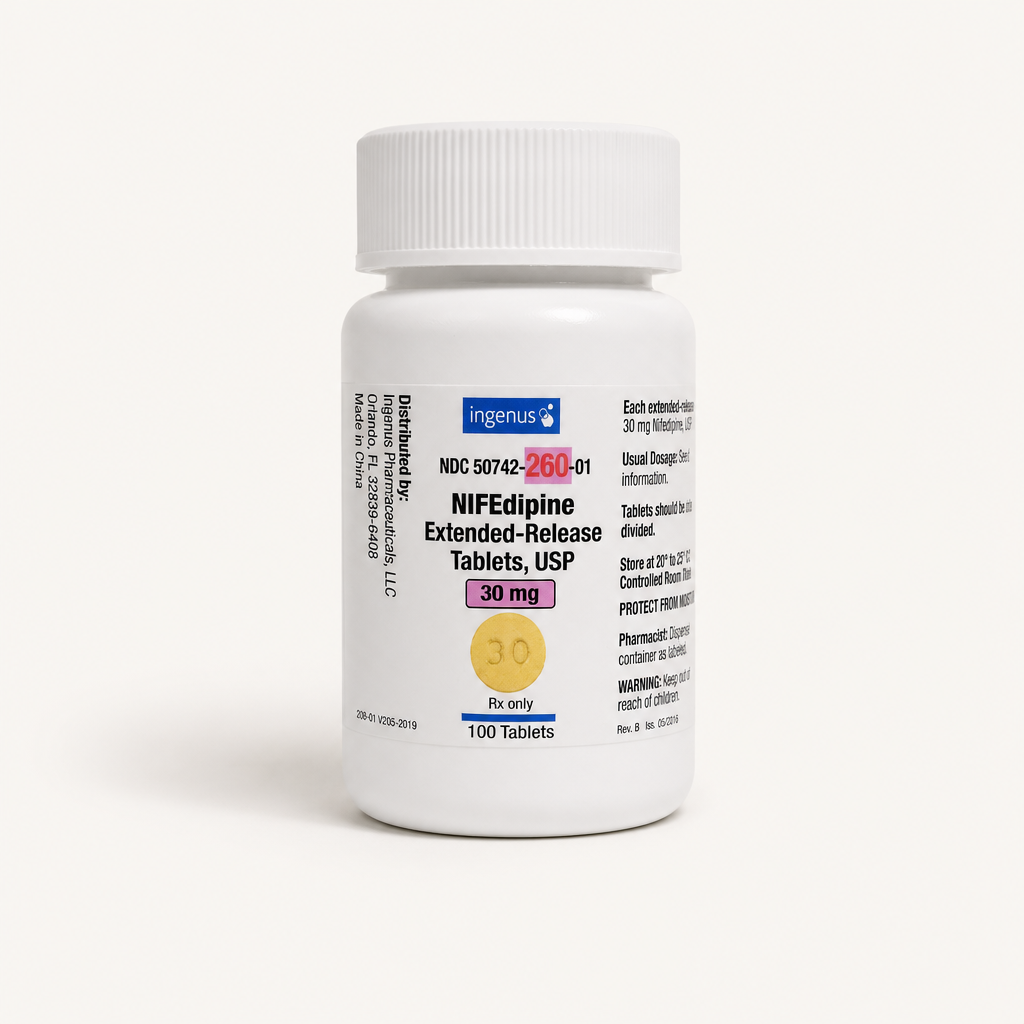
Extended-release (ER) nifedipine tablets come in the following dosage strengths:
- 30 mg
- 60 mg
- 90 mg
The recommended starting dosage is 30 mg or 60 mg taken by mouth once daily.
After a few weeks, healthcare providers typically evaluate how well the medication is lowering your blood pressure and chest pain and adjust the dose if needed.
The maximum recommended dosage for nifedipine ER is 120 mg once daily.
Note: Dosing information below is educational only. Your prescribing physician will determine your specific dose based on your individual health needs. Always follow your healthcare provider’s instructions for exact dosing.
Uses
FDA-Approved Uses
Nifedipine ER tablets are FDA-approved to treat high blood pressure (hypertension) and a specific type of chest pain called angina.
Off-Label Uses
You may see nifedipine ER tablets prescribed for uses that are not “FDA-approved.” This is a very common and legal practice called “off-label” prescribing, where a doctor uses their clinical judgment to prescribe a drug for a different (but well-researched) purpose.
There are currently no common off-label uses for nifedipine ER tablets.
Side Effects
Like all medications, nifedipine ER tablets can cause side effects. Some common side effects may improve over time as your body adjusts to the medication. Other side effects may be serious and require medical attention.
Common Side Effects
- Headache
- Dizziness
- Lightheadedness
- Facial flushing (warmth or redness)
- Fatigue
- Nausea
- Swelling (edema) in the ankles, legs, feet, or hands
- Heart palpitations or rapid heartbeat
- Muscle cramps
- Constipation
- Gastrointestinal discomfort
Serious Side Effects
Serious side effects are rare, but it’s important to know what to look for if they do occur. Stop using nifedipine ER and call your doctor immediately if you experience:
- Severe allergic reactions: Symptoms include swelling of the face, lips, tongue, or throat; difficulty breathing or swallowing; racing heart; severe rash or itching; fever.
- Decreased blood pressure (hypotension): It’s possible for nifedipine ER to cause your blood pressure to drop too low. Symptoms include dizziness, feeling faint or lightheaded, weakness, or confusion.
- Chest pain: Nifedipine may cause chest pain, which may be a sign of a heart attack. This risk may be higher for people with heart disease. Symptoms of a heart attack include chest pain pressure, fast or abnormal heartbeat, difficulty breathing, sweating, vomiting, dizziness, or pain in the back, jaw, throat, or arm.
- Heart failure: Nifedipine can increase the risk of experiencing heart failure. Symptoms include rapid weight gain, unusual tiredness, and shortness of breath (especially when lying down), and swelling in the feet, ankles, or legs.
- Stomach obstruction or ulcers: Nifedipine ER tablets may cause stomach obstruction or ulcers. Symptoms include stomach pain or constipation that does not go away, an inability to pass gas, and nausea or vomiting.
Call your doctor immediately if you experience any concerning or prolonged symptoms.
Pharmacist Tips
Take With Or Without Food
Nifedipine ER tablets can be taken with or without food.
Store At Room Temperature
Nifedipine ER tablets should be stored in a cool, dry place at temperatures below 88°F (30°C).
Swallow Nifedipine ER Tablets Whole
Chewing, cutting, or crushing the tablets disrupts the extended-release mechanism and how the medication gets absorbed by your body.
Be Prepared To Feel Dizzy
Because nifedipine lowers blood pressure, it can cause dizziness, especially when starting the medication or changing your dose. It’s recommended to sit or stand up slowly to avoid falling or feeling lightheaded.
Manage Swelling
Nifedipine can cause swelling (edema) in the feet, ankles, legs, hands or arms. While this side effect is usually harmless, it’s good to check in with your healthcare provider just in case. To ease the swelling, they may recommend sitting and elevating your feet.
Be Patient
It usually takes about 1–2 weeks to feel the full effects of nifedipine ER. If you’re not seeing improvement by that time, tell your healthcare provider.
Avoid Grapefruit And Grapefruit Juice
Consuming grapefruit can increase the concentration of nifedipine in the body, which can raise your risk of experiencing side effects.
You May See The Tablet In Your Stool
The extended-release tablet features an outer shell that the digestive system does not break down. Don’t be alarmed if you see it in your stool on occasion. This is expected and normal.
Consider Limiting Alcohol
It’s unknown if drinking alcohol affects nifedipine, but combining the two may increase your likelihood of feeling dizzy on the medication.
Tell Your Provider If You’re Pregnant Or Breastfeeding
It is not known if nifedipine ER can affect pregnancy or harm an unborn baby, but it does pass into breast milk. Tell your healthcare provider if you are pregnant, breastfeeding, or planning to be, so they can advise whether this medication is safe for you to take.
Try To Avoid Missing A Dose
If you miss a dose of nifedipine ER, take it as soon as you remember, unless it is almost time for your next dose. In that case, skip the missed dose and take your next dose as scheduled. Do not take double or extra doses to make up for a missed one.
Drug Interactions
Certain medications and substances can interact with nifedipine ER, potentially altering how it works or increasing the risk of side effects. For example:
- Beta-blockers: Using nifedipine ER alongside beta-blockers, such as metoprolol, atenolol, or propranolol, may increase the risk of side effects.
- Seizure medications: Drugs that help control seizures, such as carbamazepine, phenytoin, and phenobarbital, can interact with nifedipine.
- Antifungal and antibiotic medications: Certain treatments for infections, including fluconazole, itraconazole, ketoconazole, clarithromycin, and erythromycin, can alter nifedipine levels in the body.
- Other heart and blood pressure medications: Nifedipine ER can interact with medications like digoxin, quinidine, and flecainide.
- Cimetidine: This heartburn medication can interact with nifedipine.
- HIV/AIDS medications: Nifedipine ER can interact with antiretroviral drugs like saquinavir, indinavir, and nelfinavir.
- Grapefruit and grapefruit juice: Consuming grapefruit or grapefruit juice can affect levels of nifedipine ER in the body.
- Herbal supplements: Nifedipine ER may interact with St. John’s wort, ginkgo, ginseng, and other supplements.
Always give your doctor and pharmacist a complete list of all your medications, vitamins, and supplements to check for potential interactions.
FAQs
Why is there a warning to never drink grapefruit juice while taking Nifedipine ER?
Eating grapefruit or drinking grapefruit juice can increase the levels of nifedipine absorbed into your bloodstream and raise the risk of side effects. Providers typically recommend avoiding it entirely during treatment.
Why are my ankles and feet swollen since starting this medication?
Swelling (edema) in the hands, legs, ankles, or feet is a common side effect of nifedipine ER. Because the medication works by relaxing and widening your blood vessels to improve blood flow, it can sometimes lead to fluid pooling in the extremities.
What is the difference between Nifedipine ER tablets and the regular capsules?
Extended-release (ER) tablets are specially formulated to release the medication slowly into your body, providing consistent blood pressure control over a 24-hour period. ER tablets are taken only once daily. Immediate-release (IR) capsules are absorbed more quickly and typically must be taken three to four times a day to maintain their effect. The ER formulation is generally preferred because it tends to cause fewer side effects.
Can I cut, crush, or chew the tablet if it is too big for me to swallow?
No, nifedipine ER tablets should not be cut, crushed, or chewed. They must be swallowed whole to ensure the extended-release shell functions properly and releases the medication at a safe, steady rate.
Why do my face and neck frequently feel hot, red, and flushed?
Flushing (a warm, red feeling in the face and neck) is a common side effect of nifedipine. Because the drug relaxes and widens your blood vessels, an increased volume of blood flows near the surface of the skin, which can create this warm, flushed sensation.
Is it safe to use Nifedipine ER if I am pregnant?
It is not known if nifedipine can harm an unborn baby or affect pregnancy, so risk cannot be ruled out. Your healthcare provider will advise you on whether it is appropriate and safe for your specific situation.
Does this medication slow down my heart rate?
Nifedipine ER is not known to cause a slow heart rate as a side effect. While some other calcium channel blockers can lower the heart rate, nifedipine does not typically have a major effect on the speed of your heartbeat.
Can I take ibuprofen or naproxen while taking Nifedipine ER?
Ibuprofen and naproxen are not known to interact with nifedipine, but it’s best to check with your doctor to ensure they won’t interact with other medications you’re taking.
Can I stop taking the medication if my blood pressure is normal?
It is generally recommended to keep taking this medication unless your doctor tells you to stop, even if you feel well or your blood pressure readings are normal.
Does Nifedipine ER interact with herbal supplements?
Yes, nifedipine ER can interact with certain herbal supplements. For instance, it is known to interact with St. John’s wort. Other herbal products, such as ginkgo and ginseng, may also alter the medication’s effects. It’s recommended to share any herbal supplements you’re taking with your provider so they can check for possible interactions.
Should I take this medication on an empty stomach?
Generally, nifedipine ER can be taken with or without food, as food does not significantly affect how well the medication works. But, it’s best to review and follow the directions on your specific prescription label.
Can I drink alcohol while taking this blood pressure medication?
It is unknown if drinking alcohol directly affects nifedipine. However, because both alcohol and nifedipine can lower blood pressure, drinking alcohol while taking this medication may increase your overall risk of experiencing dizziness.
Does Nifedipine ER cause weight gain?
Sudden, rapid, or unusual weight gain is not a common side effect but can occur in rare instances. If you experience unusually fast weight gain, it is critical to contact your healthcare provider immediately. It may be a warning sign of heart failure.
How long does it actually take for this pill to start lowering my blood pressure?
It typically takes about 1 to 2 weeks to see the full effects of nifedipine ER on your blood pressure or chest pain symptoms.
Comparable Medications
Nifedipine ER tablets, amlodipine (Norvasc), diltiazem (Cardizem), lisinopril (Zestril), metoprolol (Toprol XL), or losartan (Cozaar)?
There are several medications that your doctor can prescribe in place of nifedipine ER tablets. Here are a few possible alternatives below.
Amlodipine
From $27.99
A calcium channel blocker (CCB) used to treat high blood pressure (hypertension) and coronary artery disease.
Diltiazem ER (CD) Capsules
From $37.99
A calcium channel blocker (CCB) used to treat high blood pressure (hypertension) and chest pain (angina).
Lisinopril
From $24.99
An angiotensin-converting enzyme (ACE) inhibitor used to treat high blood pressure (hypertension) and heart failure.
Metoprolol Tartrate
From $22.99
A beta-blocker used to treat high blood pressure (hypertension), chest pain (angina), heart failure, and heart attack.
Losartan
From $24.99
An angiotensin receptor blocker (ARB) used to treat high blood pressure (hypertension) and diabetes-related kidney damage (diabetic nephropathy).
We Have Nifedipine ER in Stock. Get Yours Today!
Important: Information on this page is for educational purposes only. Prescribing decisions are made by independent, licensed providers. TelyRx operates technology-enabled pharmacies and a telehealth platform that connects patients with licensed providers. Prescriptions, when provider-approved and issued, are filled and shipped by TelyRx-affiliated pharmacies. We do not employ physicians or make prescribing decisions. Learn more about our editorial standards here.