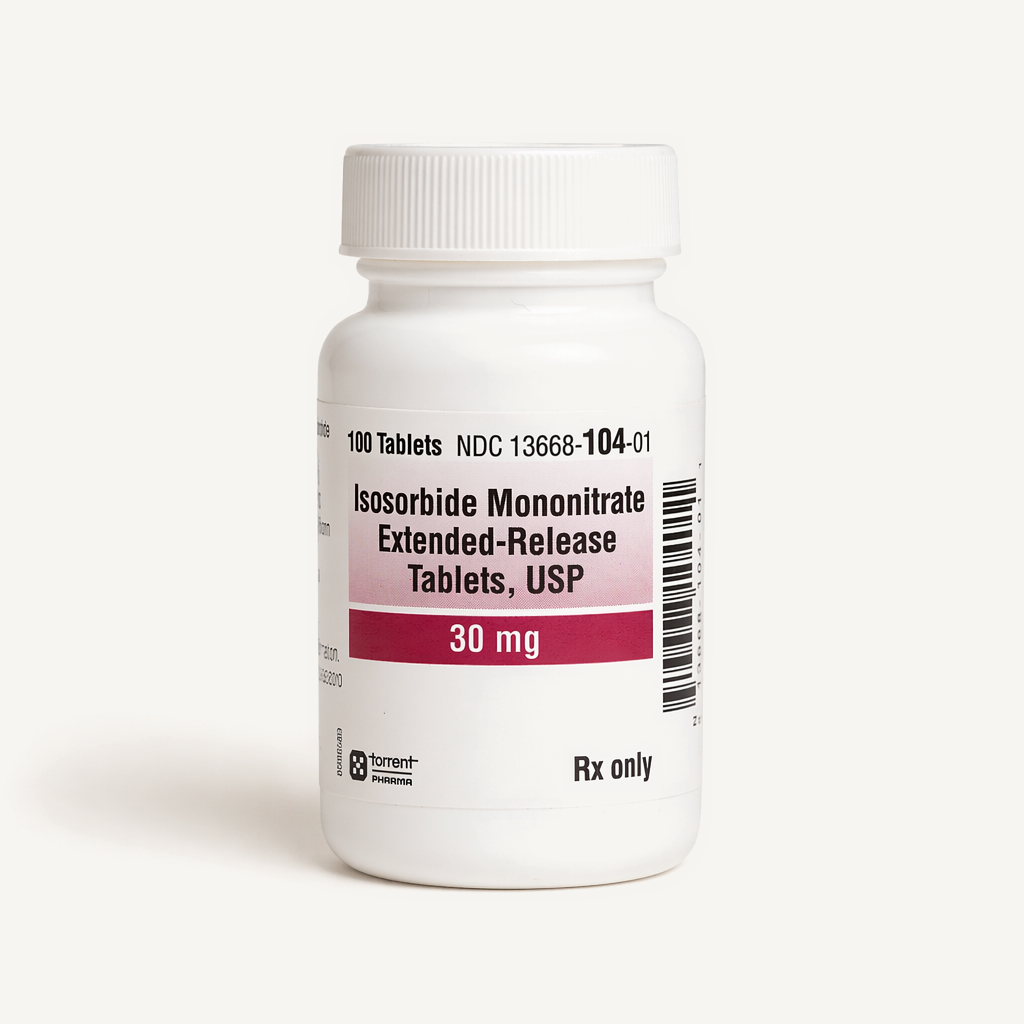
How It Works
Isosorbide mononitrate extended release works primarily by relaxing and widening blood vessels. This is known as vasodilation.
When blood vessels are dilated, blood can flow through them more easily. Improved blood flow allows more oxygen to reach the heart muscle while also reducing the heart’s workload. In these ways, this medication acts to prevent heart-related chest pain.
| Quick Facts | |
|---|---|
| Common Brands | Imdur, Ismo, Monoket |
| Drug Class | Nitrate vasodilator |
| Generic Status | Generic is available |
| Availability | Prescription only |
Dosing
Providers typically recommend a starting dose of 30 mg or 60 mg taken by mouth once daily in the morning at the same time each day.
Standard guidelines suggest swallowing the tablet whole with at least half a cup of water. It is generally accepted that you should not chew or crush the extended-release tablet, which may interfere with how the medication is absorbed.
Note: Dosing information below is educational only. Your prescribing physician will determine your specific dose based on your individual health needs. Always follow your healthcare provider’s instructions for exact dosing.
Uses
FDA-Approved Uses
Isosorbide mononitrate extended release is FDA-approved to prevent chest pain (angina) caused by coronary artery disease or other heart conditions.
Off-Label Uses
You may see isosorbide mononitrate extended release prescribed for uses that are not “FDA approved.” This is a common and legal practice called “off-label” prescribing, where a doctor uses their clinical judgment to prescribe a drug for a different (but well-researched) purpose.
While this medication does not have established and common off-label uses, providers may prescribe it based on their assessment of a patient’s individual health profile.
Side Effects
Like all medications, isosorbide mononitrate extended release can cause side effects. Some common side effects may improve over time as your body adjusts to the medication. Other side effects may be serious and require medical attention.
Common Side Effects
- Headache
- Dizziness
- Flushing
- Tiredness
- Blurry vision
- Sleep disturbances
- Low blood pressure (hypotension)
- Poor appetite
- Nausea
- Muscle pain
- Upset stomach
Serious Side Effects
Serious side effects are rare, but it’s important to know what to look for if they do occur. Consult with your doctor or get emergency medical care if you have severe side effects from taking isosorbide mononitrate extended release.
- Low blood pressure (hypotension): This medication can cause a significant drop in blood pressure, leading to symptoms such as dizziness, lightheadedness, confusion, or fainting.
- Worsening chest pain: Although prescribed to prevent angina, isosorbide mononitrate extended release can occasionally cause chest pain, pressure, or tightness.
- Severe allergic reactions: Some individuals may experience serious allergic responses characterized by trouble breathing, wheezing, hives, or swelling of the face, lips, tongue, or throat. Seek immediate medical care if you have signs of an allergic reaction to this medication.
- Methemoglobinemia: This condition impacts the blood’s ability to carry oxygen and may cause symptoms like severe headache, unusual fatigue, shortness of breath, rapid heartbeat, or blue-colored skin and lips.
- Increased brain pressure: This rare side effect can occur as a throbbing headache, blurry vision, changes in vision, and severe nausea or vomiting.
- Slow heartbeat: Some people who take isosorbide mononitrate extended release may experience an unusually slow heart rate accompanied by confusion, trouble breathing, or weakness.
Call your doctor immediately if you experience any concerning or prolonged symptoms.
Pharmacist Tips
Daily Prevention
Providers typically recommend taking isosorbide mononitrate every day to prevent chest pain. This medication is not formulated to address sudden chest pain.
Proper Administration
It is generally accepted that you should swallow the extended-release tablet whole with at least half a cup of liquid, rather than crushing or chewing it. Standard guidelines suggest taking the tablet once a day in the morning when you wake up.
Managing Headaches
Headaches are a common side effect when starting this medication, but they may lessen as your body adjusts. If bothersome headaches persist, you can ask your provider about taking a pain reliever.
Preventing Dizziness
You may feel dizzy or lightheaded, especially when changing positions. For this reason, pharmacists suggest standing up slowly after you have been sitting or lying down.
Alcohol Avoidance
Providers generally advise that you avoid alcohol while taking isosorbide mononitrate extended release. Combining the two may increase the risk of dizziness.
Medication Tolerance
It is possible to develop a tolerance to isosorbide mononitrate extended release over time. To help prevent this, follow your provider’s specific dosing schedule.
Avoid Sudden Dose Changes
It is generally recommended to avoid suddenly stopping this medication or taking extra doses unless your provider instructs you to do so.
Drug Interactions
Certain medications and substances can interact with isosorbide mononitrate extended release, potentially altering how it works or increasing the risk of side effects.
- Phosphodiesterase-5 (PDE-5) inhibitors: Medications used for erectile dysfunction or pulmonary arterial hypertension, such as sildenafil (Viagra), tadalafil (Cialis), vardenafil (Levitra), and avanafil (Stendra), are contraindicated with isosorbide mononitrate extended-release, as the combination can cause a dangerous drop in blood pressure.
- Riociguat (Adempas): This medication is contraindicated with isosorbide mononitrate extended-release due to the risk of significant hypotension and should be avoided with concurrent use.
- Blood pressure medications: Drugs used to manage high blood pressure can compound the effects of isosorbide mononitrate extended release, increasing the risk of hypotension.
- Alcohol: Drinking beer, wine, or liquor while taking this medication increases the risk of dizziness and drops in blood pressure.
- Other angina or heart failure medications: Using other heart medications alongside isosorbide mononitrate extended release may require close monitoring by your provider to prevent overlapping side effects.
Always give your doctor and pharmacist a complete list of all your medications, vitamins, and supplements to check for potential interactions.
FAQs
Why do I get a headache every single time I take this pill?
Isosorbide mononitrate acts by dilating blood vessels, which can cause a rapid drop in blood pressure that triggers a headache. Over time, your body may adjust to this medication, and headaches may diminish or stop occurring.
Can I safely take Tylenol or Advil to stop the headache from isosorbide mononitrate extended release?
If headaches are bothersome, your doctor may recommend taking an over-the-counter pain reliever such as acetaminophen (Tylenol) or aspirin. Consult your doctor before taking any over-the-counter medications alongside isosorbide mononitrate extended release.
Do I take this pill to stop a heart attack or chest pain that is currently happening?
Isosorbide mononitrate extended release is not formulated to be a fast-acting drug for treating sudden chest pain. Instead, it is a preventive medication designed to be taken daily to stop chest pain before it occurs.
You should seek emergency medical care if you experience sudden onset of severe chest pain or any symptoms of a heart attack.
Why did my doctor strictly tell me to never take this at night?
Providers typically recommend taking the extended-release tablet in the morning after you wake up. This schedule enables your body to experience a “nitrate-free” period overnight. This can help prevent you from building up a tolerance to the drug.
Can I safely cut or crush an isosorbide mononitrate extended release pill if it is too big for me to swallow?
No, standard guidelines indicate that you should swallow the extended-release tablets whole. Crushing or chewing the tablet can disrupt the extended-release mechanism. This may alter how the medicine enters your bloodstream and affect its safety and efficacy.
Can I take Viagra or Cialis with isosorbide mononitrate extended release?
Standard guidelines state that you should avoid taking medications for erectile dysfunction, such as sildenafil (Viagra) or tadalafil (Cialis), while using isosorbide mononitrate. Combining these medications can cause your blood pressure to drop too low, increasing your risk of fainting or having other cardiovascular complications.
Do I need to take this pill with a meal?
Isosorbide mononitrate extended release can be taken with or without food. Pharmacists commonly suggest taking it at the same time every day with a glass of water.
Can I drink a beer or have a glass of wine while taking isosorbide mononitrate extended release?
Providers generally advise against drinking alcohol while taking isosorbide mononitrate extended release. Mixing alcohol with this medication can increase the likelihood of extreme dizziness, lightheadedness, and a large drop in blood pressure.
Will my body build a “tolerance” to this pill and eventually cause it to stop working?
It is possible to develop a tolerance to isosorbide mononitrate extended release over time. To prevent this, your provider will prescribe a specific dosing schedule intended to give your body a “nitrate-free” period each day. Raising the dose does not always address medication tolerance, so adhering to the schedule from your provider is important.
What happens if I run out of pills and just stop taking this medication?
You should avoid suddenly stopping this medication unless directed by your provider. Stopping isosorbide mononitrate abruptly may cause a worsening of chest pain. Your provider can help you lower the dose gradually if you are planning to stop taking this medication.
Can I still take nitroglycerin pills for emergencies?
While both medications are nitrate vasodilators, they serve different purposes. Isosorbide mononitrate extended release is taken daily for long-term prevention, while short-acting nitroglycerin (Nitrostat) is used as needed to quickly relieve an active episode of chest pain.
Providers typically evaluate an individual’s specific needs to determine which medications are most appropriate. Ask your doctor whether nitroglycerin pills are still an option for you if you are already taking isosorbide mononitrate extended release.
Does isosorbide mononitrate extended release clear out the plaque in my arteries?
Isosorbide mononitrate extended release works by relaxing and widening the blood vessels, which can improve blood flow, increase oxygen delivery, and reduce stress on the heart. It is not intended to remove plaque from arteries.
Comparable Medications
Isosorbide Mononitrate Extended Release, Sublingual Nitroglycerin (Nitrostat), Metoprolol (Toprol XL), Atenolol (Tenormin), Amlodipine (Norvasc), Tadalafil (Cialis)?
Sublingual nitroglycerin
This is a fast-acting nitrate medication used on an as-needed basis for the immediate relief of sudden chest pain. In contrast, isosorbide mononitrate extended release is taken daily for the prevention of chest pain.
Metoprolol Succinate ER
From $24.99
This is a beta-blocker medication commonly prescribed in cardiac care, but it works through a different mechanism than the blood vessel-relaxing action of nitrate vasodilators.
Atenolol
From $24.99
This is another beta-blocker used to help manage cardiovascular conditions.
Amlodipine
From $27.99
This medication belongs to a class of drugs called calcium channel blockers. It is used to treat high blood pressure and angina, but it works differently than nitrate-based therapies.
Tadalafil
From $33.99
This is a phosphodiesterase-5 (PDE-5) inhibitor typically used for erectile dysfunction, and it is contraindicated with isosorbide mononitrate due to the potential of low blood pressure if taken at the same time.
We Have Isosorbide Mononitrate Extended Release in Stock. Get Yours Today!
Important: Information on this page is for educational purposes only. Prescribing decisions are made by independent, licensed providers. TelyRx operates technology-enabled pharmacies and a telehealth platform that connects patients with licensed providers. Prescriptions, when provider-approved and issued, are filled and shipped by TelyRx-affiliated pharmacies. We do not employ physicians or make prescribing decisions. Learn more about our editorial standards here.