How It Works
You can find vitamin B9 in green vegetables, fruits, beans, and fortified foods, like rice, pasta, bread, and cereals.
When people have a folate deficiency, folic acid works to replace the vitamin B9 that they are not absorbing or getting enough of through their diet. This helps treat or prevent certain types of anemia by stimulating the body to produce new red blood cells. It may also help lower elevated homocysteine levels, which are associated with an increased risk of heart disease and linked to a folate deficiency.
When taken before and during pregnancy, vitamin B9 also helps support fetal development and prevent serious birth defects, such as spina bifida.
| Quick Facts | |
|---|---|
| Common Brands | Folicet, Folvite |
| Drug Class | Dietary supplement |
| Generic Status | Generic is available |
| Availability | Prescription and over-the-counter (OTC) |
Dosing
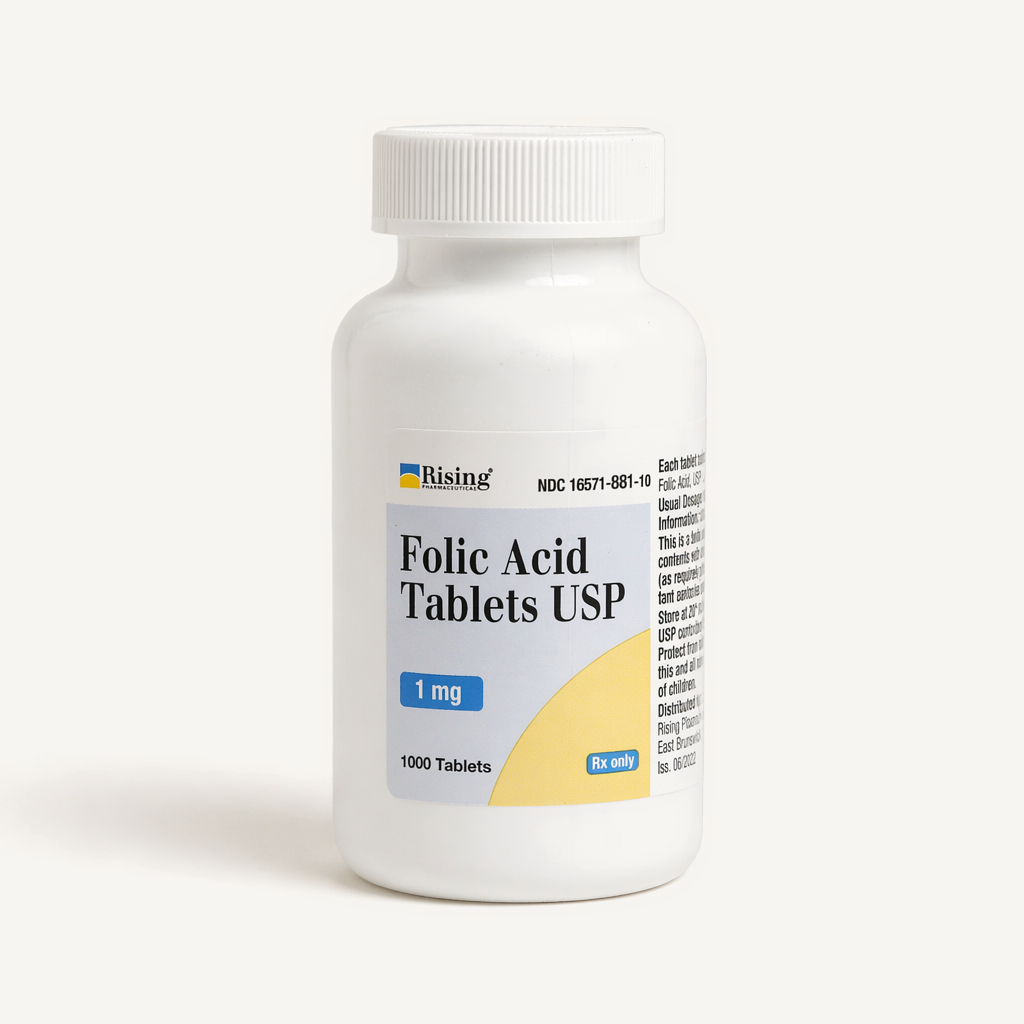
Over-the-counter folic acid comes in various forms and dosage strengths. Prescription folic acid comes in a 1 mg tablet. It is typically taken by mouth once a day, with or without food.
For most adults, the recommended daily intake of folate is 400 micrograms (mcg). When taking folic acid, a typical dose ranges from 0.1 mg to 1 mg daily. People who are trying to become pregnant are often advised to take around 0.6 mg (or 600 mcg) daily.
Note: Dosing information below is educational only. Your prescribing physician will determine your specific dose based on your individual health needs. Always follow your healthcare provider’s instructions for exact dosing.
Uses
FDA-Approved Uses
Folic acid is FDA-approved for:
- Treating or preventing low vitamin B9 levels (folate deficiency) caused by poor diet or malabsorption conditions
- Maintaining vitamin B9 levels in people with megaloblastic anemia
- Preventing neural tube birth defects, such as spina bifida, in people who are pregnant or planning to become pregnant
Off-Label Uses
You may see folic acid prescribed for uses that are not “FDA-approved.” This is a very common and legal practice called “off-label” prescribing, where a doctor uses their clinical judgment to prescribe a drug for a different (but well-researched) purpose.
Folic acid is routinely co-prescribed with low-dose methotrexate to help manage treatment-related side effects. Although off-label, it is considered a first-line strategy for improving tolerability in this treatment.
Side Effects
Like all medications, folic acid can cause side effects. Side effects are usually uncommon when folic acid is taken in recommended doses. Some side effects may be serious and require medical attention.
Common Side Effects
- Headache
- Itching
- Rash
- Dizziness
- Gas
- Change in taste
- Nausea
- Loss of appetite
- Fatigue
Serious Side Effects
Serious side effects are rare, but it’s important to know what to look for if they do occur. Stop using folic acid and call your doctor immediately if you experience:
- Severe allergic reactions: Symptoms include swelling of the face, lips, tongue, or throat; difficulty breathing or swallowing; racing heart; severe rash or itching; and/or fever.
- Masking vitamin B12 deficiency: Taking folic acid can hide the symptoms of low vitamin B12 levels. It can improve your red blood cell count without fixing the vitamin B12 deficiency. Your healthcare provider may order a blood test to review your vitamin B12 levels before you take folic acid.
Call your doctor immediately if you experience any concerning or prolonged symptoms.
Pharmacist Tips
Take Your Dose Consistently
There is no specific time of day that is better for taking folic acid. The important thing is to take it consistently around the same time every day.
Take With Or Without Food
Folic acid can be taken with or without food.
Check Your Supplements To Avoid Overdose
Carefully read the labels of any other multivitamins or dietary supplements you use to see if they already contain vitamin B9. Taking more than the recommended dose can be harmful.
Consider Limiting Alcohol
While it is unknown if alcohol affects the medication, heavy drinking may lower the levels of vitamin B9 in your body.
Store At Room Temperature
Folic acid should be stored at 68°F to 77°F (20°C to 25°C) in a cool, dry place away from light.
Try To Avoid Missing A Dose
If you miss a dose of folic acid, take it as soon as you remember, unless it is almost time for your next dose. In that case, skip the missed dose and take your next dose as scheduled. Do not take double or extra doses of folic acid to make up for a missed one.
Drug Interactions
Certain medications and substances can interact with folic acid, potentially altering how it works or increasing the risk of side effects. For example:
- Seizure medications: Folic acid levels may be reduced when taken with certain antiepileptic drugs (e.g., phenytoin). Folic acid supplementation may also affect seizure control. Similar interactions may occur with phenobarbital, primidone, and carbamazepine.
- Methotrexate: Folic acid can interact with methotrexate by partially reducing its effects. This interaction is used intentionally to decrease side effects and improve tolerability, and folic acid is often taken on non-methotrexate dosing days in low-dose therapy.
- Certain antibiotics: Folic acid can interact with some medicines used to treat serious infections, such as chloramphenicol, nitrofurantoin, and pyrimethamine.
Always give your doctor and pharmacist a complete list of all your medications, vitamins, and supplements to check for potential interactions.
FAQs
What is the difference between over-the-counter and prescription folic acid?
Both forms contain vitamin B9. Over-the-counter options are generally used as dietary supplements to maintain daily recommended folate levels. Prescription folic acid comes in prescription dosage strengths and is typically used to treat conditions like severe folate deficiency or specific types of anemia.
Will taking a large dose of folic acid make my hair grow thicker and my nails stronger?
Current research suggests that folic acid does not help with hair loss. Providers typically recommend discussing other proven treatment options for hair loss.
Why did my doctor order a Vitamin B12 blood test before letting me start this prescription?
Taking folic acid can mask the symptoms of a vitamin B12 deficiency. The supplement might help raise your red blood cell count, making blood work look normal, while your B12 levels remain low. Checking B12 levels beforehand helps your doctor recommend a comprehensive treatment plan for all nutrient deficiencies.
If I am pregnant, is taking the full 1 mg prescription pill dangerous for my baby compared to a normal prenatal vitamin?
A provider will determine the appropriate dose based on your personal health situation. While many women trying to conceive take 0.6 mg (600 mcg) to prevent birth defects, standard dosing can range up to 1 mg safely if recommended by a healthcare provider. Taking more than your healthcare provider specifically recommends can be harmful.
Will taking this prescription treat my severe exhaustion?
While general discomfort and fatigue can be side effects of anemia, folic acid is used to treat anemias caused by low blood levels of folic acid or poor diet. It does not treat all types of anemia or exhaustion.
If I have the “MTHFR mutation,” does that mean this pill won’t even work for me?
The MTHFR gene tells the body to convert folic acid into its active form. People with this genetic mutation might not convert as much folic acid. It’s recommended to tell your doctor if you have this mutation so they can decide the best course of action and precise dosage.
Do I have to take prescription folic acid with food?
No. Folic acid can be taken with or without food.
Can I take my iron pill at the exact same time as this folic acid pill?
It’s generally considered safe to take iron and folic acid pills at the same time. However, it’s best to ask your provider or pharmacist so they can check for any possible interactions.
How long does it take for my energy levels to come back after starting folic acid?
The exact timeline varies from person to person. Symptoms may gradually improve over time as your body adjusts. Providers typically monitor your progress during treatment.
Can taking high doses of folic acid cause anxiety or insomnia?
Taking more than the recommended dose can be harmful. Overdose symptoms can include insomnia (difficulty sleeping), concentration problems, and feeling irritable.
Does prescription folic acid interact with my daily seizure medications?
Yes, folic acid may interact with several medicines used for seizures, including phenytoin, fosphenytoin, carbamazepine, phenobarbital, primidone, and valproic acid.
Can I eat foods high in folic acid instead of taking this pill?
Natural folate is found in many foods, including beef liver, green vegetables, fruits, nuts, beans, and peas. While most people get enough from their diet, some people do not get enough from the foods they eat or have trouble absorbing it due to a condition like Crohn’s or celiac disease. In these cases, a supplement may be recommended to restore levels.
Comparable Medications
Folic acid, Folic Acid 800 mcg, l-methylfolate, or cyanocobalamin (B12)?
There are several medications that your doctor can prescribe in place of folic acid. Here are a few possible alternatives below.
Folic acid 800 mcg
An over-the-counter version of folic acid.
L-methylfolate
An over-the-counter and prescription form of vitamin B9 used to treat folate deficiency. Unlike folic acid, it is the active form and does not require conversion in the body.
Cyanocobalamin (Vitamin B12) Injection
From $139.99
An over-the-counter and prescription version of vitamin B12 used to treat low vitamin B12 levels.
We Have Folic Acid in Stock. Get Yours Today!
Important: Information on this page is for educational purposes only. Prescribing decisions are made by independent, licensed providers. TelyRx operates technology-enabled pharmacies and a telehealth platform that connects patients with licensed providers. Prescriptions, when provider-approved and issued, are filled and shipped by TelyRx-affiliated pharmacies. We do not employ physicians or make prescribing decisions. Learn more about our editorial standards here.