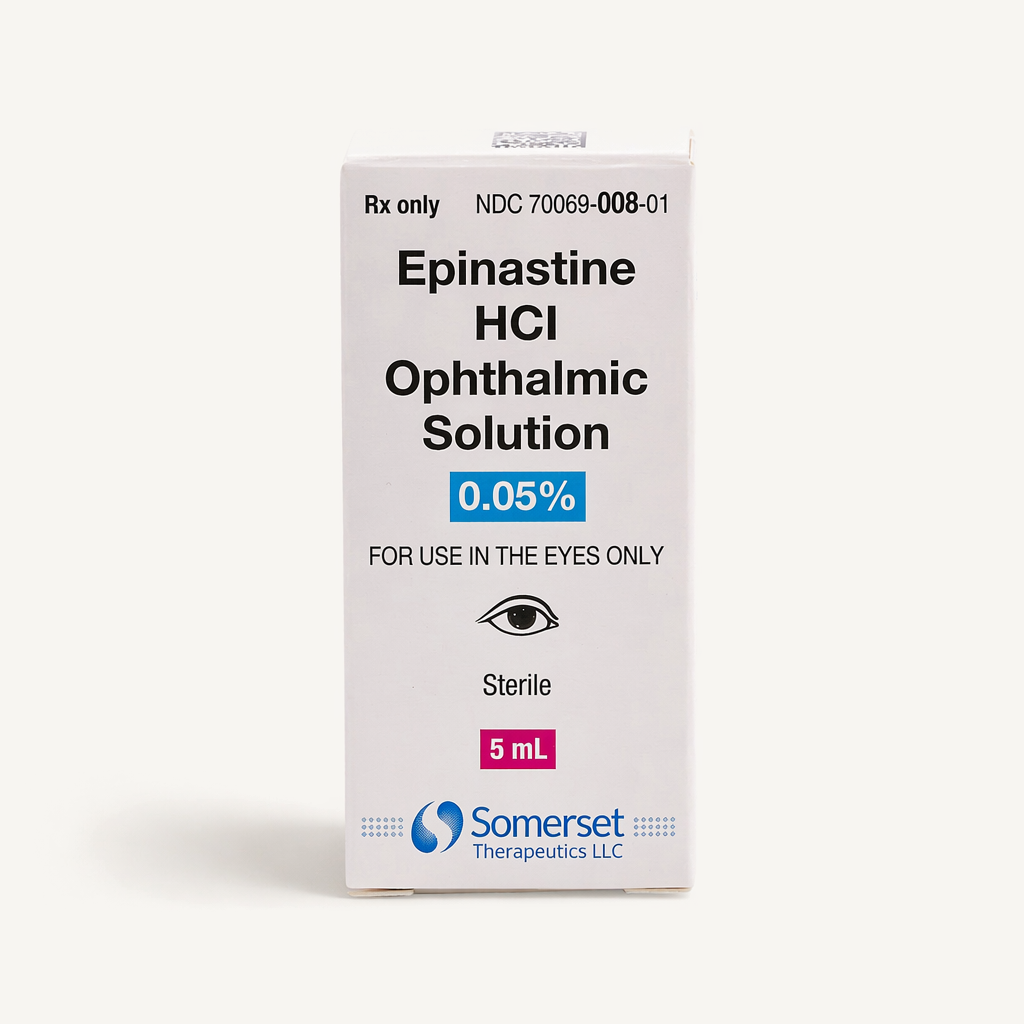
How It Works
When an allergen lands on the surface of your eye, it triggers mast cells to release histamine. Histamine is responsible for the redness, swelling, and that frustrating itchy sensation.
Epinastine works through a dual biological mechanism:
- Blocking histamine receptors: The medication acts like a shield against histamine, reducing the trigger of the itch.
- Mast cell stabilization: Epinastine also prevents mast cells from releasing histamine, helping to prevent further symptoms.
Epinastine usually provides relief within 3-5 minutes.
| Quick Facts | |
|---|---|
| Common Brands | Elestat |
| Drug Class | Antihistamine / mast cell stabilizer |
| Generic Status | Generic version available |
| Availability | Prescription only |
Dosing
Epinastine is a 0.05% ophthalmic solution. To get the most benefit, use it consistently during times of high allergen exposure.
- Typical dose: Standard guidelines suggest instilling one drop into each affected eye twice daily.
- Timing: Because the effects typically last about 8 hours, most people find it easiest to use one drop in the morning and one in the evening.
- Application technique: Tilt your head back, look up, and gently pull down your lower eyelid to create a small pocket. Squeeze one drop directly into that pocket.
- Absorption: After the drop is in, providers generally recommend closing your eyes and gently pressing on the inner corner of your eye (near your nose) for 1 minute. This helps keep the medicine in the eye and prevents it from draining into your throat.
- Consistency: Providers typically recommend using the drops every day throughout the allergy season, even on days when your eyes don’t feel particularly itchy.
Note: Dosing information below is educational only. Your prescribing physician will determine your specific dose based on your individual health needs. Always follow your healthcare provider’s instructions for exact dosing.
Uses
FDA-Approved Uses
The FDA approves epinastine for the prevention of ocular itching associated with allergic conjunctivitis.
Off-Label Uses
You may see epinastine prescribed for uses that are not FDA-approved. This is a common and legal practice called off-label prescribing, where a doctor uses their clinical judgment to prescribe a drug for a different (but well-researched) purpose.
Epinastine may be prescribed off-label for the following conditions:
- Giant papillary conjunctivitis (GPC): Doctors may prescribe epinastine to help manage bumps and irritation that sometimes develop on the underside of the eyelid from long-term contact lens use.
- Vernal keratoconjunctivitis: This is a more severe, chronic form of eye allergies that sometimes requires a multi-action drop, such as epinastine, for long-term management.
Side Effects
Epinastine is generally well-tolerated when applied topically, but localized reactions can occur.
Common Side Effects
- Burning or stinging
- Eye redness
- Watery eyes
- Headache
- Cold-like symptoms
Serious Side Effects
Serious side effects are rare, but it’s important to know what to look for if they do occur. Stop taking the medication and immediately call the doctor if you experience any of the following symptoms:
- Severe allergic reactions: Seek immediate medical attention if you experience hives, swelling of the face or tongue, difficulty breathing, or any other severe symptoms.
- Vision changes: Standard guidelines recommend contacting your doctor if you experience sudden blurred vision or significant eye pain that does not resolve.
- Eye infection: Using eye drops with unwashed hands or a contaminated eye dropper can lead to an infection. Watch for thick discharge or crusting.
Call your doctor immediately if you experience any concerning or prolonged symptoms.
Pharmacist Tips
Remove Contacts First
Providers generally recommend removing your contact lenses before using epinastine. The solution contains a preservative called benzalkonium chloride, which can be absorbed by soft lenses and cause irritation.
The 10-Minute Rule
Wait at least 10 minutes after applying the drops before you put your contact lenses back in. This delay gives the medication enough time to absorb.
Wash Your Hands
Standard guidelines typically recommend washing your hands before and after using eye drops to prevent the spread of bacteria to your eyes.
Avoid The Dropper Tip
It is generally advised not to let the tip of the dropper touch your eye, eyelashes, or any other surface. This helps keep the medicine inside the bottle sterile.
Space Your Drops
If you use other eye medications, such as artificial tears, wait at least 5 minutes between applications so the second drop does not wash out the first.
Room Temperature Storage
Standard guidelines generally recommend keeping the bottle at room temperature (around 68°F to 77°F). There is no need to refrigerate these drops unless your doctor specifically tells you to do so.
Drug Interactions
While systemic (whole-body) drug interactions are unlikely with epinastine eye drops, be mindful of other products you use in your eyes. Let your doctor know if you take:
- Other allergy drops: Using multiple antihistamine drops together can increase the risk of side effects like dry eye or stinging.
- Contact lens solutions: Some solutions may interact with the preservatives in the drops if the 10-minute wait time is not followed.
Always give your doctor and pharmacist a complete list of all your medications, vitamins, and supplements to check for potential interactions.
FAQs
How long does it usually take for epinastine to stop itching caused by seasonal allergies?
Epinastine works quickly. Most people start to feel a reduction in itching within 5 minutes of applying the drops.
How long should I wait before putting my contact lenses back in?
Standard guidelines suggest waiting at least 10 minutes. This prevents the preservative in the drops from damaging your lenses and gives the medication time to work.
Why did my doctor prescribe epinastine instead of just having me take OTC Zyrtec?
Oral antihistamines like Zyrtec are absorbed throughout your body and can sometimes cause dry eyes or drowsiness. Epinastine works directly on the eye, providing targeted treatment with fewer systemic side effects.
Is it normal for my eyes to sting or burn right after putting the drop in?
Yes, a mild stinging or burning sensation is a common but temporary side effect.
How many times a day should I use this medication during pollen season?
It is typically used twice daily: once in the morning and once in the evening.
Can I use epinastine to treat a bacterial or viral eye infection?
No. Epinastine will not kill bacteria or viruses. If you have thick discharge, pain, or crusty eyes, you may have an infection and should see a doctor.
Can I use these drops to soothe irritation from wearing contact lenses too long?
No. Epinastine is not a rewetting drop. If your eyes are irritated from over-wearing lenses, consider removing the lenses and use preservative-free artificial tears.
Is it safe to use artificial tears or dry eye drops at the same time?
Yes. However, it is generally accepted that you should space them out by about 5 to 10 minutes so one drop doesn’t wash the other away.
Does this medication absorb into my bloodstream and make me drowsy like Benadryl does?
No. Very little epinastine enters the bloodstream when using the eye drops, so it does not typically cause sleepiness.
What should I do if I taste a bitter or metallic flavor in the back of my throat after using this?
This is normal because your tear ducts connect to your nasal passages and throat. Press on the inside corner of your eye for one minute after dosing to reduce this effect.
Can I use epinastine strictly as needed, or do I have to use it every single day to prevent symptoms?
Technically yes, but it works best when used every day during allergy season. This keeps the mast cells stabilized and prevents symptoms from forming.
Should I store this bottle in the refrigerator?
Store epinastine at room temperature. However, some people find that keeping a bottle of artificial tears in the fridge provides a cooling effect that helps soothe itchy eyes.
Why does the label say I should avoid using this if my eyes are already red?
Antihistamine drops can sometimes mask a more serious issue. If your eyes are red and painful without an obvious allergy trigger, standard guidelines typically recommend having them checked by a healthcare provider before starting treatment.
What should I do if the liquid inside the bottle turns cloudy or changes to a dark color?
Do not use the solution if it changes color or becomes cloudy, as this could indicate contamination. Throw the bottle away and get a new bottle.
Comparable Medications
Pataday, Zaditor, Visine, or oral pills?
Below are some possible alternatives to epinastine:
Olopatadine Eye Drops
From $24.99
This is a prescription-strength and OTC antihistamine drop. Pataday is available in a once-daily formula (0.2% or 0.7%), whereas epinastine is typically used twice daily.
Zaditor
Zaditor is an over-the-counter multi-action drop. It works similarly to epinastine but may not be as potent for individuals with severe allergies.
Visine
Visine and other redness-reliever drops work by narrowing blood vessels. They do not treat the underlying allergy and can cause a rebound effect if used for more than 3 days. Epinastine is generally a safer long-term choice because it treats the cause of the itch.
Zyrtec / Claritin
Oral medication can help treat multiple symptoms associated with allergies, such as sneezing and a runny nose. However, if your only symptom is itchy eyes, epinastine is generally preferred because it provides faster, targeted relief.
We Have Epinastine in Stock. Get Yours Today!
Important: Information on this page is for educational purposes only. Prescribing decisions are made by independent, licensed providers. TelyRx operates technology-enabled pharmacies and a telehealth platform that connects patients with licensed providers. Prescriptions, when provider-approved and issued, are filled and shipped by TelyRx-affiliated pharmacies. We do not employ physicians or make prescribing decisions. Learn more about our editorial standards here.