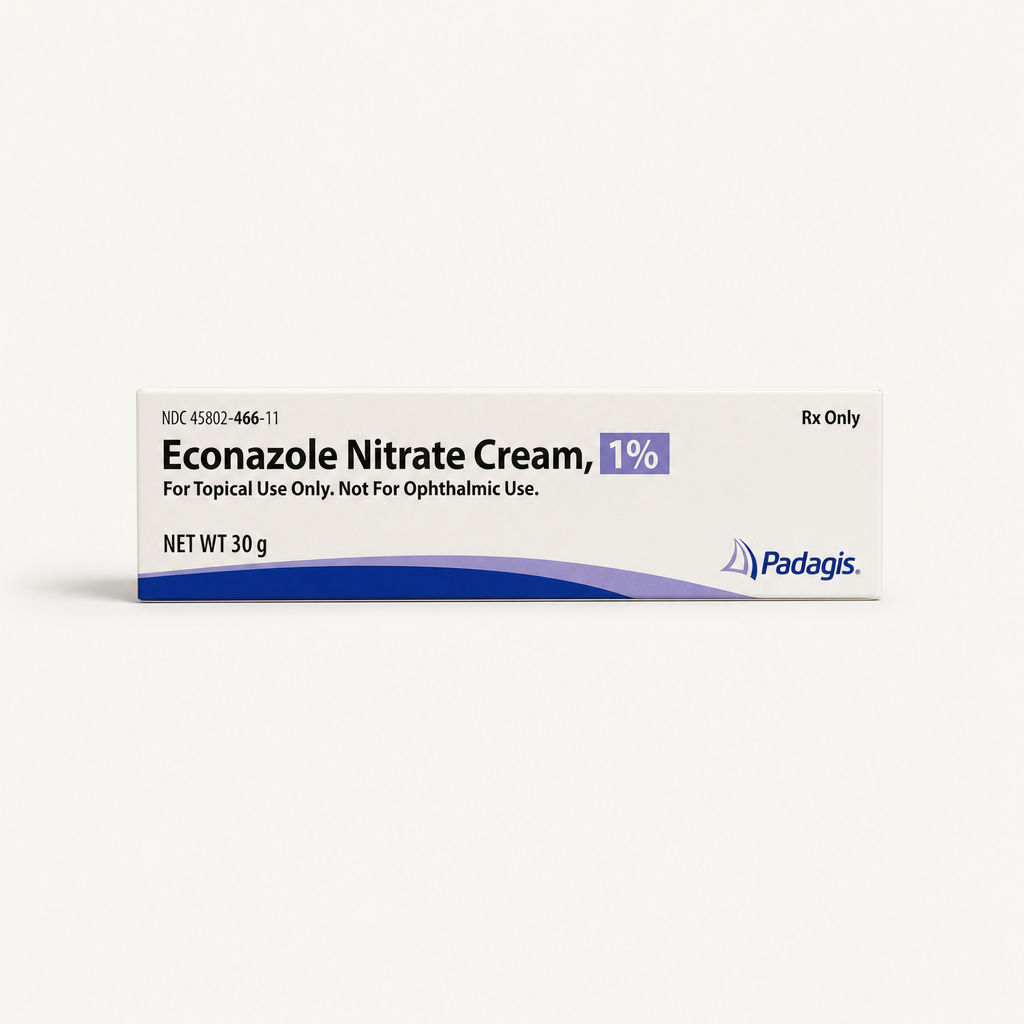
How It Works
Econazole cream works by disrupting the cell membranes of the fungi causing the infection, which stops it from growing.
| Quick Facts | |
|---|---|
| Common Brands | Spectazole |
| Drug Class | Topical antifungal |
| Generic Status | Generic is available |
| Availability | Prescription only |
Dosing
The dosing regimen for econazole 1% topical cream depends on the condition being treated:
- Athlete’s foot (tinea pedis): It is recommended to apply a thin layer of econazole cream to the affected area(s) of skin once daily for one month (4 weeks).
- Jock itch (tinea cruris), ringworm (tinea corporis), or tinea versicolor: It is recommended to apply a thin layer of econazole cream to the affected area(s) of skin once daily for 2 weeks.
- Yeast skin infections (cutaneous candidiasis): It is recommended to apply a thin layer of econazole cream to the affected area(s) of skin twice daily, in the morning and evening, for 2 weeks.
Your provider may recommend applying econazole cream more often or for a longer duration of time, depending on the severity of your infection.
Regardless of the condition, it is strongly advised to continue using the cream for the entire prescribed course, even if symptoms appear to improve early. Stopping treatment early can increase the risk of the infection returning.
Note: Dosing information below is educational only. Your prescribing physician will determine your specific dose based on your individual health needs. Always follow your healthcare provider’s instructions for exact dosing.
Uses
FDA-Approved Uses
Econazole cream is FDA-approved to treat the following fungal and yeast infections of the skin:
- Athlete’s foot (tinea pedis)
- Jock itch (tinea cruris)
- Ringworm (tinea corporis)
- Fungal skin infection (tinea versicolor)
- Yeast infections on the skin (cutaneous candidiasis)
Off-Label Uses
You may see econazole cream prescribed for uses that are not “FDA-approved.” This is a very common and legal practice called “off-label” prescribing, where a doctor uses their clinical judgment to prescribe a drug for a different (but well-researched) purpose.
There are currently no common off-label uses for econazole cream.
Side Effects
Like all medications, econazole cream can cause side effects. Most common side effects are mild and localized to the area of skin where you apply econazole cream. Other side effects may be serious and require medical attention.
Common Side Effects
- Skin burning
- Itching
- Stinging
- Redness
- Rash
Serious Side Effects
Serious side effects are rare, but it’s important to know what to look for if they do occur. Stop using econazole cream and call your doctor immediately if you experience:
- Severe allergic reactions: Symptoms include swelling of the face, lips, tongue, or throat; difficulty breathing or swallowing; racing heart; severe rash or itching; and/or fever.
- Severe skin reactions: While rare, some people may experience severe burning, itching, rash, or stinging when using econazole cream.
Call your doctor immediately if you experience any concerning or prolonged symptoms.
Pharmacist Tips
Clean The Area Before Applying
It is recommended to clean and dry the affected skin before applying the medication. Also wash your hands before and after applying, unless your hands are the area being treated. In that case, only wash them beforehand.
Apply The Cream Only To The Skin’s Surface
Avoid getting the medication in your eyes, nose, mouth, or ears. If eye exposure occurs, rinse with cool tap water for several minutes. Seek medical advice if your eye continues to feel irritated.
Do Not Insert Econazole Into The Vagina
The medication is not formulated for vaginal yeast infections.
Do Not Tightly Wrap Or Cover The Treated Skin
While a sterile gauze dressing can be placed over the treated area, avoid using airtight coverings, such as plastic bandages.
Take Care When Treating Athlete’s Foot
Ensure the cream is applied between the toes. It’s also recommended to wear well-fitting, breathable shoes and to change your socks and shoes daily.
Follow Up If You Don’t See Improvement
If you’ve applied econazole cream for the prescribed course and your symptoms don’t improve, it’s recommended to stop using it and consult your provider. They may switch you to another medication.
Store At Room Temperature
Econazole cream should be stored below 86°F (30°C) in a cool, dry place away from light.
Tell Your Provider If You’re Pregnant Or Breastfeeding
Tell your healthcare provider if you are pregnant, breastfeeding, or planning to be, so they can advise whether this medication is safe for you to use.
Try To Avoid Missing A Dose
If you miss a dose of econazole cream, apply it as soon as you remember, unless it is almost time for your next dose. In that case, skip the missed dose and apply your next dose as usual.
Drug Interactions
Certain medications and substances can interact with econazole cream, potentially altering how it works or increasing the risk of side effects. For example:
- Warfarin (Coumadin): Applying econazole cream over large areas of the body, to genital areas, or covering the treated areas can potentially increase the risk of bleeding, especially for people taking warfarin. Your healthcare team may recommend checking in more often during your treatment with econazole cream.
Always give your doctor and pharmacist a complete list of all your medications, vitamins, and supplements to check for potential interactions.
FAQs
How long does it take for econazole cream to start clearing up a fungal rash?
You may feel some relief soon after beginning treatment. However, it typically takes 2 to 6 weeks of regular application to completely clear the infection, depending on the specific condition being treated.
Why should I continue using this cream after the rash has disappeared?
It is highly recommended to complete the full prescribed course of treatment, even if symptoms like itching or the rash itself improve early. Continuing to use econazole as long as your doctor prescribed helps ensure the fungi are removed, which lowers the risk of the infection coming back.
What is the difference between prescription econazole and over-the-counter creams like Lotrimin?
Econazole is a prescription-strength antifungal medication that cannot be purchased over the counter.
Can I use this cream to treat a vaginal yeast infection?
No, econazole cream is intended for external skin use only. It is not approved or formulated for vaginal yeast infections and should not be inserted into the vagina.
Is it normal for the cream to burn immediately after applying it?
Mild burning, stinging, or redness at the application site can happen when using econazole cream. These sensations are usually temporary. If the burning is severe or doesn’t go away, it is often recommended to stop using the cream and contact your doctor.
Should I cover the treated area with a bandage or wrap, or leave it exposed to the air?
You can cover the treated area with a light, sterile gauze dressing, but avoid using airtight or plastic-covered bandages over the medication. Using airtight wraps may increase the risk of side effects.
Can this medication effectively treat fungal infections underneath the fingernails or toenails?
Econazole is designed to be effective against dermatophytes, which are the type of fungi that infect skin, hair, and nails. However, the cream formulation is not approved for or effective against nail infections. Treatment specifics for nail bed infections should be evaluated by a physician.
How many times a day should I apply this cream for athlete’s foot?
For athlete’s foot, healthcare providers typically recommend applying a thin layer of the cream to the affected areas once daily for one month (4 weeks).
Will this cream work to treat sun fungus spots on my chest and back?
Yes, if those spots are diagnosed as tinea versicolor. Tinea versicolor is a yeast infection that causes small discolored patches on the skin. Econazole cream is an FDA-approved treatment for this condition.
Is it safe to apply my moisturizer or body lotion over the econazole cream?
Standard guidance emphasizes applying the medication to clean, dry skin. It is generally best to consult your provider before layering other skin products over econazole cream to ensure the medication can absorb properly.
Can I use hydrocortisone cream at the same time to stop the severe itching?
Econazole is not a steroid. Depending on the severity of the infection and inflammation, a provider might prescribe a topical steroid to be used alongside econazole to help manage intense redness, swelling, and itching. It’s best to always check with your doctor before combining treatments to avoid drug interactions.
Is econazole cream safe to use on the face or groin?
Yes, econazole cream can be used on the groin and can also be used on the face to treat conditions like ringworm or tinea versicolor. Avoid getting the medication near the eyes, nostrils, mouth, inner ears, or vagina.
Does this medication absorb into my bloodstream?
As a topical medication, very little of the drug enters the bloodstream, making it a generally safe option for localized skin infections.
Will econazole cream stain my clothing or bed sheets?
Econazole cream generally doesn’t stain clothing or sheets. To prevent any potential transfer to fabrics, you may allow the cream to absorb fully into the skin before getting dressed or going to bed.
What should I do if the rash actually looks worse after using the cream?
If skin irritation worsens, the rash spreads, or you develop signs of an allergic reaction, it is advised to discontinue the use of the cream immediately and seek prompt medical advice.
Comparable Medications
Econazole Cream, Clotrimazole (Lotrimin AF), Terbinafine (Lamisil AT), Clotrimazole-Betamethasone (Lotrisone), Terbinafine, or Miconazole (Monistat)?
There are several medications that your doctor can prescribe in place of econazole cream. Here are a few possible alternatives below.
Clotrimazole
An over-the-counter topical antifungal medication used to treat fungal skin infections such as athlete’s foot, jock itch, and ringworm.
Terbinafine
From $57.49
An over-the-counter topical antifungal medication used to treat fungal skin infections such as athlete’s foot, jock itch, and ringworm.
Clotrimazole / Betamethasone Cream
From $29.89
A combination topical antifungal and corticosteroid medication used to treat fungal skin infections such as athlete’s foot, jock itch, and ringworm.
Terbinafine
From $57.49
An oral antifungal medication used to treat fungal infections affecting the fingernails or toenails.
Miconazole
A topical antifungal medication used to treat vaginal yeast infections.
We Have Econazole Cream in Stock. Get Yours Today!
Important: Information on this page is for educational purposes only. Prescribing decisions are made by independent, licensed providers. TelyRx operates technology-enabled pharmacies and a telehealth platform that connects patients with licensed providers. Prescriptions, when provider-approved and issued, are filled and shipped by TelyRx-affiliated pharmacies. We do not employ physicians or make prescribing decisions. Learn more about our editorial standards here.