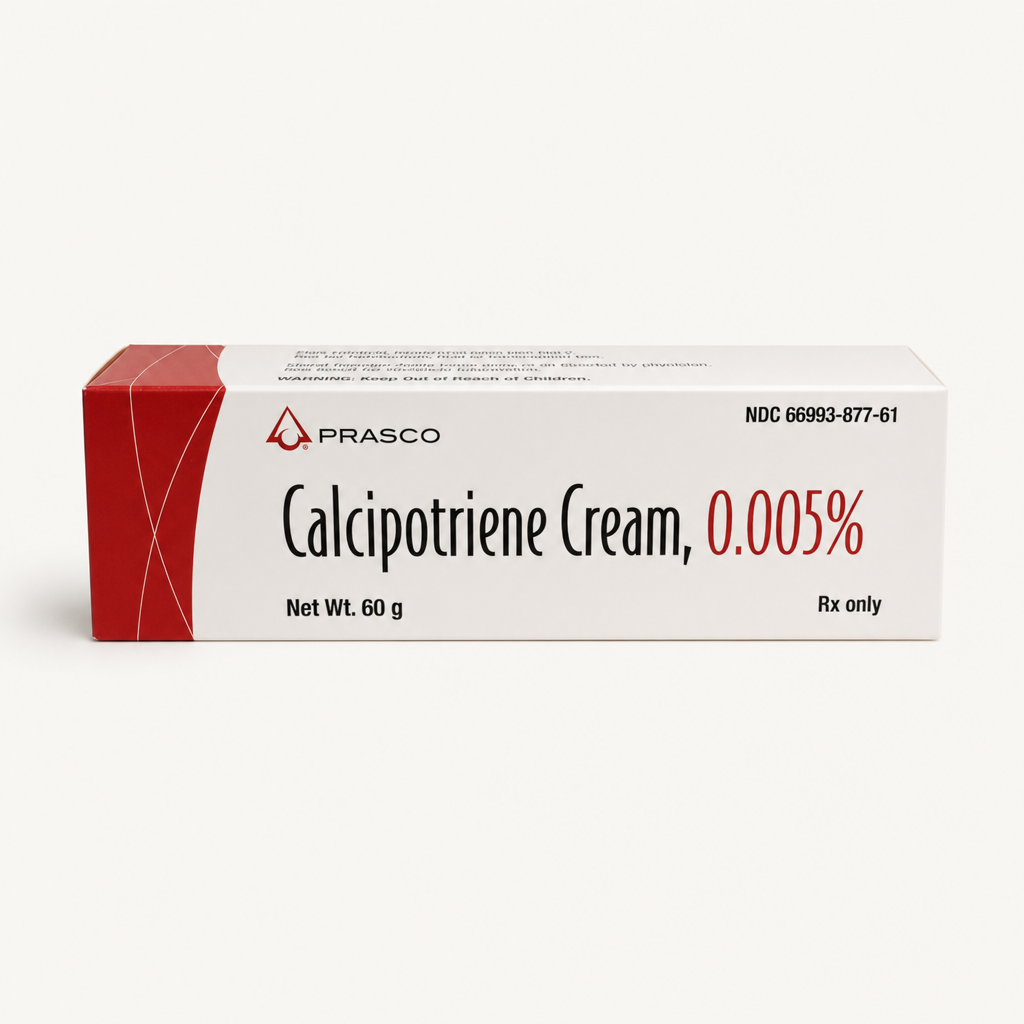
How It Works
Calcipotriene is a synthetic form of vitamin D. It is classified as a vitamin D analogue. When you apply calcipotriene cream directly to the skin, it binds to vitamin D receptors. Research suggests this process reduces the rapid cell growth that drives plaque psoriasis.
The medication normalizes the cell growth cycle. This action prevents the buildup of new scales and shrinks the size and severity of existing psoriatic patches.
| Quick Facts | |
|---|---|
| Common Brands | Calcitrene, Sorilux, Trionex |
| Drug Class | Antipsoriasis agent, Vitamin D analogue |
| Generic Status | Generic is available |
| Availability | Prescription only |
Dosing
Providers typically recommend applying a thin layer of calcipotriene cream to the affected areas of the skin once or twice daily. The cream can be gently rubbed into the psoriatic plaques until it is absorbed.
Guidelines recommend avoiding the use of calcipotriene cream on sensitive or irritation-prone areas. Unless directed by a healthcare provider, do not use this cream on your face, in your groin area, or under your arms. It is recommended to wash your hands immediately after application, unless your hands are the area being treated.
You may begin to see visible improvement in your psoriasis symptoms within 2 to 4 weeks of daily use. However, it may take several more weeks for the medication to have its full effect.
Note: Dosing information below is educational only. Your prescribing physician will determine your specific dose based on your individual health needs. Always follow your healthcare provider’s instructions for exact dosing.
Uses
FDA-Approved Uses
Topical calcipotriene cream is FDA-approved for the treatment of plaque psoriasis.
Off-Label Uses
You may see calcipotriene prescribed for uses that are not “FDA approved.” This is a common and legal practice called “off-label” prescribing, where a doctor uses their clinical judgment to prescribe a drug for a different (but well-researched) purpose.
- Actinic keratosis: Some research suggests that calcipotriene may be used in combination with topical fluorouracil (Efudex) to treat these skin growths.
- Squamous cell carcinoma: Studies have looked at using a combination of calcipotriene and fluorouracil as a potential treatment for this specific type of skin cancer.
Side Effects
Like all medications, calcipotriene can cause side effects. Some common side effects may improve over time as your body adjusts to the medication. Other side effects may be serious and require medical attention.
Common Side Effects
- Skin irritation at the application site
- Temporary burning, stinging, or tingling on the skin
- Skin redness
- Dry, peeling skin
- Rash
- Itching
- Pain where the cream is applied
- Temporary worsening of psoriasis symptoms
Serious Side Effects
Serious side effects are rare, but it’s important to know what to look for if they do occur.
- Allergic reaction: In rare cases, calcipotriene can cause a severe allergic skin reaction. Symptoms to watch for include excessive skin redness, skin that feels unusually hot to the touch, intense itching, crusting, peeling, hives, or swelling of the face, lips, tongue, or throat.
- High calcium levels (hypercalcemia): Vitamin D affects how the body absorbs calcium, and, because calcipotriene is a form of vitamin D, applying too much of the cream can temporarily raise blood calcium levels. Symptoms of hypercalcemia include frequent urination, increased thirst, unusual weakness, severe fatigue, bone pain, nausea, vomiting, constipation, lack of appetite, muscle aches or twitches, and mood changes such as depression or sudden confusion.
- Flammability risks: While primarily a concern for the foam and solution forms of calcipotriene, certain formulations are highly flammable. These medications should be kept away from open flames and heat, and you should not smoke during or immediately after application.
Call your doctor immediately if you experience any concerning or prolonged symptoms.
Pharmacist Tips
Proper Application
Apply only a thin layer of the cream, focusing only on the psoriatic plaques. Gently rub the medication in until it disappears completely into the skin.
Protect Sensitive Skin
Avoid getting calcipotriene on your face, in or near your eyes, or on any areas of healthy skin that do not have plaques. If an unwanted area of your body is exposed to the cream, rinse the area thoroughly with cool tap water.
Hand Hygiene
Wash your hands thoroughly with soap and water before and after you apply the medication. This helps prevent you from accidentally spreading the cream to your face or eyes. If your hands are the area being treated, do not wash your hands after applying the medication.
Sun Sensitivity
Calcipotriene can make treated skin more sensitive to sunlight, increasing your risk of sunburn. Avoid tanning beds, sun lamps, and extended periods of time in the sun when using this medication. When outside, use a broad-spectrum sunscreen and protective clothing to avoid sunburn.
Practice Patience
Plaque psoriasis treatment takes time. While some improvement may be seen in the first few weeks, it may take up to 8 weeks for the medication to have its full effect. Continue using the cream as prescribed, even if you don’t see immediate changes.
Safe Storage
Store calcipotriene cream at room temperature (between 68°F to 77°F). Keep it in a cool, dry place, ensuring the container is tightly closed. Do not freeze the medication.
Follow-up
If you have been using the cream for several weeks and do not notice any significant improvement, schedule a follow-up appointment with your dermatologist. They can assess your progress and discuss the most appropriate next steps.
Drug Interactions
Certain medications and substances can interact with calcipotriene, potentially altering its effectiveness or increasing the risk of side effects.
- Calcium and vitamin D supplements: As a synthetic form of vitamin D, calcitriol can affect your calcium levels. Taking over-the-counter calcium or vitamin D supplements while using calcipotriene may increase your risk of hypercalcemia (excess calcium in the blood).
- Other topical skin products: Avoid applying other medicated skin products, lotions, or harsh cosmetics to the same areas treated with calcipotriene unless you have discussed it with your healthcare provider. Layering different topical medications may increase skin irritation or alter the cream’s absorption.
Always give your doctor and pharmacist a complete list of all your medications, vitamins, and supplements to check for potential interactions.
FAQs
Is it normal for my psoriasis plaques to sting or burn when I first start using this?
It is common to experience a temporary burning, stinging, or tingling sensation when you first apply calcipotriene cream. This side effect generally decreases over time as your skin adjusts to the medication. If this sensation is severe or does not improve, talk with your doctor.
Why is there a weekly limit on how much of this cream I can apply to my body?
Healthcare providers may set dosage limits because applying too much calcipotriene in one area or over too large a surface area of the skin increases the amount of the drug absorbed into your bloodstream. Excessive absorption can elevate calcium levels in your blood (hypercalcemia), which may lead to nausea, bone pain, confusion, and fatigue.
Can I safely use calcipotriene on my face or scalp?
Providers generally recommend against using calcipotriene cream on your face. Facial skin is thinner and more prone to irritation from this medication. Other formulations of calcipotriene (like foams and liquid solutions) are designed for use on the scalp.
Can I use salicylic acid products at the same time as this cream?
Unless your doctor tells you to use other medicated skin products on your plaques, doing so is generally not recommended. Layering multiple active ingredients may dry out and irritate plaques.
Can I use UV light therapy while using calcipotriene?
Exercise caution to prevent skin damage when using calcipotriene. This medication can make your skin more sensitive to UV light. Because of this, providers commonly advise against prolonged exposure to natural sunlight, tanning booths, and artificial sun lamps. If your doctor has prescribed phototherapy for psoriasis, they can provide specific instructions on how to safely sequence your cream applications and light treatments.
Is it safe to use this cream if I am pregnant or breastfeeding?
Currently, it is not fully known if calcipotriene can affect a pregnancy, harm an unborn baby, or pass into breast milk. If you are pregnant, planning to become pregnant, or are currently breastfeeding, discuss the use of this medication with your doctor.
What is the difference between calcipotriene cream, the ointment, and the Sorilux foam?
All of these products contain calcipotriene as the active ingredient, but they come in different forms to suit different needs. The cream is water-based and absorbs quickly, while the ointment is greasier and provides a barrier for dry, thick plaques. The foam (Sorilux) and liquid solutions are easier to apply through hair, making them more commonly used to treat scalp psoriasis.
Should I apply my moisturizer before or after the calcipotriene?
Ask your dermatologist about the best routine for your specific skin type. As a general rule, do not apply other topical skin products, including moisturizers, to the treated area without checking with your health care team first. Some moisturizers can dilute the medication or cause irritation.
Can I wrap the treated plaques in bandages to make the cream work faster?
Guidelines indicate that you should not wrap, bandage, or securely cover the treated areas unless your doctor recommends it. Using a tight cover or bandage may increase the medication’s absorption into the bloodstream and affect blood calcium levels.
Why did my doctor prescribe a topical steroid to use alongside this cream?
Plaque psoriasis involves both inflammation and rapid skin cell growth. While calcipotriene can be effective at slowing down cell growth, it does not quickly reduce inflammation. Your doctor may prescribe a topical steroid to help calm redness, swelling, and itching.
Can I use calcipotriene to treat eczema or fungal infections?
No. Calcipotriene is specifically formulated and FDA-approved for the treatment of psoriasis. It has not been evaluated or approved for eczema and does not have antifungal properties.
What should I do if the cream accidentally gets into my eyes or mouth?
If calcipotriene cream accidentally comes into contact with your eyes, mouth, or other sensitive mucous membranes, flush the area immediately and thoroughly with cool tap water.
Comparable Medications
Calcipotriene Cream, Calcitriol (Vectical), Calcipotriene / Betamethasone (Taclonex / Enstilar), Clobetasol / Fluocinonide, or Tazarotene (Tazorac)?
Calcitriol
This is another topical vitamin D analogue available as an ointment, used similarly to slow rapid cell turnover and treat plaque psoriasis.
Calcipotriene / Betamethasone
This treatment approach combines a vitamin D analogue (calcipotriene) with a topical steroid (betamethasone) to slow skin cell growth and reduce inflammation.
Clobetasol / Fluocinonide
These are topical corticosteroid medications. Unlike vitamin D analogues, which target the cell growth cycle, these steroids work primarily by suppressing the local immune response to lessen skin inflammation, redness, and itching.
Tazarotene Cream
From $139.99
Tazarotene is a topical retinoid (vitamin A derivative) prescription medication used to manage plaque psoriasis and other skin conditions, acting through a different mechanism of action than vitamin D analogues.
We Have Calcipotriene Cream in Stock. Get Yours Today!
Important: Information on this page is for educational purposes only. Prescribing decisions are made by independent, licensed providers. TelyRx operates technology-enabled pharmacies and a telehealth platform that connects patients with licensed providers. Prescriptions, when provider-approved and issued, are filled and shipped by TelyRx-affiliated pharmacies. We do not employ physicians or make prescribing decisions. Learn more about our editorial standards here.