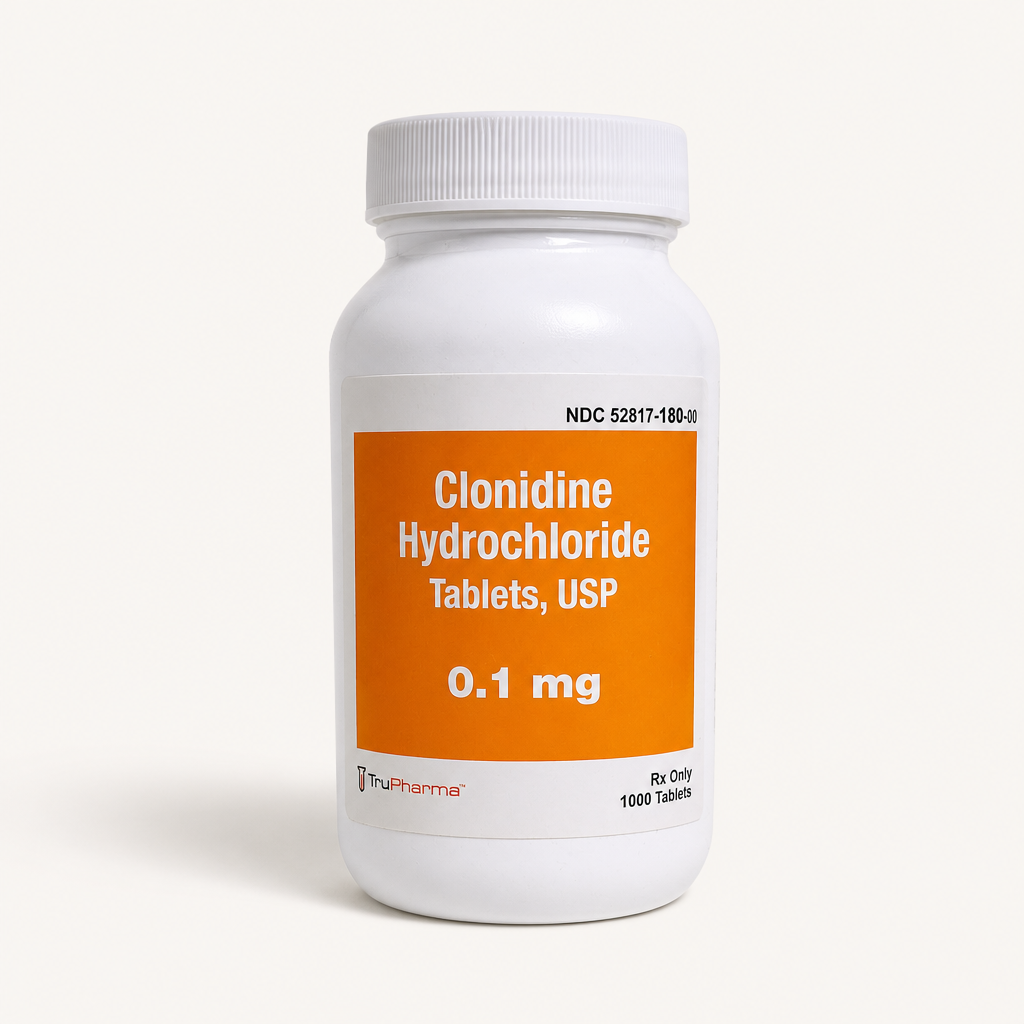
How It Works
Clonidine is classified as an alpha-2 selective agonist. Unlike many other blood pressure medications that act on the blood vessels or the heart, clonidine works in the brain.
It works by stimulating alpha-2 adrenergic receptors in specific areas of the brainstem. This reduces the brain’s “fight-or-flight” signals, lowering sympathetic nerve activity throughout the body and helping decrease blood vessel tightening and heart rate.
| Quick Facts | |
|---|---|
| Common Brands | Catapres, Nexiclon XR |
| Drug Class | Alpha 2 agonist |
| Generic Status | Generic is available |
| Availability | Prescription only |
Dosing
For immediate-release tablets, standard guidelines suggest a typical starting dose of 0.1 mg taken by mouth twice daily. Depending on how the body responds, a doctor may raise the dose weekly. The typical maintenance dose of clonidine generally ranges from 0.2 mg to 0.6 mg daily, taken in divided doses during the day.
For extended-release tablets, the standard starting dose is usually 0.17 mg taken by mouth once daily. A provider may gradually increase this dose over time, with a typical maintenance dose of 0.17 to 0.52 mg once daily.
Dosing requirements might be different for individuals with kidney problems or other coexisting health issues.
Note: Dosing information below is educational only. Your prescribing physician will determine your specific dose based on your individual health needs. Always follow your healthcare provider’s instructions for exact dosing.
Uses
FDA-Approved Uses
Clonidine tablets are FDA-approved to treat high blood pressure.
Off-Label Uses
You may see clonidine tablets prescribed for uses that are not “FDA-approved.” This is a common and legal practice called “off-label” prescribing, where a doctor uses their clinical judgment to prescribe a drug for a different (but well-researched) purpose.
Some potential off-label uses of clonidine include:
- Easing hot flashes and night sweats associated with menopause
- Managing anxiety symptoms
- Treating drug withdrawal symptoms
Side Effects
Like all medications, clonidine tablets can cause side effects. Some common side effects may improve over time as your body adjusts to the medication.
Other side effects may be serious and require medical attention.
Common Side Effects
- Dry mouth
- Drowsiness
- Dizziness
- Constipation
- Headache
- Fatigue
Serious Side Effects
Serious side effects are rare, but it’s important to know what to look for if they do occur.
- Severe allergic reactions: The medication may cause serious allergic reactions, including difficulty breathing, a rapid pulse, fever, swollen lymph nodes, or swelling of the face, lips, tongue, or throat. Seek immediate medical attention for signs of an allergic reaction to clonidine.
- Withdrawal reactions: Abruptly stopping the use of clonidine can cause withdrawal symptoms, including a spike in blood pressure, nervousness, agitation, tremor, sudden confusion, or trouble speaking.
- Heart issues: There have been reports of heart rhythm changes with clonidine use. This may include a very slow heart rate, irregular pulse, or chest pain (angina). These side effects are more likely when clonidine is taken with other medications that affect the heart.
- Severe low blood pressure: A significant drop in blood pressure (hypotension) from clonidine can cause extreme faintness, lightheadedness, or dizziness, especially when standing up quickly.
- Mental and nervous system changes: In some cases, clonidine has been reported to cause sudden confusion or other effects on thinking.
Call your doctor immediately if you experience any concerning or prolonged symptoms.
Pharmacist Tips
Avoid Sudden Discontinuation
Suddenly stopping clonidine can cause a life-threatening increase in blood pressure. For safety, work with a medical professional to gradually reduce the dose.
Monitor Your Alertness
Because clonidine can cause excessive sleepiness and dizziness, guidelines advise against driving or operating heavy machinery until it is clear how the medication affects you.
Take At Consistent Times
Providers typically recommend taking clonidine tablets at the same time every day.
Stand Up Slowly
When taking clonidine, some individuals experience dizziness or low blood pressure when standing up quickly. Rising gently from sitting or lying down can help mitigate this side effect.
Report Vomiting
Frequent vomiting can stop the body from absorbing the medication properly. Talk with your doctor if you have vomiting episodes while taking clonidine.
Drug Interactions
Certain medications and substances can interact with clonidine tablets, potentially altering how it works or increasing the risk of side effects.
- Alcohol: Providers discourage alcohol consumption when taking clonidine because alcohol can exacerbate side effects like dizziness and sleepiness.
- Beta-blockers: Medications such as metoprolol, atenolol, and propranolol can increase the risk of low heart rate and heart rhythm problems when taken concurrently with clonidine.
- Calcium channel blockers: Drugs like diltiazem and verapamil, when combined with clonidine, can cause the heart rate to slow down too much.
- Antidepressants: Tricyclic antidepressants, including amitriptyline and nortriptyline, can potentially reduce the effects of clonidine.
- Central nervous system depressants: Barbiturates, benzodiazepines, muscle relaxers, and opioids can all compound the sleepiness and dizziness associated with clonidine.
Always give your doctor and pharmacist a complete list of all your medications, vitamins, and supplements to check for potential interactions.
FAQs
Why must clonidine be tapered slowly rather than stopped abruptly?
Abruptly stopping clonidine use can cause withdrawal reactions, leading to a rapid and potentially dangerous increase in blood pressure. This rebound hypertension can be accompanied by nervousness, agitation, headaches, and tremors. If you plan to stop taking clonidine, consult your doctor first about how to safely taper down your dosage.
Does clonidine lower blood pressure, heart rate, or both?
Clinical data indicates that clonidine usually lowers both blood pressure and heart rate by relaxing blood vessels in the body.
What is the difference between immediate-release and extended-release clonidine?
According to standard guidelines, immediate-release clonidine tablets are typically taken twice daily, while extended-release tablets are taken once per day.
Clonidine medications are not necessarily interchangeable as some formulations and dosages are intended for different administration schedules or may be used for the treatment of different conditions.
Why is clonidine frequently prescribed off-label for anxiety or withdrawal symptoms?
Because it works in the brain to lower the activity of stress hormones like norepinephrine, clonidine is sometimes used off-label to ease anxiety and withdrawal symptoms. However, it can also worsen symptoms in some cases, so careful medical oversight is necessary.
Is it safe to consume alcohol while taking clonidine?
Combining alcohol with clonidine can cause excessive sleepiness, increase the risk of dizziness, and exacerbate other side effects.
Does clonidine interact with antidepressants?
Yes, clonidine can interact with tricyclic antidepressants like amitriptyline or nortriptyline. It is important to disclose all mental health medications to your healthcare provider who can address the benefits and potential risks of taking clonidine.
How does the clonidine transdermal patch delivery system differ from oral clonidine tablets?
Clonidine is available as a transdermal patch that is applied directly to the skin and left in place for seven days to continuously deliver the medication over time. In contrast, oral tablets are swallowed and must typically be taken once or twice every day.
Does clonidine interact with other blood pressure medications, such as beta-blockers or calcium channel blockers?
Taking clonidine alongside blood pressure medications like beta-blockers or calcium channel blockers can increase the risks of heart rhythm problems and dangerously slow heart rates.
Is clonidine approved for use during pregnancy or while breastfeeding?
It is currently not known if clonidine is safe to use during pregnancy, so risk cannot be ruled out. People who are pregnant or breastfeeding should have a thorough discussion with their healthcare provider to carefully weigh the benefits and risks of taking clonidine.
Why must extended-release clonidine tablets be swallowed whole instead of crushed or chewed?
Extended-release clonidine tablets should be swallowed whole. Altering these tablets, such as by crushing or chewing them, may impact the extended-release mechanism.
Comparable Medications
Clonidine, Guanfacine, Metoprolol (Lopressor), Propranolol (Inderal LA)?
Guanfacine
This medication is in a similar class of drugs as clonidine, and it may be prescribed in similar circumstances depending on a patient's specific health needs and diagnosis.
Metoprolol
This is a beta-blocker medication used for certain heart conditions or to lower blood pressure. It can have drug interactions when taken with clonidine.
Propranolol
From $24.99
This is a beta-blocker used for various heart conditions and hypertension. Careful monitoring is required if this drug is used with clonidine.
We Have Clonidine Tablets in Stock. Get Yours Today!
Important: Information on this page is for educational purposes only. Prescribing decisions are made by independent, licensed providers. TelyRx operates technology-enabled pharmacies and a telehealth platform that connects patients with licensed providers. Prescriptions, when provider-approved and issued, are filled and shipped by TelyRx-affiliated pharmacies. We do not employ physicians or make prescribing decisions. Learn more about our editorial standards here.