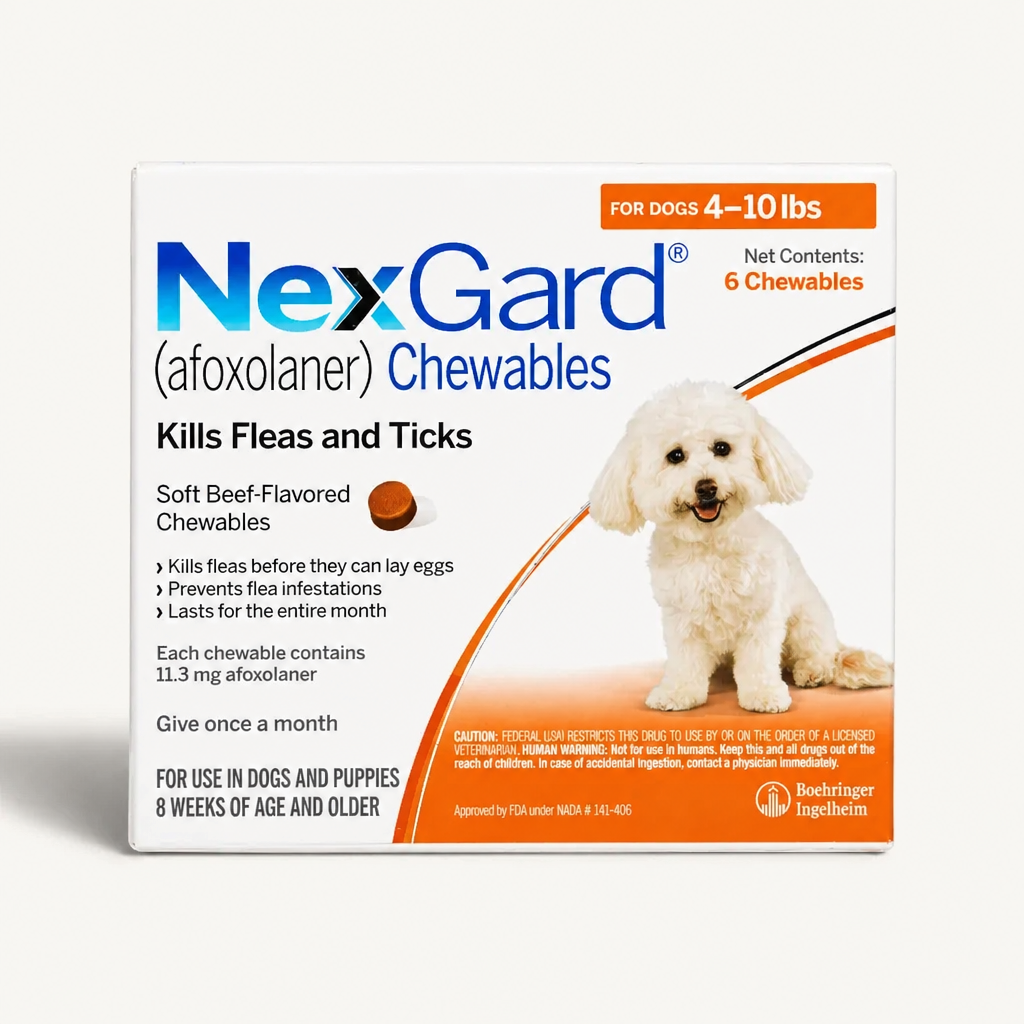
How It Works
The active ingredient in NexGard is afoxolaner, which belongs to a class of drugs called isoxazoline ectoparasiticides. After a dog eats the chewable NexGard tablet, the medication is absorbed into their bloodstream. When fleas and ticks bite the dog and ingest the treated blood, afoxolaner kills the parasites by disrupting their central nervous system.
| Quick Facts | |
|---|---|
| Common Brands | NexGard, NexGard Plus |
| Drug Class | Isoxazoline ectoparasiticide |
| Generic Status | Not available as a generic |
| Availability | Prescription only |
Dosing
NexGard is administered orally once a month. The standard recommended minimum dosage is 1.14 mg per pound (2.5 mg/kg). The chewables are available in different sizes depending on a dog’s weight.
NexGard can be given to dogs with or without food. It is generally accepted that treatment can begin at any time of the year and should continue monthly without interruption, especially in areas where fleas are common year-round.
Note: Dosing information below is educational only. The prescribing veterinarian can suggest a specific dose for your dog. Always follow your veterinarian’s instructions for exact dosing.
Uses
FDA-Approved Uses
NexGard is approved by the FDA for dogs for the treatment and prevention of fleas. It is also approved for dogs for the treatment and control of various species of ticks, including black-legged ticks that are associated with Lyme disease.
Off-Label Uses
You may see NexGard prescribed for uses that are not “FDA-approved.” This is a common and legal practice called “off-label” prescribing, where a veterinarian uses their clinical judgment to prescribe a drug for a different (but well-researched) purpose.
Some examples of common off-label uses of NexGard in dogs include:
- Treatment of certain types of mange
- Treatment of ear mite infestations
- Control of bedbugs and sand flies
Side Effects
Like all medications, NexGard can cause side effects. Some side effects may be serious and require veterinary attention.
Common Side Effects
- Vomiting
- Diarrhea
- Lethargy
- Decreased appetite
- Itching
Serious Side Effects
Serious side effects are rare, but it’s important to know what to look for if they do occur.
- Muscle tremors: Neurologic issues such as involuntary muscle shaking have been associated with medications like NexGard.
- Ataxia: Some dogs may experience difficulty walking or a loss of coordination after taking NexGard.
- Seizures: Seizures have been reported in some dogs receiving drugs like NexGard, including some dogs with no prior history of seizures.
- Excessive vomiting: While mild vomiting is considered a common side effect of NexGard, continuous or severe vomiting is a serious reaction that requires veterinary attention.
Call your dog’s veterinarian immediately if your dog experiences any concerning or prolonged symptoms after taking NexGard.
Pharmacist Tips
Monitor Consumption
Care should be taken to ensure your dog consumes the entire chewable tablet. Veterinarians advise observing your dog for a few minutes afterward to make sure no part of the tablet is refused or leaves their mouth.
Administer With Food If Needed
If your dog tends to throw up or appear sick after taking NexGard on an empty stomach, standard guidelines suggest giving the next dose with food or a small treat.
Redose After Vomiting
If your dog vomits within two hours of taking NexGard, it is generally recommended to redose with another full chewable.
Maintain Year-Round Protection
Fleas can survive indoors after coming inside on people, so continuing NexGard treatment throughout the year is commonly suggested, even for indoor dogs.
Store Properly
Keep the medication in its original packaging at room temperature, ideally at or below 86°F (30°C), and protect the chews from light.
Wash Your Hands
It is good practice to wash your hands with soap and water after handling the chewable tablets.
Drug Interactions
No major drug interactions are well documented with NexGard. In clinical studies, NexGard was used safely with many common veterinary medications, including vaccines, antibiotics, corticosteroids, NSAIDs, anesthetics, and antihistamines. Dogs with a history of seizures or neurologic disorders may have a higher risk of neurologic side effects with NexGard and should be monitored closely.
Always give your dog’s veterinarian a complete list of their medications, vitamins, and supplements to check for potential interactions.
FAQs
How long does it actually take for NexGard to start killing fleas after my dog eats the chew?
NexGard begins to kill fleas within 4 hours of administration. It is demonstrated to be over 99% effective at killing fleas within 8 hours.
Does this medication repel fleas and ticks, or do they have to bite my dog first?
Parasites must bite your dog to be exposed to the medication in NexGard. The active ingredient is absorbed into your dog’s bloodstream, so the fleas and ticks have to ingest blood from your dog in order for NexGard to kill them.
What is the difference between standard NexGard and the newer NexGard PLUS?
Standard NexGard contains only afoxolaner and is intended to control fleas and ticks. NexGard PLUS contains afoxolaner alongside moxidectin and pyrantel. The addition of these other medications is designed to also prevent heartworm disease and treat intestinal roundworms and hookworms.
What should I do if my dog throws up the chew within an hour of eating it?
Standard guidelines indicate that if your dog vomits any portion of the chewable tablet within two hours of receiving it, you should report the event to your veterinarian and administer a new, full dose.
Can I safely divide the chewable tablet if I have two smaller dogs?
Instructions indicate that you should not divide NexGard tablets. For effective treatment, care must be taken to ensure the dog consumes the complete, accurately dosed tablet for their specific weight range.
Does standard NexGard protect my dog against heartworms or intestinal tapeworms?
No, the standard version of NexGard only targets fleas and ticks. To protect against heartworms or other intestinal parasites, a different product like NexGard PLUS or a separate medication would be required. Consult your veterinarian about the most appropriate medication for your dog.
Is it safe to give my dog their monthly heartworm pill on the same day?
Research studies have shown that NexGard can be safely used with many other medications, including anthelmintics (dewormers) and vaccines. However, safety depends on the specific drugs and dosages being given. As a result, you should always check with your veterinarian before giving more than one medication to your dog.
Can I safely give this dog medication to my cat if I adjust the dosage for their weight?
No, NexGard is for use in dogs only and should never be given to cats. There is a separate topical product designed for cats called NexGard Combo.
Can this chew be used off-label by my vet to clear up a mange infection?
NexGard may be prescribed off-label to treat certain types of mange and skin mites in dogs. However, using NexGard in this way requires careful monitoring by your veterinarian.
Why do I need a prescription from a vet to buy this?
Because NexGard contains active pharmaceutical ingredients that can cause side effects, the FDA requires it to be dispensed under the supervision and prescription of a licensed veterinarian.
How should I store a 6-month supply to keep the chews fresh?
You should store NexGard chews in their original packaging at room temperature (at or below 86°F or 30°C) and protect them from direct light.
Comparable Medications
NexGard, NexGard PLUS (Afoxolaner/Moxidectin/Pyrantel), Simparica (Sarolaner), Heartgard Plus (Ivermectin/Pyrantel), Frontline Plus (Fipronil)?
NexGard Plus Chewable Tablets
From $45.99
NexGard PLUS expands upon the standard NexGard chew by adding ingredients to prevent heartworm disease and treat intestinal hookworms and roundworms.
Simparica Chewable Tablets
From $32.99
Sarolaner (Simparica) is a similar oral chewable medication belonging to the same drug class as NexGard that is used for flea and tick control in dogs.
Heartgard Plus Chewables
From $17.99
Heartgard Plus is a monthly chewable designed for heartworm prevention and the treatment of intestinal parasites in dogs. It is not intended for flea or tick protection.
Fipronil (Frontline Plus)
This is a topical liquid medication applied to a dog’s skin to kill fleas and ticks. It works externally rather than affecting parasites with medication in the dog’s bloodstream.
We Have NexGard in Stock. Get Yours Today!
Important: Information on this page is for educational purposes only. Prescribing decisions are made by independent, licensed providers. TelyRx operates technology-enabled pharmacies and a telehealth platform that connects patients with licensed providers. Prescriptions, when provider-approved and issued, are filled and shipped by TelyRx-affiliated pharmacies. We do not employ physicians or make prescribing decisions. Learn more about our editorial standards here.