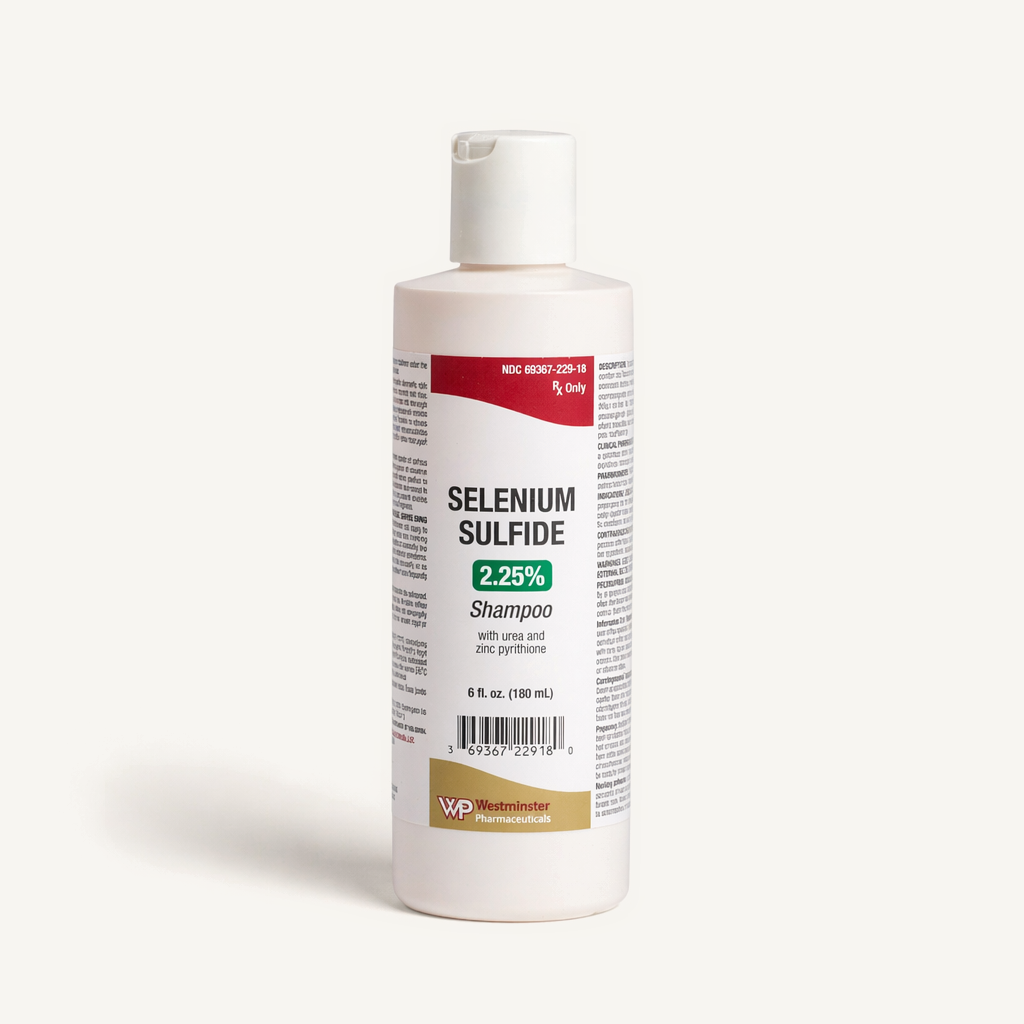
How It Works
Selenium sulfide works by:
- Reducing the production of natural oils on the scalp
- Slowing down the growth and shedding of skin cells on the skin’s surface and within the hair follicles
- Killing the yeast and fungus associated with skin irritation and flaking
| Quick Facts | |
|---|---|
| Common Brands | Selsun Blue 2-in-1, Selsun Blue Medicated, Selsun Blue Moisturizing, Selsun Blue Normal to Oily |
| Drug Class | Topical anti-infective |
| Generic Status | Generic is available |
| Availability | Prescription-strength and over-the-counter |
Dosing
Selenium sulfide shampoo is available in the following prescription-strength formulations:
- 2.25% shampoo
- 2.3% shampoo
Dosing depends on the specific condition being treated:
- Dandruff and seborrheic dermatitis of the scalp: Shake the bottle well and wet the hair or skin. Apply onto the scalp and work into a full lather. Rinse thoroughly. Repeat twice a week for 2 weeks and then less frequently as recommended by your provider.
- Tinea versicolor: Shake the bottle well and wet the skin. Apply onto the affected areas and work into a full lather. Leave on for 10 minutes and then rinse off thoroughly. Repeat daily for 7 days.
Note: Dosing information below is educational only. Your prescribing physician will determine your specific dose based on your individual health needs. Always follow your healthcare provider’s instructions for exact dosing.
Uses
FDA-Approved Uses
Selenium sulfide shampoo is FDA-approved to treat:
- Dandruff
- Seborrheic dermatitis of the scalp, a condition that causes itchy, flaky, and dry skin
- Tinea versicolor, a fungal skin infection that causes discolored patches on the skin
Off-Label Uses
You may see selenium sulfide shampoo prescribed for uses that are not “FDA-approved.” This is a very common and legal practice called “off-label” prescribing, where a doctor uses their clinical judgment to prescribe a drug for a different (but well-researched) purpose.
There are currently no common off-label uses for selenium sulfide shampoo.
Side Effects
Like all medications, selenium sulfide shampoo can cause side effects. Some common side effects may improve over time as your body adjusts to the medication. Other side effects may be serious and require medical attention.
Common Side Effects
- Hair discoloration
- Oiliness or dryness of hair and scalp
- Skin irritation or itchiness
- Increase in normal hair loss
Serious Side Effects
Serious side effects are rare, but it’s important to know what to look for if they do occur. Stop using selenium sulfide shampoo and call your doctor immediately if you experience:
- Severe allergic reactions: Symptoms include swelling of the face, lips, tongue, or throat; difficulty breathing or swallowing; racing heart; severe rash or itching; fever.
- Severe skin reactions: Selenium sulfide shampoo can cause mild skin irritation, but for some people, reactions may be more severe. If you experience skin burning, itching, crusting, or peeling, your doctor may recommend a different medication.
Call your doctor immediately if you experience any concerning or prolonged symptoms.
Pharmacist Tips
Shake The Bottle Well
Doing so before every application helps ensure the medication is properly mixed.
Remove Jewelry When Applying
Providers typically recommend removing all jewelry before applying selenium sulfide, as the medication can damage it.
Rinse Thoroughly
To help prevent hair discoloration, standard guidelines recommend thoroughly rinsing your hair and scalp after each application.
Avoid Sensitive Areas
This medication is for external use only. Avoid getting it into your nose, mouth, genitals, or eyes. If it accidentally gets into your eyes, rinse them thoroughly with cool tap water.
Do Not Apply To Broken Skin
Do not apply selenium sulfide shampoo to skin that is inflamed, red, swollen, or injured, as this can cause severe irritation.
Wash Your Hands
Always wash your hands immediately before and after using the medication.
Be Aware That The Shampoo May Change Color
It is normal for some selenium sulfide shampoos to darken over time. As long as they aren’t expired, they are still safe to use.
Store At Room Temperature
Selenium sulfide shampoo should be stored at 68°F to 77°F (20°C to 25°C) in a cool, dry place away from light.
Tell Your Provider If You’re Pregnant Or Breastfeeding
It is not known if selenium sulfide can affect pregnancy or pass into breast milk. Tell your healthcare provider if you are pregnant, breastfeeding, or planning to be pregnant so they can advise whether this medication is safe for you to use.
Drug Interactions
Certain medications and substances can interact with selenium sulfide shampoo, potentially altering its effectiveness or increasing the risk of side effects. For example, other skin products can affect the shampoo. It’s recommended to avoid using other skin products on the affected area unless your provider says it’s okay.
Always give your doctor and pharmacist a complete list of all your medications, vitamins, and supplements to check for potential interactions.
FAQs
Why does this shampoo smell like rotten eggs?
Selenium sulfide shampoo can be smelly because it contains sulfur.
How long must the selenium sulfide shampoo sit before I can wash it off?
It depends on the condition you are treating. For seborrheic dermatitis and dandruff, standard guidelines recommend lathering the shampoo and then rinsing. For the fungal infection tinea versicolor, it is recommended to leave the medication on for 10 minutes before washing it off thoroughly.
What is the difference between the prescription 2.25% bottle and the regular Selsun Blue at the store?
Prescription-strength selenium sulfide contains a higher concentration (such as 2.25% or 2.3%) compared to the 1% concentration found in over-the-counter selenium sulfide shampoo. Prescription-strength selenium sulfide can also treat tinea versicolor in addition to dandruff and seborrheic dermatitis, whereas over-the-counter versions are generally only used for dandruff and seborrheic dermatitis.
Can I use my regular conditioner after washing with this?
Providers typically recommend consulting your dermatologist about hair care during treatment, especially since selenium sulfide shampoo can make your hair feel dry.
Will using selenium sulfide shampoo actually cure my skin fungus, or just my dandruff?
Prescription-strength selenium sulfide shampoo is an antifungal medication that treats tinea versicolor while also managing dandruff and seborrheic dermatitis.
Can I use this shampoo to get rid of “fungal acne”?
Selenium sulfide shampoo is FDA-approved to treat tinea versicolor, dandruff, and seborrheic dermatitis. Healthcare providers may determine it is appropriate to prescribe selenium sulfide for other conditions based on their clinical judgment. It’s best to check with your dermatologist before applying it to your face for fungal acne.
Am I supposed to use selenium sulfide shampoo every single day?
Usually, no. For dandruff and seborrheic dermatitis, providers typically recommend avoiding daily use to reduce the risk of dryness and irritation. It’s generally used twice a week to manage symptoms. However, if you are treating tinea versicolor, a dermatologist may instruct you to use it daily for a short duration, such as 7 days.
Is it normal for my scalp to burn slightly, or feel incredibly dry after rinsing this out?
Mild skin irritation and unusual dryness are some of the most common side effects of this medication. However, if the burning is severe or your skin begins to crust or peel, it is important to report this to your care team as soon as possible.
Does using selenium sulfide make your hair thin out or fall out?
Yes, it is possible. People have reported experiencing a greater-than-normal amount of hair loss after using selenium sulfide. If you are concerned about hair thinning, talk to your healthcare provider.
How many washes does it usually take for itching to stop?
It may take 1–2 weeks, depending on the condition you’re treating. When used for dandruff or seborrheic dermatitis, selenium sulfide shampoo should be used twice a week for the first 2 weeks to control symptoms. Tinea versicolor is typically treated with a week of daily applications.
Is it safe to use this medicated shampoo if I am pregnant or breastfeeding?
It is not recommended to use selenium sulfide during pregnancy because it is unknown if it can harm an unborn baby. It is also unknown if the medication passes into breast milk. Providers typically recommend speaking with your healthcare team to discuss the safest options during pregnancy and breastfeeding.
Will selenium sulfide shampoo cure regular dry scalp from winter weather?
Selenium sulfide is a medicated shampoo used to reduce the natural oil production on the scalp and slow the growth of yeast that causes dandruff, seborrheic dermatitis, and fungal infections. It is not generally used for winter dryness.
Comparable Medications
Selenium sulfide shampoo, Nizoral (ketoconazole 1% or 2%), Neutrogena T/Sal (salicylic acid), or clobetasol shampoo (Clobex)?
There are several medications your doctor can prescribe instead of selenium sulfide shampoo. Here are a few possible alternatives below.
Nizoral
An over-the-counter (1%) or prescription (2%) antifungal medication used to treat dandruff and tinea versicolor.
Neutrogena T/Sal
An over-the-counter shampoo used to treat dandruff, seborrheic dermatitis, psoriasis, acne, eczema, and other conditions.
Clobetasol Shampoo
From $69.98
A prescription topical corticosteroid used to treat moderate to severe scalp psoriasis.
We Have Selenium Sulfide Shampoo in Stock. Get Yours Today!
Important: Information on this page is for educational purposes only. Prescribing decisions are made by independent, licensed providers. TelyRx operates technology-enabled pharmacies and a telehealth platform that connects patients with licensed providers. Prescriptions, when provider-approved and issued, are filled and shipped by TelyRx-affiliated pharmacies. We do not employ physicians or make prescribing decisions. Learn more about our editorial standards here.