

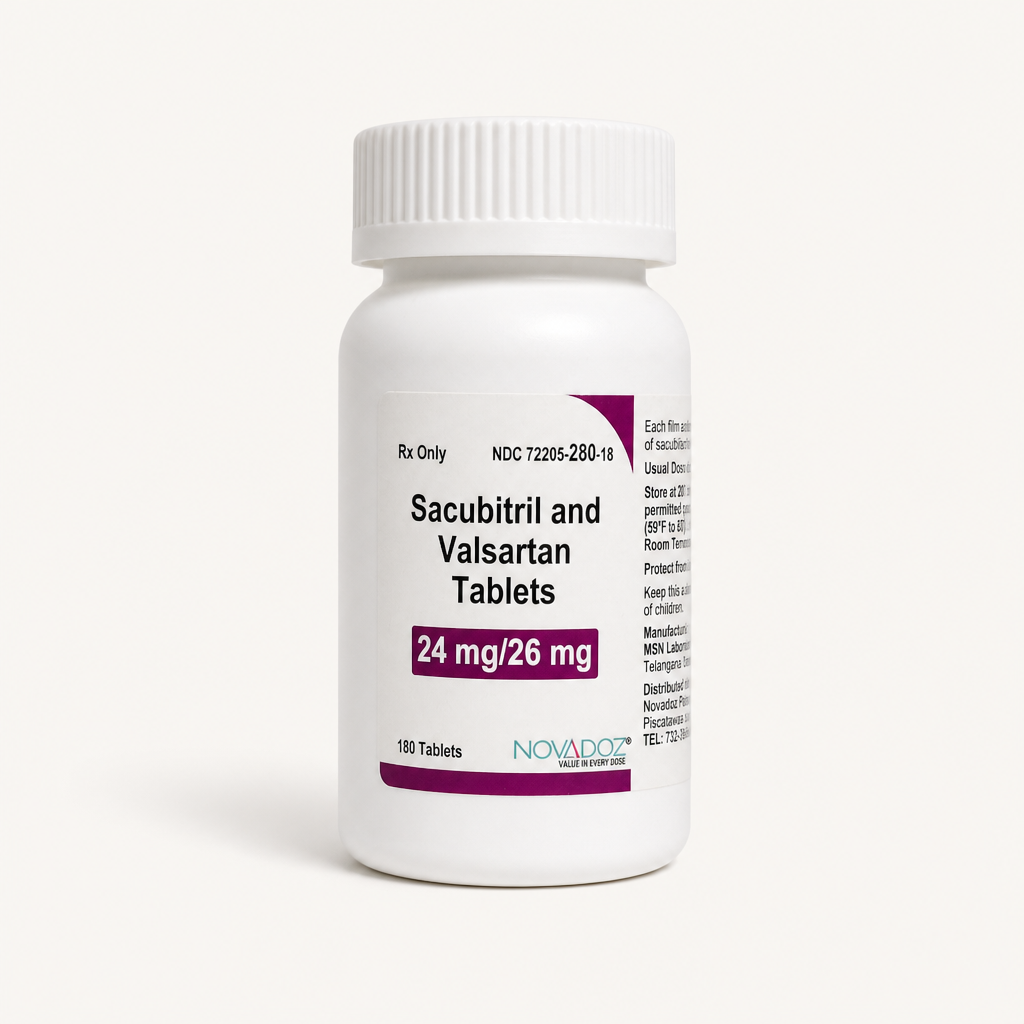
How It Works
Sacubitril/valsartan belongs to a class of medications known as angiotensin receptor-neprilysin inhibitors (ARNIs).
The two active components in this drug work together to support heart function.
- Sacubitril: Sacubitril is known as a neprilysin inhibitor. It prevents the breakdown of beneficial substances called natriuretic peptides. By prolonging the presence of these peptides in the body, sacubitril helps relax blood vessels and lower blood pressure.
- Valsartan: This ingredient is an angiotensin II receptor blocker (ARB). It functions by blocking angiotensin II, a hormone that narrows blood vessels. In this way, valsartan helps lower blood pressure and improve blood flow to the heart and the rest of the body.
| Quick Facts | |
|---|---|
| Common Brands | Entresto, Entresto Sprinkle |
| Drug Class | Angiotensin receptor-neprilysin inhibitor (ARNI), neprilysin inhibitor, angiotensin II receptor blocker (ARB) |
| Generic Status | Generic is available |
| Availability | Prescription only |
Dosing
For adults with heart failure, the typical starting dose is 49 mg/51 mg (sacubitril/valsartan) taken by mouth twice a day. After 2 to 4 weeks of treatment, providers commonly increase the dose to a standard maintenance level of 97mg/103 mg, taken twice daily.
Note: Dosing information below is educational only. Your prescribing physician will determine your specific dose based on your individual health needs. Always follow your healthcare provider’s instructions for exact dosing.
Uses
FDA-Approved Uses
Sacubitril/valsartan is FDA-approved to reduce the risk of serious complications of heart failure.
Off-Label Uses
You may see sacubitril/valsartan prescribed for uses that are not “FDA-approved.” This is a common and legal practice called “off-label” prescribing. In these cases, a doctor uses their clinical judgment to prescribe a drug for a different, yet well-researched, purpose.
Sacubitril/valsartan does not have commonly established off-label uses, but doctors may consider this drug for other conditions based on their clinical assessment.
Side Effects
Like all medications, sacubitril/valsartan tablets can cause side effects. Some common side effects may improve over time as your body adjusts to the medication. Other side effects may be serious and require medical attention.
Common Side Effects
- Low blood pressure
- High potassium levels
- Cough
- Dizziness
- Kidney problems
Serious Side Effects
Serious side effects are rare, but it’s important to know what to look for if they do occur. Contact your doctor or seek medical attention if you have signs of one of these severe reactions.
- Angioedema: This is a severe allergic reaction that causes swelling of the face, lips, tongue, throat, hands, feet, or genitals. Swelling in the throat or tongue can impair breathing and requires immediate emergency medical care.
- Severely low blood pressure: This reaction can cause lightheadedness, dizziness, fainting, confusion, or extreme tiredness. The risk is elevated if you are dehydrated or taking diuretics (water pills).
- Serious kidney problems: Sacubitril/valsartan can affect kidney function, leading to decreased urine output, unexplained weight gain, and swelling in the feet, ankles, or hands.
- High potassium levels: Hyperkalemia is a serious condition characterized by nausea, extreme tiredness, muscle weakness, tingling, or a pounding and irregular heartbeat.
- Severe allergic reactions: Symptoms of an allergic reaction to sacubitril/valsartan may include breathing problems, wheezing, a racing pulse, hives, skin rash, severe itching, or swollen lymph nodes.
Call your doctor immediately if you experience any concerning or prolonged symptoms.
Pharmacist Tips
Administration
You can take sacubitril/valsartan with or without food. If the medication upsets your stomach, it may help to take it with a meal.
Swallowing Difficulties
If you have trouble swallowing tablets, speak to your prescriber. They may be able to prescribe a liquid solution or capsules with contents that can be mixed with soft foods.
Managing Dizziness
It is common to feel dizzy or lightheaded during the first few days of treatment or when your dose is increased. To stay safe, sit down slowly while holding onto something if you feel unsteady.
Dietary Adjustments
Providers recommend following a heart-healthy diet and avoiding salt substitutes that contain potassium, as this medication naturally raises potassium levels in your body.
Pregnancy Precautions
Do not take this medication if you are pregnant or planning to become pregnant, as it may cause harm to an unborn baby.
Drug Interactions
Certain medications and substances can interact with sacubitril/valsartan, potentially altering how it works or increasing the risk of side effects.
- ACE inhibitors: Guidelines indicate that medications like lisinopril, benazepril, or enalapril should not be taken with sacubitril/valsartan. Combining them increases the risk of angioedema. Standard guidelines suggest waiting a full 36 hours after stopping an ACE inhibitor before starting this drug.
- Other ARBs: Medications like losartan or valsartan should generally be avoided since sacubitril/valsartan already contains this type of drug. Taking more than one can cause dangerously low blood pressure.
- Potassium supplements and potassium-sparing diuretics: Substances such as spironolactone, amiloride, or over-the-counter potassium supplements can interact with this drug, raising the body’s potassium levels too high.
- NSAIDs: Pain and inflammation medications like ibuprofen (Advil) or naproxen (Motrin) can interact with this drug, potentially increasing the risk of kidney injury.
- Aliskiren: Guidelines recommend avoiding this blood pressure medication if you have diabetes and are taking sacubitril/valsartan.
- Lithium: May interact adversely with sacubitril/valsartan.
Always give your doctor and pharmacist a complete list of all your medications, vitamins, and supplements to check for potential interactions.
FAQs
Why did my doctor make me wait 36 hours after stopping my old blood pressure pill to take my first dose of sacubitril/valsartan?
If your previous medication was an ACE inhibitor, taking it too close to sacubitril/valsartan can cause an allergic swelling reaction. Guidelines recommend a 36-hour washout period to ensure the old medication is completely out of your system.
Can I take my water pills at the exact same time as this medication?
Taking a diuretic (water pill) alongside sacubitril/valsartan can increase your risk of experiencing severely low blood pressure and dizziness. Discuss the exact timing of your doses with your healthcare provider to minimize the likelihood of these side effects.
Do I need to take this pill with food, or does it work better on an empty stomach?
You have the flexibility to take sacubitril/valsartan either with or without food. However, if the medication tends to cause an upset stomach, taking it with a meal may help reduce discomfort.
Can I use “salt substitutes” or eat high-potassium foods while taking sacubitril/valsartan?
Providers typically recommend avoiding salt substitutes that contain potassium. Because sacubitril/valsartan raises potassium levels in the body, adding extra potassium through your diet or salt substitutes can further elevate those levels. This increase raises the risk of weakness and irregular heart rhythms.
Is it safe to take ibuprofen while on this heart drug?
Providers typically advise against taking nonsteroidal anti-inflammatory drugs (NSAIDs) like ibuprofen or naproxen while on this sacubitril/valsartan. These drugs may interact, increasing the risk of kidney damage.
What should I do if I completely forget to take my morning pill and remember in the afternoon?
If you miss a dose, take it as soon as you remember. However, if it is almost time for your next scheduled dose, standard guidelines suggest skipping the missed one and taking your next dose at the regular time. Do not double up on doses to make up for a missed pill.
Can I safely drink alcohol or a beer while taking sacubitril/valsartan?
While there is no clearly established chemical interaction between sacubitril/valsartan and alcohol, drinking may amplify the medication’s effect on blood pressure. This could increase your risk of low blood pressure, which can result in dizziness, lightheadedness, or fainting.
Does this drug interact with my other heart medications, like beta-blockers or blood thinners?
Sacubitril/valsartan is not a blood thinner, and providers suggest that it does not affect your bleeding risk. However, sacubitril/valsartan can interact with other heart and blood pressure medications. Do not combine it with ACE inhibitors or other ARBs. Have your pharmacist review your complete list of cardiovascular medications for safety guidance.
Is it safe to take this medication if I am pregnant?
Guidelines indicate that taking sacubitril/valsartan during pregnancy is unsafe, particularly during the second and third trimesters. If you become pregnant, contact your doctor immediately to discuss your options for alternative medications.
Can I cut the tablet in half or crush it if it’s too big for me to swallow?
Do not cut, crush, or chew these tablets. If the tablets break, the active ingredients may not evenly distribute, resulting in an inaccurate dose. If you have difficulty swallowing, ask your provider about prescribing sprinkle capsules or an oral liquid.
Why do I feel like my heart is racing or fluttering more than usual after taking my dose?
A racing, pounding, or irregular heartbeat can be a sign of dangerously high potassium levels or an allergic reaction. Providers typically recommend seeking medical attention immediately if you experience these cardiac symptoms.
Comparable Medications
Sacubitril / Valsartan, Lisinopril, Empagliflozin (Jardiance), Furosemide (Lasix), Carvedilol (Coreg)?
Lisinopril
From $24.99
An ACE inhibitor used to treat high blood pressure and heart failure. Guidelines state that it should not be taken at the same time as sacubitril/valsartan due to a severe risk of angioedema.
Empagliflozin
This medication acts via a different mechanism from the ARNI class and is commonly used to treat heart failure and metabolic disorders.
Furosemide
From $26.99
This drug is a diuretic, or water pill, prescribed to reduce fluid buildup (edema). It may be used alongside heart failure medications, but the combination can increase the risk of low blood pressure.
Carvedilol
From $29.99
This medication is a beta-blocker that may be used to treat heart failure. It acts on different cardiovascular pathways than sacubitril/valsartan.
We Have Sacubitril / Valsartan Tablets in Stock. Get Yours Today!
Important: Information on this page is for educational purposes only. Prescribing decisions are made by independent, licensed providers. TelyRx operates technology-enabled pharmacies and a telehealth platform that connects patients with licensed providers. Prescriptions, when provider-approved and issued, are filled and shipped by TelyRx-affiliated pharmacies. We do not employ physicians or make prescribing decisions. Learn more about our editorial standards here.