How It Works
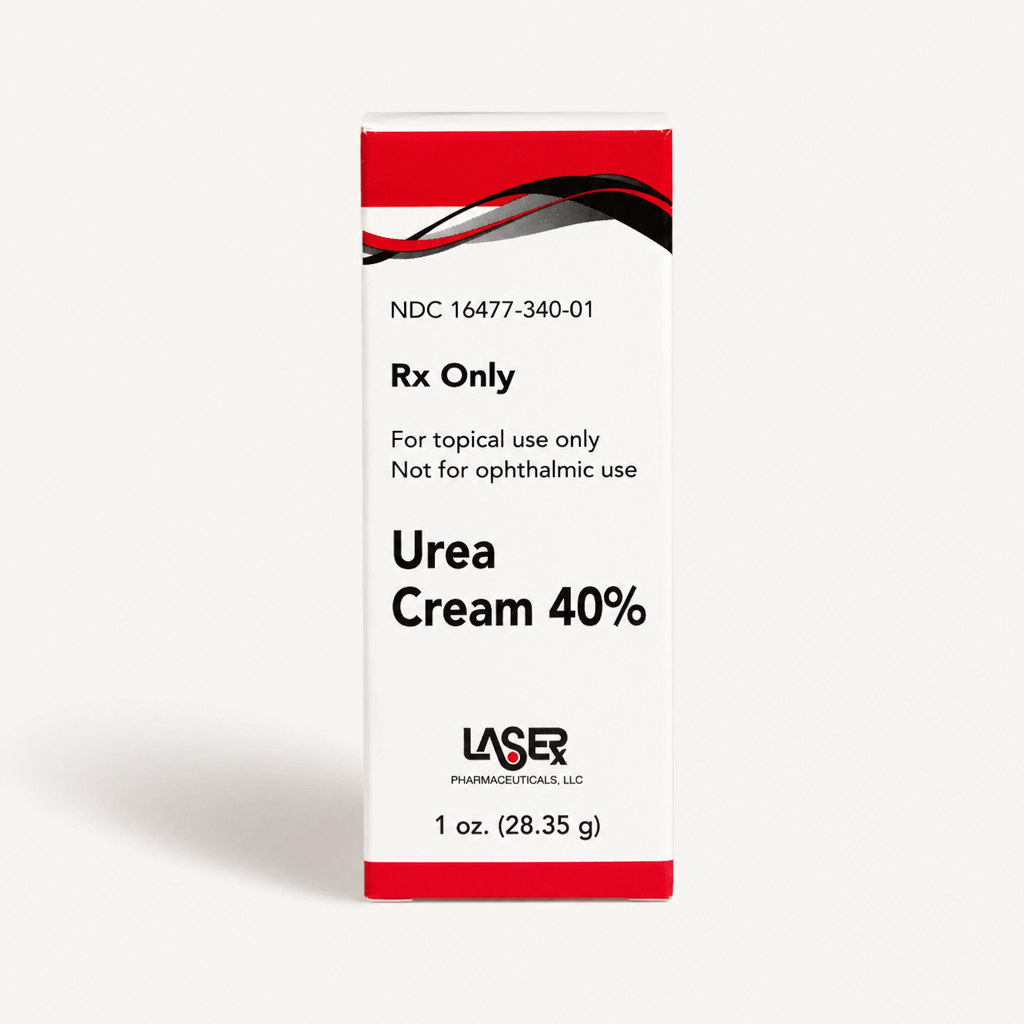
Urea cream works by first hydrating the skin, then exfoliating it. Urea is a strong humectant, meaning it is attracted to water, and helps draw moisture from your environment and the dermis layer in your skin. This helps increase the skin’s water-binding capacity and rehydrates skin cells, making the skin less susceptible to cracking.
Urea cream is also keratolytic, meaning it dissolves excess keratin to break down and shed dead skin cells. Keratin is a protein that forms your skin and nails. By breaking down the bonds that stabilize keratin, urea cream makes dead skin cells softer and easier for your body to shed.
Hydrating the skin and removing dead skin cells both help restore and normalize your skin barrier. A healthy barrier is essential for maintaining healthy moisture levels in the skin and keeping out bacteria. This makes urea cream particularly beneficial for people with conditions that frequently compromise their skin barrier, such as psoriasis or diabetes-related foot dryness.
| Quick Facts | |
|---|---|
| Common Brands | Aquacare, Carmol, Gordon’s Urea, Keralac, Ureacin, Utopic, Vanamide, Umecta |
| Drug Class | Emollient and keratolytic agent |
| Generic Status | Generic version available |
| Availability | OTC (lower concentrations) or prescription only (higher concentrations) |
Dosing
With urea cream, proper application is key to preventing irritation while maximizing the topical’s softening effect on thick calluses and nails. Applying a larger amount does not necessarily make it a more effective treatment.
- Frequency: Providers generally recommend applying urea cream twice per day. Patients often follow a morning-evening schedule for application.
- Timing: It is widely accepted that urea cream most effectively traps moisture when the skin is slightly damp, such as after a shower or bath. For this reason, many providers recommend timing the applications with daily bathing.
- Targeted use: To treat thickened fingernails or toenails, standard guidelines recommend applying a generous layer of cream to each affected nail, then covering it with a bandage or gauze. This helps the cream penetrate the nail plate.
- Hygiene: Unless they are treating a skin condition on their hands, patients are advised to thoroughly wash their hands before and after applying the cream to prevent the medication from getting into their eyes or mouth.
Note: Dosing information below is educational only. Your prescribing physician will determine your specific dose based on your individual health needs. Always follow your healthcare provider’s instructions for exact dosing.
Uses
FDA-Approved Uses
Urea cream is FDA-approved to treat abnormally thick calluses, corns, keratoderma on the palms and soles, and other hyperkeratotic conditions. The cream is also FDA-approved to manage the xerosis, ichthyosis, and dry skin associated with eczema and psoriasis, and to soften and aid the removal of damaged, thickened, or ingrown nails.
Off-Label Uses
You may see urea cream prescribed for uses that are not “FDA-approved.” This is a very common and legal practice called “off-label” prescribing, where a doctor uses their clinical judgment to prescribe a drug for a different (but well-researched) purpose.
Common off-label uses for urea cream currently found in clinical research and practice include:
- Keratosis plate: Although urea cream is not specifically FDA-approved to treat keratosis plate, dermatologists commonly recommend urea cream with a concentration of 10% to 20% for smoothing small, rough bumps on the back of the arms.
- Nail fungus: Urea cream does not kill fungal infections, but may be used with antifungal medication to thin the nails and allow the medication to reach the infection more easily.
- Wound care: Urea cream can help shed dead tissue from chronic wounds and promote the regrowth of healthy skin.
Side Effects
Urea cream is active and can cause side effects, especially at higher concentrations. However, most side effects are localized to the site of application.
Common Side Effects
Common side effects from using urea cream include:
- Brief burning or stinging
- Itching and redness at the application site
- Visible peeling or flaking
Serious Side Effects
Serious side effects are rare, but it’s important to know what to look for if they do occur. Serious side effects from using urea cream can include:
- Severe irritation: In some cases, urea cream can lead to blistering, oozing, and prolonged redness. If these symptoms occur, patients are advised to discontinue use of the cream and contact their provider.
- Systemic distress: Although topical medications rarely cause systemic distress, patients should contact their doctor immediately if they experience difficulty breathing or a racing heart.
- Severe allergic reaction: As with many other medications, urea cream can trigger anaphylaxis in people allergic to one or more of its ingredients.
Call your doctor immediately if you experience any concerning or prolonged symptoms.
Pharmacist Tips
Socks Can Help
If you’re using urea cream to treat dry or cracked skin on the heels, standard guidelines recommend applying the cream at night and then wearing clean cotton socks to bed. This method helps the urea cream absorb more easily into the skin and also prevents stained sheets.
Try A Pumice Stone
Healthcare providers often recommend using a pumice stone or foot file once or twice a week after several days of using urea cream. As the cream softens calluses and patches of dry skin, the dead cells shed more easily when you use a stone or file.
Avoid Sensitive Areas If Possible
Urea cream can irritate areas where the skin is thinner and lead to chemical burns. It is recommended to avoid applying the cream to the face, lips, and genital region unless a doctor specifically instructs you to do so.
Don’t Stress About White Powder
Urea cream can dry and crystallize, leaving a white powdery residue on the cap of the tube. This does not indicate the medication has expired.
Drug Interactions
Systemic interactions with urea cream are unlikely because it is not significantly absorbed into the bloodstream. However, there are known interactions with urea cream. These include:
- Other topical medications: Patients are advised to avoid applying other medicated creams, including steroid and retinoid topicals, to the same area as the urea cream unless their provider instructs them to do so. Urea can increase the absorption of other medications, increasing the risk of irritation and other side effects.
- Cosmetics: Patients are recommended to wait to apply makeup or sunscreen until after the urea cream has fully dried. This helps ensure the medication is properly absorbed.
Always give your doctor and pharmacist a complete list of all your medications, vitamins, and supplements to check for potential interactions.
FAQs
Do I need to wash the cream off after a few hours, or leave it on all day?
Per standard guidelines, patients are advised to leave the urea cream on all day to allow for full absorption. The cream does not need to be washed off at any point.
Will applying urea cream cure my thick toenail fungus by itself?
No, applying urea cream will not cure your thick toenail fungus by itself because it is not an antifungal medication. Urea cream softens nails. For this reason, it is often used to thin infected fingernails and toenails, allowing antifungal medication to reach the infection more easily.
Can I use urea lotion to get rid of keratosis pilaris?
Yes, urea lotion can help reduce keratosis pilaris (KP), and providers commonly prescribe it off-label for this purpose. Urea cream’s keratolytic properties help dissolve the keratin plugs that produce KP’s telltale bumps. Doctors typically recommend urea cream at 10%-20% concentration for treating KP.
Should I put on socks after applying this to my cracked heels at night?
Putting socks on after applying urea cream to cracked heels at night helps lock in moisture to ensure the medication is properly absorbed. As an added bonus, wearing socks to bed after using the cream can protect your sheets from stains.
Should I use a pumice stone or foot file while using this cream?
For patients who use urea cream, providers often recommend shedding dead skin cells with a pumice stone or foot file once or twice per week. The cream loosens dead skin cells, making them easier to remove. Patients are advised to rub the stone or file gently against the target area to prevent injury.
Will this cream bleach my clothes, socks, or bedsheets?
Urea does not contain bleach and is not known to discolor bedding or clothes. That said, the cream is thick and oily, so it can leave a residue on fabric and cause stains to occur.
Is it safe to use urea cream if I am currently pregnant or breastfeeding?
Urea’s effects on fetal health and breast milk are not fully known so risk cannot be ruled out. Providers generally advise patients to use the cream sparingly, if at all. It is always recommended to speak to your doctor or OB/GYN before trying any new medication while pregnant or breastfeeding.
Can I use urea cream on my hands if they are peeling from washing them too much?
Yes, standard guidelines state that you can use urea cream on your hands if they are peeling from frequent washing. Lower concentrations of 5% to 10% are generally recommended. Patients are advised to avoid concentrations of 40% or higher on their hands unless treating thick calluses, as this medication can be too aggressive toward the thinner skin on the backs of the hands.
What is the difference between the 10% and 40% versions?
At a 10% concentration, urea cream is primarily used as a humectant, or moisturizer. This form is available over the counter. A 40% concentration indicates the cream also has strong keratolytic properties to break down and remove thick, hardened skin or nails. This form is only available with a doctor’s prescription.
Comparable Medications
Urea Cream, Ammonium Lactate/Lactic Acid, or Salicylic Acid?
Urea cream is a topical medication primarily used to treat patches of dry, thick, or scaly skin. Your provider may recommend a urea cream alternative based on your medical history and severity of symptoms. Alternatives to urea cream include:
Ammonium Lactate Lotion
From $49.99
Sold under the brand name AmLactin, ammonium lactate is the salt form of lactic acid that exfoliates the skin through chemical acidity. This medication is popular for its "smoothing" effect. Urea cream has humectant properties to promote moisturization, and may be better for people who want to soften thick calluses or nails.
Salicylic Acid Topical Solution
From $99.99
Sold under brand names like CeraVe, salicylic acid is an oil-soluble topical that penetrates pores to treat acne and blackheads. Since urea cream is water-soluble, it provides more hydration to loosen dead skin cells. Salicylic acid is generally preferred for unclogging pores, while urea cream is often better for wearing down thick calluses and nails.
We Have Urea Cream in Stock. Get Yours Today!
Important: Information on this page is for educational purposes only. Prescribing decisions are made by independent, licensed providers. TelyRx operates technology-enabled pharmacies and a telehealth platform that connects patients with licensed providers. Prescriptions, when provider-approved and issued, are filled and shipped by TelyRx-affiliated pharmacies. We do not employ physicians or make prescribing decisions. Learn more about our editorial standards here.