

How It Works
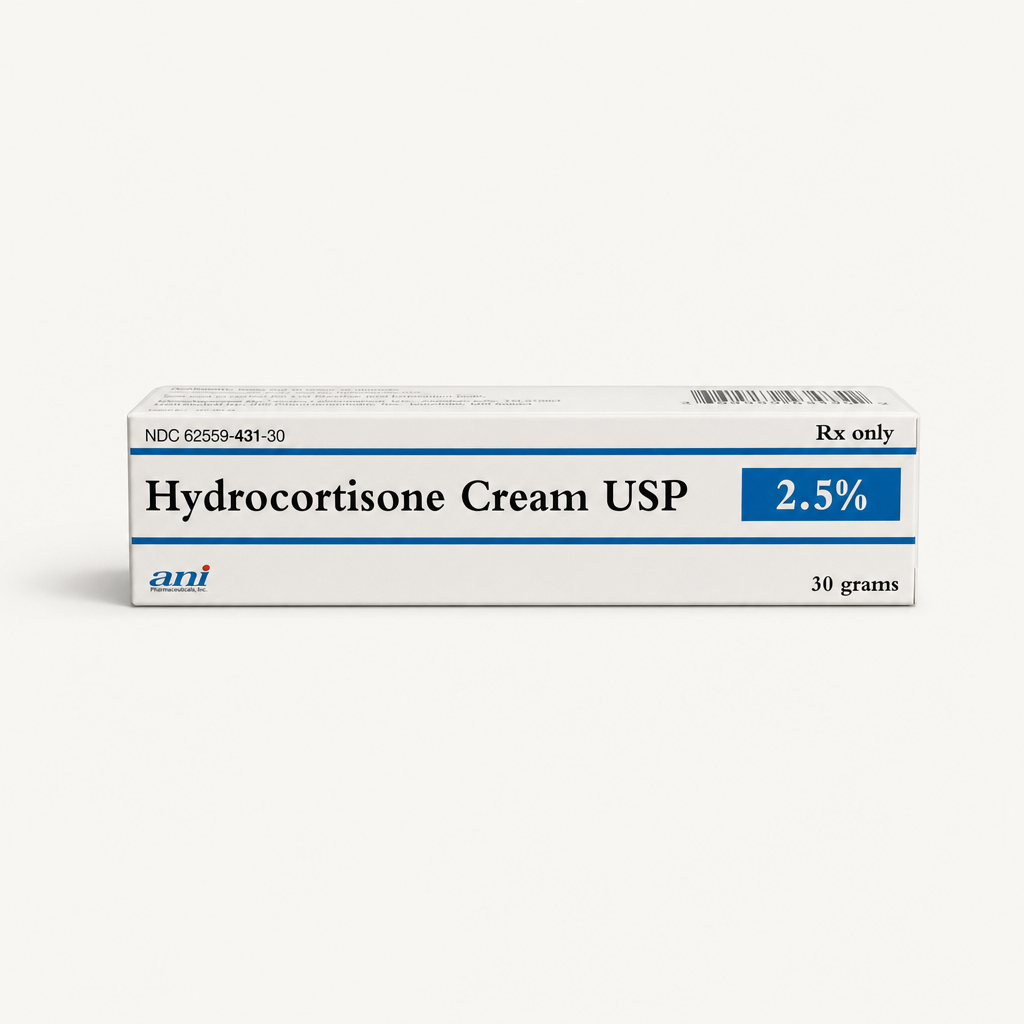
Hydrocortisone works by lowering the production of prostaglandins, leukotrienes, and other chemicals responsible for itching and redness at the application site. Hydrocortisone does not treat the underlying cause of inflammation.
Hydrocortisone also narrows blood vessels in the skin, reducing blood flow to the affected area to minimize swelling and heat.
| Quick Facts | |
|---|---|
| Common Brands | Ala-Cort, Cortaid, Cortizone-10, Locoid, Pandel, Westcort |
| Drug Class | Topical corticosteroid |
| Generic Status | Generic version available |
| Availability | Low-strength formulation available over the counter; high-strength formulation is prescription only |
Dosing
Hydrocortisone is available as a topical ointment, cream, or lotion. Your doctor may recommend a low-strength over-the-counter (OTC) formulation or prescription-strength formulation of hydrocortisone depending on your medical history and symptoms.
- Administration: Per standard guidelines, hydrocortisone is most effective when applied directly to the skin as a thin film. It is advised to rub the topical into the skin until it disappears. Avoid applying more than a thin film.
- Frequency: Providers typically recommend applying hydrocortisone 1 to 4 times per day, depending on the severity of symptoms.
- Duration (OTC): For over-the-counter hydrocortisone, standard guidelines recommend using the medication no longer than 7 consecutive days without consulting your provider.
- Duration (prescription): The duration of a prescription-strength hydrocortisone treatment course varies by patient. It may be prescribed as a temporary treatment or as an ongoing treatment for maintenance. Talk to your provider about specific instructions for short- and long-term use.
Note: Dosing information below is educational only. Your prescribing physician will determine your specific dose based on your individual health needs. Always follow your healthcare provider’s instructions for exact dosing.
Uses
FDA-Approved Uses
Hydrocortisone is FDA-approved for the following:
- Reducing flares and itching of eczema
- Managing mild to moderate plaque psoriasis
- Treating contact dermatitis rashes from poison ivy, poison oak, sumac, or soaps and detergents
- Relieving the inflammatory response to insect stings and bites
- Treating itchy, flaky skin caused by seborrheic dermatitis
Off-Label Uses
You may see hydrocortisone prescribed for uses that are not “FDA-approved.” This is a common and legal practice called “off-label” prescribing, where a doctor uses their clinical judgment to prescribe a drug for a different (but well-researched) purpose.
Common off-label uses for hydrocortisone currently found in clinical research and practice include:
- Lichen sclerosus: A skin condition that typically affects the genital area
- Post-laser treatment: Hydrocortisone may be prescribed to treat skin redness after laser dermatological procedures
- Severe sunburn: Provide relief from systemic inflammation in people with blistering sunburn
Side Effects
Common Side Effects
Side effects typically are localized to the affected area of the skin. The most common side effects from using hydrocortisone include:
- Mild burning, stinging, or itching at the application site immediately after use
- Dry, tight, or flaky skin on and surrounding the application site
- Small, red bumps or pus-filled pimples around hair follicles
Serious Side Effects
Serious side effects are rare, but it’s important to know what to look for if they do occur.
Serious side effects from using hydrocortisone can include:
- Skin atrophy: Hydrocortisone can cause thinning of the skin, making it bruise more easily and potentially resulting in stretch marks.
- Adrenal suppression: If hydrocortisone is used for long periods or applied to large areas of the body, it can prevent or interfere with your body’s ability to naturally produce cortisol.
- Cushing’s syndrome: In rare cases, hydrocortisone has been linked to Cushing’s syndrome. Symptoms include a rounded “moon” face, weight gain in the upper body, and elevated blood pressure.
- Vision changes: If hydrocortisone is applied near the eyes, it can increase the risk of glaucoma and cataracts.
- Masked infection: Hydrocortisone and other corticosteroids reduce inflammation, increasing the risk of undetected fungal and bacterial infections.
Call your doctor immediately if you experience any concerning or prolonged symptoms.
Pharmacist Tips
Do Not Cover the Application Site
Per standard guidelines, patients are advised not to cover treated areas with bandages, plastic wrap, or tight clothing. This can trap the steroid and increases the risk of absorption, which can lead to systemic changes and side effects.
Mind the Face and Folds
Certain areas of the skin are thinner and more susceptible to skin atrophy. It is recommended to use hydrocortisone sparingly in those areas, if at all. These areas include the face, underarms, and groin.
Follow the “Fingertip Rule”
The Finger-Tip Unit (FTU) is a recognized measurement for administering hydrocortisone and other topical medications. Standard guidelines state the amount of topical on an adult’s fingertip should be sufficient.
Practice Good Hygiene
It is recommended to thoroughly wash your hands before and after applying the hydrocortisone topical medication.
Monitor the Infection
It is advised to stop using hydrocortisone and contact your provider if the infection begins to ooze yellow fluid, develops a crust, or feels warm to the touch. These are signs the infection is worsening, not improving.
Drug Interactions
Known interactions with hydrocortisone include:
- Other topical steroids: Using hydrocortisone alongside other topical steroid medications like triamcinolone or clobetasol can cause a “steroid overdose” on the skin.
- Oral prednisone: If you are taking oral prednisone and you apply hydrocortisone topical over a large area of your body, this may lead to adrenal suppression.
- Antifungals: Applying hydrocortisone to a fungal rash like athlete’s foot or a yeast infection without using an antifungal agent can cause the infection to spread.
Always give your doctor and pharmacist a complete list of all your medications, vitamins, and supplements to check for potential interactions.
FAQs
Can I put hydrocortisone cream on my face for acne?
Providers generally recommend against putting hydrocortisone cream on your face for acne. The topical can temporarily reduce redness, but the steroid component can cause its own type of acne and cause skin on the face to become thinner.
What is the difference between the cream, ointment, and lotion forms?
The main difference between hydrocortisone cream, ointment, and lotion forms is consistency. Ointment formulations are the most occlusive and ideal for dry skin. Cream formulations are medium consistency and absorb more quickly. Lotions are the least occlusive, making them ideal for large areas of the body.
Why shouldn’t I use hydrocortisone on a fungal infection?
Per standard guidelines, you should not use hydrocortisone on a fungal infection because corticosteroids suppress the immune system and make it harder for your body to fight the infection.
Can I use hydrocortisone 2.5% cream for poison ivy?
Yes, hydrocortisone 2.5% cream is FDA-approved to treat rash from poison ivy. According to standard guidelines, you should contact your provider if your symptoms don’t improve after 1 week of continuous hydrocortisone use.
Does hydrocortisone help with bug bites or bee stings?
Yes, hydrocortisone can alleviate inflammation from insect bites and stings. The drug has been FDA-approved for this purpose.
Why shouldn’t I cover the treated area with a bandage?
Covering an application site with a bandage, also called “occlusion,” can trap the steroid in one place and increase its chances of systemic absorption.
Can I use hydrocortisone for hemorrhoids?
Generally yes, patients may use hydrocortisone for hemorrhoids if their doctor recommends it. Hydrocortisone cream, ointment, and suppositories like Anusol-HC and Proctocream-HC treat the redness, swelling, and itching from hemorrhoids.
Is hydrocortisone safe to use during pregnancy?
Standard guidelines suggest that small amounts of hydrocortisone are safe to use during pregnancy, but risk cannot be ruled out. Pregnant people are advised to talk to their doctor before using any new medication.
How long can I use hydrocortisone before I need to stop?
For over-the-counter hydrocortisone, most doctors recommend discontinuing use after 7 consecutive days if symptoms have not improved. Prescription-strength hydrocortisone may be used for longer periods under a doctor’s supervision to manage conditions like eczema or psoriasis.
Does hydrocortisone cream enter the bloodstream?
Hydrocortisone is not intended to enter the bloodstream and should remain on the surface of the skin. Patients are advised to not apply too much of the topical and to avoid covering the application site to prevent systemic absorption.
Can I use this for vaginal itching or yeast infections?
Generally yes, standard guidelines state patients can use 1% hydrocortisone cream to relieve vaginal itching from yeast infections and other sources. However, patients are advised to never use hydrocortisone internally, and to avoid using the medication for more than a few days without a doctor’s advice or if there is noticeable vaginal discharge.
What is the difference between hydrocortisone valerate and regular hydrocortisone?
Hydrocortisone valerate is a more potent, prescription-strength form of topical hydrocortisone medication. “Regular” hydrocortisone is less potent and typically available as an over-the-counter medication.
Does hydrocortisone help with sunburn?
Yes, over-the-counter hydrocortisone can effectively treat sunburn by reducing redness, inflammation and swelling. Hydrocortisone is often prescribed off-label for severe, blistering sunburn.
Can I put this on an open wound or cut?
It is not advised to put hydrocortisone on an open wound or cut because this can hinder healing and increase the risk of infection. Doctors may prescribe hydrocortisone for some types of wounds or cuts, such as excessive or lumpy granulation tissue in old wounds.
What is “topical steroid withdrawal” (TSW)?
Topical steroid withdrawal (TSW) is a rare but documented reaction that occurs after patients stop using high-potency steroid medication after a long-term period of continuous use. Symptoms include intense burning, red skin, and skin shedding. It is recommended to contact your provider if you notice any of these symptoms, or otherwise suspect you may be experiencing TSW.
Comparable Medications
Hydrocortisone, Hydrocortisone Butyrate, Hydrocortisone Valerate, Triamcinolone Acetonide, Betamethasone Dipropionate, or Clobetasol Propionate?
Hydrocortisone is a topical corticosteroid used to treat inflammation related to eczema and psoriasis, as well as insect bites and stings and contact dermatitis from toxic plants like poison ivy. Your doctor may recommend over-the-counter or prescription-strength hydrocortisone depending on your medical history and severity of symptoms, or may suggest an alternative to hydrocortisone altogether. Hydrocortisone alternatives include:
Hydrocortisone
From $24.99
This form of hydrocortisone is potent and prescription-only. It is used to treat severe eczema and psoriasis.
Hydrocortisone Ointment
From $23.99
The generic for Westcort, hydrocortisone valerate is a modified, medium-strength form of hydrocortisone. It is often prescribed as backup treatment for inflammation and irritation when lower-strength hydrocortisone has not been successful.
Triamcinolone
From $24.99
The generic for Kenalog, this medicine is more potent than hydrocortisone. It is used for stubborn conditions, but carries a higher risk of skin thinning.
The generic for Diprolene, this medication is a high-potency steroid used to treat stubborn conditions. It is more likely to enter the bloodstream and cause adrenal suppression than hydrocortisone.
Clobetasol Cream
From $23.99
Clobetasol is one of the most potent steroids available and has shown to be effective against severe plaque psoriasis. Due to its strength, clobetasol propionate is rarely prescribed for longer than 2 weeks.
We Have Hydrocortisone in Stock. Get Yours Today!
Important: Information on this page is for educational purposes only. Prescribing decisions are made by independent, licensed providers. TelyRx operates technology-enabled pharmacies and a telehealth platform that connects patients with licensed providers. Prescriptions, when provider-approved and issued, are filled and shipped by TelyRx-affiliated pharmacies. We do not employ physicians or make prescribing decisions. Learn more about our editorial standards here.