

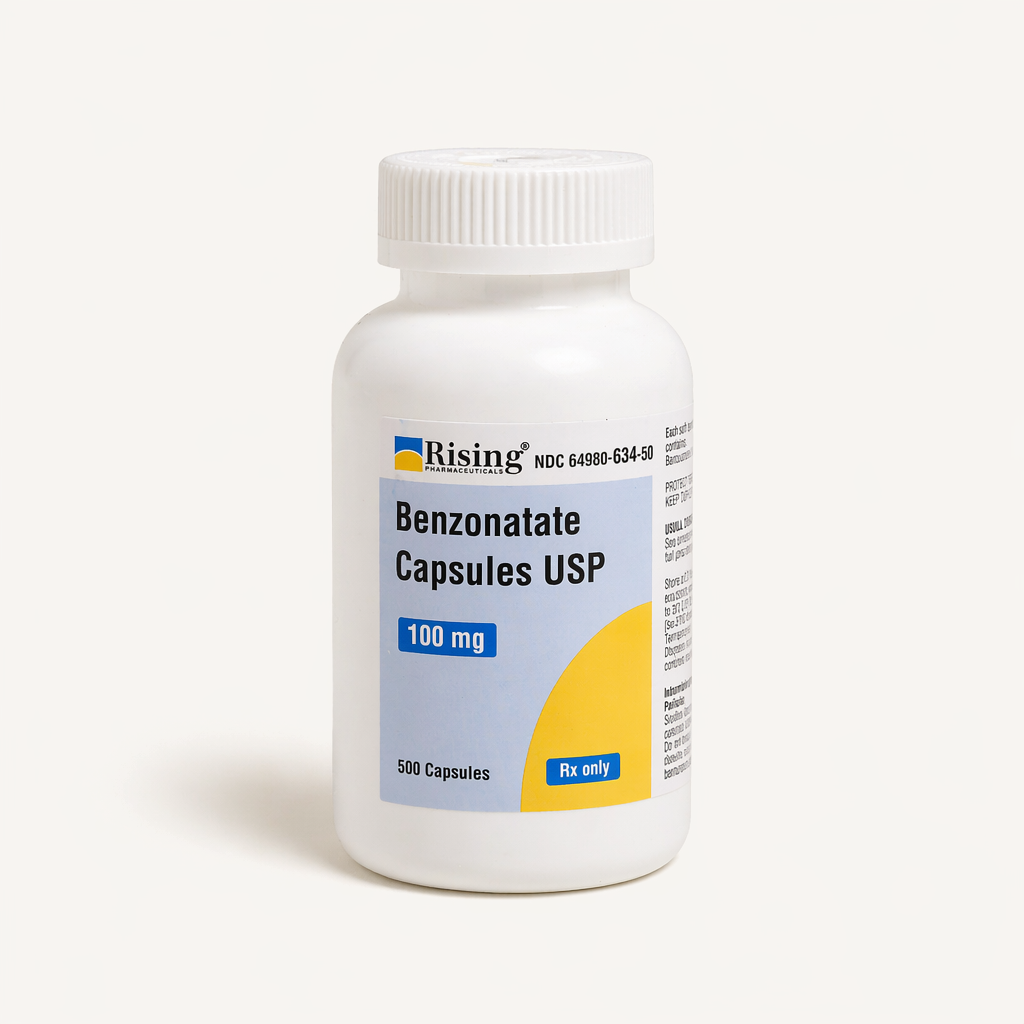
How It Works
Benzonatate works by targeting the “stretch receptors” in your lungs and airway lining. When irritated due to inflammation or infection, these receptors send signals to the brain to trigger the cough reflex. Benzonatate numbs the receptors and makes them less sensitive to irritation.
This localized mechanism allows benzonatate to suppress the urge to cough with fewer systemic effects on the central nervous system.
| Quick Facts | |
|---|---|
| Common Brands | Tessalon Perles |
| Drug Class | Antitussive (cough suppressant) |
| Generic Status | Generic version available |
| Availability | Prescription only |
Dosing
Benzonatate is typically used short term until the cough subsides. Your doctor will provide detailed information in your prescription about the treatment course’s duration.
- Standard dose: 100 to 200 mg taken three times per day
- Maximum dose: Per standard guidelines, a patient’s benzonatate dose should not exceed 600 mg per day
- Administration: It is generally accepted that benzonatate can be taken with or without food, but a meal or light snack can help prevent an upset stomach.
- Hydration: To help the capsule reach your stomach as quickly as possible, it is recommended to take your benzonatate with a full glass of water.
Note: Dosing information below is educational only. Your prescribing physician will determine your specific dose based on your individual health needs. Always follow your healthcare provider’s instructions for exact dosing.
Uses
FDA-Approved Uses
Benzonatate is FDA-approved to treat a dry, non-productive cough associated with acute or chronic respiratory conditions. It is currently the only non-narcotic antitussive (cough suppressant) available as a prescription medication.
Off-Label Uses
You may see benzonatate prescribed for uses that are not “FDA-approved.” This is a common and legal practice called “off-label” prescribing, where a doctor uses their clinical judgment to prescribe a drug for a different (but well-researched) purpose.
Common off-label uses for benzonatate currently found in clinical research and practice include:
- Post-procedural cough: Benzonatate may be prescribed to patients who have undergone a lung biopsy or other thoracic procedure and developed a cough that can potentially hinder healing.
- Intubation-related irritation: Providers may use benzonatate to soothe an intubated patient’s airway after their breathing tube has been removed.
- Hiccups: Some clinical studies suggest benzonatate’s numbing effect may help treat persistent, intractable hiccups.
Side Effects
Common Side Effects
Benzonatate may produce side effects similar to other cough suppressants. Common side effects from taking benzonatate include:
- Mild drowsiness or sedation
- Dizziness
- Nausea, upset stomach, or constipation
- Mild to moderate headache
- Nasal congestion or “heavy” feeling in the sinuses
Serious Side Effects
Serious side effects are rare, but it’s important to know what to look for if they do occur.
Serious side effects from taking benzonatate include:
- Mental status changes: Some people report confusion, visual hallucinations, and “weird” feelings after taking benzonatate. This is especially common when benzonatate is mixed with other medications.
- Bronchospasm: Benzonatate can trigger paradoxical breathing and tightness in the chest.
- Severe Allergic Reaction: Like many other types of medication, benzonatate can produce anaphylaxis in people who are allergic to one or more of the drug’s ingredients.
Call your doctor immediately if you experience any concerning or prolonged symptoms.
Pharmacist Tips
Swallow the Capsule Whole
Per standard guidelines, benzonatate capsules should not be chewed, crushed, or dissolved prior to taking them. If the liquid medication is released in your mouth, it can numb your tongue and throat, leading to a higher risk of choking or aspiration.
Do Not Eat if Numb
If the benzonatate capsule breaks in your mouth, it is advised to avoid eating or drinking anything for 20 to 30 minutes, or until the numbness has completely worn off.
Take Caution Behind the Wheel
Benzonatate can cause drowsiness. Avoid driving or operating heavy machinery until you know how the drug affects you.
Know the Missed Dose Protocol
If you miss a dose, standard guidelines state to skip it and wait until the next scheduled dose. Doubling the dose to make up for a missed dose increases the risk of side effects.
Drug Interactions
Known interactions with benzonatate include:
- Sedatives: Taking benzonatate with sleep aids, muscle relaxants, or anxiety medications can cause excessive sedation.
- Alcohol: Drinking alcohol while taking benzonatate can increase the risk of dizziness, drowsiness, and confusion.
- Monoamine oxidase inhibitors (MAOIs): Taking benzonatate along with MAOIs, an older class of antidepressant drugs, can increase the risk of mental hallucinations, confusion, and other neurological side effects.
- Other cough suppressants/cold medications: Taking benzonatate with other suppressants like dextromethorphan (Delsym) can cause too much suppression. Per standard guidelines, mixing these medications is not advised unless instructed by a doctor.
Always give your doctor and pharmacist a complete list of all your medications, vitamins, and supplements to check for potential interactions.
FAQs
Why must I swallow the capsule whole?
Benzonatate is a local anesthetic with numbing properties. If the benzonatate capsule breaks and the liquid medicine escapes, it can numb your tongue and throat instead of treating your cough.
Is benzonatate a narcotic or opioid?
Benzonatate is neither a narcotic nor an opioid. It is a non-narcotic, non-addictive medication. It does not contain codeine or hydrocodone, and is not classified as a controlled substance.
Can I drink alcohol while taking benzonatate?
Per standard guidelines, patients are advised to limit their alcohol intake while taking benzonatate. Drinking can intensify the side effects of benzonatate, including dizziness, drowsiness, and confusion.
Does benzonatate make you sleepy?
Yes, benzonatate can make you sleepy. Drowsiness is a common side effect of taking benzonatate.
How long does it take for benzonatate to stop my cough?
Cough symptoms commonly improve after one or two doses of benzonatate, but it can take the entire treatment course to completely treat the cough.
Can I take Mucinex (guaifenesin) or Delsym (dextromethorphan) with benzonatate?
According to standard guidelines, patients can take Mucinex (guaifenesin) with benzonatate. These medications are commonly combined for cough suppression. However, it is advised to avoid Delsym (dextromethorphan) while taking benzonatate.
Does benzonatate show up on a drug test?
Benzonatate is not a narcotic and does not usually trigger a false positive during standard drug panels.
Can I take benzonatate if I am pregnant?
Benzonatate’s effects on a fetus have not been fully established, so risk cannot be ruled out. Your provider may prescribe a safer alternative.
What happens if the capsule breaks in my mouth?
If the benzonatate capsule breaks in your mouth, it is advised to wait at least 20 to 30 minutes before eating or drinking anything. The liquid medicine acts as a local anesthetic to numb your tongue and throat. Eating or drinking can increase the risk of choking or aspiration.
Is benzonatate addictive?
No, benzonatate is not considered addictive or classified as a controlled substance. It is the only non-addictive cough suppressant available as a prescription medication.
Can I drive while taking this medication?
Generally yes, standard guidelines say it is safe to drive while taking benzonatate as long as you do not feel dizzy or disoriented. These side effects can interfere with motor skills, so it is recommended to wait until they subside before getting behind the wheel.
Does benzonatate treat the cause of the cough or just the symptom?
Benzonatate treats cough symptoms by numbing stretch receptors in the lungs and airway lining. It does not treat the underlying illness that produces the cough. Your doctor may prescribe additional medications to treat the cold, flu, bacterial infection, or other cause of the cough.
What is the difference between the yellow and clear capsules?
With benzonatate, color may indicate dosage. Check the prescription label for the correct medication strength.
Comparable Medications
Benzonatate, Tessalon Perles, Codeine, Hydrocodone, or Gabapentin?
Benzonatate is a cough suppressant that numbs the receptors that signal the brain to trigger a cough reflex. Alternatives to benzonatate include:
Tessalon Perles
There is no clinical difference between generic benzonatate and Tessalon Perles, which is the drug's brand name.
Codeine
Codeine is a narcotic that suppresses coughs by acting on the brain and central nervous system. It carries an addiction risk and can produce unpleasant side effects, such as constipation and severe respiratory depression.
Hydrocodone
Hydrocodone is a strong opioid typically reserved for severe, painful coughs that interrupt sleep. It has strong sedating properties and is highly regulated.
Gabapentin
Gabapentin is usually prescribed for nerve pain or seizures, but it is sometimes used off-label to treat chronic or unexplained coughs. Gabapentin is a long-term maintenance drug, while benzonatate is designed for acute, short-term relief from infection-related coughing.
We Have Benzonatate in Stock. Get Yours Today!
Important: Information on this page is for educational purposes only. Prescribing decisions are made by independent, licensed providers. TelyRx operates technology-enabled pharmacies and a telehealth platform that connects patients with licensed providers. Prescriptions, when provider-approved and issued, are filled and shipped by TelyRx-affiliated pharmacies. We do not employ physicians or make prescribing decisions. Learn more about our editorial standards here.