How It Works
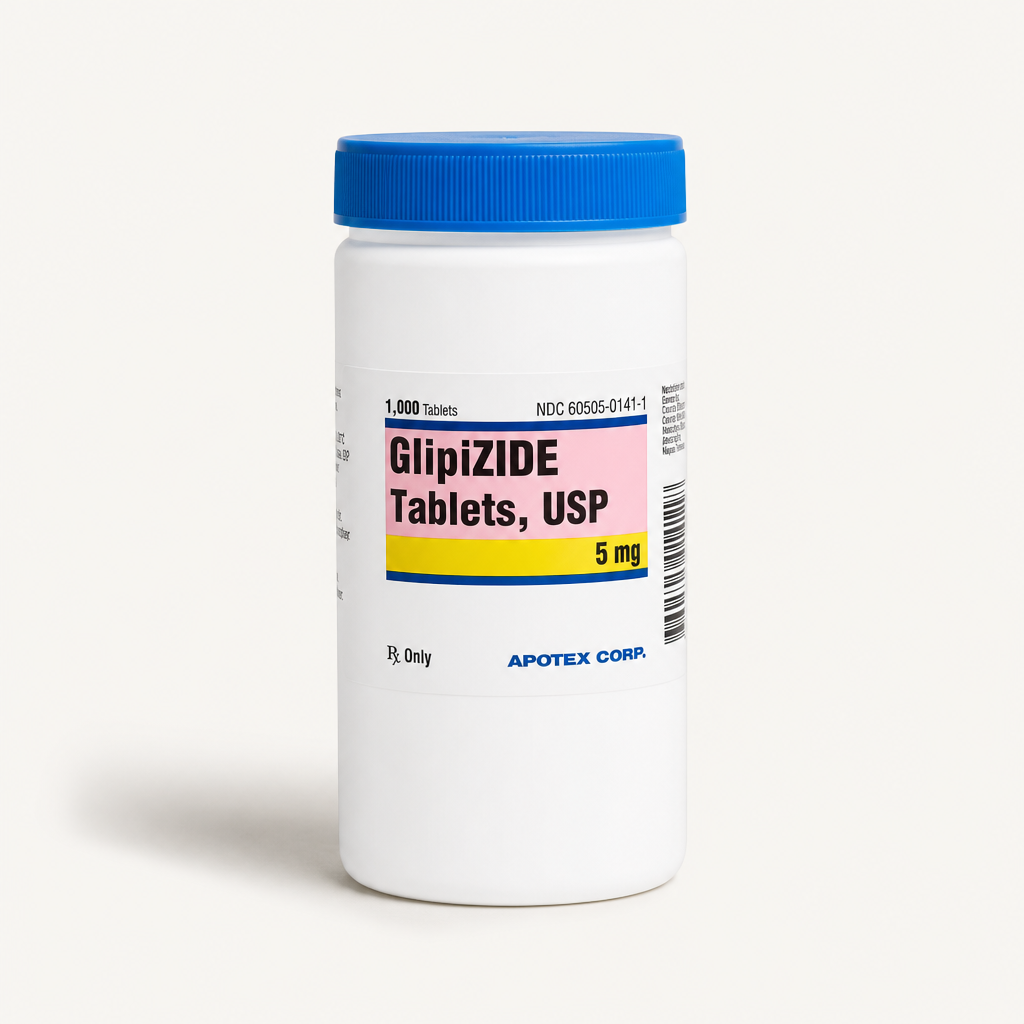
Glipizide works by stimulating the pancreas to release more insulin. Insulin helps your body use blood sugar (glucose) as an energy source. By increasing insulin levels, glipizide helps reduce the amount of sugar circulating in your blood.
| Quick Facts | |
|---|---|
| Common Brands | Glucotrol, Glucotrol XL |
| Drug Class | Sulfonylurea |
| Generic Status | Generic is available. |
| Availability | Prescription only |
Dosing
Glipizide comes in immediate-release tablets (5 mg, 10 mg) and extended-release tablets (2.5 mg, 5 mg, and 10 mg). Dosing depends on which tablet you’re prescribed and your blood sugar levels.
- Immediate-release: The recommended starting dose is 5 mg taken by mouth once daily, 30 minutes before your first meal of the day. Based on your blood sugar response, your healthcare provider may adjust the dose. If the total daily dose goes above 15 mg, it is typically divided into two doses taken twice daily. The maximum recommended dose for glipizide immediate-release tablets is 40 mg daily.
- Extended-release: The recommended starting dose is 5 mg taken by mouth once daily with breakfast. Based on your blood sugar response, your healthcare provider may adjust the dose.The maximum recommended dose for glipizide extended-release tablets is 20 mg once daily.
Your healthcare provider may prescribe a lower dose of glipizide if you’re older, have liver problems, or are taking other diabetes medications.
Note: Dosing information below is educational only. Your prescribing physician will determine your specific dose based on your individual health needs. Always follow your healthcare provider’s instructions for exact dosing.
Uses
FDA-Approved Uses
Glipizide is FDA-approved to treat type 2 diabetes in combination with diet and exercise.
Off-Label Uses
You may see some medications being prescribed for uses that are not “FDA-approved.” This is a common and legal practice called “off-label” prescribing, where a doctor uses their clinical judgment to prescribe a drug for a different (but well-researched) purpose.
There are currently no off-label uses for glipizide.
Side Effects
Like all medications, glipizide can cause side effects. Some common side effects may improve over time as your body adjusts to the medication. Other side effects may be serious and require medical attention.
Common Side Effects
- Dizziness or lightheadedness
- Diarrhea
- Gas
- Weight gain
- Nervousness
- Nausea
- Shakiness
- Low blood sugar
Serious Side Effects
Serious side effects are rare, but it’s important to know what to look for if they do occur. Stop using glipizide and call your doctor immediately if you experience:
- Severe allergic reactions: Symptoms include swelling of the face, lips, tongue, or throat; difficulty breathing or swallowing; racing heart; severe rash or itching; and/or fever.
- Low blood sugar (hypoglycemia): Blood sugar levels may drop too low when taking glipizide. The risk may be higher in people who are older, have preexisting kidney problems, or are taking other diabetes medications. Symptoms include shaking, anxiety, confusion, dizziness, sweating, rapid heartbeat, or cold skin.
- Hemolytic anemia: This condition causes a low red blood cell count. Symptoms include unusual weakness, tiredness, or dizziness. This is more common in individuals with a glucose-6-phosphate dehydrogenase (G6PD) deficiency.
- Heart problems: Sulfonylureas like glipizide may increase the risk of serious heart problems, including a heart attack or heart failure. Symptoms include chest pain, difficulty breathing, nausea, dizziness, sweating, swelling in the body, or sudden weight gain.
Call your doctor immediately if you experience any concerning or prolonged symptoms.
Pharmacist Tips
Time Your Dose
It is recommended to take glipizide immediate-release tablets 30 minutes before a meal (usually breakfast). Extended-release tablets should be taken with breakfast.
Swallow XL Tablets Whole
If you are prescribed glipizide extended-release (XL) tablets, swallow the tablet whole. Do not chew, cut, or crush it.
XL Tablets May Appear in Stool
It is normal to see the non-dissolvable shell of the XL tablet in your stool after the medicine has been released into your body.
Practice Sun Protection
Glipizide can make your skin more sensitive to sunlight (photosensitivity). It is recommended to wear sunscreen and protective clothing to avoid severe sunburns.
Avoid Alcohol
Drinking alcohol while taking glipizide can cause your blood sugar to drop to dangerously low levels and may worsen side effects like nausea.
Have Fast-Acting Sugars on Hand
If you experience signs of hypoglycemia, check your blood sugar levels. If they’re low, consume a fast-acting sugar such as a glucose tablet or fruit juice.
Know the Missed Dose Protocol
If you miss a dose of glipizide, take it as soon as you remember with food (extended-release tablets) or 30 minutes before you eat (immediate-release tablets). If it is almost time for your next dose, skip the missed dose and take your next dose at the regular time.
Drug Interactions
Certain medications and substances can interact with glipizide, potentially altering how it works or increasing the risk of side effects. For example:
- Medications for fungal infections: Some of these medications, such as fluconazole (Diflucan) and miconazole (Oravig), may interact with glipizide.
- Cholesterol medications: Colesevelam (Welchol) can affect absorption. It is recommended to take glipizide at least 4 hours before colesevelam.
- Aspirin and NSAIDs: Medications like ibuprofen or naproxen can affect blood sugar levels.
- Antibiotics: Certain antibiotics, including chloramphenicol, clarithromycin, and quinolones (e.g. ciprofloxacin), may cause interactions with glipizide.
- Other diabetes medications: Taking glipizide with other drugs that lower blood sugar may increase the risk of low blood sugar (hypoglycemia).
- Blood pressure and heart medications: Diuretics, beta-blockers (e.g. atenolol, metoprolol), and other heart medications can affect blood sugar levels.
Always give your doctor and pharmacist a complete list of all your medications, vitamins, and supplements to check for potential interactions.
FAQs
Why must I take glipizide 30 minutes before a meal?
Taking glipizide 30 minutes before a meal ensures the medication is working when your body starts digesting food. This timing helps prevent blood sugar spikes after eating. If taken without food, it can increase the risk of hypoglycemia (low blood sugar).
Can glipizide cause low blood sugar (hypoglycemia)?
Yes, glipizide can cause hypoglycemia. It stimulates the pancreas to release insulin, which can cause blood sugar to drop too low. This risk is higher if you skip meals, drink alcohol, or take other medications that lower blood sugar.
What is the difference between glipizide IR (immediate release) and glipizide ER (extended release)?
Glipizide IR is typically taken 30 minutes before meals, often once or twice daily. It releases the medication quickly. Glipizide ER (extended release) is a specially coated tablet taken once daily with breakfast that releases the medication slowly over 24 hours.
Can I drink alcohol while taking glipizide?
It is generally recommended to avoid alcohol while taking glipizide. Alcohol can interact with glipizide to cause dangerously low blood sugar levels and may worsen side effects like nausea.
Is glipizide safe if I have a “sulfa” drug allergy?
No. Glipizide is a sulfonylurea (related to sulfonamides). If you have a known allergy to sulfa medications, it’s recommended to avoid glipizide as it may cause a serious allergic reaction.
Can I take glipizide and metformin together?
Generally yes, they are commonly prescribed together to help manage blood sugar when one medication alone is not enough.
Is glipizide safe for elderly patients (over 65)?
Elderly people are at a higher risk for low blood sugar while taking glipizide. Providers may prescribe a lower starting dose and monitor your response more closely.
Can I take this medication if I am pregnant?
It is not known if glipizide affects pregnancy or harms an unborn baby, so risk cannot be ruled out. Tell your healthcare provider if you are pregnant or planning to become pregnant so they can advise you on the safest treatment options.
Does glipizide interact with heart medications?
Yes, certain heart medications, including diuretics and beta-blockers, may interact with glipizide or make it harder to recognize signs of low blood sugar.
How quickly does glipizide lower blood sugar?
Glipizide typically starts working within minutes to hours of taking the dose. It is recommended to take the immediate-release tablet 30 minutes before your first meal of the day, or the extended-release tablet with your first meal of the day.
What is the maximum daily dose of glipizide?
For immediate-release tablets, the maximum recommended daily dose is 40 mg, in divided doses. For extended-release tablets, the maximum recommended dose is 20 mg daily.
Is glipizide the same as insulin?
No. Insulin is a hormone replacement. Glipizide is an oral medication that tells your pancreas to release more of the insulin it naturally produces.
Does this medication work for type 1 diabetes?
No. Glipizide requires a functioning pancreas to stimulate insulin release. It is not approved for treating type 1 diabetes.
What happens if I miss a dose?
If you miss a dose of glipizide, take it as soon as you remember, either with food (extended-release tablets) or 30 minutes before eating (immediate-release tablets). If it is almost time for your next dose, skip the missed dose. Do not take extra medicine to make up for the missed dose.
Comparable Medications
Glipizide, Glimepiride (Amaryl), Metformin (Glucophage), Sitagliptin (Januvia), Empagliflozin (Jardiance), or Semaglutide (Ozempic)?
There are several medications that your doctor can prescribe in place of glipizide. A few possible alternatives are:
Glimepiride Tablets
From $27.99
An oral sulfonylurea used to treat type 2 diabetes
Metformin ER
From $24.99
An oral non-sulfonylurea medication used to treat type 2 diabetes
Sitagliptin
An oral DPP-4 used to treat type 2 diabetes
Empagliflozin
An oral SGLT2 inhibitor used to treat type 2 diabetes and reduce cardiovascular risk in people with heart failure or with type 2 diabetes and heart disease
Semaglutide
A once-weekly injectable GLP-1 receptor agonist used to treat type 2 diabetes, reduce cardiovascular risk in people with type 2 diabetes and heart disease, and slow kidney decline in people with type 2 diabetes and chronic kidney disease
We Have Glipizide in Stock. Get Yours Today!
Important: Information on this page is for educational purposes only. Prescribing decisions are made by independent, licensed providers. TelyRx operates technology-enabled pharmacies and a telehealth platform that connects patients with licensed providers. Prescriptions, when provider-approved and issued, are filled and shipped by TelyRx-affiliated pharmacies. We do not employ physicians or make prescribing decisions. Learn more about our editorial standards here.