

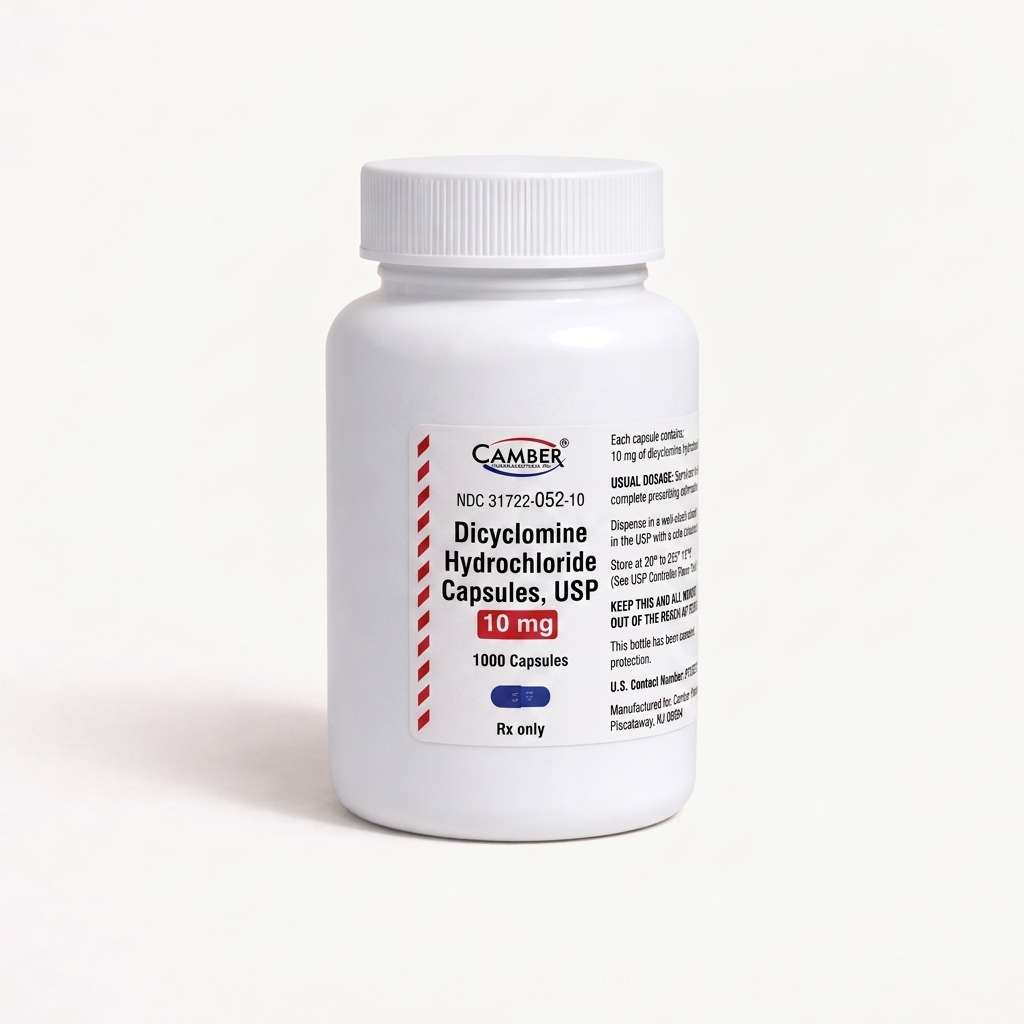
How It Works
Your digestive tract is lined with smooth muscle that squeezes in a coordinated wave to move food through your system. The body releases a chemical called acetylcholine, which acts as a “squeeze” signal. Normally, this happens smoothly, but when too much acetylcholine is released, the muscles can spasm, leading to sharp pain, bloating, and urgency.
Dicyclomine blocks these chemical signals from reaching your gut muscles, which helps prevent the muscles from contracting too hard and causing discomfort.
| Quick Facts | |
|---|---|
| Common Brands | Bentyl |
| Drug Class | Anticholinergic / antispasmodic |
| Generic Status | Generic for Bentyl |
| Availability | Prescription only |
Dosing
Dicyclomine dosage is adjusted to the individual’s needs. Providers typically follow these general dosage patterns:
- Standard oral dose: A common starting point is 20 mg taken four times daily. If this is well tolerated but symptoms persist after a week, a provider may increase the dose to 40 mg four times daily.
- Liquid formulation: For the 10 mg/5 mL oral solution, an accurate measuring device (like an oral syringe) is necessary. Household spoons are not considered accurate for this purpose.
It is generally accepted that taking the medication 30 to 60 minutes before eating is the most effective way to prevent spasms triggered by digestion.
Dicyclomine targets symptoms rather than an underlying cause, so it is often prescribed for short-term use during active flare-ups. Patients generally do not exceed two weeks of continuous use without further medical evaluation.
Note: Dosing information is educational only. Your prescribing physician will determine your specific dose based on your individual health needs. Always follow your healthcare provider’s instructions for exact dosing.
Uses
FDA-Approved Uses
The FDA has approved dicyclomine for irritable bowel syndrome (IBS) to treat functional bowel disturbances, including stomach pain and intestinal cramps.
Off-Label Uses
You may see dicyclomine prescribed for uses that are not “FDA-approved.” This is a common and legal practice called “off-label” prescribing, where a doctor uses their clinical judgment to prescribe a drug for a different (but well-researched) purpose.
Dicyclomine is commonly prescribed for the following off-label uses:
- Diverticulitis pain: Helps ease cramps caused by inflammation in the colon.
- Menstrual cramps: Because it relaxes smooth muscle, some providers use it to treat severe period pain.
- Anxiety-related stomach pain: Treating the “tightness” in the stomach caused by acute stress.
- Bladder spasms: Used to calm a cramping or overactive bladder.
Side Effects
Dicyclomine affects the nervous system that controls involuntary functions, so it can cause secondary effects throughout the body.
Common Side Effects
- Dizziness or lightheadedness
- Dry mouth, nose, or throat
- Blurred vision
- Nausea or mild stomach upset
- Sleepiness, nervousness, or a “foggy” feeling
Serious Side Effects
Serious side effects are rare, but it’s important to know what to look for if they do occur. Standard guidelines advise stopping the medication and contacting your doctor immediately if you experience any of the following:
- Heat stroke and overheating: Dicyclomine reduces sweating. In hot weather or during heavy exercise, this makes it more likely for the body to overheat dangerously.
- Anticholinergic toxicity: This can cause severe confusion, hallucinations, flushed skin, or a rapid, irregular heartbeat.
- Bowel obstruction: If you experience severe constipation, inability to pass gas, or persistent vomiting, the gut may have slowed down excessively.
- Urinary retention: Especially in those with prostate issues, it may become very difficult to pass urine.
Call your doctor immediately if you experience any concerning or prolonged symptoms.
Pharmacist Tips
Follow The 30-Minute Rule
Standard guidelines recommend taking your dose about 30 minutes before a meal. This gives the medicine time to relax the gut muscles before food triggers a contraction.
Stay Hydrated
Providers advise keeping water nearby to help with dry mouth. They also recommend staying hydrated because you will sweat less, making you more prone to heat-related issues.
Avoid The Heat
Providers advise that you be careful in the sun or during strenuous activity. Since your body cannot cool itself as well through sweating, you are at a higher risk for heat exhaustion.
Separate Your Antacids
Providers do not recommend taking antacids (like Tums or Maalox) at the same time as dicyclomine. They can block the medication from being absorbed. Wait at least 2 hours between the two.
Skip The Alcohol
Alcohol can increase the dizziness and drowsiness caused by dicyclomine. It may also trigger digestive flares.
Drive With Caution
Standard guidelines advise against driving or operating machinery until you know how this medicine affects your vision and mental clarity.
Drug Interactions
Dicyclomine can interact with other “drying” or sedative medicines, potentially increasing the risk of side effects.
- Glaucoma medications: Dicyclomine can raise the pressure inside the eye, which may interfere with glaucoma treatments.
- Sleep and allergy medications: Combining this with antihistamines (like Benadryl) or sleep aids can exacerbate drowsiness.
- Digoxin: This heart medication may be absorbed differently if taken with dicyclomine.
- Metoclopramide: This drug (Reglan) is meant to speed up the gut. Taking it with dicyclomine, which slows the gut, may make both drugs less effective.
Always give your doctor and pharmacist a complete list of all your medications, vitamins, and supplements to check for potential interactions.
FAQs
Why must I take dicyclomine 30 to 60 minutes before a meal?
Taking the medicine before you eat allows it to reach your system and relax the muscles before the act of eating triggers a spasm.
Does dicyclomine treat diarrhea or just stomach pain?
While it is primarily used to address stomach pain, it slows down the entire gut. This may naturally help reduce the frequency of diarrhea.
Can I drive while taking dicyclomine?
Standard guidelines recommend being cautious before driving. Because dicyclomine can cause blurry vision and lightheadedness, it’s best to see how it affects you before getting behind the wheel.
Is dicyclomine a narcotic or opioid?
No. Dicyclomine is an antispasmodic that works specifically on muscle tissue.
Can I drink alcohol while taking dicyclomine?
Providers recommend avoiding alcohol consumption altogether. Alcohol may increase side effects like dizziness and can also irritate the digestive tract.
Can I take dicyclomine “as needed” for cramps, or do I have to take it every day?
Yes. Some may take it as needed when they feel a flare-up starting, while others take it every day for a short period to treat a cycle of pain.
Is dicyclomine safe for elderly patients (over 65)?
Older adults are more likely to experience confusion or lose their balance when taking this medicine. Providers typically recommend lower doses and additional monitoring.
Why shouldn’t I take this if I have glaucoma?
Standard guidelines state that dicyclomine can raise the pressure inside your eye, which is dangerous for people with certain types of glaucoma.
Is it safe during pregnancy?
Dicyclomine should be used only during pregnancy after a discussion with a healthcare provider about the risks and benefits.
Does dicyclomine help with acid reflux (GERD)?
Usually, no. It may worsen heartburn by relaxing the muscle that is supposed to keep stomach acid down.
Can I take antacids at the same time?
No. Antacids can stop the medicine from being absorbed. It’s generally recommended that you wait at least 2 hours between them.
Does it help with menstrual cramps?
Some providers use dicyclomine for menstrual cramps because it relaxes the smooth muscle of the uterus in the same way it relaxes the gut.
Comparable Medications
Dicyclomine, Hyoscyamine, Glycopyrrolate, Librax, or Loperamide?
Hyoscyamine
From $48.99
A similar antispasmodic that is available in fast-acting forms that dissolve under the tongue.
Glycopyrrolate (Robinul)
Another "drying" medicine used for stomach issues, but it is typically prescribed to reduce stomach acid rather than targeting gut cramps.
Librax
A combination pill that includes a cramp medicine and a mild anti-anxiety medicine, often used when stress is a trigger for digestive spasms.
Loperamide (Imodium)
An over-the-counter medicine used to treat diarrhea. Unlike dicyclomine, it does not directly relax muscles to stop cramping.
We Have Dicyclomine in Stock. Get Yours Today!
Important: Information on this page is for educational purposes only. Prescribing decisions are made by independent, licensed providers. TelyRx operates technology-enabled pharmacies and a telehealth platform that connects patients with licensed providers. Prescriptions, when provider-approved and issued, are filled and shipped by TelyRx-affiliated pharmacies. We do not employ physicians or make prescribing decisions. Learn more about our editorial standards here.