

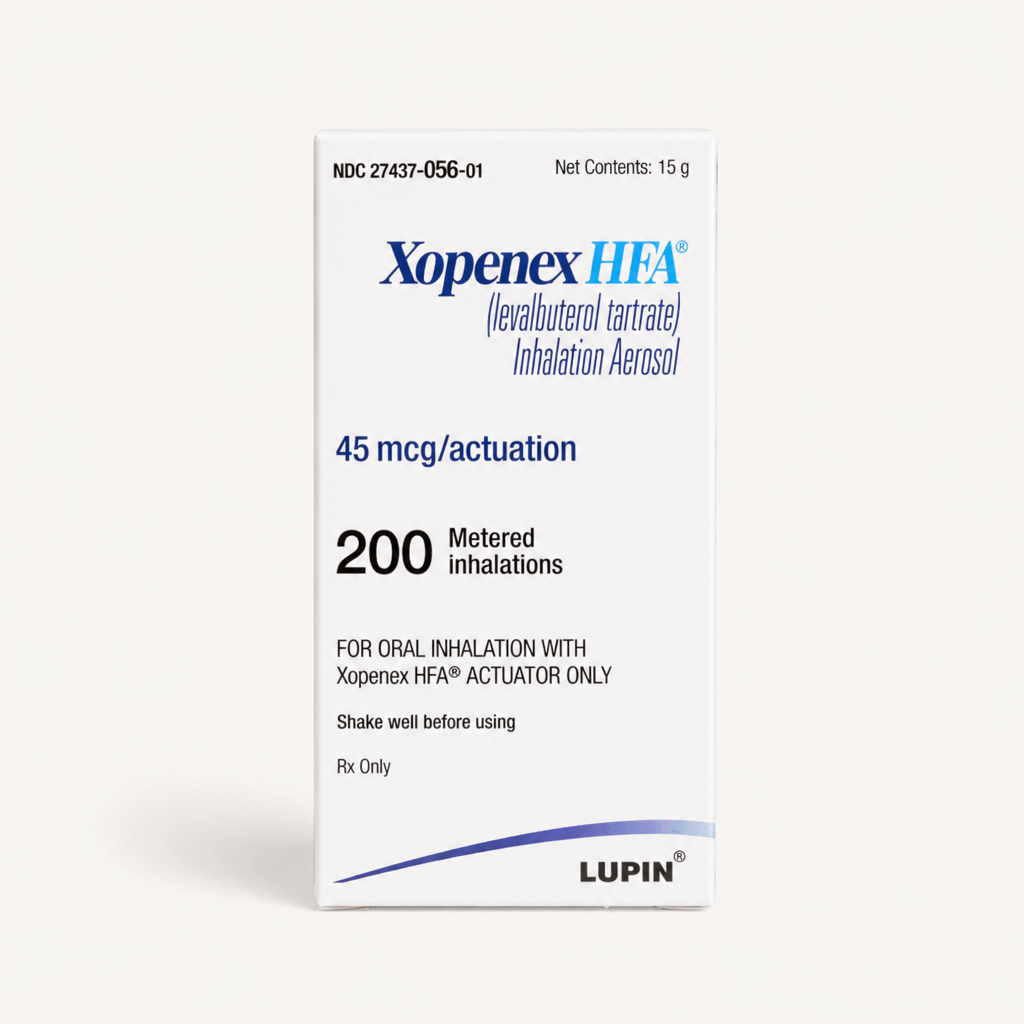
How It Works
Xopenex, or levalbuterol, works by relaxing the smooth muscles in the lungs. When inhaled, the levalbuterol binds to beta-2 receptors on the surface of bronchial tubes. Binding to these receptors triggers the release of chemicals that signal to the smooth muscle to relax. Since the medication is delivered as a fast-moving mist, it works immediately to reduce constriction.
Traditional albuterol contains R-isomers believed to open airways during bronchospasm, and less active S-isomers thought to contribute to side effects such as increased heart rate. Levalbuterol contains only the S-isomer.
| Quick Facts | |
|---|---|
| Common Brands | Xopenex, Xopenex HFA |
| Drug Class | Beta-2 adrenergic agonist and bronchodilator (short-acting beta-agonist) |
| Generic Status | Generic version available |
| Availability | Prescription only |
Dosing
When using a metered-dose inhaler, proper administration technique is key to effective treatment. If patients do not inhale the mist properly, the medication may coat the back of the throat rather than reach the lungs.
- Standard dose: Per clinical guidelines, the standard rescue dose is two puffs from the metered inhaler every 4 to 6 hours until symptoms improve.
- Exercise pre-treatment: To prevent exercise-induced bronchospasm, standard guidelines recommend 2 puffs 15 to 30 minutes before starting physical activity.
- Wait period: If a provider prescribes two puffs per dose, patients should wait roughly 60 seconds between the first and second puff. This allows the first to open up the airway, allowing the second to reach the lungs more effectively.
- Priming the inhaler: You should prime it if it is new or you haven’t used it for at least 3 days. This process involves shaking the inhaler and spraying four puffs into the air, away from your face. Priming ensures the chamber contains the correct amount of medication.
Note: Dosing information below is educational only. Your prescribing physician will determine your specific dose based on your individual health needs. Always follow your healthcare provider’s instructions for exact dosing.
Uses
FDA-Approved Uses
The Xopenex (levalbuterol) inhaler is FDA-approved to treat asthma with rapid relief of wheezing, shortness of breath, and other acute symptoms. It is also FDA-approved to prevent bronchospasm in patients with reversible obstructive airway disease.
Off-Label Uses
You may see the Xopenex inhaler prescribed for uses that are not “FDA-approved.” This is a very common and legal practice called “off-label” prescribing, where a doctor uses their clinical judgment to prescribe a drug for a different (but well-researched) purpose.
Common off-label uses for the Xopenex inhaler currently found in clinical research and practice include:
- Chronic obstructive pulmonary disease (COPD): Although providers generally recommend albuterol for COPD, they may prescribe Xopenex off-label for patients who experience tachycardia (fast heart rate) with other bronchodilators.
- Acute bronchitis: Doctors occasionally prescribe Xopenex to relieve the tightness and wheezing associated with this condition.
Side Effects
Doctors often prefer the Xopenex inhaler because it carries a lower incidence rate of side effects compared to standard albuterol. That said, levalbuterol is still a potent medication that affects the nervous system, and side effects can occur.
Common Side Effects
The most common side effects of using a Xopenex inhaler include:
- Shakiness or tremors in the hands
- Headache and dizziness
- Sore throat or dry mouth
- Tachycardia (increase in heart rate or palpitations)
Serious Side Effects
Serious side effects are rare, but it’s important to know what to look for if they do occur. Serious side effects from using the Xopenex inhaler can include:
- Paradoxical bronchospasm: In rare cases, the medication can cause the airway to tighten rather than dilate. This is considered a medical emergency,
- Hypokalemia (low potassium): Continuous or excessive use of beta-agonists such as levalbuterol can cause potassium levels to drop. Symptoms of hypokalemia include muscle cramps, weakness, and heart rhythm issues.
- Severe cardiovascular effects: Levalbuterol can lead to significantly elevated blood pressure and chest pain, especially for people with pre-existing heart conditions.
Call your doctor immediately if you experience any concerning or prolonged symptoms.
Pharmacist Tips
Monitor the Doses
Xopenex inhalers come with a dose counter. When the counter reaches zero, there may still be liquid left in the inhaler, but not enough for a full dose, so it is important to keep an eye on this figure and replenish your supply as needed.
Clean The Inhaler Regularly
Standard guidelines call for cleaning the inhaler weekly. This prevents medication buildup and unclogs the spray hole. To clean, patients should remove the metal canister and wash the plastic actuator under warm running water, then let the inhaler dry completely before reassembling.
Try a Spacer
If you have a hard time coordinating your breath with the inhaled spray, talk to your provider about a spacer or valved holding chamber for the medication. This device holds the mist in a tube to allow for easier, slower breathing.
Bring The Inhaler Inside
Patients are advised never to leave their Xopenex inhaler in a vehicle, as extreme heat or cold can alter the canister’s internal pressure and cause the medication to break down.
The “Float Trick” Is A Myth
A common myth about the Xopenex inhaler is that placing the device in water to see if it floats is an effective way to gauge how much medication is left. With this inhaler, the dose counter is the most reliable way to determine how much longer the device will last.
Drug Interactions
Xopenex can interact with a wide range of medications, and this can reduce the efficacy of the inhaler and increase the risk of cardiac side effects. Known interactions with the Xopenex inhaler include:
- Beta-blockers: Atenolol, metoprolol, and other beta-blockers used to manage high blood pressure can block the effects of Xopenex, making it harder for the inhaler to open the airway.
- Diuretics: Certain diuretics, known as “water pills,” can lower potassium levels. Since Xopenex has the same effect, using both at the same time can increase the risk of hypokalemia.
- Monoamine oxidase inhibitors (MAOIs) and tricyclic antidepressants: Using a Xopenex inhaler within 2 weeks of starting any MAOI or tricyclic antidepressant can significantly increase levalbuterol’s effect on the patient’s heart.
Always give your doctor and pharmacist a complete list of all your medications, vitamins, and supplements to check for potential interactions.
FAQs
Will this inhaler make my heart race the way albuterol does?
Although Xopenex inhalers reduce the post-puff jitters many people experience with traditional albuterol, the medication is still a stimulant that can contribute to a racing heart. This is especially true for patients who use the inhaler more frequently than prescribed.
How many puffs am I supposed to take when I feel an asthma attack coming on?
Standard guidelines for using a Xopenex inhaler suggest two inhalations every 4 to 6 hours for acute symptoms. If a patient’s symptoms do not improve after two puffs, or if they need to use their inhaler as a “rescue” aid more than twice a week, they should contact their healthcare provider.
Is Xopenex a daily preventative inhaler, or do I only use it for sudden emergencies?
Xopenex is a rescue inhaler intended for sudden-onset bronchospasm. It does not contain the steroids necessary for long-term daily prevention. If patients require daily treatment, their provider can prescribe a daily maintenance inhaler.
Does this inhaler contain steroids that will make me gain weight?
No, Xopenex inhalers do not contain steroids that will make you gain weight. Xopenex is a nonsteroidal bronchodilator that does not carry the same risk of weight gain and other side effects associated with oral or high-dose inhaled corticosteroids.
How long does it usually take for a puff of Xopenex to open up my lungs?
Most people who use the Xopenex inhaler notice a difference in breathing within 5 to 10 minutes. The maximum effect typically occurs about 60 to 90 minutes after inhalation.
Can I take a puff of Xopenex before working out to prevent exercise-induced asthma?
Yes, providers typically recommend two puffs of Xopenex 15 to 30 minutes before physical activity to prevent exercise-induced bronchospasm.
How do I read the dose counter to know when the inhaler is actually empty?
The counter located on the back of the inhaler’s actuator lists the number of remaining doses in the device. When this figure reaches zero, patients are advised to discard the inhaler and obtain a new one.
Do I need to “prime” or shake the inhaler before using it for the very first time?
Yes, standard guidelines recommend priming the inhaler before first use. Patients are also advised to prime the inhaler if they haven’t used it in more than three days. To prime, shake the inhaler well, then spray 4 puffs into the air, away from your face.
How often should I wash the plastic mouthpiece, and what is the best way to clean it?
Standard guidelines suggest cleaning the plastic actuator once per week. To do so, remove the metal canister and rinse the plastic component under warm running water. Thorough air-drying before reassembling the inhaler is advised.
Is it safe to use a spacer or holding chamber attachment with this specific inhaler?
Yes, using a spacer or holding chamber attachment with this specific inhaler is considered safe. In fact, many providers recommend doing this if you have trouble coordinating your breath with the inhaler. A spacer allows for slow, more effective breaths with the inhaler.
Can I use Xopenex if I am currently pregnant or breastfeeding?
Medical professionals have not fully established the effects of Xopenex on pregnant or breastfeeding patients, though uncontrolled asthma poses a significant risk to both the mother and the fetus. Providers generally recommend using a Xopenex inhaler during pregnancy or breastfeeding if the benefits outweigh the potential risks. You should discuss this further with your doctor or OB/GYN to ensure it is the right choice for your care.
Can I float the metal canister in water to see if it’s empty?
The “float trick” is not a reliable way to check the dose count for Xopenex inhalers, as it can clog the valve. The built-in dose counter provides a more accurate gauge of the remaining doses.
Can I safely leave this inhaler in my car?
No, patients are advised never to leave their Xopenex inhaler in their car. Extreme heat or cold can compromise the device and the effective delivery of the dose.
Comparable Medications
Xopenex Inhaler, Albuterol, Budesonide/Formoterol, Albuterol/Budesonide, Fluticasone, or Levalbuterol Inhalation Solution?
The Xopenex inhaler contains levalbuterol and is primarily used as a rescue inhaler to prevent symptoms of sudden bronchospasm. Other inhaler devices are available, as are other medications for bronchospasm, so your doctor may recommend a Xopenex inhaler alternative based on your medical history and the nature of your symptoms.
Alternatives to the Xopenex inhaler include:
Albuterol HFA
From $43.99
Albuterol, sold under brand names such as ProAir and Ventolin, is a racemic mixture of R- and S-isomers. Because S-isomers can cause side effects, Xopenex — which contains only R-isomers — may offer a safer option for patients with pre-existing heart conditions. However, albuterol remains the standard first-line rescue treatment.
Budesonide / Formoterol Inhaler
From $249.99
Sold under the brand name Symbicort, budesonide/formoterol acts as a combination bronchodilator and steroid medication. Patients often use it as a daily maintenance inhaler. Xopenex lacks the anti-inflammatory benefits of Symbicort, so providers typically do not prescribe it for daily use.
Albuterol/budesonide
The combination drug albuterol/budesonide is sold under the brand name Airsupra as a rescue medication. Because it combines albuterol with budesonide, a strong steroid, the drug helps expand the airway and reduce inflammation. Xopenex only treats the muscle-tightening component of bronchospasm. Providers may prefer Airsupra for patients prone to inflammation-driven flare-ups.
Fluticasone Propionate HFA Inhaler
From $199.99
Fluticasone is an inhaled steroid prescribed for daily maintenance treatment. It is not effective during an asthma attack and does not aid people experiencing shortness of breath, unlike Xopenex.
Levalbuterol Inhalation Solution
From $79.99
While the Xopenex inhaler and levalbuterol inhalation solution contain the same active ingredient, their delivery modes differ. You place the solution into a nebulizer machine for 5 to 15 minutes, and the machine turns the liquid into an inhaled mist. Patients who struggle with standard metered-dose inhalers may find the levalbuterol inhalation solution easier to use.
We Have the Xopenex Inhaler in Stock. Get Yours Today!
Important: Information on this page is for educational purposes only. Prescribing decisions are made by independent, licensed providers. TelyRx operates technology-enabled pharmacies and a telehealth platform that connects patients with licensed providers. Prescriptions, when provider-approved and issued, are filled and shipped by TelyRx-affiliated pharmacies. We do not employ physicians or make prescribing decisions. Learn more about our editorial standards here.