

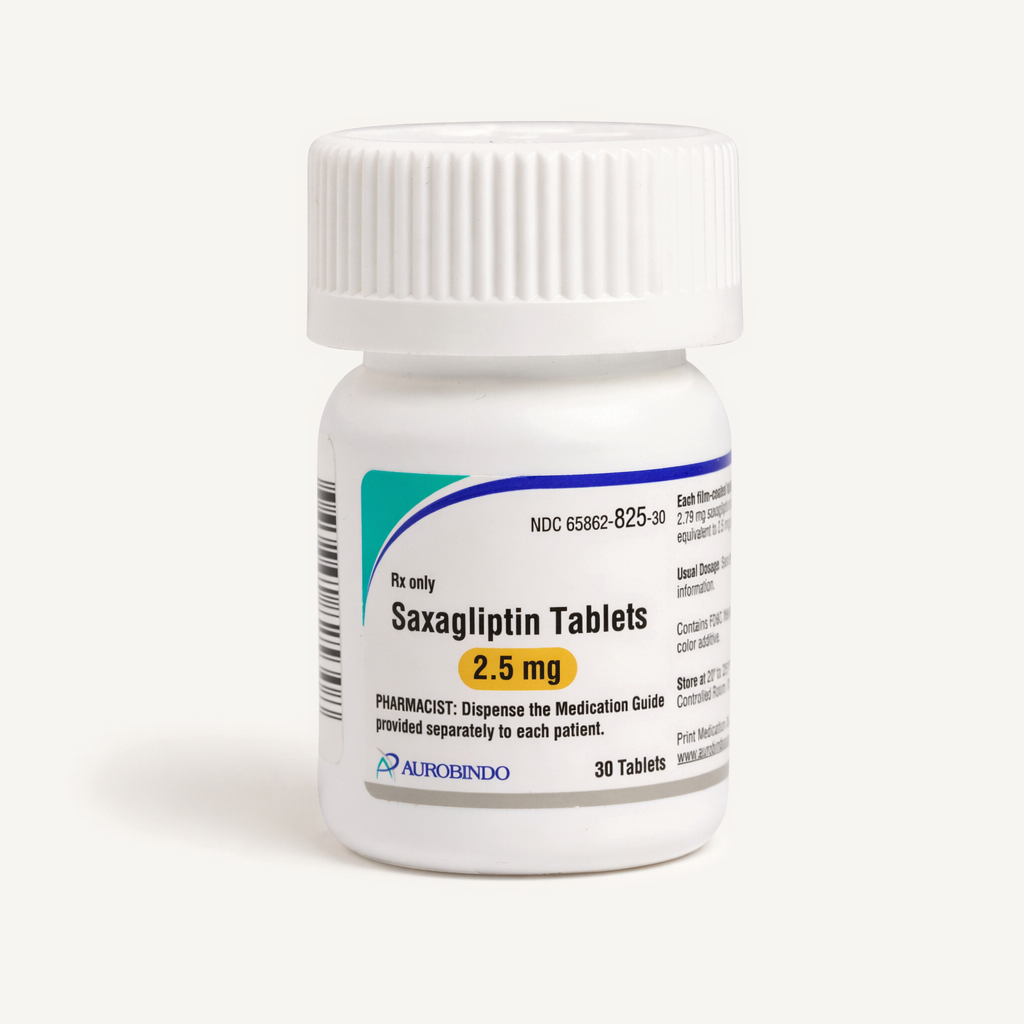
How It Works
As a dipeptidyl peptidase-4 (DPP-4) inhibitor, saxagliptin blocks the DPP-4 enzyme. This enzyme breaks down incretin hormones, which help your body release more insulin when blood sugar is high and signal the liver to make less glucose. By blocking DPP-4, saxagliptin lets these hormones stay active longer.
| Quick Facts | |
|---|---|
| Common Brands | Former brand name Onglyza, now discontinued. Saxagliptin is also available in combination tablets with metformin extended-release and with dapagliflozin (brand names discontinued; generics available). |
| Drug Class | Dipeptidyl peptidase-4 (DPP-4) inhibitor |
| Generic Status | Generic is available |
| Availability | Prescription only |
Dosing
Saxagliptin tablets are available in 2.5 mg and 5 mg strengths. The recommended dose is one tablet by mouth once daily, with or without food.
Your provider should check your kidney function before you start saxagliptin, and again as needed. Depending on your results, you may need the lower 2.5 mg dose. You may also need the lower dose if you take certain other medicines that change how your body handles saxagliptin.
Note: Dosing information below is educational only. Your prescribing physician will determine your specific dose based on your individual health needs. Always follow your healthcare provider’s instructions for exact dosing.
Uses
FDA-Approved Uses
Saxagliptin is FDA-approved to lower blood sugar levels in adults with type 2 diabetes, when used in combination with diet and exercise.
Off-Label Uses
You may see some medications prescribed for uses that are not “FDA-approved.” This is a common and legal practice called “off-label” prescribing, where a doctor uses their clinical judgment to prescribe a drug for a different purpose.
There are currently no common off-label uses of saxagliptin.
Side Effects
Like all medications, saxagliptin can cause side effects. Some are mild, and others may be serious or need treatment. The sections below cover what is most common and what needs medical attention.
Common Side Effects
- Headache
- Upper respiratory tract infection (e.g., runny or stuffy nose, sore throat)
- Urinary tract infection. See a doctor for treatment if this develops.
Serious Side Effects
Some side effects are serious, and it’s important to know what to look for.
- Severe allergic reactions: Symptoms include swelling of the face, lips, tongue, or throat (angioedema); difficulty breathing or swallowing; racing heart; severe rash or itching; and/or fever. Allergic reactions to saxagliptin have been reported within the first 3 months of treatment, including some after the first dose. Report symptoms at any point during treatment. If you suspect a severe allergic reaction, stop taking saxagliptan and call 911 or seek emergency treatment right away. Do not start taking it again unless your provider tells you to.
- Pancreatitis (inflammation of the pancreas): In rare cases, saxagliptin may cause pancreatitis. Stop taking saxagliptin and contact your provider right away if you have severe stomach pain that does not go away. The pain may spread to your back, and it may happen with or without vomiting. Tell your provider before starting saxagliptin if you have ever had pancreatitis.
- Heart failure: Saxagliptin may increase your risk of heart failure. Patients who have had heart failure before and those with reduced kidney function should speak with their provider about the risks and benefits of saxagliptin before starting treatment. Symptoms of heart failure include shortness of breath (especially while lying down), unusual tiredness, rapid weight gain, and swelling in the ankles, legs, or feet.
- Low blood sugar (hypoglycemia): Saxagliptin can cause low blood sugar, especially when it’s used with certain diabetes medications (such as insulin or sulfonylureas), so your provider may choose to lower the dose of those medications. Symptoms include headache, anxiety, hunger, shakiness, sweating, dizziness, confusion, slurred speech, blurry vision, and fast heartbeat. If you experience any of these symptoms, check your blood sugar, treat it if it’s low, and contact your healthcare provider.
- Severe joint pain: Saxagliptin may cause new or worsening joint pain.
- Severe skin reactions (bullous pemphigoid): This rare condition may start as an itchy rash, followed by large, fluid-filled blisters or sores.
Call your doctor immediately if you experience any concerning or prolonged symptoms.
Pharmacist Tips
Take Your Dose With Or Without Food
Food does not impact how well the medication works.
Swallow The Tablets Whole
Do not cut, crush, chew, or split the tablets. If you have difficulty swallowing the tablets, talk to your healthcare provider.
Take Your Dose Consistently
Taking saxagliptin at the same time each day can help you establish a routine and maintain consistent drug levels in the body.
Pair With Diet And Exercise
Saxagliptin is meant to be used along with a balanced diet and regular physical activity.
Limit Or Avoid Alcohol
Alcohol can affect blood sugar levels in people with diabetes, which may interfere with the intended effects of the medication. Consuming alcohol on an empty stomach or after exercise also increases the risk of low blood sugar.
Store At Room Temperature
Saxagliptin should be stored at 68°F to 77°F (20°C to 25°C). Brief periods between 59°F and 86°F (15°C to 30°C) are acceptable. Keep it dry and away from direct heat.
Tell Your Provider If You’re Pregnant Or Breastfeeding
It is not known if saxagliptin can affect pregnancy, harm an unborn baby, or pass into breast milk, so risk cannot be ruled out. Tell your provider if you are pregnant, breastfeeding, or planning to be, so they can advise whether it’s safe for you to use saxagliptin.
Try To Avoid Missing A Dose
If you miss a dose of saxagliptin, skip the missed dose and take your next dose at the usual time. Do not take double or extra doses to make up for a missed one.
Drug Interactions
Certain medications and substances can interact with saxagliptin, potentially altering its effectiveness or increasing the risk of side effects. For example:
- Other diabetes medications: Using saxagliptin alongside insulin or sulfonylureas (such as glimepiride, glipizide, or glyburide) can increase the risk of experiencing hypoglycemia (low blood sugar). A healthcare provider may consider lowering the dosage of insulin or similar medications when taken with saxagliptin.
- Medicines that slow down how your body breaks down saxagliptin: If you take one of these, your saxagliptin dose is limited to 2.5 mg once daily. Examples include clarithromycin (an antibiotic), oral ketoconazole and itraconazole (antifungals), ritonavir (an HIV medicine), and nefazodone (an antidepressant). This is not a complete list, and many common antibiotics and antifungals are not affected. Ask your provider or pharmacist to check any new medicine before you start it, rather than changing your dose on your own.
- Alcohol: While alcohol is not known to interact with saxagliptin directly, it is generally recommended to limit alcohol consumption while taking the medication due to its blood sugar-lowering effects.
Always give your doctor and pharmacist a complete list of all your medications, vitamins, and supplements to check for potential interactions.
FAQs
Why was brand-name Onglyza discontinued in the United States, and is generic saxagliptin still considered safe to take?
Onglyza’s discontinuation does not reflect the safety or efficacy of the drug compound itself. Generic versions of saxagliptin have been approved and are available as an alternative to the brand name.
What is the difference between taking saxagliptin and a DPP-4 inhibitor like Januvia?
Saxagliptin and Januvia (sitagliptin) are two different drugs that both belong to the same class of medications: dipeptidyl peptidase-4 (DPP-4) inhibitors. Both are typically taken once daily and work similarly to lower blood sugar levels. Your provider may choose one over the other based on cost, insurance coverage, your kidney function, and your other health conditions.
Should saxagliptin tablets be taken with a heavy meal?
It is not necessary to take saxagliptin with a heavy meal. Food does not impact how well the medication works.
Is saxagliptin FDA-approved for the treatment of type 1 diabetes or weight loss?
No, saxagliptin is approved for type 2 diabetes. It is not FDA-approved to treat type 1 diabetes or weight loss.
What should you do if you miss a daily dose of saxagliptin?
If you miss a dose of saxagliptin, the missed dose should be skipped. Instead, resume taking saxagliptin at the next scheduled dose. Do not take double or extra doses to make up for a missed one.
Can saxagliptin be taken with insulin or sulfonylureas?
Saxagliptin can be taken with other diabetes medications, including insulin and sulfonylureas (such as glimepiride, glipizide, or glyburide).
However, taking these medications together increases the risk of experiencing low blood sugar (hypoglycemia). Your provider may need to lower your insulin or sulfonylurea dose to reduce the risk of low blood sugar.
Is saxagliptin safe for use during pregnancy to manage gestational diabetes?
There is not enough information to know whether saxagliptin is safe to take during pregnancy. Saxagliptin is not approved for gestational diabetes. Gestational diabetes is usually managed with changes to eating and activity, and with insulin if medicine is needed. If you are pregnant, planning to become pregnant, or breastfeeding, tell your provider before starting or continuing saxagliptin so they can discuss the right treatment for you.
Comparable Medications
Saxagliptin, sitagliptin, metformin, empagliflozin, or semaglutide?
Your doctor may prescribe a different medicine instead of saxagliptin, or may prescribe saxagliptin alongside another one. Below are other medications commonly used for type 2 diabetes. These medicines work in different ways, and some offer benefits beyond blood sugar control. Your provider can explain which differences matter for your situation.
Sitagliptin Tablets
From $249.99
A daily oral DPP-4 inhibitor used to control blood sugar levels in people with type 2 diabetes.
Metformin
From $27.99
A daily oral medication used to control blood sugar levels in people with type 2 diabetes.
Empagliflozin
A daily oral SGLT2 inhibitor used to control blood sugar levels in people with type 2 diabetes. Empagliflozin has been shown to protect the heart and kidneys.
Semaglutide
A daily oral or weekly injectable GLP-1 receptor agonist used to control blood sugar levels in people with type 2 diabetes. In people with type 2 diabetes who have heart disease or are at high risk for it, semaglutide has been shown to lower the risk of heart attack, stroke, and death from heart or blood vessel disease. The weekly injection has also been shown to lower the risk of kidney disease getting worse in people with type 2 diabetes and chronic kidney disease.
We Have Saxagliptin in Stock. Get Yours Today!
Important: Information on this page is for educational purposes only. Prescribing decisions are made by independent, licensed providers. TelyRx operates technology-enabled pharmacies and a telehealth platform that connects patients with licensed providers. Prescriptions, when provider-approved and issued, are filled and shipped by TelyRx-affiliated pharmacies. We do not employ physicians or make prescribing decisions. Learn more about our editorial standards here.