

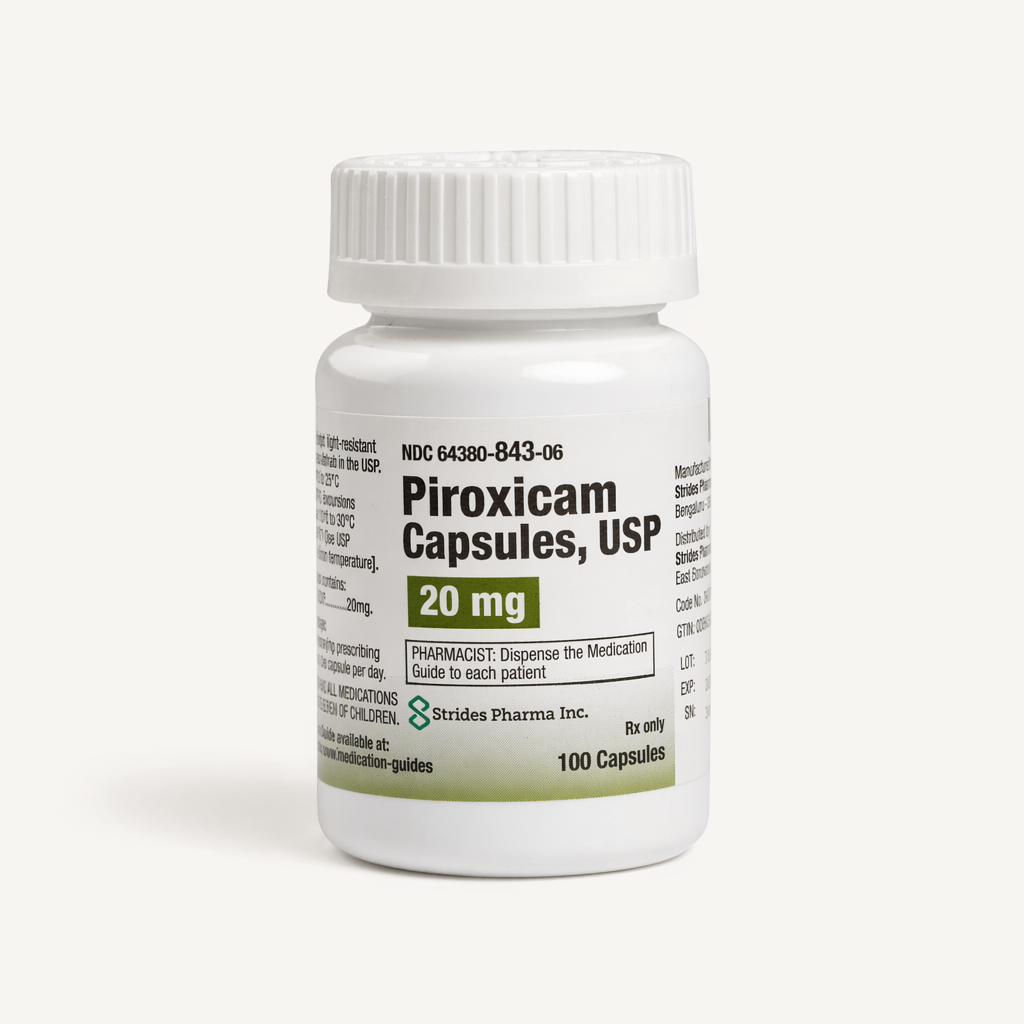
How It Works
Piroxicam works by inhibiting cyclooxygenase-1 (COX-1) and cyclooxygenase-2 (COX-2) enzymes. These enzymes contribute to pain signals and vasodilation, or the widening of blood vessels that can lead to redness and swelling in arthritic joints.
By inhibiting the COX-1 and COX-2 enzymes, piroxicam reduces the body’s inflammatory response to pain.
| Quick Facts | |
|---|---|
| Common Brands | Feldene |
| Drug Class | Nonsteroidal anti-inflammatory drug (NSAID); oxicam derivative |
| Generic Status | Generic version available |
| Availability | Prescription only |
Dosing
Doctors typically prescribe piroxicam in strengths of 10 mg or 20 mg. A single daily dose is usually sufficient.
- Osteoarthritis and rheumatoid arthritis: Standard guidelines suggest a daily dose of 20 mg. In clinical scenarios, providers may split the dose into two separate doses each day.
- Duration of therapy: Piroxicam slowly builds up in the system, so patients may not notice initial relief for several days. It can take weeks for the drug to reach its full anti-inflammatory potential.
- Administration: Per standard guidelines, taking the capsule or capsules at the same time each day helps ensure a consistent level of medication in the body at all times.
Note: Dosing information below is educational only. Your prescribing physician will determine your specific dose based on your individual health needs. Always follow your healthcare provider’s instructions for exact dosing.
Uses
FDA-Approved Uses
Piroxicam is FDA-approved to relieve osteoarthritis-related pain and stiffness that occurs due to a breakdown in joint cartilage. The drug is also FDA-approved to manage the systemic inflammation and joint destruction associated with rheumatoid arthritis.
Off-Label Uses
You may see piroxicam prescribed for uses that are not “FDA-approved.” This is a very common and legal practice called “off-label” prescribing, where a doctor uses their clinical judgment to prescribe a drug for a different (but well-researched) purpose.
Common off-label uses for piroxicam currently found in clinical research and practice include:
- Ankylosing spondylitis: Piroxicam may be prescribed to treat this type of arthritis that affects the spine if the patient requires long-term NSAID therapy.
- Primary dysmenorrhea: Doctors may recommend the medication off-label for severe menstrual cramping if other treatments have failed. However, other NSAIDs are more frequently prescribed for this purpose.
- Chronic gouty arthritis: Your provider may recommend piroxicam to manage lingering inflammation between gout flares.
Side Effects
Patients generally tolerate piroxicam well, though some side effects from the medication may still occur.
Common Side Effects
Common side effects from taking piroxicam include:
- Nausea, vomiting, constipation, or diarrhea
- Heartburn, gas, or stomach pain
- Dizziness, headache, or a ringing in the ears (tinnitus)
- Minor rashes, increased sensitivity to sunlight, and other skin reactions
Serious Side Effects
Serious side effects are rare, but it’s important to know what to look for if they do occur. Serious side effects from using piroxicam can include:
- Gastrointestinal bleeding and ulcers: Due to its long duration in the body, piroxicam can cause gastrointestinal bleeding and ulcers. Symptoms include black, tarry stools and vomit that resembles coffee grounds.
- Cardiovascular risk: NSAIDs like piroxicam can increase the risk of serious cardiovascular thrombotic events, including heart attack and stroke. This risk may increase with duration of use.
- Kidney impairment: Providers who prescribe piroxicam often monitor the kidneys because NSAIDs can decrease blood flow to the kidneys, leading to issues like urinary retention or decreased urinary output.
- Hepatotoxicity: In rare cases, people who take piroxicam develop liver damage. Symptoms include jaundice (yellowing) of the skin and eyes, dark urine, and extreme fatigue.
- Severe skin reaction: Piroxicam has been linked to severe skin reactions like Stevens-Johnson syndrome, which are rare but require emergency medical intervention if a blistering rash develops.
Call your doctor immediately if you experience any concerning or prolonged symptoms.
Pharmacist Tips
Food Is Recommended
Standard guidelines state patients can take piroxicam with or without food, but a meal or glass of milk is recommended at dose time to provide a protective buffer around the stomach lining.
Avoid Alcohol
Consuming alcohol while taking piroxicam significantly increases the risk of gastrointestinal ulcers and bleeding. Doctors typically recommend limiting or abstaining from alcohol while on this medication.
Protect Yourself In The Sun
Piroxicam can make the skin more sensitive to UV rays. Standard advice includes using sunscreen and wearing protective clothing when outdoors.
Be Patient
Many people don’t notice piroxicam’s effects for at least one to two weeks after treatment begins, while the medication often needs 8 to 12 weeks to reach full therapeutic effect.
Check Cold Medication Labels
Many over-the-counter medications used for cold and flu treatment contain NSAIDs like ibuprofen or naproxen. Combining these medications with piroxicam can lead to an accidental overdose or increased toxicity.
Drug Interactions
Piroxicam has a broad interaction profile, so your provider will thoroughly review all of your concurrent medications to check for potential issues in the future. Known interactions with piroxicam include:
- Blood thinners: Taking piroxicam alongside blood thinners like warfarin or aspirin can increase the risk of dangerous bleeding.
- Blood pressure medications: NSAIDs like piroxicam can reduce the effectiveness of ACE inhibitors, angiotensin II receptor blockers, and beta blockers used to manage blood pressure. Piroxicam can also cause the body to retain salt and water, which in turn can elevate blood pressure.
- SSRIs and SNRIs: Common antidepressants like fluoxetine and venlafaxine can increase the risk of gastrointestinal bleeding when used alongside piroxicam and other NSAIDs.
- Lithium and methotrexate: Piroxicam can slow the clearance of both of these drugs from the body, leading to a potentially toxic buildup in the blood.
- Other NSAIDs: Standard guidelines advise patients to avoid doubling up on NSAIDs, which can significantly increase the risk of side effects without the added benefit of stronger pain relief.
Always give your doctor and pharmacist a complete list of all your medications, vitamins, and supplements to check for potential interactions.
FAQs
How long does piroxicam take to reduce joint pain and inflammation associated with osteoarthritis?
You may notice minor relief within a few days of beginning treatment, but piroxicam typically takes one to two weeks of consistent daily dosage before you see a noticeable reduction in inflammation. For treating conditions like rheumatoid arthritis, it can take the drug up to 3 months to reach peak therapeutic effectiveness.
Should piroxicam be taken with a meal or milk to reduce gastrointestinal irritation?
Yes, standard guidelines suggest taking your piroxicam dose with a meal or glass of milk. This helps form a protective buffer around the stomach lining and can reduce the potential for gastrointestinal irritation.
Is it safe to consume alcohol while taking a dose of piroxicam?
Doctors typically discourage consuming alcohol while taking piroxicam. Alcohol increases the risk of stomach lining irritation and bleeding when combined with NSAIDs.
Does piroxicam interact with NSAIDs like ibuprofen or naproxen?
Yes, piroxicam interacts with other NSAIDs like ibuprofen and naproxen. Providers usually discourage patients from doubling up on NSAIDs because this can increase the risk of side effects without providing stronger or longer-lasting pain relief.
Can piroxicam elevate blood pressure?
Yes, piroxicam can elevate blood pressure. Like other NSAIDs, piroxicam can lead to fluid retention and affect kidney function, which in turn may cause blood pressure to rise or interfere with blood pressure medications.
Is piroxicam approved for the treatment of acute gout or musculoskeletal injuries?
Piroxicam can treat the pain associated with gout or musculoskeletal injuries, but doctors typically prefer a faster-acting NSAID for acute gout flares and short-term injuries. Piroxicam is typically reserved for long-term pain management.
Is piroxicam approved for use during the third trimester of pregnancy?
No, piroxicam is not approved for use in pregnancy, especially starting around 20 weeks. Using piroxicam and other NSAIDs from that point on can cause serious heart or kidney problems in the unborn baby and may lead to delivery complications.
Does piroxicam interact with selective serotonin reuptake inhibitors (SSRIs)?
Yes, piroxicam interacts with SSRIs and SNRIs. These medications primarily used to treat depression can increase the risk of gastrointestinal bleeding when taking alongside NSAIDs like piroxicam.
Why is piroxicam prescribed for patients who do not respond to other NSAIDs?
Piroxicam remains in the body longer than many other NSAIDs. Doctors may recommend it to patients who have not found success with shorter-acting NSAIDs.
Comparable Medications
Piroxicam, Ibuprofen, Meloxicam, Celecoxib, or Acetaminophen?
Piroxicam is an oxicam NSAID primarily used to treat the symptoms of osteoarthritis and rheumatoid arthritis. Your doctor may recommend an alternative to piroxicam based on your age, medical history, and nature and severity of symptoms. Piroxicam alternatives include:
Ibuprofen
Ibuprofen is a short-acting NSAID widely available in over-the-counter formulations. People who take ibuprofen normally dose every 4 to 6 hours to manage acute pain and fever. Piroxicam is a longer-lasting maintenance medication often preferred for the chronic inflammation of established arthritis.
Meloxicam
From $19.99
Piroxicam and meloxicam are both in the oxicam class of NSAIDs. Meloxicam is slightly more selective for the COX-2 enzyme, which can lower the risk of an upset stomach in some patients. However, piroxicam has a longer half-life and is considered more effective for managing rheumatoid arthritis.
Celecoxib
From $31.99
Sold under the brand name Celebrex, celecoxib is a selective COX-2 inhibitor specifically formulated to be easy on the stomach by avoiding COX-1 enzymes protecting the gut. Piroxicam can be harder on the stomach, but its selectivity for COX-1 and COX-2 enzymes makes it a more potent anti-inflammatory option for people who can tolerate it.
Acetaminophen
Acetaminophen, sold over the counter under brand names like Tylenol, is a pain reliever and fever reducer, but does not have anti-inflammatory properties and cannot reduce the swelling or joint damage of arthritis. Piroxicam is considered more effective for inflammatory conditions, though it carries a higher risk of gastrointestinal and kidney side effects compared to acetaminophen.
We Have Piroxicam in Stock. Get Yours Today!
Important: Information on this page is for educational purposes only. Prescribing decisions are made by independent, licensed providers. TelyRx operates technology-enabled pharmacies and a telehealth platform that connects patients with licensed providers. Prescriptions, when provider-approved and issued, are filled and shipped by TelyRx-affiliated pharmacies. We do not employ physicians or make prescribing decisions. Learn more about our editorial standards here.