

How It Works
Olopatadine nasal spray works by blocking the effects of histamines, a chemical released by your body in response to an allergen trigger. Histamines can cause blood vessels in the nose to swell and tissues to become irritated. This medication attaches to histamine receptors in the nasal passages, preventing the histamine from causing these reactions.
Olopatadine nasal spray reduces nasal inflammation and excess mucus production, which in turn reduces sneezing and itching while also helping clear congestion. Because this treatment is applied as a spray, the medicine reaches the sensitive lining of the nose quickly to provide rapid relief.
This spray provides treatment for up to 12 hours, helping to keep the nasal passages clear throughout the day or night.
| Quick Facts | |
|---|---|
| Common Brands | Former brand name Patanase (discontinued), but generic still available |
| Drug Class | Antihistamine |
| Generic Status | Generic version of Patanase |
| Availability | Prescription only |
Dosing
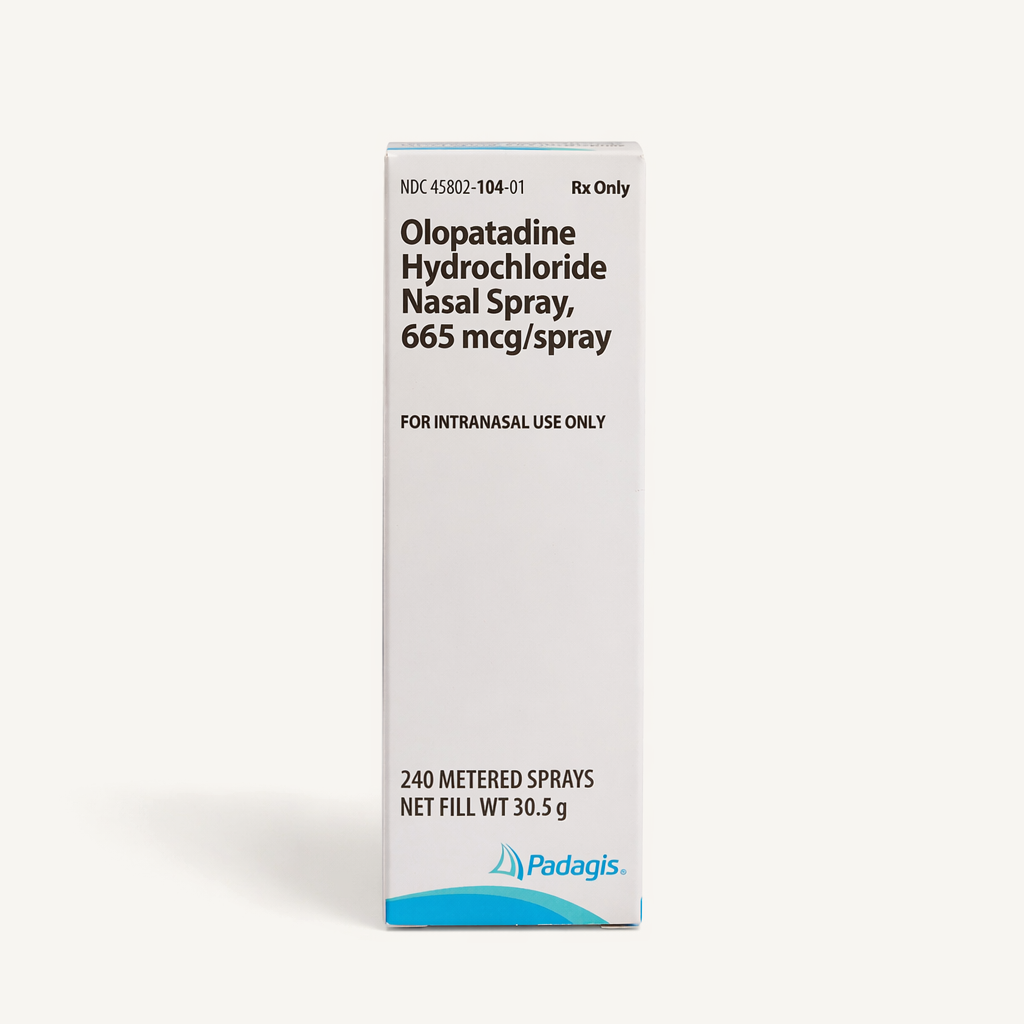
The typical dose is two sprays in each nostril twice daily. In the 0.6% strength formulation, each spray delivers 665 mcg of olopatadine hydrochloride.
To ensure this medication works properly, gently blow your nose to clear the passages before use. To apply the spray, then tilt your head slightly forward while spraying. This technique helps prevent the medicine from running down the back of the throat and minimizes the risk of a bitter taste. Also be sure to aim the nozzle of the nasal spray to the side of each nostril away from the septum when spraying.
Using it every morning and evening keeps the medicine working through the day and night.
If you miss a dose, use the spray as soon as you remember unless it is nearly time for the next dose. Do not take extra doses to make up for a missed dose because it can increase the risk of side effects such as drowsiness.
Note: Dosing information below is educational only. Your prescribing physician will determine your specific dose based on your individual health needs. Always follow your healthcare provider’s instructions for exact dosing.
Uses
FDA-Approved Uses
Olopatadine nasal spray is FDA-approved for the treatment of symptoms of seasonal allergic rhinitis.
Off-Label Uses
You may see olopatadine nasal spray prescribed for uses that are not “FDA-approved.” This is a common and legal practice called “off-label” prescribing, where a doctor uses their clinical judgment to prescribe a drug for a different purpose.
For example, some providers may prescribe olopatadine nasal spray for vasomotor rhinitis. In this condition, the nose becomes runny or stuffy due to changes in weather or irritants rather than allergies.
Side Effects
Most people experience few issues when using olopatadine nasal spray, but direct application to the nasal tissues can cause localized reactions.
Some mild side effects settle with continued use. Tell your prescriber about any side effects that persist or cause continued discomfort.
Common Side Effects
- Bitter or unpleasant taste in the mouth
- Headache
- Mild nosebleeds
- Sore throat or cough
- Postnasal drip (mucus draining down the back of the throat)
- Dizziness
A reduced or lost sense of smell has also been reported with olopatadine nasal spray. Tell your prescriber if you notice a change in your sense of smell.
Serious Side Effects
Serious side effects are rare, but it’s important to know what to look for if they do occur.
- Severe allergic reactions: Seek immediate medical attention for a skin rash, itching, hives, or swelling of the face, lips, tongue, or throat. Breathing problems or wheezing are also signs of a serious reaction.
- Nasal structural problems: Sores (nasal ulcers) or a hole in the cartilage of the nose (nasal septal perforation) have been reported with usage of olopatadine nasal spray. Tell a provider if you notice significant crusting, persistent pain, or a whistling sound when you breathe.
- Severe nosebleeds: Frequent or heavy bleeding from the nose requires a medical evaluation to ensure the nasal lining remains healthy.
Call your doctor immediately if you experience any concerning or prolonged symptoms.
Pharmacist Tips
Prime the Pump Carefully
Before using a new bottle for the first time, release five sprays into the air, away from the face, until a fine mist forms. This ensures that the first dose you use is the full and correct amount.
Re-prime After Inactivity
If you have not used this spray for more than 7 days, release 2 sprays into the air to re-prime the device before applying it to your nose.
Tilt Your Head Down
When spraying, keep your chin slightly tucked toward your chest. This helps keep the medication from dripping down the throat and causing a bitter taste.
Clean the Applicator
If the spray tip becomes clogged, do not use a pin or sharp object to clear it. Instead, remove the nozzle tip and rinse it under warm running water for 1 minute, then let it air dry. Be sure to reprime the nasal spray after cleaning.
Store Correctly
Store the nasal spray at between 39°F to 77°F (4°C to 25°C).
Avoid the Eyes and Mouth
This medication is intended strictly for the nasal passages. If the spray accidentally gets into the eyes or mouth, rinse it immediately with cool water to avoid irritation.
Count Your Sprays
Most bottles provide 240 sprays after the initial priming. It is a good idea to keep track of your sprays and discard the bottle after this point, even if some liquid remains, as the dose may no longer be accurate.
Do Not Drive Until Ready
Because this medication can cause drowsiness, wait to see how it affects your alertness before driving a car or performing other tasks that require focus.
Drug Interactions
Although you spray it into your nose, some of the medicine reaches your bloodstream and can add to side effects.
Olopatadine can add to the drowsiness caused by alcohol and other medications. Examples include:
- Sleep aids and sedatives
- Opioid pain medications
- Sedating antihistamines, such as diphenhydramine
- Certain antidepressants
Always give your doctor and pharmacist a complete list of all your medications, vitamins, and supplements to check for potential interactions. Also, do not stop taking an existing prescribed medication without first consulting with a provider.
FAQs
Why does olopatadine nasal spray cause a bitter taste in the back of the throat immediately after use?
A bitter taste occurs when the medication drips from the nasal passages down into the throat. You can minimize this effect by tilting your head forward while using it and resisting the urge to tilt your head back or sniff deeply immediately after spraying.
Can using olopatadine nasal spray cause nosebleeds?
Nosebleeds are a common side effect of many nasal sprays because the ingredients can dry out the delicate lining of the nose. If you experience frequent or heavy nosebleeds, consult a provider to ensure the medication is not causing excessive irritation.
Why must you prime the olopatadine nasal spray pump before the first use?
Priming the pump fills the internal plastic tube with the medication. This step is essential to ensure that the first spray you use contains the full, measured dose of the medicine.
Can olopatadine nasal spray relieve symptoms of non-allergic rhinitis?
While this medication is specifically approved for seasonal allergies, some providers may prescribe it for non-allergic issues like weather-related congestion. This use is considered off-label and should be managed by a healthcare professional.
Is it safe to use olopatadine nasal spray with a nasal corticosteroid like Flonase?
For some patients, providers may recommend using an antihistamine spray like this one alongside a steroid spray for symptom control. However, always verify with a provider before combining treatments to ensure they are appropriate for your specific needs.
How quickly does olopatadine typically relieve nasal congestion and sneezing?
Relief may start about 30 minutes after a dose and can last up to 12 hours.
Does using olopatadine nasal spray cause “rebound congestion” if used for more than three days?
Combining this spray with sleep aids can lead to excessive drowsiness and a significant drop in alertness. If you take any medications for sleep or anxiety, discuss them with a provider before starting this treatment.
Does olopatadine cause drowsiness?
Some people who use olopatadine nasal spray may feel sleepy. Do not drive until you know how it affects you.
Does olopatadine nasal spray contain any stimulant decongestant ingredients like pseudoephedrine or oxymetazoline?
No, this medication is only an antihistamine. It works by blocking histamine rather than chemically constricting blood vessels with stimulants. Unlike oxymetazoline, olopatadine does not carry the three-day limit and can be used for longer as prescribed.
Comparable Medications
Olopatadine Nasal Spray vs Azelastine, Fluticasone Propionate, Cetirizine, or Oxymetazoline?
Azelastine Nasal Spray
From $32.99
This is another antihistamine nasal spray that works similarly to olopatadine. Both provide rapid relief for sneezing and itching. Some forms of azelastine are now available without a prescription, whereas olopatadine currently requires a prescription from a healthcare provider. Some individuals find that one spray produces a less bitter taste than the other.
Fluticasone Nasal Spray
From $27.99
A nasal corticosteroid, often sold as Flonase. While olopatadine blocks histamine to provide quick relief, fluticasone works more slowly to reduce overall nasal inflammation. Steroid sprays often take a few days of consistent use to reach their full effect, whereas antihistamine sprays work much faster. A prescriber may recommend both when more symptom control is needed.
Cetirizine Tablets
From $22.99
Cetirizine (Zyrtec) is an antihistamine in a pill formulation, unlike olopatadine nasal spray, which is delivered in a spray formulation. Both can relieve symptoms such as a stuffy nose and itchy eyes, but one is taken orally while the other is applied topically in the nose.
Oxymetazoline
A nasal decongestant spray, such as Afrin. It works by shrinking blood vessels in the nose to provide fast relief from a stuffy nose. However, oxymetazoline cannot be used for more than three days without risking "rebound congestion." Olopatadine nasal spray does not have this restriction and is a safer option for managing adult allergies throughout a long season.
We Have Olopatadine Nasal Spray in Stock. Get Yours Today!
Important: Information on this page is for educational purposes only. Prescribing decisions are made by independent, licensed providers. TelyRx operates technology-enabled pharmacies and a telehealth platform that connects patients with licensed providers. Prescriptions, when provider-approved and issued, are filled and shipped by TelyRx-affiliated pharmacies. We do not employ physicians or make prescribing decisions. Learn more about our editorial standards here.