

How It Works
This medication requires an acidic environment to be activated. The prevention process follows a straightforward biological sequence:
- Activation in acid: Once you swallow the tablet, methenamine travels to your kidneys and is excreted in your urine. When urine is sufficiently acidic (generally pH below 6.0), methenamine breaks down into formaldehyde.
- Localized antiseptic: The formaldehyde acts as an antiseptic inside your bladder. It prevents bacteria from growing and kills germs that might settle in the urinary tract.
- Bacterial defense: The second part of the medicine, mandelic acid, helps keep the urine acidic so that the methenamine can continue to convert into its active, bacteria-killing form.
By constantly cleaning the urine as it sits in the bladder, methenamine prevents small amounts of bacteria from turning into a full-blown infection.
| Quick Facts | |
|---|---|
| Common Brands | Mandelamine |
| Drug Class | Urinary antiseptic / Antibacterial |
| Generic Status | Generic version available |
| Availability | Prescription only |
Dosing
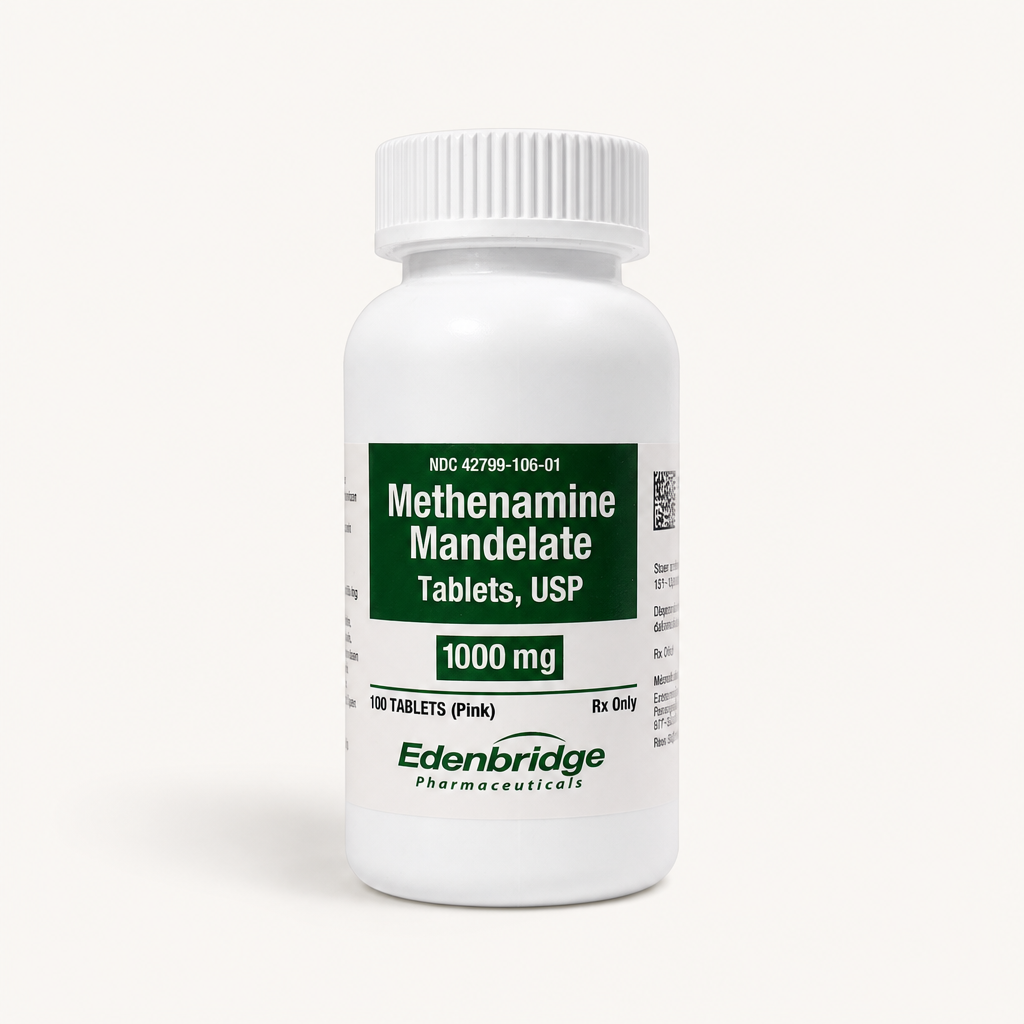
Methenamine mandelate is available in 500 mg and 1,000 mg (1 g) tablets. Because it relies on the continuous presence of formaldehyde in the bladder, the dosing schedule is specific.
- Standard dose: Providers typically recommend 1 gram taken four times a day.
- Timing: Take your doses after each meal and right before bedtime. This ensures the medication works around the clock, especially overnight, when urine stays in the bladder the longest.
- Consistency: Preventive medications only work if taken every day. Keep taking the prescription even if you feel like your UTI days are behind you.
- Missed doses: If you miss a dose, it is generally advised to take it as soon as you remember. However, if it is almost time for your next dose, skip the missed one. Do not take a double dose to catch up.
Note: Dosing information below is educational only. Your prescribing physician will determine your specific dose based on your individual health needs. Always follow your healthcare provider’s instructions for exact dosing.
Uses
FDA-Approved Uses
The FDA approves methenamine mandelate for the prophylactic or suppressive treatment of frequently recurring urinary tract infections after the acute infection has been eradicated by other appropriate antimicrobial therapy.
Off-Label Uses
You may see methenamine mandelate prescribed for uses that are not FDA-approved. This is a common and legal practice called off-label prescribing, where a doctor uses their clinical judgment to prescribe a drug for a different (but well-researched) purpose.
Methenamine mandelate may be prescribed off-label for the following conditions:
- Kidney transplant recipients: Some specialists prescribe methenamine mandelate to help prevent recurrent urinary tract infections in selected kidney transplant recipients, although its use should be individualized based on kidney function and other clinical factors.
Side Effects
Methenamine mandelate is generally well tolerated because it remains localized in the urinary tract, but some reactions can occur.
Common Side Effects
- Nausea or upset stomach
- Stomach cramps
- Mouth sores
- Skin rash or itching
- Loss of appetite
Serious Side Effects
Serious side effects are rare, but it’s important to know what to look for if they do occur.
It’s generally accepted that you stop taking the medication and immediately call the doctor if you experience any of the following symptoms:
- Bladder irritation: Excessive doses can cause painful urination or a constant, urgent need to pee.
- Blood in the urine (hematuria): If your urine turns pink, red, or dark brown, contact your doctor immediately.
- Sulfonamide antibiotics: Methenamine mandelate should not be taken with sulfonamide antibiotics, such as sulfamethoxazole. Combining these medications can cause a substance to form in the urine that may increase the risk of urinary tract complications.
- Severe allergic reactions: Seek emergency medical attention for signs of a severe allergic reaction, such as hives, swelling of the face, lips, tongue, or throat, or difficulty breathing. Some formulations also contain FD&C Yellow No. 5 (tartrazine), which may trigger allergic-type reactions, including bronchial asthma, in susceptible individuals, especially those with aspirin sensitivity.
Call your doctor immediately if you experience any concerning or prolonged symptoms.
Pharmacist Tips
The Acid Diet
Since this medicine requires acidic urine to work, what you eat matters. Providers typically recommend limiting foods that make your urine more alkaline, even if they taste acidic, such as citrus fruits, most vegetables, and milk. Instead, it is generally advisable to focus on acidifying foods such as meats, cheeses, and grains.
Hydration Is Key
Standard guidelines typically recommend drinking enough water throughout the day to stay well hydrated while taking this medication. This helps flush the kidneys and ensures the antiseptic reaches all parts of the bladder. Avoid becoming dehydrated, but do not dramatically increase your fluid intake unless your healthcare provider recommends it.
pH Testing
Your doctor may give you paper strips to test the acidity of your urine at home. The goal is usually a pH of 5.5 or lower.
Separate Your Antacids
If you take antacids for heartburn, especially those containing sodium bicarbonate, it is generally accepted to take them at least 2 hours before or after your methenamine. Antacids neutralize the acid that the medicine needs to work.
Drug Interactions
Methenamine mandelate has a few critical interactions that can affect your health or the drug’s effectiveness.
Let your doctor know if you take:
- Sulfa drugs (sulfonamides): Methenamine is contraindicated with sulfonamide antibiotics (such as Bactrim or Septra). Taking these medications together can cause insoluble crystals to form in the urine, which may damage the kidneys.
- Sodium bicarbonate: This and other alkaline medications (including some potassium supplements) can prevent the medicine from working by making the urine less acidic.
- Diuretics: Certain water pills such as thiazide diuretics can change the concentration of the medicine in your urine.
Always give your doctor and pharmacist a complete list of all your medications, vitamins, and supplements to check for potential interactions.
FAQs
What is the difference between methenamine mandelate and methenamine hippurate?
They contain the same active medicine (methenamine), but they are paired with different salts (mandelic acid vs. hippuric acid). The main difference is the dosing: the hippurate form is usually taken twice a day, while the mandelate form is taken four times a day.
Why must you take methenamine mandelate four times a day?
Methenamine mandelate is taken four times a day to help maintain a steady amount of the medication in your urine. This allows it to continuously produce formaldehyde in acidic urine, helping prevent bacteria from growing throughout the day.
Can taking methenamine mandelate cause painful urination?
Yes, if the dose is too high it can irritate the bladder lining, causing a burning sensation.
Why do doctors monitor kidney function for patients taking methenamine mandelate?
Methenamine is removed from the body through the kidneys. Your doctor may order blood or urine tests to make sure your kidneys are working well enough for the medication to be used safely and to help ensure it reaches the urine, where it works to prevent urinary tract infections.
Can taking methenamine mandelate cause side effects like nausea or diarrhea?
Nausea is a common side effect, especially if the pill is taken on an empty stomach. Diarrhea is less common but can occur as your body adjusts.
Why should patients avoid drinking large amounts of milk while using methenamine mandelate?
Milk is an alkaline food. When you drink a lot of it, your urine becomes less acidic, which prevents methenamine from converting to formaldehyde.
Is methenamine mandelate approved for the treatment of an active UTI?
No. Methenamine does not work quickly enough in acidic urine to cure an active infection. It is just for prevention.
Can methenamine mandelate trigger an allergic reaction?
Yes. Like any medication, methenamine mandelate can cause an allergic reaction in some people. In addition, certain formulations may contain the yellow dye tartrazine (FD&C Yellow No. 5), which can trigger allergic reactions in susceptible individuals, especially those with aspirin sensitivity. Check your product’s inactive ingredients or ask your pharmacist if you are unsure.
Can taking methenamine cause blood in the urine?
Blood in the urine has been reported with high doses of methenamine taken for extended periods and is not expected with standard dosing. If you notice blood in your urine while taking this medication, stop taking it and contact your healthcare provider promptly.
Comparable Medications
Methenamine Hippurate, Nitrofurantoin, or Phenazopyridine?
Below are the potential alternatives for methenamine mandelate:
Methenamine Hippurate Tablets
From $59.99
Both formulations contain Methenamine as the active ingredient. Mandelate requires dosing four times a day. Hippurate is more concentrated and only requires twice-daily dosing, making it easier for some patients to remember.
Nitrofurantoin
From $34.99
Nitrofurantoin is a true antibiotic that kills bacteria. While it can be used for prevention, it carries a higher risk of long-term side effects including lung, liver, and nerve problems, although these are uncommon. Unlike methenamine, nitrofurantoin is an antibiotic, so its use may also contribute to antibiotic resistance.
Sulfamethoxazole-trimethoprim
Bactrim is an antibiotic used for active infections. It cannot be taken with methenamine because the two can react in the urine to form crystals, increasing the risk of urinary tract and kidney complications.
Phenazopyridine Tablets
From $34.99
Pyridium is a pain reliever that numbs the bladder but does nothing to prevent or treat an infection. Methenamine treats the cause by stopping bacterial growth, while Pyridium only treats the symptoms of a UTI.
We Have Methenamine Mandelate in Stock. Get Yours Today!
Important: Information on this page is for educational purposes only. Prescribing decisions are made by independent, licensed providers. TelyRx operates technology-enabled pharmacies and a telehealth platform that connects patients with licensed providers. Prescriptions, when provider-approved and issued, are filled and shipped by TelyRx-affiliated pharmacies. We do not employ physicians or make prescribing decisions. Learn more about our editorial standards here.