

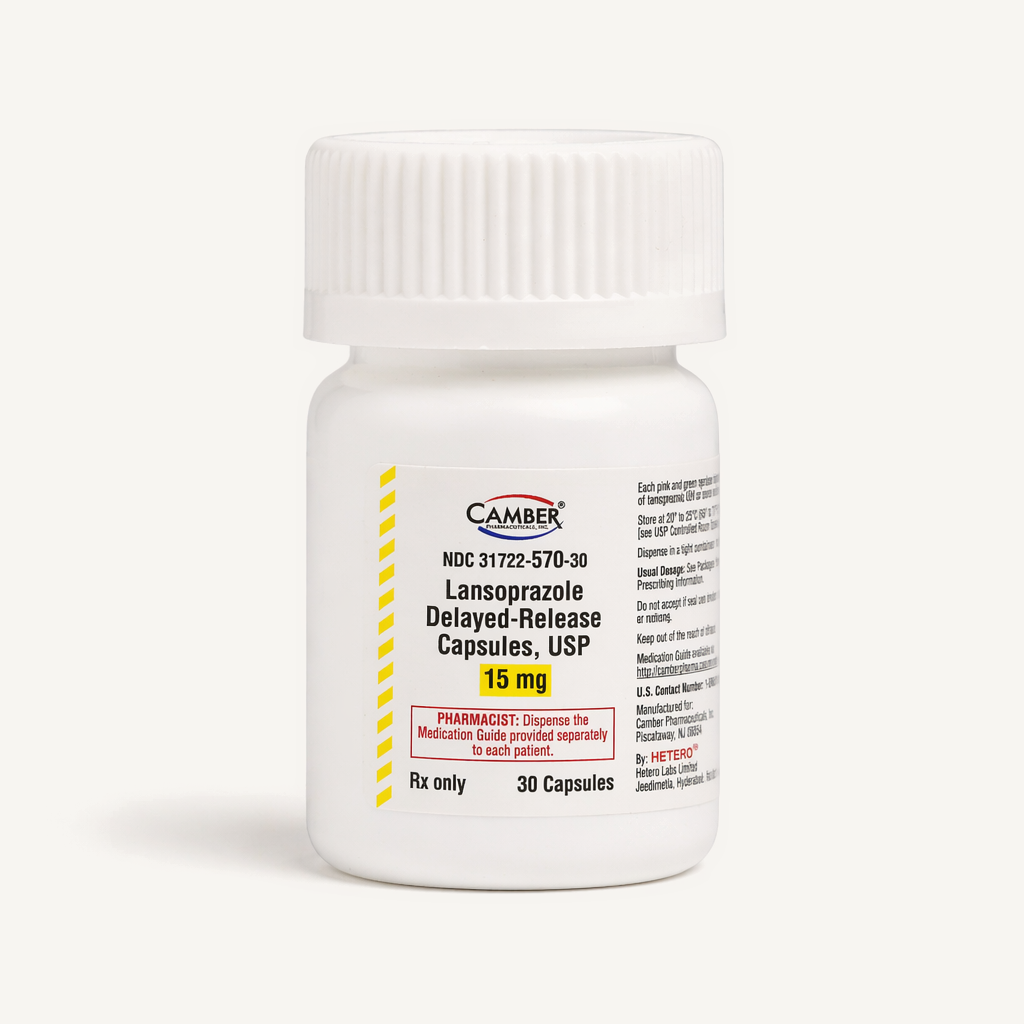
How It Works
Lansoprazole works by inhibiting the function of proton pumps that release acid into the stomach. The medication travels upstream in the bloodstream to bind to these pumps, which are located in the parietal cells of the stomach lining. This process significantly reduces stomach acid production.
Since lansoprazole acts before stomach acid is secreted, the medication is effective at reducing acid buildup whether the issue stems from a spicy meal, stress, or biological signaling.
| Quick Facts | |
|---|---|
| Common Brands | Prevacid, Prevacid 24HR, Prevacid SoluTab |
| Drug Class | Proton pump inhibitor |
| Generic Status | Generic version available |
| Availability | Available over the counter and in prescription strength |
Dosing
Whether your doctor recommends over-the-counter lansoprazole or prescribes a prescription-strength dose depends on the condition being treated and the severity of symptoms, among other factors.
- Timing: Providers often recommend taking lansoprazole 30 to 60 minutes before breakfast. If two daily doses are required, patients usually take their second capsule with dinner.
- Consistency: You must take lansoprazole daily for the medication to reach a steady balance in your body and provide full relief. Lansoprazole is not intended for use on an as-needed basis.
- Administration: You must swallow lansoprazole capsules whole. Crushing or chewing the capsules interferes with the delayed-release mechanism, which makes the medication less effective. According to standard guidelines, if you have trouble swallowing, you may open the capsule and sprinkle the granules onto a tablespoon of soft food, like apple sauce. However, you must not chew the granules.
Note: Dosing information below is educational only. Your prescribing physician will determine your specific dose based on your individual health needs. Always follow your healthcare provider’s instructions for exact dosing.
Uses
FDA-Approved Uses
Lansoprazole is FDA-approved for the following:
- Short-term treatment of gastroesophageal reflux disease (GERD) and healing of erosive esophagitis
- Treatment and risk reduction of gastric and duodenal ulcers, including those caused by nonsteroidal anti-inflammatory drugs (NSAIDs)
- Triple therapy for eradication of H. pylori (in combination with antibiotics)
- Long-term management of hypersecretory conditions like Zollinger-Ellison syndrome
Off-Label Uses
You may see lansoprazole capsules prescribed for uses that are not “FDA-approved.” This is a very common and legal practice called “off-label” prescribing, where a doctor uses their clinical judgment to prescribe a drug for a different (but well-researched) purpose.
Common off-label uses for lansoprazole capsules currently found in clinical research and practice include:
- Laryngopharyngeal reflux: Lansoprazole can treat this condition, which is also called silent reflux. Symptoms include chronic cough or a hoarse voice due to stomach acid reaching the throat and voice box.
- Stress ulcer prophylaxis: Doctors may use lansoprazole in clinical settings to prevent stomach ulcers in patients who are critically ill or in extreme physiological stress.
- Barrett’s esophagus management: While not a cure for this precancerous condition, lansoprazole and other proton pump inhibitors may be used long-term to manage symptoms and reduce the inflammatory environment.
Side Effects
People generally tolerate lansoprazole capsules well and don’t experience significant side effects, but issues can still arise.
Common Side Effects
Common side effects from taking lansoprazole capsules include:
- Mild diarrhea, constipation, nausea, or abdominal pain
- Headaches or occasional dizziness
- Itching or mild skin rash
Serious Side Effects
Serious side effects are rare, but it’s important to know what to look for if they do occur. Serious side effects from taking lansoprazole capsules can include:
- Clostridioides difficile-associated diarrhea: Reducing stomach acid with medications like lansoprazole can allow bacteria like C. diff to thrive. Symptoms include severe, watery diarrhea, and fever.
- Magnesium and vitamin B12 deficiency: Long-term lansoprazole use can impair nutrient absorption, especially of magnesium and vitamin B12. This can lead to tremors, muscle spasms, and tingling in the extremities.
- Tubulointerstitial nephritis: Lansoprazole can lead to this rare type of kidney inflammation. Symptoms include changes in urine output and blood in the urine.
- Bone health: Chronic use of lansoprazole and other proton pump inhibitors (PPIs) in high doses can increase the risk of fractures to the hips, wrists, and spine.
- Lupus flares: Lansoprazole and other PPIs can trigger or worsen autoimmune symptoms of lupus, such as joint pain or cheek rash.
Call your doctor immediately if you experience any concerning or prolonged symptoms.
Pharmacist Tips
Follow The 30-Minute Rule
Standard guidelines advise patients always to take lansoprazole on an empty stomach and to wait at least 30 minutes after the dose before eating. If you eat too soon after taking the capsule, the proton pumps in your stomach may begin secreting acid before the medication has a chance to block acid production.
Antacid Combo Is Usually OK
Per standard guidelines, it is generally safe to take an over-the-counter antacid like Tums while waiting for lansoprazole to take full effect. People generally don’t feel lansoprazole working until 1 to 4 days after their initial dose.
Don’t Quit Cold Turkey
If you have taken lansoprazole for an extended length of time, discontinuing use abruptly can lead to rebound acid hypersecretion and more intense symptoms than before you began the medication. Talk to your pharmacist or doctor about a tapering schedule if you’d like to stop taking lansoprazole.
Check Your Supplements
Lansoprazole requires an acidic environment for the absorption of certain nutrients, and some supplements interfere with this process. Your doctor may recommend taking iron or calcium supplements at a different time of day than your lansoprazole capsules.
Watch For Symptom Masking
Lansoprazole and other proton pump inhibitors can mask the symptoms of more serious conditions, including stomach cancer. If you experience unexplained weight loss or persistent trouble swallowing, it is advisable to see a specialist.
Drug Interactions
Since lansoprazole alters the pH of your stomach, the medication can change how other drugs enter your system. Known interactions with lansoprazole include:
- Warfarin: Lansoprazole may increase the effects of this drug and elevate the risk of bleeding.
- Methotrexate: Using methotrexate with lansoprazole and other proton pump inhibitors (PPIs) can cause the former to remain in the body longer than intended, increasing the risk of toxicity.
- Antivirals: Certain HIV medications, such as rilpivirine, require stomach acid to work effectively. Because lansoprazole reduces acid production, it can interfere with these antiviral mechanisms and make the HIV treatment less effective.
- Sucralfate: Sucralfate coats the stomach and can block lansoprazole absorption. To prevent this interference, doctors advise that you take lansoprazole at least 30 minutes before sucralfate.
Always give your doctor and pharmacist a complete list of all your medications, vitamins, and supplements to check for potential interactions.
FAQs
How long does it typically take for lansoprazole to stop acid reflux?
Some people feel improvements after a single dose of lansoprazole, but the drug typically takes 1 to 4 days of consistent use to reach maximum acid-blocking effect.
Why do you have to take lansoprazole at least 30 minutes before eating?
Lansoprazole takes some time to be absorbed into your system and to block proton pumps from producing acid, even after the arrival of food activates them. Taking the dose 30 to 60 minutes before a meal ensures proper timing for this process.
What is the difference between prescription lansoprazole and over-the-counter medications like Prevacid?
The primary differences between prescription lansoprazole and over-the-counter (OTC) medications like Prevacid are strength and duration of use. Most OTC lansoprazole capsules are 15 mg and intended for a 14-day treatment course. Prescription strengths often measure 30 mg and are meant for long-term use to treat conditions like severe GERD and stomach ulcers.
Is it safe to take Tums or other antacids while waiting for this pill to work?
Yes, it is generally considered safe to take over-the-counter antacids while waiting for lansoprazole to take full effect, which typically takes 1 to 4 days. Talk to your doctor about the best antacid options to use during this period.
How long can I safely take this medication?
Lansoprazole is generally considered safe for short-term use, typically a 14-day course for over-the-counter capsules and up to 8 weeks of daily dosing at prescription strengths. Since long-term use is associated with medical problems like vitamin B12 deficiency and an increased risk of bone fractures, providers closely monitor patients who take the drug continuously.
Can lansoprazole cause me to develop a magnesium or vitamin B12 deficiency over time?
Yes, long-term use of lansoprazole can lead to magnesium and vitamin B12 deficiencies. By reducing stomach acid, the medication limits the body’s ability to break down food and absorb nutrients.
Will taking lansoprazole cure my GERD?
Lansoprazole is used to reduce stomach acid to manage and treat GERD symptoms, but the medication does not “cure” the underlying causes of GERD.
Is it normal to experience a headache, mild diarrhea, or stomach pain when first starting this?
Yes, a headache, mild diarrhea, and stomach pain are all known and common side effects of taking lansoprazole capsules. These effects are typically mild and should eventually resolve as your body adapts to the medication. Persistent or intense side effects may warrant a consultation with your doctor.
What should I do if I forget my morning dose? Should I take it right before dinner instead?
Per standard guidelines, patients who forget their morning dose of lansoprazole are advised to take the capsule as soon as they remember unless it is close to their next dose. If it is within 4 to 12 hours of the next dose, patients are advised to skip the missed dose and resume their regular schedule. Double-dosing is not advised and can lead to severe side effects.
Can I take ibuprofen if lansoprazole is protecting my stomach?
Yes, you can take ibuprofen if lansoprazole is protecting your stomach, but exercise caution. Lansoprazole helps reduce stomach discomfort from the irritating effects of NSAIDs like ibuprofen, but frequent use of both medicines requires close medical supervision to monitor your kidney health.
Can I take lansoprazole at the same time as my thyroid medication?
Standard guidelines advise that you should never take lansoprazole and thyroid medication at the same time. Since lansoprazole reduces stomach acid, it can interfere with how your body absorbs thyroid medication. To ensure the treatment remains effective, space your lansoprazole and thyroid medications apart by at least 4 hours.
Is it safe to drink alcohol or coffee while taking lansoprazole?
While you can generally drink small amounts of alcohol or coffee while taking lansoprazole, doctors do not recommend it because these beverages can reduce the medication’s effectiveness. Alcohol and caffeine trigger symptoms like reflux and increase stomach acid.
Do you experience “rebound” acid when trying to stop taking this cold turkey?
Yes, discontinuing lansoprazole abruptly can lead to a rebound in the symptoms you experienced before starting the medication. Your doctor can provide a tapering schedule to lower your dosage gradually to reduce the risk of a rebound effect.
Comparable Medications
Lansoprazole Capsules, Omeprazole, or Famotidine?
Lansoprazole capsules inhibit the proton pumps in your stomach that produce acid after meals, making the medication effective for treating a wide range of acid-related conditions. While lansoprazole is available over the counter and in prescription strength, your doctor may recommend an alternative to lansoprazole based on factors such as age, medical history, and the severity of symptoms. Lansoprazole capsule alternatives include:
Omeprazole
From $19.99
Sold under the brand name Prilosec, omeprazole is a proton pump inhibitor (PPI) used to treat medical conditions like GERD.
We Have Lansoprazole Capsules in Stock. Get Yours Today!
Important: Information on this page is for educational purposes only. Prescribing decisions are made by independent, licensed providers. TelyRx operates technology-enabled pharmacies and a telehealth platform that connects patients with licensed providers. Prescriptions, when provider-approved and issued, are filled and shipped by TelyRx-affiliated pharmacies. We do not employ physicians or make prescribing decisions. Learn more about our editorial standards here.