

How It Works
Ibuprofen-famotidine works through two different biological pathways.
The ibuprofen component inhibits enzymes that produce prostaglandins, which are natural chemicals that signal the body to feel pain and create swelling. By blocking these enzymes, the medication reduces heat, redness, and joint stiffness, allowing for easier movement.
The famotidine component acts as an acid reducer. Lowering acid levels can help prevent stomach irritation because NSAIDs can weaken the protective barrier of the stomach that protects against ulcers. By keeping the stomach environment less acidic, famotidine allows the ibuprofen to treat joint pain with a lower risk of irritation.
| Quick Facts | |
|---|---|
| Common Brands | Duexis (discontinued) |
| Drug Class | Nonsteroidal anti-inflammatory drug (NSAID) and H2-receptor antagonist |
| Generic Status | Generic version of Duexis |
| Availability | Prescription only |
Dosing
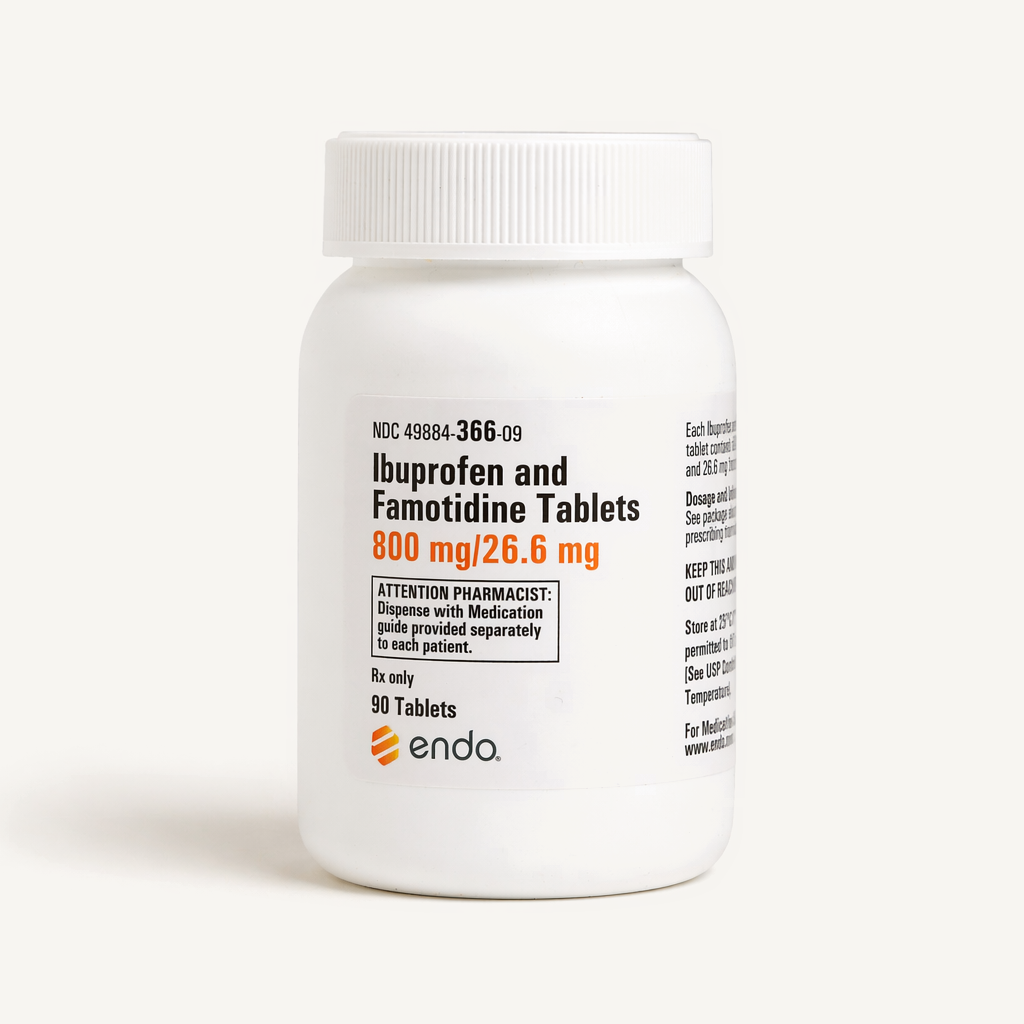
Standard guidelines suggest that the typical dose for adults is one tablet taken by mouth three times per day. Each tablet contains 800 mg of ibuprofen and 26.6 mg of famotidine.
This schedule is designed to provide steady pain relief and stomach protection over 24 hours. This medication can be taken with or without food, depending on individual tolerance. If stomach upset occurs, taking the dose with food or a glass of milk may help relieve discomfort.
If a dose is missed, it should be taken as soon as it is remembered unless the next scheduled dose is near. Doubling up on doses is not recommended, as this can significantly increase the risk of adverse effects on the heart, kidneys, and digestive system.
Note: Dosing information below is educational only. Your prescribing physician will determine your specific dose based on your individual health needs. Always follow your healthcare provider’s instructions for exact dosing.
Uses
FDA-Approved Uses
Ibuprofen-famotidine is FDA-approved for the relief of signs and symptoms of osteoarthritis and rheumatoid arthritis, and to reduce the risk of upper gastrointestinal ulcers in adults.
Off-Label Uses
You may see ibuprofen-famotidine prescribed for uses that are not “FDA-approved.” This is a common and legal practice called “off-label” prescribing, where a doctor uses their clinical judgment to prescribe a drug for a different purpose.
- Ankylosing spondylitis: Providers may use this combination to manage the chronic spinal inflammation and pain associated with this condition while protecting the gut.
- Acute musculoskeletal pain: In some instances, this medication is prescribed for short-term relief of severe muscle or bone injuries in patients with a history of sensitive stomachs.
Side Effects
Most individuals tolerate this medication well, but because it contains an NSAID, it carries risks common to that drug class. Side effects can affect the stomach, heart, or kidneys, especially with long-term use. Monitoring for new or worsening symptoms is a necessary part of this treatment plan.
Common Side Effects
- Nausea
- Diarrhea or constipation
- Upset stomach or indigestion
- Headache
- Dizziness
Serious Side Effects
Serious side effects are rare, but it’s important to know what to look for if they do occur.
- Cardiovascular events: This medication may increase the risk of heart attack or stroke. Seek emergency care for chest pain, shortness of breath, sudden weakness on one side of the body, or slurred speech.
- Gastrointestinal bleeding: Symptoms include black or tarry stools, vomiting material that looks like coffee grounds, or severe stomach pain that does not resolve.
- Neurological and sensory changes: Contact a provider right away for sudden dizziness, confusion, or changes in vision, such as blurred vision or loss of color vision.
- Kidney injury: Signs may include decreased urination, swelling in the ankles or feet, and unusual fatigue.
- Liver damage: Tell a provider immediately if you notice yellowing of the skin or eyes (jaundice), dark urine, or pain in the upper right side of the stomach.
- Severe skin reactions: Rare but life-threatening rashes (Stevens-Johnson syndrome or DRESS) can occur. Seek help for a red, peeling rash, painful blisters, or fever with swollen lymph nodes.
- Anaphylaxis: Get immediate medical assistance if you experience hives, facial swelling, or difficulty breathing.
Call your doctor immediately if you experience any concerning or prolonged symptoms.
Pharmacist Tips
Swallow Tablets Whole
Do not cut, crush, or chew this medication. Breaking the tablet can interfere with how famotidine protects your stomach lining and may change how the medicine is absorbed.
Limit Alcohol Intake
Drinking alcohol while taking this medication can increase the risk of stomach bleeding and place extra stress on the liver and kidneys.
Check for Other NSAIDs
Many over-the-counter cold and pain medicines contain ibuprofen or naproxen. Taking these along with your prescription can lead to an accidental overdose.
Stay Hydrated
Drinking plenty of water helps your kidneys process the medication safely and can reduce the risk of certain side effects.
Watch Your Blood Pressure
NSAIDs can cause the body to hold onto fluid, which may raise blood pressure. It is helpful to monitor your readings regularly if you have a history of hypertension.
Recognize the Timeline
While pain relief may happen quickly, it can take up to two weeks of consistent use to see significant reduction in joint swelling and inflammation.
Discuss Pregnancy Plans
This medication is not recommended for use during pregnancy, as it can cause harm to a fetus or complications during delivery. If you are pregnant or planning to become pregnant, talk to your provider about safer alternatives.
Drug Interactions
Ibuprofen-famotidine can interact with several other types of medications, potentially changing their effectiveness or increasing safety risks.
- Blood thinners: Medications like warfarin or clopidogrel increase the risk of serious bleeding when taken with an NSAID.
- Aspirin: Taking aspirin for heart health alongside this medication can increase the risk of ulcers and may interfere with aspirin’s ability to protect the heart.
- Blood pressure medications: Drugs such as ACE inhibitors (lisinopril), ARBs (losartan), and beta-blockers (metoprolol) may not work as well when taken with ibuprofen.
- Diuretics: These “water pills” can increase the risk of kidney damage if taken at the same time as this combination drug.
- Lithium or methotrexate: Ibuprofen-famotidine can cause the body to hold onto these drugs, potentially leading to toxic levels in the bloodstream.
- Specific antifungals: Famotidine can reduce the absorption of medications such as ketoconazole, which require stomach acid to work.
Always give your doctor and pharmacist a complete list of all your medications, vitamins, and supplements to check for potential interactions.
FAQs
What is the difference between taking prescription ibuprofen-famotidine and just taking Advil and Pepcid at the same time?
The prescription version provides a specific, high-dose combination in a single tablet, formulated for long-term arthritis management. While the individual ingredients are available over the counter, the dosages differ, and using them together without professional guidance may not provide the same level of stomach protection or pain relief.
How many times a day am I supposed to take this medication to keep joint pain away?
Standard guidelines suggest taking one tablet three times per day. This frequency ensures that both the anti-inflammatory and the acid-reducing components are active in your system throughout the day. That said, you should take the medication on whatever schedule your provider gave you.
Should I take ibuprofen-famotidine with a heavy meal?
You can take this medication with or without food. However, taking it with a meal or a glass of milk is often helpful if you experience mild upset stomach or indigestion when taking it on an empty stomach.
Does taking this medication increase my risk of having a heart attack or stroke?
NSAIDs, including the ibuprofen in this medication, carry a warning regarding increased cardiovascular risks. This risk may be higher for individuals with existing heart disease or those taking the medication for a long period.
Is it safe to keep taking my daily low-dose aspirin for my heart while I am on this prescription?
Combining aspirin with another NSAID increases the risk of stomach bleeding and ulcers. Furthermore, ibuprofen can sometimes block the heart-protective effects of aspirin. Don’t stop taking your aspirin without checking with your provider first.
Can I take this pill if I already have high blood pressure or take blood pressure medicine?
This medication can cause fluid retention and may raise blood pressure or interfere with blood pressure drugs. Providers will typically monitor your blood pressure closely if you need to take this medication while managing hypertension.
What should I do if my stomach hurts while taking this?
If you experience severe or persistent stomach pain, stop taking the medication and contact a healthcare professional. While the famotidine helps protect your stomach, it does not eliminate the risk of ulcers or irritation.
Is it safe to drink alcohol while taking ibuprofen-famotidine?
It is best to limit or avoid alcohol. Both alcohol and ibuprofen can irritate the stomach lining and increase the risk of bleeding or liver issues when used together.
Can I cut, crush, or chew the tablet if it is too big for me to swallow?
No, the tablets must be swallowed whole. Altering the tablet can destroy the specific formulation designed to protect your stomach and deliver the medication safely.
Does this medicine make you sleepy or unable to drive safely?
Drowsiness was not a common side effect in clinical studies. However, some people may experience dizziness or changes in vision. It is helpful to see how the medication affects you before driving or operating machinery.
Why did the manufacturer discontinue the brand-name Duexis?
The discontinuation of the brand-name Duexis was a business decision by the manufacturer and was not related to the medication’s safety or effectiveness. The combination remains available as a generic version.
Comparable Medications
Ibuprofen-Famotidine vs Advil + Pepcid, Meloxicam, Celecoxib, or Diclofenac Gel?
Advil + Pepcid
This is the over-the-counter (OTC) equivalent of the prescription tablet's ingredients. While they contain the same active ingredients, OTC versions are typically lower-strength and intended for short-term use. The prescription combination is specifically balanced for the chronic, high-dose needs of patients with arthritis
Meloxicam
From $19.99
This is another NSAID commonly used for arthritis. It is usually taken once daily, which can be more convenient than the three-times-daily dosing of ibuprofen-famotidine. However, meloxicam does not come with a built-in acid reducer so it may require a separate medication for stomach protection in sensitive individuals.
Celecoxib
From $31.99
This drug is a COX-2 selective NSAID. It was designed to be naturally gentler on the stomach than traditional NSAIDs like ibuprofen. While it may carry a lower risk of ulcers, it does not contain an H2 blocker, such as famotidine, to actively reduce stomach acid production.
Diclofenac Sodium 3% Gel
From $59.99
This is a topical NSAID applied directly to the skin over the painful joint. Because it is absorbed through the skin, it delivers the medication locally. This significantly reduces the risk of stomach ulcers and heart issues, making it a safer option for people who cannot tolerate oral anti-inflammatory pills.
We Have Ibuprofen in Stock. Get Yours Today!
Important: Information on this page is for educational purposes only. Prescribing decisions are made by independent, licensed providers. TelyRx operates technology-enabled pharmacies and a telehealth platform that connects patients with licensed providers. Prescriptions, when provider-approved and issued, are filled and shipped by TelyRx-affiliated pharmacies. We do not employ physicians or make prescribing decisions. Learn more about our editorial standards here.