

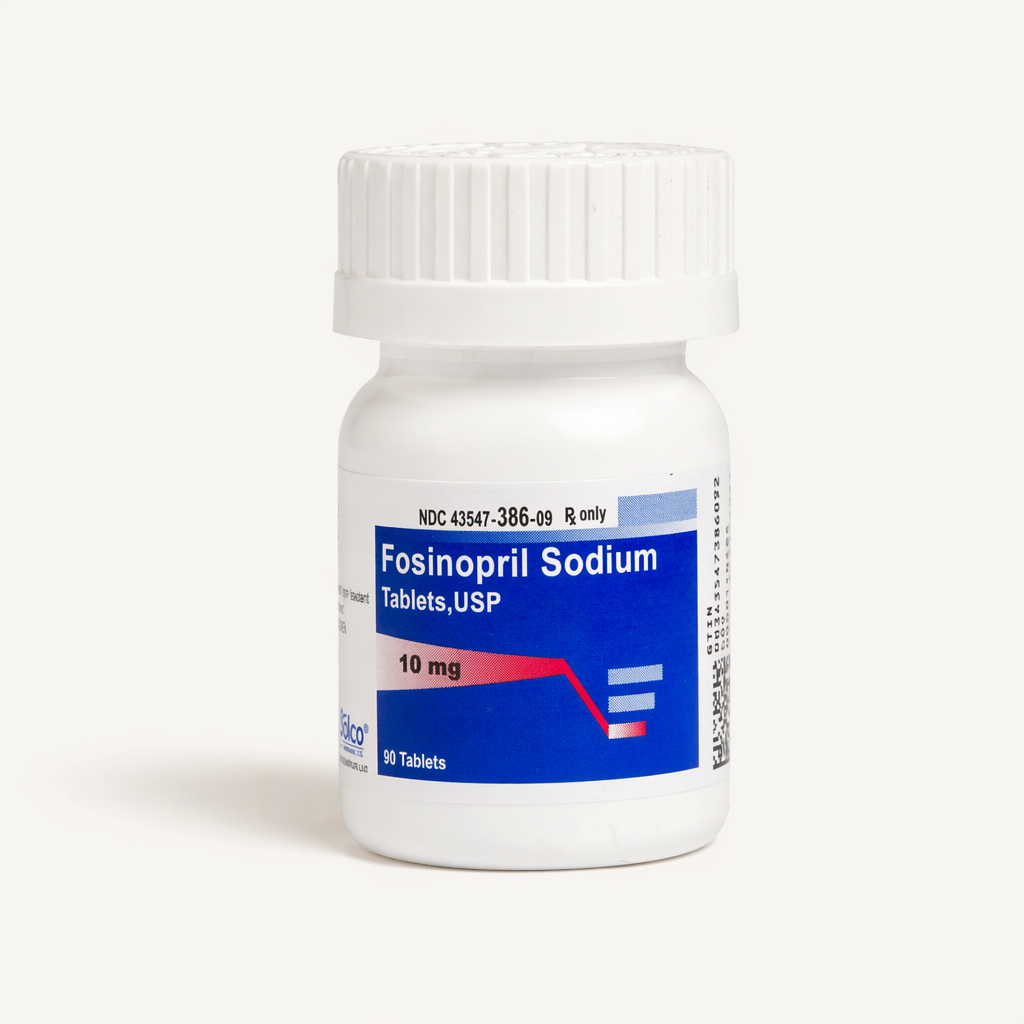
How It Works
Fosinopril works by blocking the angiotensin II enzyme, a natural vasoconstrictor the body produces that causes the muscles around the blood vessels to become narrower. By preventing formation of the enzyme, fosinopril ensures blood vessels remain in a wider, or dilated, state.
As blood vessels relax, the heart does not need to work as hard to pump blood throughout the body. This reduction of the heart’s workload is especially vital to people with heart failure. By reducing systemic pressure, fosinopril can also protect the kidney’s filtering units.
| Quick Facts | |
|---|---|
| Common Brands | Monopril (discontinued) |
| Drug Class | Angiotensin-converting enzyme (ACE) inhibitor |
| Generic Status | Generic version available |
| Availability | Prescription only |
Dosing
Dosing for fosinopril is usually individualized and based on the patient’s blood pressure baseline. Other dosage factors may include age and the presence of other medications.
- For hypertension: Standard guidelines for fosinopril include a suggested starting dose of 10 mg per day. Providers may recommend a dosage increase up to 20 mg or 40 mg per day based on how the patient’s blood pressure responds during the first few weeks.
- For heart failure: Providers typically start heart failure patients at a dose of 10 mg per day. Initial dose may be lower to prevent a drop in blood pressure for people who also take water pill diuretics.
- Titration: The full therapeutic effect of a single fosinopril dose may not be visible for up to 6 hours after the patient has ingested the tablet, and consistent results may take several weeks. For this reason, doctors generally wait before titrating, or increasing, the dose during the early stages of treatment.
Note: Dosing information below is educational only. Your prescribing physician will determine your specific dose based on your individual health needs. Always follow your healthcare provider’s instructions for exact dosing.
Uses
FDA-Approved Uses
Fosinopril tablets are FDA-approved to manage hypertension, either as standalone treatment or in combination with another type of blood pressure medication. The drug is also FDA-approved as an adjunct therapy for patients with heart failure alongside other treatments like diuretics and digitalis to improve symptoms and reduce the risk of hospitalization.
Off-Label Uses
You may see fosinopril tablets prescribed for uses that are not “FDA-approved.” This is a very common and legal practice called “off-label” prescribing, where a doctor uses their clinical judgment to prescribe a drug for a different (but well-researched) purpose.
Common off-label uses for fosinopril currently found in clinical research and practice include:
- Diabetic nephropathy: In some cases, providers may recommend fosinopril or another ACE inhibitor to slow the progression of kidney disease in people with type 2 diabetes.
- Post-myocardial infarction treatment: Research suggests ACE inhibitors like fosinopril can help prevent remodeling of the cardiac muscles after a heart attack, which may improve long-term survival rates.
- Proteinuria: Fosinopril can be prescribed to reduce pressure on the renal filtering system for people with proteinuria, a kidney stress condition that causes protein to leak into the urine.
Side Effects
Many people tolerate fosinopril well, but the drug’s impact on hormone levels and blood pressure can still lead to side effects.
Common Side Effects
Common side effects from taking fosinopril include:
- Dry, persistent cough
- Dizziness or lightheadedness
- Nausea and fatigue
- Headache
Serious Side Effects
Serious side effects are rare, but it’s important to know what to look for if they do occur. Serious side effects from taking fosinopril tablets can include:
- Angioedema: Fosinopril can lead to angioedema, a rare but life-threatening allergic reaction characterized by rapid swelling of the face, lips, tongue, and throat. This requires emergency medical intervention, as the swelling can cause airway obstruction.
- Hyperkalemia: ACE inhibitors like fosinopril can cause the body to retain potassium, potentially leading to excessively high levels. Symptoms include muscle weakness, confusion, and an irregular heartbeat.
- Kidney dysfunction: Fosinopril can help protect the kidneys, but the drug can also decrease kidney filtration and lead to renal dysfunction in people with certain heart conditions or severe dehydration.
- Liver toxicity: In rare cases, taking fosinopril can lead to liver toxicity. Key signs include elevated liver enzymes and jaundice (yellowing) of the skin and eyes.
- Neutropenia: Fosinopril has been linked to neutropenia, a rare drop in white blood cell count that can increase the patient’s risk of infection.
Call your doctor immediately if you experience any concerning or prolonged symptoms.
Pharmacist Tips
Timing Is Key
Standard guidelines recommend taking fosinopril at the same time every day. Many patients prefer taking their tablet in the morning, but your provider may suggest evening doses if you are prone to daytime dizziness.
Get Up Slowly
Since fosinopril can lead to a drop in blood pressure, getting out of bed quickly increases the risk of dizziness and injury from a fall. Rising slowly is recommended after waking up, and you may need to sit on the edge for a moment to let your blood pressure catch up.
Stay Hydrated
Dehydration can lead to a steep drop in blood pressure while you’re taking fosinopril. Adequate water intake is key, especially while exercising or during periods of hot weather.
Log Your Blood Pressure
While taking fosinopril, home monitoring with a blood pressure log is recommended to ensure the current dose is optimized to your needs.
Avoid Salt Substitutes
Many salt substitutes replace sodium with potassium chloride. Since fosinopril increases potassium levels, consuming these salt substitutes while taking the drug can lead to hyperkalemia and dangerously high potassium levels.
Drug Interactions
Fosinopril can interact with various medications and supplements, and these interactions can potentially alter its effectiveness and increase the risk of side effects. Known interactions with fosinopril include:
- Nonsteroidal anti-inflammatory drugs (NSAIDs): Pain relievers like ibuprofen or naproxen can affect fosinopril’s ability to lower blood pressure and increase the risk of kidney damage.
- Potassium supplements: Fosinopril can cause the body to retain potassium, so taking the drug alongside potassium supplements requires close medical supervision to ensure the patient’s potassium levels are not excessively high.
- Sacubitril: Sold under the brand name Entresto, this medication is primarily used to manage heart failure. Per standard guidelines, patients are advised to avoid taking sacubitril within 36 hours of fosinopril or another ACE inhibitor due to the elevated risk of severe angioedema.
- Antacids: Antacids that contain aluminum or magnesium can interfere with fosinopril’s absorption. Providers generally recommend spacing out antacids and fosinopril with a buffer of at least 2 hours.
Always give your doctor and pharmacist a complete list of all your medications, vitamins, and supplements to check for potential interactions.
FAQs
Why do I have a constant cough since I started taking fosinopril?
Your constant cough after starting fosinopril is known as the “ACE cough,” and is a common side effect of ACE inhibitors. This occurs due to the accumulation of bradykinin, a peptide that promotes inflammation, in the upper respiratory tract. The cough typically resolves, but if it becomes bothersome, your provider may switch you to a different medication class.
Why is fosinopril usually prescribed over lisinopril?
Fosinopril and lisinopril are both effective for treating high blood pressure and heart failure. However, fosinopril is cleared by both the liver and kidneys and typically does not require dose adjustment in renal impairment. For this reason, it is often preferred in patients with declining kidney function.
Do I absolutely need to take this blood pressure pill with food?
No, standard guidelines state you can take your fosinopril tablet with or without food. The medication is absorbed the same regardless of food intake, but a light meal or snack with your daily dose can curb side effects like nausea and an upset stomach.
What is the best time of day to take my daily fosinopril?
Many patients take fosinopril in the morning for convenience, but those prone to daytime dizziness may prefer an evening dose. Per clinical guidelines, consistent timing from day to day is more crucial to the drug’s efficacy than taking it at a specific time.
Can I take Advil or Aleve while taking this medication?
Patients are generally advised to avoid Advil, Aleve, or other NSAIDs while taking fosinopril or another ACE inhibitor. This combination can place undue stress on the kidneys and make the blood pressure medication less effective. Providers generally recommend Tylenol (acetaminophen) for people taking fosinopril who need over-the-counter pain relief.
Is it normal to feel dizzy or lightheaded when I stand up on fosinopril?
Yes, feeling dizzy or lightheaded when standing up is known as orthostatic hypertension, and this is a known side effect of fosinopril. It occurs because your body needs extra time to adjust to changes in blood pressure. Standing up and moving slowly is recommended to reduce the risk of fainting and injury from a fall.
How long does it take for my blood pressure numbers to go down?
Patients may see a drop in blood pressure within an hour of their first dose, but the maximum effect can take up to 6 hours. Significant stabilization of blood pressure levels often requires several weeks of consistent daily dosing.
Will taking fosinopril ruin my sex drive?
Clinical studies suggest that ACE inhibitors like fosinopril are less likely to impact sex drive than other types of medication like beta-blockers and diuretics. Some patients have reported general sexual dysfunction, but this is not considered a common side effect.
Will this medication actually cure my high blood pressure?
Hypertension is a chronic cure that is managed, not cured. Fosinopril can help keep your blood pressure within a healthy range to prevent complications, but if you stop taking the drug, your blood pressure will return to its previous higher levels.
Comparable Medications
Fosinopril, Lisinopril, Losartan, Hydrochlorothiazide, or Carvedilol?
Fosinopril is an ACE inhibitor primarily used to reduce high blood pressure in people with hypertension and manage symptoms of heart failure. Other available medications also address these issues, so your doctor may recommend fosinopril or a fosinopril alternative based on factors like your age and medical history. Alternatives to fosinopril include:
Lisinopril
From $24.99
Fosinopril and lisinopril are both ACE inhibitors indicated for the same medical conditions. Lisinopril is cleared almost exclusively within the kidneys, whereas fosinopril is cleared through the kidneys and liver. Many providers prefer the latter because it is gentler for people with reduced kidney function.
Losartan
From $24.99
Losartan, which is sold under the brand name Cozaar, belongs to the angiotensin receptor blocker (ARB) drug class. Fosinopril inhibits production of the angiotensin II enzyme, while losartan blocks the actions of angiotensin II after the enzyme has been produced. Since it acts later in the angiotensin II life cycle, providers may recommend losartan as a backup plan for patients who do not respond to fosinopril or other ACE inhibitors.
Hydrochlorothiazide
From $25.99
HCTZ is a water pill diuretic that lowers blood pressure by removing excess salt and water through the urine. This mechanism differs from that of fosinopril, which reduces blood pressure by relaxing blood vessels. Doctors frequently prescribe fosinopril and HCTZ together as a dual-action treatment method for hypertension.
Carvedilol
From $29.99
Sold under the brand name Coreg, carvedilol is a beta-blocker that slows the heart rate and reduces the force of the heart's contractions. Both are used for patients with heart failure, but fosinopril is responsible for dilating blood vessels while carvedilol focuses on improving the heart's pumping abilities.
We Have Fosinopril Tablets in Stock. Get Yours Today!
Important: Information on this page is for educational purposes only. Prescribing decisions are made by independent, licensed providers. TelyRx operates technology-enabled pharmacies and a telehealth platform that connects patients with licensed providers. Prescriptions, when provider-approved and issued, are filled and shipped by TelyRx-affiliated pharmacies. We do not employ physicians or make prescribing decisions. Learn more about our editorial standards here.