

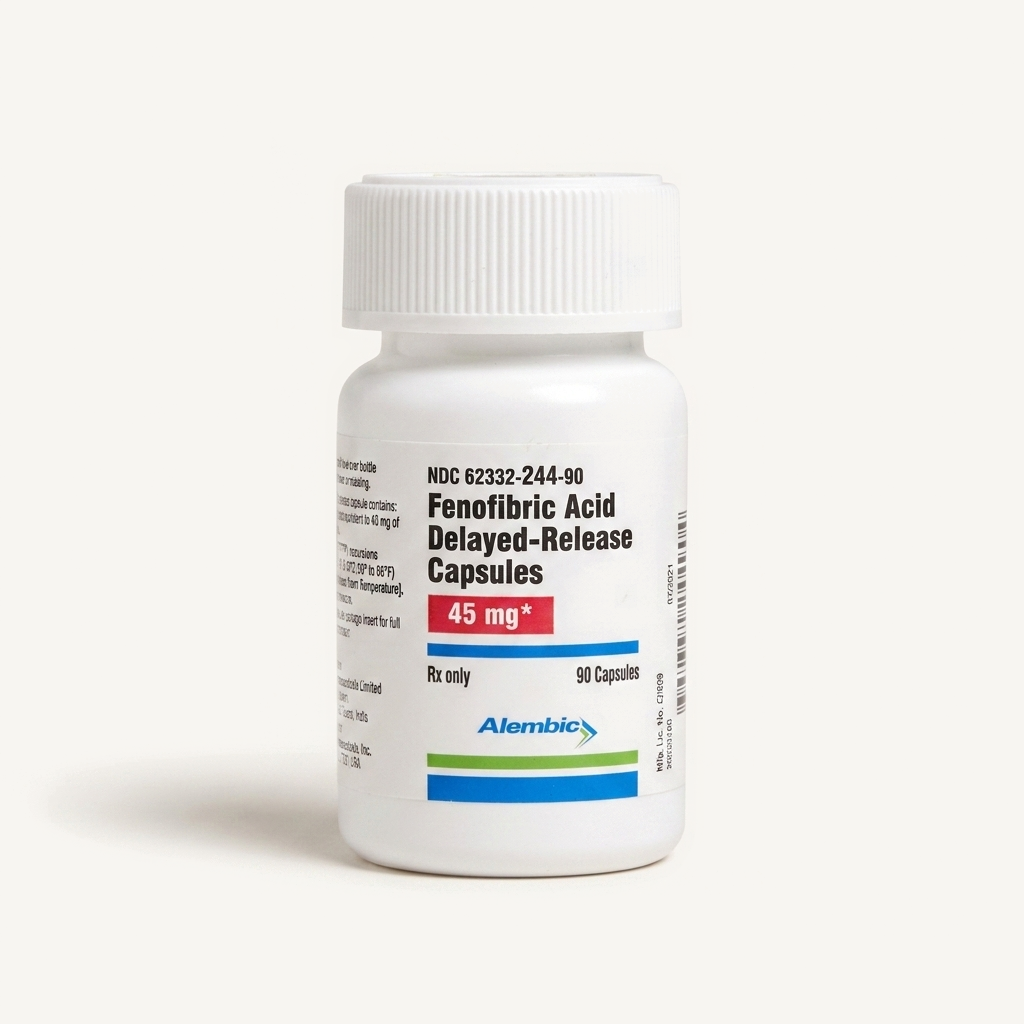
How It Works
Fenofibric acid belongs to a class of medications called fibrates. It works by activating peroxisome proliferator-activated receptors (PPARs) in the body. Activating these receptors helps the body break down fats in the bloodstream.
This lowers the amount of triglycerides and “bad” LDL (low-density lipoprotein) cholesterol that can clog the arteries. At the same time, the medication increases the production of “good” HDL (high-density lipoprotein) cholesterol.
| Quick Facts | |
|---|---|
| Common Brands | Trilipix |
| Drug Class | Fibrate |
| Generic Status | Generic is available |
| Availability | Prescription only |
Dosing
Fenofibric acid capsules come in two dosage strengths: 45 mg and 135 mg. The capsules are taken by mouth once daily, with or without food. The recommended dose depends on what you’re taking fenofibric acid for:
- High triglycerides: The recommended dose is 45 to 135 mg by mouth once daily. Your provider may adjust your dose depending on your response to the medication.
- Hyperlipidemia: The recommended dose is 135 mg once daily by mouth.
People with kidney problems may be prescribed a lower starting dosage.
Note: The dosing information below is for educational purposes only. Your prescribing physician will determine your specific dose based on your individual health needs. Always follow your healthcare provider’s instructions for exact dosing.
Uses
FDA-Approved Uses
In combination with dietary changes, fenofibric acid capsules are FDA-approved to:
- Lower severely high triglycerides
- Lower “bad” LDL cholesterol in people with mixed dyslipidemia who cannot reach target levels with statin medication alone
Off-Label Uses
You may see fenofibric acid capsules prescribed for uses that are not “FDA-approved.” This is a very common and legal practice called “off-label” prescribing, where a doctor uses their clinical judgment to prescribe a drug for a different (but well-researched) purpose.
There are currently no common off-label uses for fenofibric acid capsules.
Side Effects
Like all medications, fenofibric acid capsules can cause side effects. Some common side effects may improve over time as your body adjusts to the medication. Other side effects may be serious and require medical attention.
Common Side Effects
- Stomach pain
- Back pain
- Headache
- Runny or stuffy nose
- Nausea
- Constipation
- Breathing problems
- Liver problems
Serious Side Effects
Serious side effects are rare, but it’s important to know what to look for if they do occur. Stop using fenofibric acid capsules and call your doctor immediately if you experience:
- Severe allergic reactions: Symptoms include swelling of the face, lips, tongue, or throat; difficulty breathing or swallowing; racing heart; severe rash or itching; and/or fever.
- Liver damage (hepatotoxicity): Fenofibric acid capsules may cause liver damage. Symptoms include belly pain, light-colored stool, dark urine, fever, nausea, vomiting, loss of appetite, or yellowing of the skin or eyes (jaundice).
- Muscle problems: Muscle weakness (myopathy) or muscle breakdown (rhabdomyolysis) can occur when taking fenofibric acid capsules. Symptoms include unexplained muscle pain, weakness, or tenderness; low energy levels; dark urine; muscle cramps; fever; stomach pain; nausea or vomiting.
- Gallbladder problems: Fenofibric acid capsules can increase the risk of developing gallstones (cholelithiasis). Symptoms include upper stomach pain, clay-colored stool, fever, or yellowing of the skin or eyes (jaundice).
- Pancreatitis: Inflammation of the pancreas can occur when taking fenofibric acid capsules. Symptoms include vomiting or severe belly pain that radiates to the back.
- Blood clots: Fenofibric acid capsules can increase the risk of deep vein thrombosis (DVT) or pulmonary embolism (PE), which can be life-threatening. Symptoms include sudden shortness of breath, chest pain, lightheadedness, coughing up blood, soreness when walking or standing, and sudden warmth or swelling in the leg or arm.
- Delayed allergic reactions: Serious allergic reactions like Stevens-Johnson syndrome (SJS), toxic epidermal necrolysis (TEN), or drug reaction with eosinophilia and systemic symptoms (DRESS) can occur days to weeks after starting the medication. Symptoms include breathing problems, fever, swollen lymph nodes, painful, red or purple skin that peels, blisters on the mouth or genitals, or red, watery eyes.
Call your doctor immediately if you experience any concerning or prolonged symptoms.
Pharmacist Tips
Swallow Fenofibric Acid Capsules Whole
Do not crush, chew, or break the tablets. Doing so can damage the medication’s delayed-release mechanism.
Take With Or Without Food
Take fenofibric acid capsules with or without food. If the medication upsets your stomach, taking it with food may offer relief.
Take Your Dose Consistently
Providers typically recommend taking the dose at the same time every day to maintain consistent medication levels in the body.
Make The Recommended Lifestyle Changes
Fenofibric acid should be paired with a balanced low-fat diet and a regular exercise routine.
Keep Up With Lab Work
Your healthcare provider may recommend periodic blood tests to monitor liver function, kidney function, and lipid levels.
Ask Your Doctor About Timing Your Dose With Other Medications
For example, if you also take a bile acid sequestrant, it’s typically recommended to take fenofibric acid at least 1 hour before or 4 to 6 hours after the sequestrant.
Limit Or Avoid Alcohol
It is highly recommended to limit or avoid drinking alcohol when taking fenofibric acid capsules. Alcohol can increase triglyceride levels and the risk of liver problems.
Store At Room Temperature
Fenofibric acid capsules should be stored at 68°F to 77°F (20°C to 25°C) in a cool, dry place away from light.
Tell Your Provider If You’re Pregnant Or Breastfeeding.
It is recommended to avoid fenofibric acid capsules during pregnancy and to avoid breastfeeding until 5 days after your last dose. Tell your healthcare provider if you are pregnant, breastfeeding, or planning to be.
Try To Avoid Missing A Dose
If you miss a dose of fenofibric acid capsules, take it as soon as you remember, unless it is almost time for your next dose. In that case, skip the missed dose and only take your next dose as usual. Do not take double or extra doses of fenofibric acid capsules to make up for a missed one.
Drug Interactions
Certain medications and substances can interact with fenofibric acid capsules, potentially altering how it works or increasing the risk of side effects. For example:
- Statin medications: Combining fenofibric acid with certain cholesterol medications (like simvastatin, rosuvastatin, or atorvastatin) increases the risk of muscle problems.
- Blood thinners: Using blood thinners such as warfarin can raise the risk of severe bleeding and require more frequent INR monitoring.
- Bile acid sequestrants: Bile acid sequestrants such as colestipol, cholestyramine, or colesevelam can interfere with the absorption of fenofibric acid if their doses overlap. To ensure both medications are effective, you should take fenofibric acid at least 1 hour before or 4 to 6 hours after taking the sequestrant.
- Immunosuppressants: Medications like cyclosporine and tacrolimus can interact with fenofibric acid capsules.
- Colchicine: This medication can interact with fenofibric acid capsules.
Always give your doctor and pharmacist a complete list of all your medications, vitamins, and supplements to check for potential interactions.
FAQs
Do I need to take this capsule with a full meal, or is an empty stomach fine?
Trilipix (fenofibric acid capsules) can be taken with or without food. If you find the medication upsets your stomach, taking it with food may help.
Why does my doctor want me to take this at the exact same time as my cholesterol pill?
Standard treatment guidelines sometimes allow for combination therapy with a statin cholesterol pill. However, this strategy requires close medical supervision due to an increased risk of severe side effects, like muscle breakdown and liver problems.
How long does it usually take for fenofibric acid to noticeably drop my high triglyceride numbers?
People may begin to notice some improvement within a few days to weeks of starting treatment, but it usually takes a few months to observe the medication’s full effects on their lipid levels.
Can taking fenofibric acid cause me to develop painful gallstones over time?
Yes, gallstones and gallbladder problems are possible side effects of fenofibric acid capsules.
Does this medication actively lower my “bad” LDL cholesterol, or does it just target triglycerides?
The main benefit of fenofibric acid is to lower triglyceride levels. However, the medication also increases “good” HDL cholesterol and may slightly decrease “bad” LDL cholesterol.
Can taking fenofibric acid cause my blood sugar to spike?
Fenofibric acid is not known to cause blood sugar spikes. However, having diabetes may potentially increase the risk of experiencing side effects from the medications. It’s best to discuss any concerns with your healthcare provider.
Can I take over-the-counter omega-3 fish oil at the same time as this pill?
Over-the-counter omega-3 fish oil is not known to interact directly with fenofibric acid capsules. But to avoid potential interactions, it’s best to review all vitamins and supplements with your provider before using them.
Is it safe to continue taking this medication if I am pregnant or actively breastfeeding?
Healthcare providers typically recommend avoiding fenofibric acid entirely during pregnancy. It is also strongly advised not to use it while breastfeeding, as the medication may pass into breast milk.
Comparable Medications
Fenofibric acid capsules, fenofibrate (Tricor), gemfibrozil (Lopid), Lipitor, icosapent ethyl (Vascepa), or omega-3-acid ethyl esters (Lovaza)?
There are several medications your doctor can prescribe instead of fenofibric acid capsules. Here are a few possible alternatives below.
Fenofibrate
From $24.99
An oral fibrate medication used alongside diet to lower cholesterol and triglycerides.
Gemfibrozil Tablets
From $29.99
An oral fibrate medication used alongside diet to lower high triglyceride levels.
Atorvastatin
From $26.99
An oral statin medication used alongside diet to lower cholesterol and triglycerides.
Icosapent Ethyl
From $119.99
An oral medication used alongside diet to lower high triglyceride levels.
Omega-3 Fatty Acids Ethyl Esters
From $49.99
An oral medication used alongside diet to lower high triglyceride levels.
We Have Fenofibric Acid Capsules in Stock. Get Yours Today!
Important: Information on this page is for educational purposes only. Prescribing decisions are made by independent, licensed providers. TelyRx operates technology-enabled pharmacies and a telehealth platform that connects patients with licensed providers. Prescriptions, when provider-approved and issued, are filled and shipped by TelyRx-affiliated pharmacies. We do not employ physicians or make prescribing decisions. Learn more about our editorial standards here.