

How It Works
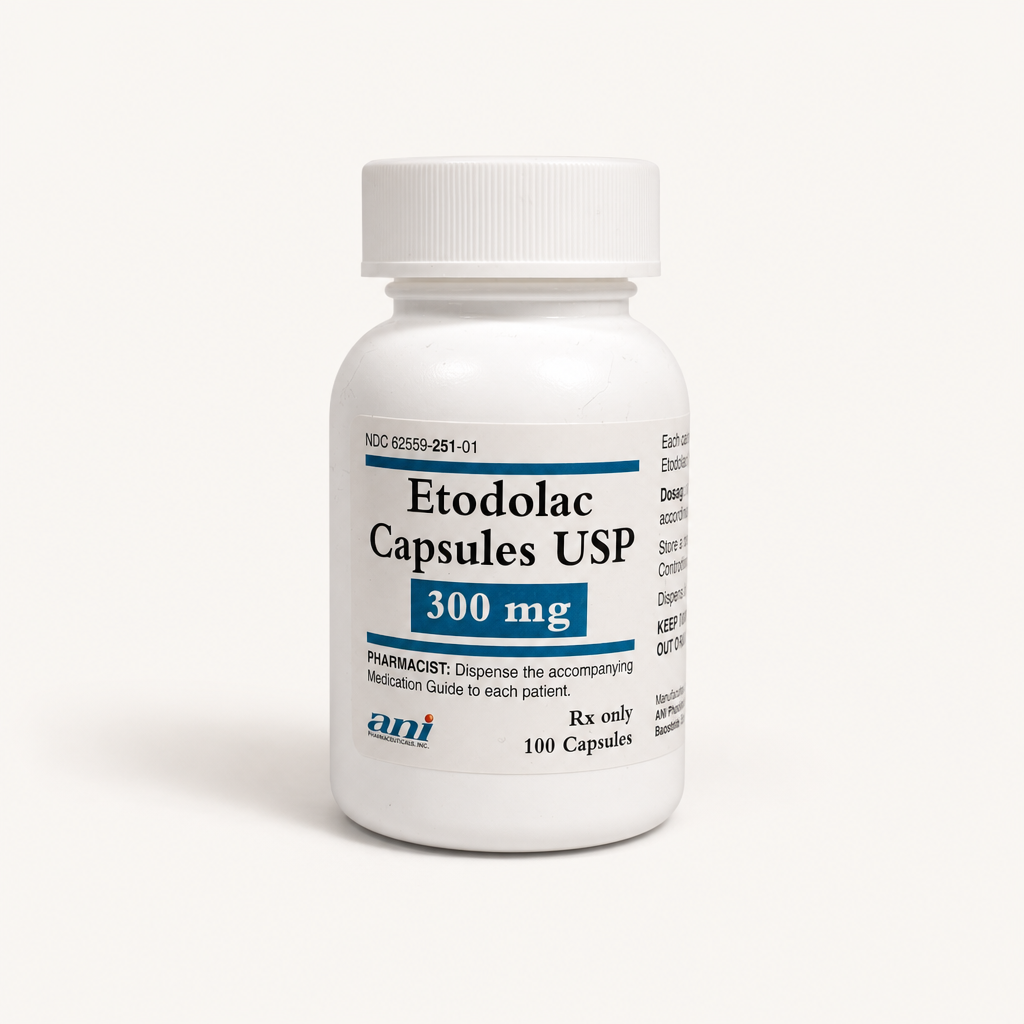
Etodolac capsules work by blocking cyclooxygenase (COX) enzymes in the body. Inhibiting these enzymes reduces the body’s production of prostaglandins, chemical messengers that cause inflammation, swelling, and pain. By lowering prostaglandin levels, etodolac capsules help relieve these symptoms.
| Quick Facts | |
|---|---|
| Common Brands | Formerly Lodine and Lodine XL (brand name discontinued). Currently only available as generic. |
| Drug Class | Nonsteroidal anti-inflammatory drug (NSAID) |
| Generic Status | Generic is available |
| Availability | Prescription only |
Dosing
Standard guidelines indicate that a typical dose of immediate-release etodolac capsules for short-term pain is 200-400 mg, taken by mouth every 6-8 hours as needed.
When used to manage osteoarthritis or rheumatoid arthritis, providers typically recommend a starting dose of 300 mg taken by mouth 2-3 times per day, or 400 mg to 500 mg taken twice a day.
Drug data indicates that doses do not usually exceed 1,000 mg daily.
Note: The dosing information below is for educational purposes only. Your prescribing physician will determine your specific dose based on your individual health needs. Always follow your healthcare provider’s instructions for exact dosing.
Uses
FDA-Approved Uses
Etodolac are FDA-approved to treat pain and inflammation caused by osteoarthritis and rheumatoid arthritis. They are also approved to relieve sudden or short-term pain.
Off-Label Uses
You may see etodolac capsules prescribed for uses that are not “FDA-approved.” This is a common and legal practice called “off-label” prescribing, where a doctor uses their clinical judgment to prescribe a drug for a different (but well-researched) purpose.
For example, healthcare providers may prescribe etodolac off label to manage inflammatory conditions like ankylosing spondylitis and gout.
Side Effects
Like all medications, etodolac can cause side effects. Some common side effects may improve over time as your body adjusts to the medication. Other side effects may be serious and require medical attention.
Common Side Effects
- Stomach pain or upset
- Indigestion or heartburn
- Nausea and vomiting
- Constipation or diarrhea
- Gas or bloating
- Dizziness
- Headache
- Ringing in the ears
- Itching or rash
Serious Side Effects
Serious side effects are rare, but it’s important to know what to look for if they do occur.
- Stomach bleeding and ulcers: Etodolac can increase the risk of serious stomach bleeding, ulcers, and intestinal tears, which can occur without warning and may cause symptoms like stomach pain, bloody or dark stools, or vomiting blood.
- Heart attack and stroke: Using NSAIDs like etodolac can increase the risk of blood clots, heart attacks, and strokes. This risk is higher for those with existing heart disease or those taking high doses for long periods.
- Kidney damage: Long-term use of etodolac capsules can damage the kidneys, leading to symptoms such as decreased need to urinate, muscle cramps, and swelling in the feet, ankles, or legs.
- Liver damage: Though rare, etodolac can cause elevated liver enzymes and liver toxicity, which may manifest as right upper belly pain, yellowing of the skin or eyes, dark urine, and unexplained nausea.
- Increased blood pressure: Etodolac may cause the body to retain excess fluid, which can lead to new or worsening high blood pressure and an increased risk of heart failure.
- Severe allergic reactions: Life-threatening allergic responses, including anaphylaxis and a multiorgan hypersensitivity condition called DRESS, can occur, causing symptoms like facial swelling, trouble breathing, and swollen lymph nodes.
- Severe skin reactions: Etodolac can cause skin conditions such as Stevens-Johnson syndrome (SJS) and toxic epidermal necrolysis (TEN), which may involve a painful rash, skin peeling, and blisters.
- Anemia: Etodolac may lower red blood cell counts, causing a condition called anemia that can lead to unusual weakness, pale skin, and lightheadedness.
Call your doctor immediately if you experience any concerning or prolonged symptoms.
Pharmacist Tips
Try Taking Capsules With Food Or Milk
You can take etodolac with or without food, but taking them with a meal or milk is a common approach pharmacists recommend to help prevent an upset stomach.
Swallow Capsules Whole
Do not crush, chew, or open etodolac. If you have trouble swallowing the capsules whole, talk to your doctor about other medication options.
Avoid Consuming Alcohol
Avoid drinking alcohol while taking etodolac because combining the two raises your risk for stomach upset, bleeding, and ulcers.
Monitor Your Blood Pressure
Etodolac can cause fluid retention and increase blood pressure. If you have a history of hypertension, check your blood pressure regularly at home.
Avoid Taking Multiple NSAIDs
Carefully check over-the-counter medications and avoid taking other NSAIDs, such as ibuprofen or naproxen, while taking etodolac capsules. Taking too many NSAIDs can make serious side effects more likely.
Avoid During Pregnancy
Standard guidelines suggest avoiding etodolac capsules during pregnancy because the medication may harm the unborn baby and cause complications during delivery.
Report Aspirin Allergies
Tell your healthcare professional if you are allergic to aspirin, as this increases the likelihood that you are also allergic to etodolac capsules.
Drug Interactions
Certain medications and substances can interact with etodolac, potentially altering how it works or increasing the risk of side effects.
- Other NSAIDs: Taking etodolac concurrently with aspirin, ibuprofen, naproxen, or ketorolac raises the risk of gastrointestinal bleeding and cardiovascular complications.
- Blood thinners: Medications prescribed to prevent blood clots, such as warfarin, can interact with etodolac capsules and significantly increase the risk of uncontrolled bleeding.
- Blood pressure medications: Etodolac can reduce the effectiveness of ACE inhibitors, ARBs, beta-blockers, and diuretics, making it more difficult to control high blood pressure.
- Antidepressants: Using selective serotonin reuptake inhibitors (SSRIs) or serotonin and norepinephrine reuptake inhibitors (SNRIs) alongside etodolac capsules increases the likelihood of bleeding problems.
- Corticosteroids: Anti-inflammatory steroid medications like prednisone and dexamethasone can raise the risk of stomach ulcers and digestive tract bleeding when combined with etodolac.
- Lithium and methotrexate: Etodolac can interact with lithium and methotrexate, potentially altering how these medications affect the body.
- Cyclosporine: Taking etodolac with this immunosuppressant medication can heighten the risk of kidney damage.
Always give your doctor and pharmacist a complete list of all your medications, vitamins, and supplements to check for potential interactions.
FAQs
What is the difference between regular etodolac capsules and extended-release etodolac tablets?
Regular etodolac capsules are immediate-release medications taken multiple times throughout the day to relieve sudden pain or alleviate arthritis symptoms. The extended-release tablets are formulated to release the medication slowly over time, allowing them to be taken once daily for the management of arthritis.
Should etodolac capsules be taken with milk or an antacid to prevent severe stomach upset?
Many providers suggest taking etodolac capsules with milk or food as a practical way to prevent an upset stomach. However, taking the medication with food might slow the absorption of the immediate-release capsules, meaning it could take slightly longer to experience pain relief.
How long does etodolac typically take to provide relief for acute joint pain?
Data on this medication indicate that immediate-release etodolac capsules typically take 45 minutes to 1 hour to start working, and the pain relief lasts approximately 5 to 6 hours. For extended-release tablets used for arthritis, it can take 1 to 2 weeks of consistent use to notice a reduction in joint inflammation.
Is it safe to take NSAIDs with prescription etodolac?
No, providers typically recommend against taking other NSAIDs, either prescription or over-the-counter, alongside etodolac capsules. Taking multiple NSAIDs at the same time raises your risk for significant side effects, including stomach bleeding, kidney damage, and heart problems.
Does taking etodolac alter the effectiveness of blood pressure medications?
Yes, etodolac capsules can interact with various blood pressure medications, potentially reducing their effectiveness. If you have high blood pressure, your prescriber might ask you to monitor your blood pressure at home more often, as etodolac capsules can cause fluid retention and raise your blood pressure.
Is etodolac classified as an opioid pain medication?
No, etodolac capsules are not a narcotic or an opioid. They are classified as a nonsteroidal anti-inflammatory drug (NSAID). This type of pain reliever works by blocking inflammatory proteins rather than altering pain receptors in the brain like opioids.
Can you consume alcohol while taking etodolac?
Providers recommend avoiding alcohol while you are taking etodolac capsules. Consuming alcohol alongside this medication increases your risk of ulcers and bleeding in the stomach.
What should you do if you miss a dose of etodolac?
Guidelines indicate that if you miss a dose of etodolac capsules, you should take them as soon as you remember. However, if it is almost time for your next scheduled dose, simply skip the missed dose and resume your regular schedule. You should not take double or extra doses to make up for a missed one.
How much etodolac can you safely take within a single 24-hour period?
For short-term pain or arthritis, the maximum recommended dose is 1 gram (1,000 mg) per day. Always follow the exact dosing schedule provided by your physician.
Comparable Medications
Etodolac capsules, Ibuprofen (Advil, Motrin), Celecoxib (Celebrex), Meloxicam (Mobic), Acetaminophen (Tylenol)?
Ibuprofen
Another common nonsteroidal anti-inflammatory drug (NSAID). To prevent side effects, it should generally not be taken at the same time as etodolac capsules.
Celecoxib
From $31.99
This is a prescription NSAID used for pain and arthritis-related inflammation, and is frequently compared to etodolac.
Meloxicam
From $19.99
A prescription NSAID used to reduce joint pain and inflammation. It operates similarly to etodolac.
Acetaminophen
This is a different class of pain reliever that does not have known interactions with etodolac capsules.
We Have Etodolac Capsules in Stock. Get Yours Today!
Important: Information on this page is for educational purposes only. Prescribing decisions are made by independent, licensed providers. TelyRx operates technology-enabled pharmacies and a telehealth platform that connects patients with licensed providers. Prescriptions, when provider-approved and issued, are filled and shipped by TelyRx-affiliated pharmacies. We do not employ physicians or make prescribing decisions. Learn more about our editorial standards here.