

How It Works
Current medical research suggests that migraines likely involve both temporary widening (dilation) of blood vessels in the brain and the release of chemicals from nearby nerves that cause inflammation and pain.
Eletriptan works through a dual biological process:
- Narrowing blood vessels: The medication attaches to serotonin receptors on the blood vessels in the brain to get them to stop dilating and return to a normal size. This reduces throbbing pain and pressure.
- Interrupting pain signals: Eletriptan also blocks the release of substances that send pain signals to the brain. This may
- help calm the overactive nerves that cause sensitivity to light and sound.
By acting on both the widened blood vessels and the overactive nerves, eletriptan can help ease the headache and other migraine symptoms, such as nausea and sensitivity to light and sound.
| Quick Facts | |
|---|---|
| Common Brands | Relpax |
| Drug Class | Serotonin (5-HT1) receptor agonist (Triptan) |
| Generic Status | Generic version available |
| Availability | Prescription only |
Dosing
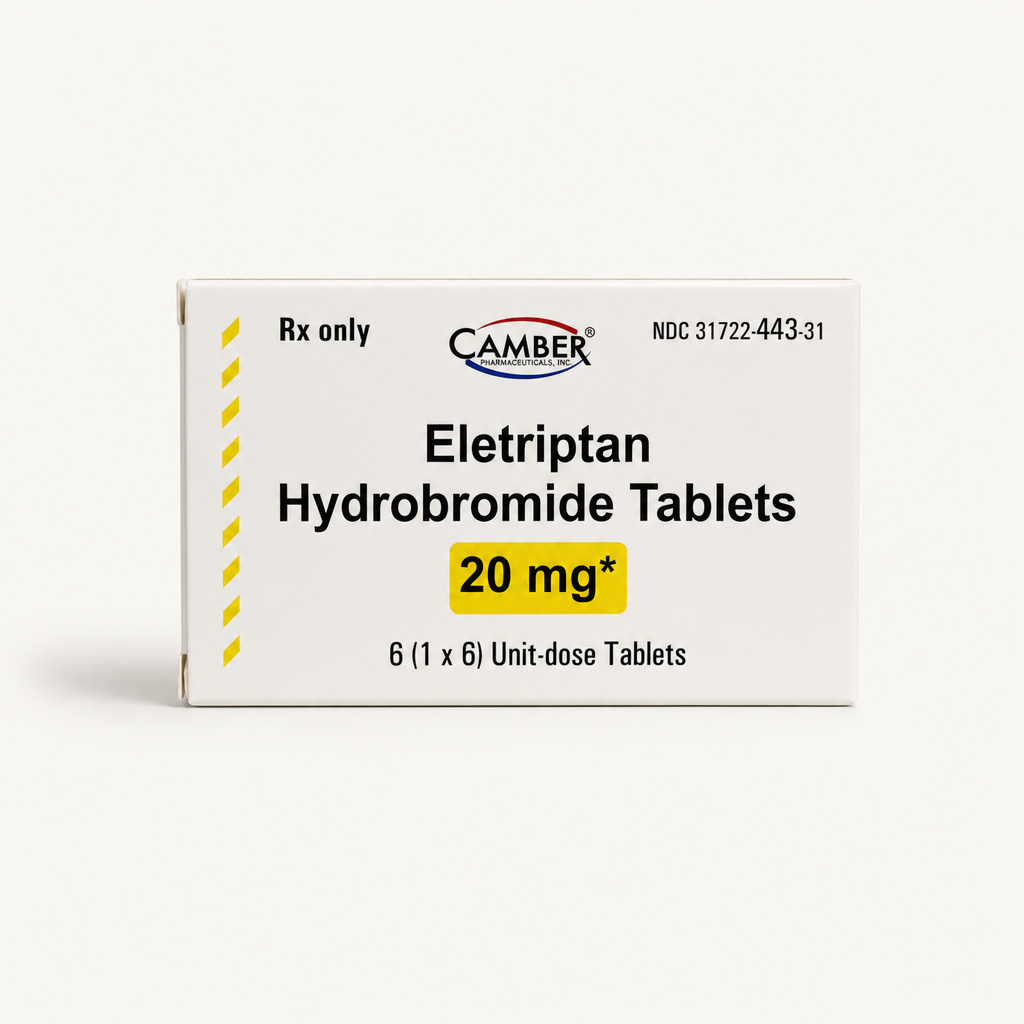
Eletriptan is available in 20 mg and 40 mg tablets. The goal is to use the lowest effective dose to manage the attack.
- Timing is key: It is generally accepted that you should take eletriptan at the first sign of a migraine headache. The sooner it is taken, the more effective it typically is.
- Standard dose: Most people take one 20 mg or 40 mg tablet at the start of an attack.
- The two-hour rule: If your migraine returns or does not fully go away, providers typically recommend taking a second dose 2 hours after the first. However, if the first dose did not provide any relief at all, speak with your doctor before taking a second dose.
- Daily maximum: Do not take more than 80mg of eletriptan over the span of 24 hours, and do not take more than 40mg in a single dose.
- Food: Eletriptan can be taken with or without food.
Note: Dosing information below is educational only. Your prescribing physician will determine your specific dose based on your individual health needs. Always follow your healthcare provider’s instructions for exact dosing.
Uses
FDA-Approved Uses
The FDA approves eletriptan for acute migraine treatment and relief of migraine attacks in adults with or without aura.
Off-Label Uses
You may see some medications prescribed for uses that are not FDA-approved. This is a common and legal practice called off-label prescribing, where a doctor uses their clinical judgment to prescribe a drug for a different purpose.
There are currently no off-label uses for eletriptan.
Side Effects
Patients generally tolerate eletriptan well, but some side effects can occur. However, if you have a medical history of heart conditions, stroke, or poor circulation, do not take eletriptan.
Common Side Effects
- Dizziness or spinning sensations
- Sleepiness or unusual tiredness
- Nausea
- Dry mouth
- A “pins and needles” or tingling sensation in the skin
- Weakness
Serious Side Effects
Serious side effects are rare, but it’s important to know what to look for if they do occur.
Stop taking the medication and immediately call the doctor or emergency services if you experience any of the following symptoms:
- Chest and throat pressure: Some users feel tightness or pressure in the chest, throat, or jaw. These could be side effects to the medication but could also be a sign of heart attack.
- Heart and circulation issues: Contact emergency services immediately for severe chest pain, shortness of breath, and your doctor for cold/numb hands and feet.
- Serotonin syndrome: This is a rare but dangerous reaction caused by too much serotonin activity in the body. It is more likely when eletriptan is taken with other medicines that affect serotonin. Watch for symptoms like a racing heart, hallucinations, muscle stiffness, or extreme agitation.
- Rebound headaches: Taking any triptan too frequently (10 or more
- days a month) can make your headaches happen more often.
- Extreme blood pressure elevation: Eletriptan can raise blood pressure. This is why it is not used in people whose high blood pressure is not under control.
- Signs of stroke: Call emergency services immediately if you experience a sudden, severe headache that feels different from your usual migraines, or have symptoms of stroke: sudden trouble seeing, sudden numbness or weakness on one side of the body, or sudden confusion or trouble speaking.
Call your doctor immediately if you experience any concerning or prolonged symptoms.
Pharmacist Tips
Don’t Wait
Many patients try to tough it out before taking their prescription. Triptans work significantly better when the pain is still mild.
Monitor Your Usage
It is generally advised to keep a headache diary. If you find yourself needing eletriptan for more than two or three migraines a month, you can talk to your doctor about starting a preventative medication. The safety of this drug has not been established for treating more than three migraines per month.
Rest After Dosing
Rest after dosing. Eletriptan can cause dizziness, weakness, or drowsiness. If you notice any of these, do not drive, use machinery, or do anything that needs your full attention.
Watch For Rebound
If your headaches are getting worse or happening more often, it may be due to medication overuse. Providers typically suggest limiting triptan use to no more than 2 days per week.
Alcohol Caution
Alcohol can be a migraine trigger and can worsen the dizziness caused by eletriptan. It is generally advised to avoid alcohol during an attack.
Drug Interactions
Eletriptan has several important interactions that can affect your safety, particularly concerning other medications that impact serotonin or blood vessels.
Let your doctor know if you take:
- Other migraine medications: Wait at least 24 hours between using eletriptan and any other triptan (such as sumatriptan) or ergot-type medication (such as dihydroergotamine, also known as Migranal).
- Antidepressants: SSRIs (like Zoloft), SNRIs (like Cymbalta), tricyclic antidepressants (TCAs, like amitriptyline), and MAO inhibitors (MAOIs, like phenelzine) may increase the risk of serotonin syndrome when taken with eletriptan.
- Medicines that slow how your body clears eletriptan: Some antibiotics (such as clarithromycin), antifungals (such as ketoconazole and itraconazole), HIV medicines (such as ritonavir and nelfinavir), Paxlovid for COVID-19, and the antidepressant nefazodone can raise eletriptan to dangerous levels. Do not take eletriptan within 72 hours of these medicines. Ask your doctor or pharmacist if you are not sure whether one of your medicines is in this group.
In addition, you should not take eletriptan if you have:
- Heart disease, including chest pain from heart disease (angina), a past heart attack, or spasms in the heart’s blood vessels
- Certain heart rhythm problems, such as Wolff-Parkinson-White syndrome
- A history of stroke or mini-stroke (TIA), or a rare type of migraine that causes temporary weakness or problems with balance or speech (hemiplegic or basilar migraine)
- Poor blood flow to your legs or feet (peripheral vascular disease)
- Reduced blood flow to your intestines (ischemic bowel disease)
- High blood pressure that is not under control
- An allergy to eletriptan
Always give your doctor and pharmacist a complete list of all your medications, vitamins, and supplements to check for potential interactions.
FAQs
How long does eletriptan take to provide relief during a migraine attack?
Most people begin to feel a reduction in pain within 30 to 60 minutes. However, it can take up to 2 hours for full effect.
Can eletriptan be taken daily to prevent migraines from happening?
No. Eletriptan is only for treating attacks as they happen. Taking it that often can cause medication overuse headaches, and there is not enough safety information about using it more than three times a month.
What is the difference between taking eletriptan and over-the-counter NSAIDs like ibuprofen for a migraine?
NSAIDs like ibuprofen are general pain relievers that reduce inflammation throughout the body. Eletriptan is a targeted medication that specifically works on the neurological receptors and blood vessels involved in a migraine attack.
How many milligrams of eletriptan can you safely take within a 24-hour period?
The maximum is 40 mg for a single dose, with a maximum of 80 mg per 24-hour period.
Does eletriptan interact with selective serotonin reuptake inhibitors (SSRIs), increasing the risk of serotonin syndrome?
Yes. While many people use both safely, be aware of the signs of serotonin syndrome (agitation, muscle twitches, fast heart rate).
What should I do if the first dose of eletriptan fails to relieve my migraine?
Contact your doctor to discuss alternative treatment options if the first dose did nothing to relieve your migraine. If the first dose did relieve the migraine but the pain has returned, standard guidelines typically recommend taking a second dose after 2 hours.
Does taking eletriptan too frequently cause medication overuse headaches (rebound headaches)?
Yes. Using triptans more than 10 days a month can create a cycle where the medication causes more frequent and severe rebound headaches.
Why must you wait at least 24 hours between taking eletriptan and another triptan medication like sumatriptan?
Since all triptans narrow blood vessels, taking two different ones too close together could narrow your blood vessels too much, which can be dangerous for your heart and brain. The 2-hour rule for a second dose only applies to a second eletriptan tablet. If you want to switch to a different triptan, wait 24 hours.
Can taking eletriptan temporarily elevate your blood pressure?
Yes. Because it constricts blood vessels, it can cause a temporary rise in blood pressure. People with uncontrolled high blood pressure should not take this medication.
Is eletriptan considered safe for use during pregnancy or while breastfeeding?
There is not enough research in pregnant women to know whether eletriptan is safe during pregnancy. If you are pregnant or planning to become pregnant, talk with your OB-GYN or doctor before taking it.
Eletriptan does pass into breast milk, but only in small amounts that are not expected to harm a nursing baby. It has been recommended as one of the preferred triptans for people who are breastfeeding. If you want to further lower your baby’s exposure, you can wait 24 hours after a dose before nursing. Talk with your doctor about whether that is right for you.
Comparable Medications
Sumatriptan, Ubrogepant, or Topiramate?
Below are potential alternatives to eletriptan:
Sumatriptan
From $29.99
Sumatriptan comes in more forms (injections, sprays), while eletriptan is available only as tablets. Some clinical studies suggest that eletriptan may provide more effective pain relief and carry a lower risk of the migraine returning compared to sumatriptan.
Ubrogepant
Ubrogepant belongs to a newer class called gepants. Unlike eletriptan, gepants do not narrow blood vessels, so they may be an option for patients who cannot take triptans because of heart disease. However, gepants can still raise blood pressure in some people, so consult with your provider.
Dihydroergotamine
Dihydroergotamine is an ergot-type medication. It can be an option when a triptan does not work well.
Topiramate
Topiramate is a daily preventative pill taken to reduce the number of migraines you get. Eletriptan is the rescue pill you take only when a migraine occurs.
We Have Eletriptan in Stock. Get Yours Today!
Important: Information on this page is for educational purposes only. Prescribing decisions are made by independent, licensed providers. TelyRx operates technology-enabled pharmacies and a telehealth platform that connects patients with licensed providers. Prescriptions, when provider-approved and issued, are filled and shipped by TelyRx-affiliated pharmacies. We do not employ physicians or make prescribing decisions. Learn more about our editorial standards here.