

How It Works
Darifenacin is an antimuscarinic, which is more commonly known as an anticholinergic. It works by relaxing the bladder muscles. This reduces involuntary spasms and increases the amount of urine your bladder can hold, helping improve overall bladder control.
| Quick Facts | |
|---|---|
| Common Brands | Enablex (discontinued) |
| Drug Class | Anticholinergic, antimuscarinic, muscarinic antagonist |
| Generic Status | Generic is available |
| Availability | Prescription only |
Dosing
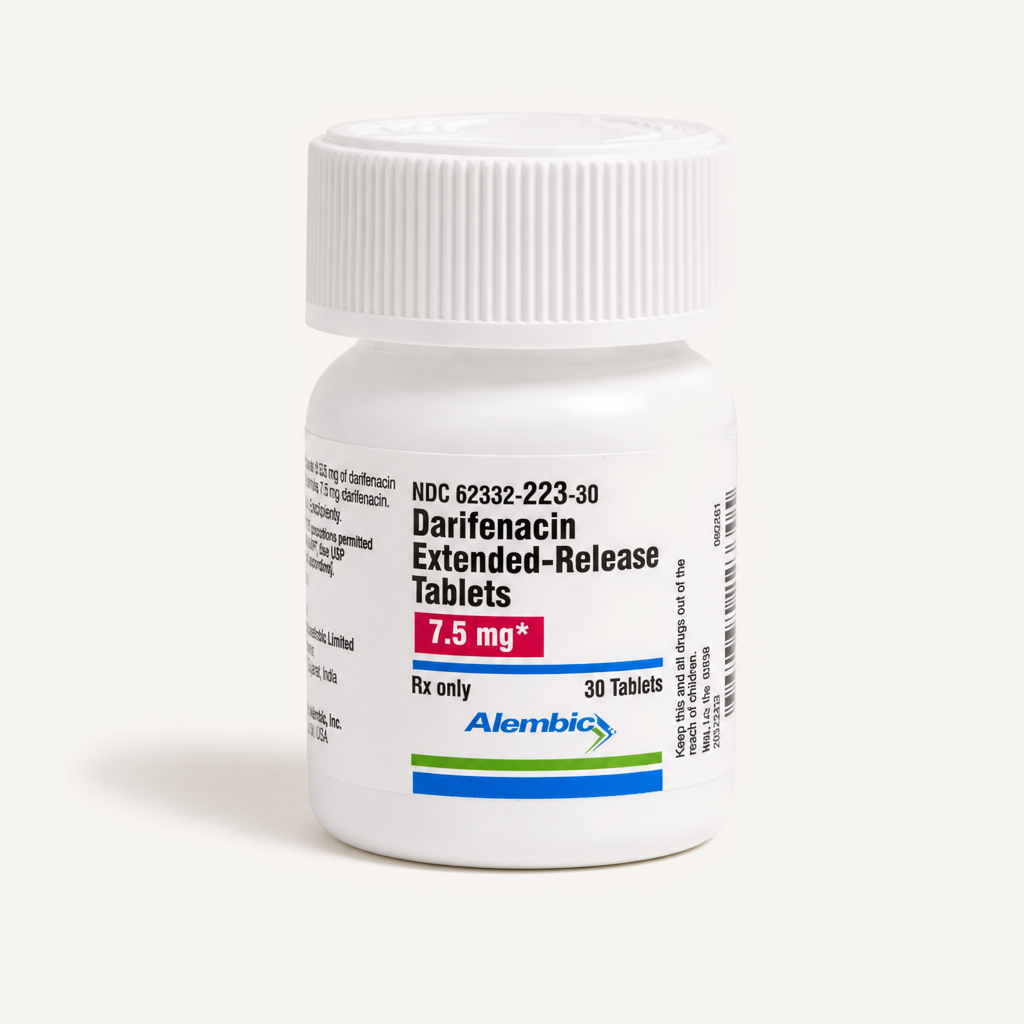
Darifenacin ER tablets come in strengths of 7.5 mg and 15 mg. The recommended starting dose of darifenacin is 7.5 mg taken by mouth once daily.
After 2 weeks, your provider may increase the dosage to 15 mg once daily, depending on your response to the medication. The dosage may stay at 7.5 mg once daily for people with liver problems or who are taking medications that could interact with darifenacin.
Note: Dosing information below is educational only. Your prescribing physician will determine your specific dose based on your individual health needs. Always follow your healthcare provider’s instructions for exact dosing.
Uses
FDA-Approved Uses
Darifenacin is FDA-approved to treat an overactive bladder.
Off-Label Uses
You may see darifenacin prescribed for uses that are not “FDA-approved.” This is a very common and legal practice called “off-label” prescribing, where a doctor uses their clinical judgment to prescribe a drug for a different (but well-researched) purpose.
Off-label use is not commonly reported for darifenacin.
Side Effects
Like all medications, darifenacin can cause side effects. Some common side effects may improve over time as your body adjusts to the medication. Other side effects may be serious and require medical attention.
Common Side Effects
- Dry mouth
- Constipation
- Headache
- Upset stomach or indigestion
- Nausea
- Blurred vision
- Dizziness
- Urinary tract infection (UTI)
- Flu-like symptoms
Serious Side Effects
Serious side effects are rare, but it’s important to know what to look for if they do occur. Stop using darifenacin and call your doctor immediately if you experience:
- Severe allergic reactions: Symptoms include swelling of the face, lips, tongue, or throat (angioedema); difficulty breathing or swallowing; racing heart; severe rash or itching; and/or fever. Of these, darifenacin is known to cause angioedema, especially after the first dose, rarely. If your face or throat swells or you have difficulty breathing, seek emergency medical attention.
- Inability to empty the bladder (urinary retention): Because darifenacin is designed to slow down the emptying of the bladder, there is a risk of being unable to empty the bladder.
- Central nervous system effects: Darifenacin may cause side effects like confusion, sleepiness, dizziness, and, in some cases, hallucinations. Avoid driving or operating heavy machinery until you know how darifenacin affects you.
- Heat exhaustion: Darifenacin can impair your body’s ability to regulate its core temperature, which could lead to overheating, especially when it’s hot outside. Symptoms include decreased sweating, dizziness, tiredness, nausea, and increased body temperature.
Call your doctor immediately if you experience any concerning or prolonged symptoms.
Pharmacist Tips
Swallow The Tablet Whole With Water
Do not chew, cut, or crush the tablets.
Darifenacin Can Be Taken With Or Without Food
If the medication causes mild stomach upset, indigestion, or nausea, taking it with food may offer relief.
Manage Dry Mouth
To help combat dry mouth, try sucking on ice, chewing sugar-free gum, or rinsing your mouth with cold water frequently. Specialized mouthwashes, sprays, and lozenges may also provide relief.
Manage Constipation
Stay hydrated and eat more fiber-rich foods to help maintain your gut mobility.
Avoid Getting Overheated
Darifenacin can reduce sweating, your body’s natural way of cooling down. It is recommended to avoid spending long periods outdoors when it’s hot.
Wait To See How The Medication Affects You
Since blurry vision, dizziness, and sleepiness are potential side effects of darifenacin, it is recommended to avoid driving or operating heavy machinery until you understand how the medication affects you.
Limit Or Avoid Alcohol
Alcohol does not have a known direct pharmacokinetic interaction with darifenacin, but may increase side effects such as dizziness.
Store At Room Temperature
Darifenacin should be stored at 68°F to 77°F (20°C to 25°C) in a cool, dry place away from light.
Tell Your Provider If You’re Pregnant Or Breastfeeding
It is unknown if darifenacin can affect pregnancy or pass into breast milk, so risk cannot be ruled out. Tell your healthcare provider if you are pregnant, breastfeeding, or planning to be, so they can advise whether you should continue taking the medication.
Try To Avoid Missing A Dose
If you miss a dose of darifenacin, take it as soon as you remember, unless it is almost time for your next dose. In that case, skip the missed dose and take your next dose as usual. Do not take double or extra doses of darifenacin to make up for a missed one.
Drug Interactions
Certain medications and substances can interact with darifenacin, potentially altering its effectiveness or increasing the risk of side effects. For example:
- Other anticholinergics: Darifenacin should not be used alongside diphenhydramine (Benadryl) or other medicines used for overactive bladder, Parkinson’s disease, or stomach problems.
- Antifungals: Drugs that treat fungal infections, such as ketoconazole or itraconazole, can interact with darifenacin.
- HIV medications: Drugs like ritonavir and nelfinavir can interact with darifenacin.
- Nefazodone: This drug can interact with darifenacin.
- Clarithromycin: Darifenacin should not be taken with this drug.
- Flecainide: Darifenacin can interact with this medication.
- Thioridazine: This drug can interact with darifenacin.
- Tricyclic antidepressants: Drugs like amitriptyline, nortriptyline, and protriptyline can interact with darifenacin.
Always give your doctor and pharmacist a complete list of all your medications, vitamins, and supplements to check for potential interactions.
FAQs
How long does it take for darifenacin to reduce urinary frequency?
Clinical studies show that darifenacin may begin to improve overactive bladder symptoms within 2 weeks of starting treatment. However, it might take a few months of daily use to experience the full effects of the medication.
What is the difference between the 7.5 mg and 15 mg darifenacin tablets?
The 7.5 mg dose is typically the starting point for adults. The 15 mg tablet is used if a provider determines that a higher dose is necessary after evaluating the person’s initial response to the medication.
Why must darifenacin extended-release tablets be swallowed whole instead of crushed or chewed?
The extended-release tablet is specifically designed to slowly and steadily deliver the medication into the body throughout the day. Chewing, cutting, dividing, or crushing the tablet destroys the controlled-release mechanism, potentially leading to a rapid release of the drug and raising the risk of side effects.
Is it safe to take darifenacin with food?
Darifenacin can be safely taken with or without food. Taking the tablet with food may be beneficial for those who experience mild indigestion, nausea, or general stomach discomfort from darifenacin.
Can darifenacin be used by patients with narrow-angle glaucoma?
Darifenacin is contraindicated in patients with uncontrolled narrow-angle glaucoma. The medication can cause increased pressure inside the eye, severely worsening the condition. If you have controlled glaucoma, it’s recommended to consult your ophthalmologist before using darifenacin.
How does darifenacin compare to over-the-counter bladder control supplements?
As a prescription-strength medication, darifenacin is generally considered to be more effective at treating symptoms of overactive bladder than over-the-counter options.
Does taking darifenacin increase the risk of developing a urinary tract infection (UTI)?
Yes, standard guidelines state that you may use lubricants or moisturizers, such as Replens, on the same day you use the Vagifem tablet. However, it is recommended to let the insert fully dissolve and be absorbed before applying additional topicals.
Does localized estrogen help prevent recurring urinary tract infections (UTIs)?
Yes, a urinary tract infection (UTI) is a possible side effect of darifenacin. UTI was reported in clinical trials.
Can darifenacin be taken at the same time as blood pressure medications?
Darifenacin can generally be taken with blood pressure medications, but it depends on the specific medication. It’s best to provide your doctor with a complete list of the medications and supplements you’re taking so they can check for potential interactions before prescribing darifenacin.
Is it safe to consume alcohol while taking darifenacin?
It is unknown if or how alcohol directly affects darifenacin. It is generally accepted that consuming alcohol while on this medication can increase the risk of experiencing dizziness. Also, given that darifenacin increases the risk of overheating, it’s recommended to avoid dehydrating beverages like alcohol.
Can darifenacin cause weight gain or fluid retention?
Weight gain has been reported in a very small percentage (2%) of people taking darifenacin. Fluid retention in the form of swelling or edema is also listed as a less common side effect.
Comparable Medications
Darifenacin, oxybutynin, mirabegron, solifenacin, or tolterodine?
There are several medications that your doctor can prescribe in place of darifenacin. Here are a few possible alternatives below.
Oxybutynin ER Tablets
From $32.99
A prescription oral anticholinergic used to treat an overactive bladder.
Mirabegron ER Tablets
From $359.99
A prescription oral beta-3 adrenergic agonist used to treat an overactive bladder.
Solifenacin
From $29.99
A prescription oral anticholinergic used to treat an overactive bladder.
Tolterodine ER Capsules
From $69.99
A prescription oral anticholinergic used to treat an overactive bladder.
We Have Darifenacin in Stock. Get Yours Today!
Important: Information on this page is for educational purposes only. Prescribing decisions are made by independent, licensed providers. TelyRx operates technology-enabled pharmacies and a telehealth platform that connects patients with licensed providers. Prescriptions, when provider-approved and issued, are filled and shipped by TelyRx-affiliated pharmacies. We do not employ physicians or make prescribing decisions. Learn more about our editorial standards here.