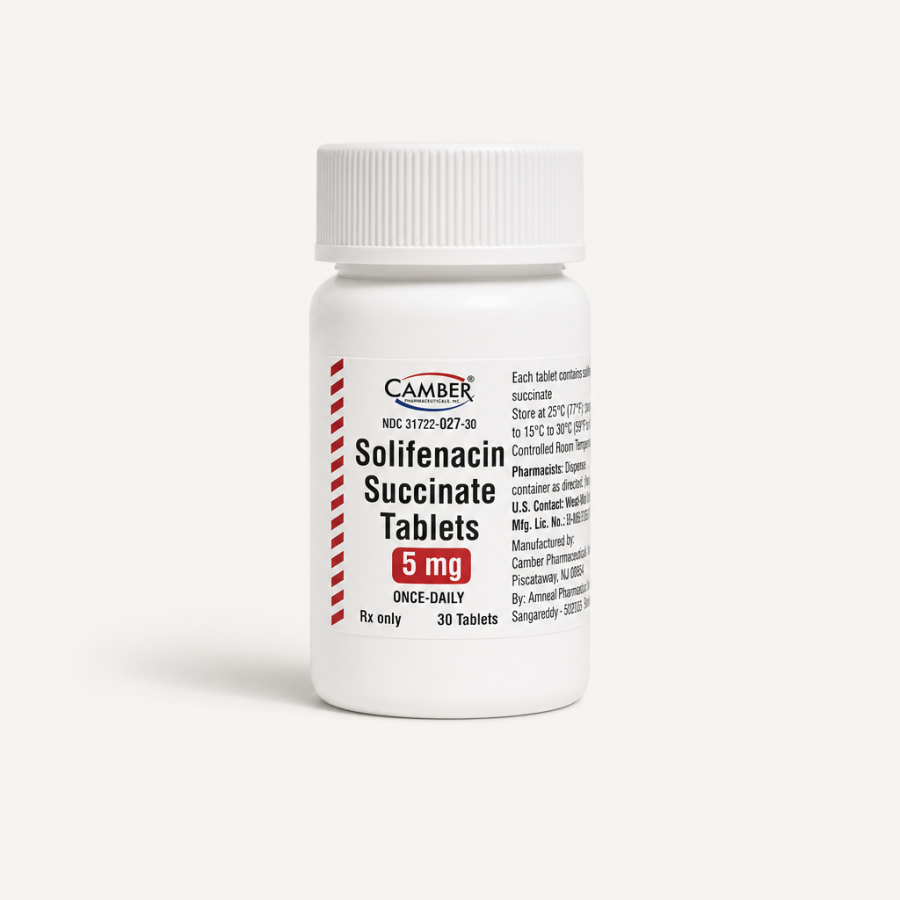
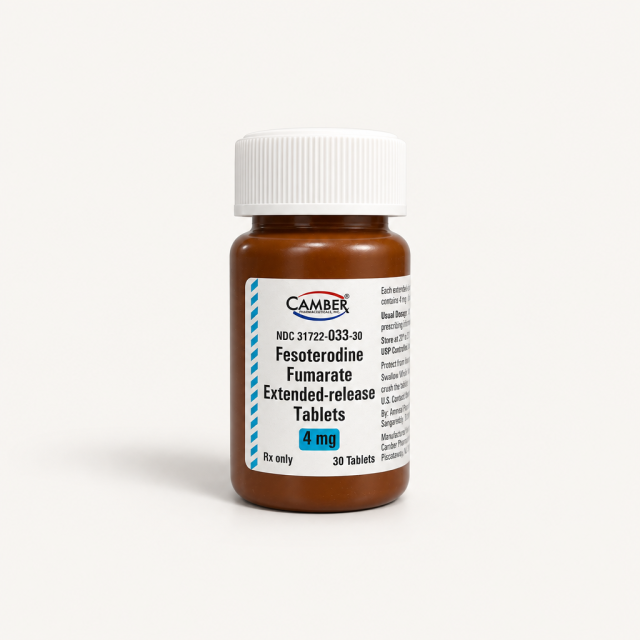
Solifenacin is a prescription medication used to treat overactive bladder in adults experiencing urinary frequency, urgency, or urge incontinence. It works by relaxing the bladder’s detrusor muscle, allowing it to hold more urine and reducing sudden, strong urges to urinate. By improving bladder control, solifenacin can help decrease bathroom visits and reduce the risk of leakage episodes.
Efficacy is often noticeable within 4 weeks of daily use, with continued improvement over time when taken as prescribed.
Usage Instructions:
Take exactly as prescribed by your healthcare provider, usually once daily
Typical dosing is 5 to 10 mg taken at the same time each day
Swallow tablets whole with water; do not crush or chew
May be taken with or without food
Continue taking even if symptoms improve, as stopping may cause symptoms to return
Warnings & Precautions:
Do not use if you have urinary retention, gastric retention, or uncontrolled narrow-angle glaucoma
Use with caution if you have liver disease, kidney problems, or gastrointestinal disorders such as severe constipation
Possible side effects include dry mouth, constipation, blurred vision, and dizziness
May cause drowsiness or blurred vision. Use caution when driving or operating machinery
Inform your healthcare provider of all medications you take, as some may interact with solifenacin
Solifenacin potential side effects may include: constipation, headache, blurred vision, dry mouth, fatigue, dry eyes
This information should not be used to decide whether or not to take this medicine or any other medicine. Only a healthcare provider has the knowledge and training to decide which medicines are right for you. TelyRx does not endorse any medicine as safe, effective, or approved for treating any patient or health condition. This is only a limited summary of general information about the medicine’s uses from the patient education materials and is not intended to be comprehensive. This limited summary does NOT include all information about the possible uses, directions, warnings, precautions, interactions, adverse effects, or risks that may apply to this medicine. This information is not intended to provide medical advice, diagnosis or treatment and does not replace information you may receive from your healthcare provider. For a more detailed summary of information about the risks and benefits of using this medicine, please review the entire patient education information you receive with the medication.