

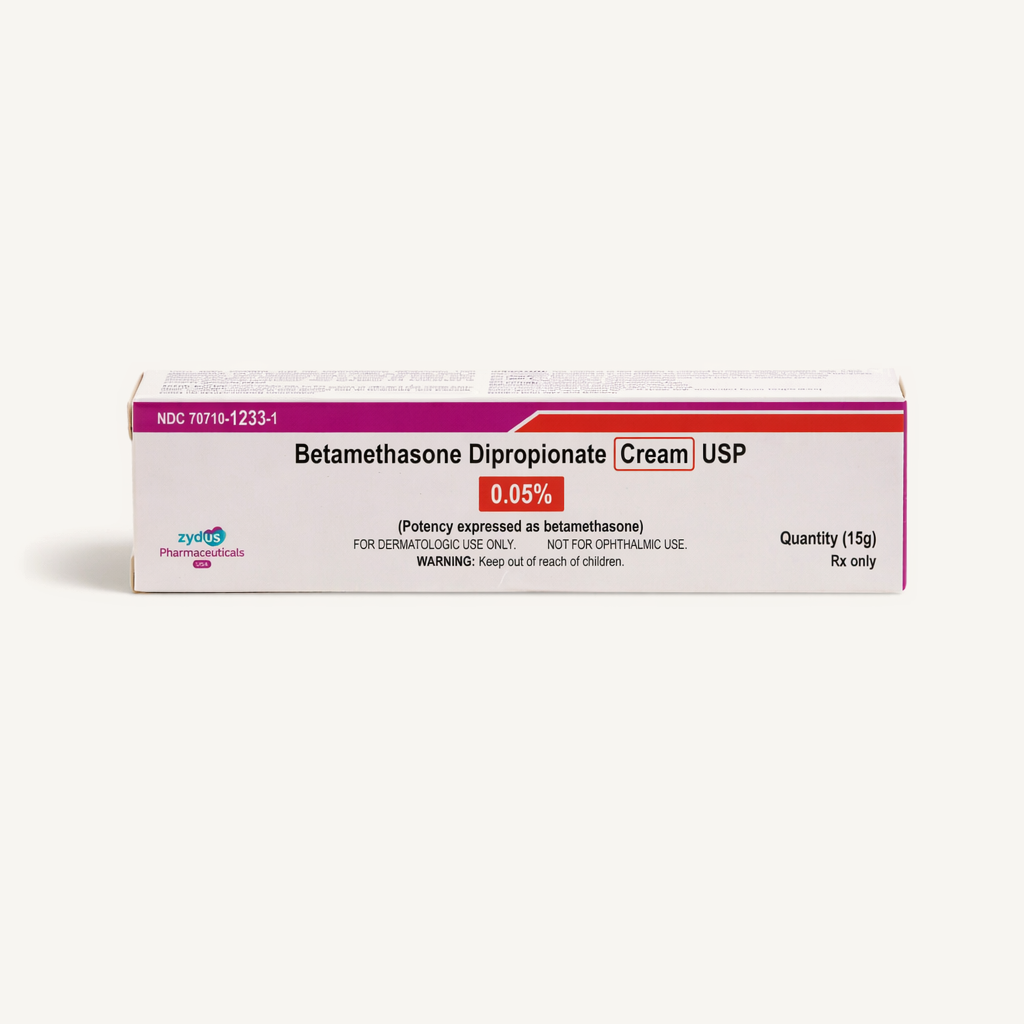
How It Works
When your skin is irritated, your immune system’s defense cells release chemicals that dilate blood vessels (causing redness) and trigger tissue swelling (causing inflammation).
Betamethasone works to reduce both of those symptoms:
- Calming immune cells: The medication binds to receptors in your skin cells to signal the immune system to stop overreacting.
- Blocking inflammatory chemicals: It prevents the production of substances such as prostaglandins and leukotrienes, which are the main triggers of itching and pain.
- Narrowing blood vessels: It has a vasoconstrictive effect, narrowing the small blood vessels in the skin to reduce redness and warmth.
By quieting this overactive internal response, betamethasone helps the skin return to its healthy, smooth state and relieves the urge to scratch.
| Quick Facts | |
|---|---|
| Common Brands | Diprosone |
| Drug Class | Topical corticosteroid (medium potency) |
| Generic Status | Generic version available |
| Availability | Prescription only |
Dosing
The success of betamethasone treatment depends on applying the correct amount to the right areas for a limited amount of time.
- Typical dosage: Providers typically recommend applying a thin film to the affected area once daily, or twice daily in some cases.
- Application technique: Wash your hands before and after use. Gently rub a small amount of cream into the skin until it disappears.
- The thin film rule: You do not need a thick layer. A small amount is effective.
- Dosage limits: Use only the amount your doctor prescribes, since using large amounts, covering large areas, or using this medication for a long time can increase how much medicine enters the bloodstream, increasing the risk of side effects.
- Hand safety: Wash your hands after application unless your hands are the area being treated.
- Avoid occlusion: Do not bandage, wrap, or cover the treated skin unless your doctor specifically tells you to. Covering the area increases how much medicine is absorbed into the body, which raises the risk of side effects.
Note: The dosing information below is for educational purposes only. Your prescribing physician will determine your specific dose based on your individual health needs. Always follow your healthcare provider’s instructions for exact dosing.
Uses
FDA-Approved Uses
The FDA approves betamethasone dipropionate cream for inflammatory dermatoses. It is prescribed for the relief of the inflammatory and pruritic (itchy) manifestations of corticosteroid-responsive skin conditions, such as plaque psoriasis.
Off-Label Uses
You may see some medications prescribed for uses that are not FDA-approved. This is a common and legal practice called off-label prescribing, where a doctor uses their clinical judgment to prescribe a drug for a different purpose.
Betamethasone dipropionate cream may be prescribed off-label for the following conditions:
- Vitiligo: Some specialists use topical corticosteroids to help restore pigment in small areas of the skin.
- Lichen planus: An inflammatory condition affecting the skin and mucous membranes.
- Alopecia areata: In certain cases, it may be used on the scalp to manage localized hair loss caused by inflammation.
Side Effects
Because betamethasone is a corticosteroid, the skin can react if the medication is used incorrectly or for too long.
Common Side Effects
The following are possible side effects patients may experience:
- Temporary stinging or burning immediately after application
- Itching or irritation at the site of use
- Dryness or peeling of the skin
Serious Side Effects
Serious side effects are rare, but it’s important to know what to look for if they do occur. Call your doctor promptly if you experience any of the following symptoms:
- Skin thinning (atrophy): Prolonged use can make the skin fragile, leading to easy bruising or stretch marks (striae).
- Adrenal suppression: If used over large areas for prolonged periods, the steroid can enter the bloodstream and suppress your body’s production of natural hormones. Symptoms may include unusual tiredness, muscle weakness, loss of appetite, nausea, and dizziness
- Vision changes: Blurred vision or eye pain may occur, as steroids used near the face can increase the risk of cataracts or glaucoma.
- Secondary infections: Symptoms may include pus, increased swelling, or warmth, as steroids can mask the signs of a skin infection.
Call your doctor immediately if you experience any concerning or prolonged symptoms.
Pharmacist Tips
Don’t Use It If You’re Allergic To It
Don’t use this cream if you’re allergic to betamethasone dipropionate, other corticosteroids, or any ingredient in the product.
Short Term Use
Use this medication only for as long as your doctor prescribes. If your skin isn’t better after two weeks, your provider may need to re-evaluate your treatment.
Location Matters
Avoid applying this cream to the face, underarms, or groin area unless specifically directed. The skin in these areas is thin and absorbs medication much more rapidly, increasing the risk of skin thinning.
Moisturize First
Many patients find it helpful to apply their standard moisturizer and wait 15–30 minutes before applying the medicated cream.
Sun Protection
Steroids can make your skin more sensitive to UV light. Use sunscreen and wear protective clothing over the treated areas when outdoors.
Check The Expiration
Do not use old betamethasone tubes for new rashes. The medication loses potency over time and may not be appropriate for a different skin condition.
Drug Interactions
While only a small amount of medication enters the blood when used correctly, interactions can still occur if you use multiple products. Let your doctor know if you use:
- Other corticosteroids: It is generally advised to avoid using other steroid creams (like OTC hydrocortisone) or taking oral steroids (like prednisone) unless directed to by your provider, as this can increase the risk of hormone-related side effects.
- Cosmetic products: Choose gentle cleansers and avoid harsh or drying products that can irritate your skin. Ask your provider before using medicated cleansers, cosmetics, or other skin products on the treated area.
Always give your doctor and pharmacist a complete list of all your medications, vitamins, and supplements to check for potential interactions.
FAQs
What is the difference between betamethasone dipropionate and augmented betamethasone dipropionate?
Augmented betamethasone (like Diprolene) is formulated with a special base that helps the medication penetrate the skin more deeply and quickly. This makes the augmented version even more potent than the regular dipropionate form.
Why shouldn’t you apply betamethasone dipropionate to the face or underarms?
The skin on your face and in body folds is thinner and more porous than the skin on your arms or legs. Using a steroid cream can lead to permanent stretch marks, visible blood vessels, and skin thinning within a short time.
How long can you use betamethasone dipropionate cream?
Using it for a long time raises the risk of side effects such as skin thinning, and increases the amount of the medicine being absorbed into the bloodstream. This can affect your body’s natural hormone production. Your doctor will tell you how long to use it and if you should take any breaks to lower these risks.
How does betamethasone dipropionate reduce the inflammation and scaling associated with psoriasis?
By stopping the rapid overproduction of skin cells and inflammation, the medication prevents the buildup of thick, silvery scales, allowing the underlying skin to heal.
Can betamethasone dipropionate be used to treat severe scalp psoriasis?
Yes, but providers typically recommend alternative formulations, such as lotions, which are easier to apply through the hair and do not leave a greasy residue the way that cream or ointment does.
Can you experience topical steroid withdrawal or rebound flares if betamethasone dipropionate is stopped abruptly?
If used excessively and then stopped abruptly, some patients experience a rebound flare, where the rash returns worse than before. Your doctor will tell you whether to stop treatment or gradually reduce it, especially if you have used it for a long time.
Comparable Medications
Augmented Betamethasone, Betamethasone Valerate, or Clobetasol?
Below are some potential alternatives to betamethasone dipropionate:
The regular dipropionate cream is medium-potency, while augmented versions are formulated to be stronger, such as the augmented ointment which is considered to be super-high potency. Augmented forms are usually reserved for stubborn plaques on the palms or soles of the feet.
Betamethasone Valerate Ointment
From $29.99
This is a different form of the same drug. The dipropionate form is more potent than the valerate form (like Beta-Val). Valerate is often used for milder conditions or on more sensitive skin.
Clobetasol Cream
From $23.99
Clobetasol is one of the strongest topical steroids available. Betamethasone dipropionate is less potent.
Clotrimazole / Betamethasone Cream
From $29.89
Clotrimazole / betamethasone (Lotrisone) is a combination of betamethasone and an antifungal (clotrimazole). Betamethasone should not be used alone on a fungal infection (like ringworm), because it can make the infection grow faster by suppressing the local immune response.
We Have Betamethasone Dipropionate Cream in Stock. Get Yours Today!
Important: Information on this page is for educational purposes only. Prescribing decisions are made by independent, licensed providers. TelyRx operates technology-enabled pharmacies and a telehealth platform that connects patients with licensed providers. Prescriptions, when provider-approved and issued, are filled and shipped by TelyRx-affiliated pharmacies. We do not employ physicians or make prescribing decisions. Learn more about our editorial standards here.