

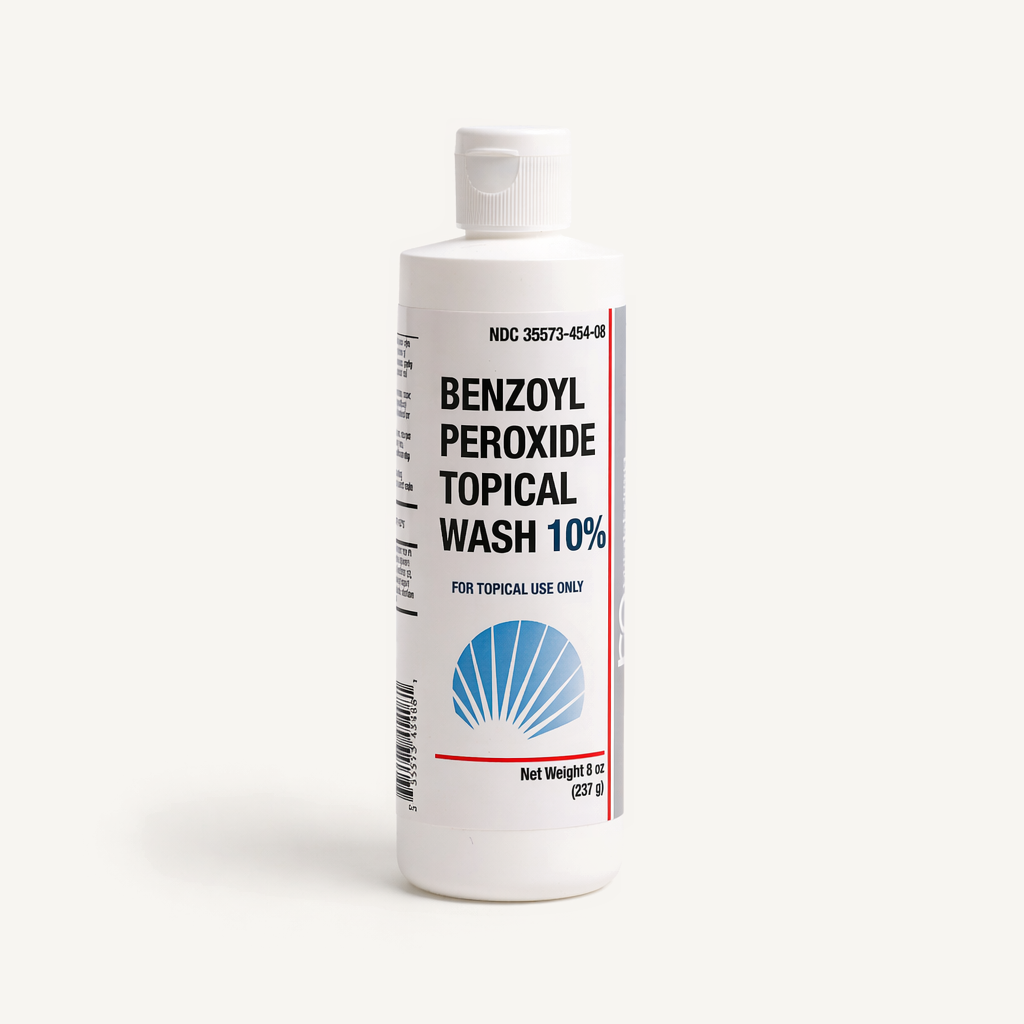
How It Works
Acne generally forms when oil and dead skin cells block a pore and bacteria multiply inside it. Benzoyl peroxide works through a three-pronged biological process to reduce the formation of acne:
- Eliminating bacteria: Benzoyl peroxide breaks down on your skin into unstable oxygen molecules. These damage the bacteria involved in acne (Cutibacterium acnes) and reduce how many of them are on your skin.
- Unclogging pores: It has keratolytic properties, meaning it helps break down and shed the stratum corneum (the top layer of dead skin cells). This prevents those cells from clumping together with oil and forming a new blockage.
- Reducing inflammation: By lowering the bacterial count on the skin’s surface, the medication reduces the signals that tell your immune system to create a red, painful bump.
Benzoyl peroxide helps clear current blemishes and reduces the risk of new ones forming.
| Quick Facts | |
|---|---|
| Common Brands | PanOxyl, Advanced Acne Wash, Neutrogena Clear Pore |
| Drug Class | Antiseptic/keratolytic |
| Generic Status | Sold under many brand and store-brand names |
| Availability | Prescription or over-the-counter (OTC) |
Dosing
Note: Dosing information below is educational only. Follow the directions on the product label, and check with a provider if you aren’t sure how often to use it.
- Typical frequency: Most users start with a once-daily application. Start with one application a day. You can increase to two or three times a day if needed, or as your provider directs. If bothersome dryness or peeling occurs, cut back to once a day or every other day. If irritation becomes severe, stop and ask a doctor.
- Application technique: Wet the affected area and apply a small amount of the wash to the skin. Gently massage it into the skin to create a lather. Keep it away from your eyes, lips and mouth. If it gets in your eyes, flush them thoroughly with water. Do not use it on broken skin.
- The contact rule: Pay attention to either the product instructions on the label, or to provider instructions. Some products require it to be left on the skin for a set amount of time before rinsing it off.
- Thorough rinsing: Rinse it off with plain water and pat dry with a white towel because benzoyl peroxide has a bleaching effect on linens.
- Gradual introduction: Before using it more widely, apply a small amount to one or two small affected areas for the first three days. If nothing uncomfortable happens, follow the directions on the label.
- Mind skin sensitivity: Do not use benzoyl peroxide if you have very sensitive skin, or if you are sensitive to benzoyl peroxide itself. If your skin is on the sensitive side but not in that group, start with a lower strength such as 2.5% or 4% and use it every other day for the first week to allow your skin to adjust.
Always follow your healthcare provider’s instructions for exact dosing.
Uses
FDA-Approved Uses
Benzoyl peroxide washes are sold over the counter for the treatment of acne. The FDA sets rules for what these products can contain and what their labels can say, but it does not review and approve each product individually the way it does with prescription drugs
Off-Label Uses
You may see benzoyl peroxide prescribed for uses that are not FDA-approved. This is a common and legal practice called off-label prescribing, where a doctor uses their clinical judgment to prescribe a drug for a purpose the FDA has not reviewed. How much evidence sits behind an off-label use varies, so it is worth asking your provider what supports it.
Benzoyl peroxide topical wash may be prescribed off-label for the following conditions:
- Hidradenitis suppurativa: Some dermatologists recommend benzoyl peroxide washes to help manage the bacterial load in patients with this chronic inflammatory skin condition.
- Folliculitis: It may be used to treat or prevent infected hair follicles on the legs, arms, or beard area. Note that though they may look similar, razor bumps are a reaction to ingrown hairs rather than an infection.
- Pitted keratolysis: This is a bacterial infection of the soles of the feet that causes small pits and odor; benzoyl peroxide’s antiseptic properties can help resolve it.
Side Effects
Because benzoyl peroxide is a strong active ingredient, you may experience some skin changes, especially early on. If they bother you, using it less often or at a lower strength usually helps.
Common Side Effects
- Dryness and peeling: This is the most frequent issue, occurring as the medication helps shed dead skin cells.
- Redness and irritation: The skin may feel slightly tight or look flushed after washing.
- Stinging or burning: A mild, temporary sensation right after application.
Serious Side Effects
Serious side effects are rare, but it’s important to know what to look for if they do occur. Stop using the wash if you notice any of the symptoms below.
- Severe allergic reactions: Call 911 or go to an emergency room right away if you have throat tightness or trouble breathing, feel faint, or have swelling of the eyes, face, lips, or tongue. If you get hives or itching, stop using the wash and call your doctor.
- Severe blistering: If the medication causes severe crusting, oozing, or painful blisters, stop using it immediately.
- Severe or widespread rash: Contact a doctor if a rash spreads beyond the area where you applied the wash.
Call your doctor immediately if you experience any concerning or prolonged symptoms.
Pharmacist Tips
The Bleach Factor
Benzoyl peroxide is a potent bleaching agent. It can bleach colored towels, pillowcases and clothing, leaving pale patches that do not wash out. It is generally advised to use only white towels and bedding, or ensure your skin is dry before coming into contact with fabrics.
Protect Your Hair
Standard guidelines generally recommend caution around your hairline and eyebrows. If the wash is not rinsed thoroughly, it can lighten your hair color over time.
Moisturize Strategically
To address common dryness, providers typically recommend using a moisturizer after washing that is labeled non-comedogenic, meaning it is formulated not to clog pores. Look for ingredients like hyaluronic acid or ceramides to help repair the skin barrier.
Apply Sunscreen Before Going Outside
Benzoyl peroxide can make your skin more sensitive to sunlight, and it can leave your skin dry and easily irritated. Standard guidelines suggest applying a broad-spectrum SPF 30 or higher every morning.
Wash Your Hands
After applying benzoyl peroxide to your body or face, you should wash your hands thoroughly with plain soap to avoid accidentally bleaching your clothes later in the day.
Don’t Scrub
The medication does the work chemically. Aggressively scrubbing your skin with a washcloth while using this product will increase irritation and redness.
Drug Interactions
Benzoyl peroxide can react with other products you apply to the same area. Let your doctor know if you take or use:
- Topical retinoids (tretinoin): Some tretinoin formulations can be broken down and rendered less effective by benzoyl peroxide when applied at the same time.
- Dapsone gel (Aczone): Using benzoyl peroxide and dapsone at the same time can temporarily turn skin and facial hair yellow or orange where you applied them. Rinsing the benzoyl peroxide off completely before applying dapsone, or using them at different times of day, reduces the chance of this occurring.
- Exfoliating acids: Using salicylic acid or glycolic acid alongside benzoyl peroxide can cause excessive dryness.
Always give your doctor and pharmacist a complete list of all your medications, vitamins, and supplements to check for potential interactions.
FAQs
How long should I leave benzoyl peroxide wash on my skin before rinsing?
Refer to the product’s instructions or your provider’s instructions for how long to leave the benzoyl peroxide wash on your skin before rinsing.
Does benzoyl peroxide wash bleach colored towels, clothing, and pillowcases?
Yes. It bleaches fabrics. It is generally recommended to switch to white towels and pillowcases when using this product to avoid bleach spots.
Why does benzoyl peroxide frequently cause skin dryness and peeling during the initial weeks of use?
Benzoyl peroxide is a keratolytic, meaning it peels away the outer layer of dead skin cells to keep pores open. This process often looks like mild flaking or dryness during the first few weeks of use.
What is the difference between 2.5%, 4%, 5%, and 10% benzoyl peroxide wash formulations?
10% is the highest concentration you can buy. Higher is not automatically better. In the studies that compared them, lower strengths worked about as well on inflamed pimples with less dryness and stinging. Those studies used gels rather than washes, so treat this as a guide rather than a rule, and pick the strength you can use comfortably.
Some people find they can tolerate a stronger benzoyl peroxide wash, such as 10%, on their body while using a lower-strength wash on their face.
Can a patient use benzoyl peroxide topical wash with a topical retinoid like tretinoin or adapalene?
Yes, but timing is important. It is generally recommended to use the benzoyl peroxide topical wash in the morning and the tretinoin at night to prevent the two from interacting and irritating the skin.
Is benzoyl peroxide topical wash effective for treating body acne on the chest, back, and shoulders?
Yes. In fact, many people find the wash format the easiest way to treat back acne because it can be used in the shower.
Does benzoyl peroxide topical wash cause worsening of acne before your skin improves?
Acne can look worse during the first few weeks. It isn’t clear why this happens, and it isn’t proof the product is or isn’t working. If your skin keeps getting worse, or it becomes badly irritated, check with a provider rather than pushing through.
Most people start to see improvement in about six to eight weeks, and fuller clearing can take three to four months. If you see no difference after eight weeks, it’s worth seeing a dermatologist
Why is it recommended to take benzoyl peroxide topical wash to prevent bacterial resistance for those taking oral antibiotics for acne?
Bacteria can become resistant to oral antibiotics over time, meaning the antibiotic no longer works well against them. Using benzoyl peroxide alongside them helps kill the bacteria through a different mechanism, which helps reduce that risk.
Is it safe to use a daily exfoliating acid in the same routine as benzoyl peroxide topical wash?
Use caution when combining benzoyl peroxide with other exfoliating acids (such as salicylic acid) because the combination can irritate the skin more than using either product alone. If you are worried about irritation, consider adding only one new active treatment at a time until your skin has adjusted.
Is benzoyl peroxide topical wash considered safe for use during pregnancy or while breastfeeding?
Standard guidelines suggest that because little of the medication is absorbed into the blood, it is considered one of the safer acne options during pregnancy. However, consult your OB-GYN before starting any new medication if you are pregnant, planning to become pregnant, or breastfeeding.
If you are breastfeeding, check with a provider before using it, and do not apply the wash to your chest or breasts so it isn’t transferred to your baby.
Does benzoyl peroxide topical wash help fade dark spots from old acne lesions?
Benzoyl peroxide does not bleach the skin. By helping control acne, it can help prevent new dark spots from forming. Existing spots may fade on their own over time, and benzoyl peroxide has not been shown to speed that up. If the wash irritates your skin, try using it less often, as irritation can cause new dark spots to form.
Comparable Medications
Salicylic Acid, Clindamycin, or Adapalene?
Here are some other medications that may be used in addition to or as an alternative to benzoyl peroxide topical wash:
Salicylic Acid Topical Solution
From $99.99
Salicylic acid helps unclog pores and can be especially useful for blackheads and whiteheads. Benzoyl peroxide works differently by reducing acne-causing bacteria and inflammation, so it may be more helpful for red, inflamed pimples. The better option can depend on the type of acne you have and how your skin responds.
Clindamycin and Benzoyl Peroxide
From $29.99
Clindamycin is an antibiotic that kills bacteria but it loses effectiveness over time when used on its own. Benzoyl peroxide is usually prescribed together with clindamycin to reduce the risk of antibiotic resistance.
Adapalene and Benzoyl Peroxide
From $32.99
Adapalene is a retinoid that focuses on how your skin cells grow. It can be used for long-term prevention but lacks the immediate antiseptic feature of benzoyl peroxide. Both may be prescribed together for comprehensive acne management.
Sodium sulfacetamide with sulfur
Sodium sulfacetamide with sulfur is a prescription option, often used when skin does not tolerate other treatments well. Direct comparisons with benzoyl peroxide are limited, so deciding which would be better for your needs is worth a discussion with a provider.
We Have Benzoyl Peroxide Topical Wash in Stock. Get Yours Today!
Important: Information on this page is for educational purposes only. Prescribing decisions are made by independent, licensed providers. TelyRx operates technology-enabled pharmacies and a telehealth platform that connects patients with licensed providers. Prescriptions, when provider-approved and issued, are filled and shipped by TelyRx-affiliated pharmacies. We do not employ physicians or make prescribing decisions. Learn more about our editorial standards here.