

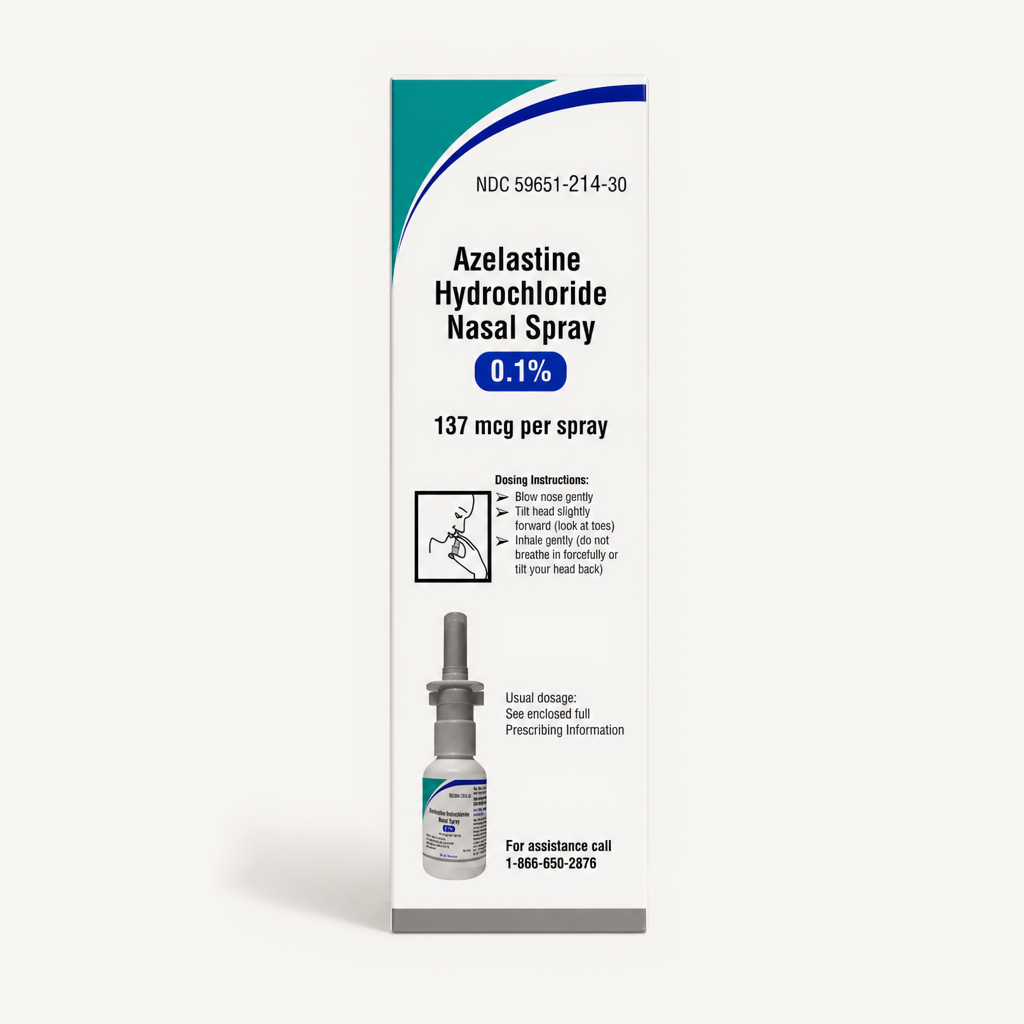
How It Works
Azelastine works by blocking histamine, a substance produced by the body that contributes to allergic reactions.
Many allergy symptoms arise when histamine and other natural chemicals trigger inflammation in the nasal passages. By blocking histamine receptors in the nose, azelastine nasal spray can relieve symptoms such as sneezing, runny or stuffy nose, and nasal congestion.
| Quick Facts | |
|---|---|
| Common Brands | Astepro Allergy. Astelin (former brand name) |
| Drug Class | Antihistamine |
| Generic Status | Generic is available |
| Availability | Prescription and over-the-counter (OTC) |
Dosing
Azelastine nasal spray is administered directly into the nostrils. Standard guidelines recommend that most people use 1 or 2 sprays in each nostril, twice a day. For the 0.15% strength, an alternative dose of 2 sprays in each nostril once daily may be used.
Note: Dosing information below is educational only. Your prescribing physician will determine your specific dose based on your individual health needs. Always follow your healthcare provider’s instructions for exact dosing.
Uses
FDA-Approved Uses
Azelastine nasal spray is approved to treat symptoms associated with seasonal allergies (allergic rhinitis), including a stuffy nose, runny nose, and sneezing. It is also approved to treat these symptoms from some non-allergy irritants (nonallergic rhinitis).
Certain formulations, like 0.15% strength, are approved to treat year-round allergy symptoms.
Off-Label Uses
You may see azelastine nasal spray prescribed for uses that are not “FDA-approved.” This is a common and legal practice called “off-label” prescribing, where a doctor uses their clinical judgment to prescribe a drug for a different (but well-researched) purpose.
For example, azelastine nasal spray is occasionally used off-label to treat post-nasal drip associated with seasonal allergies.
Side Effects
Like all medications, azelastine nasal spray can cause side effects. Some common side effects may improve over time as your body adjusts to the medication. Other side effects may be serious and require medical attention.
Common Side Effects
- Bitter taste in the mouth
- Headache
- Sleepiness
- Nasal discomfort or burning
- Sneezing
- Runny or stuffy nose
- Sore throat
- Nosebleeds
- Dry mouth
- Nausea
- Dizziness
- Temporary eye burning or stinging
- Weight gain
Serious Side Effects
Serious side effects are rare, but it’s important to know what to look for if they do occur.
- Severe allergic reactions: Symptoms of a serious allergy to azelastine can include breathing problems, swollen lymph nodes, itching, hives, or swelling of the face, lips, mouth, tongue, or throat. Contact a doctor promptly if you have any signs of an azelastine allergy.
- Breathing issues: In rare cases, azelastine may cause wheezing, shortness of breath, noisy breathing, or an uncomfortable tightness in the chest.
- Heart symptoms: Some people who use azelastine experience a racing heartbeat.
- Swallowing difficulties: Some patients may experience difficulty swallowing or a feeling of throat tightness.
- Fainting and lightheadedness: In some cases, azelastine may cause severe dizziness, lightheadedness, or fainting.
- Frequent nosebleeds: Stop using the medication if you experience frequent nosebleeds or nosebleeds that are difficult to stop.
Call your doctor immediately if you experience any concerning or prolonged symptoms.
Pharmacist Tips
Proper Priming
Before using the nasal spray for the first time, spray it into the air (4 times for the 0.1% strength or 6 times for the 0.15% strength) until a fine mist appears. This ensures you receive a full dose of the medication.
Reprime After Breaks
If you haven’t used the medication for three or more days, you will need to re-prime the bottle by spraying it twice into the air until a fine mist is visible.
Administration Technique
Instructions state that you should breathe in lightly through your nose while spraying and tilt your head forward to help keep the medication from traveling down your throat.
Post-Spray Care
Wait a few minutes after using the spray before blowing your nose. This allows the medication to remain in your nasal passages.
Be Cautious With Drowsiness
Avoid driving or operating heavy machinery until you understand how azelastine affects you, as it can cause sleepiness and impair your reaction times.
Avoid Alcohol
Providers strongly recommend against drinking alcohol while taking this medication because alcohol can increase the risk of extreme drowsiness.
Drug Interactions
Certain medications and substances can interact with azelastine, potentially altering its effectiveness or increasing the risk of side effects.
- Central nervous system depressants: Medications that cause dizziness and sleepiness, such as prescription pain medicines, sleep medicines, and anxiety treatments, can exacerbate drowsiness if used with azelastine nasal spray.
- Alcohol: Drinking alcohol can worsen the side effects of azelastine, especially drowsiness.
- Cimetidine: Using cimetidine alongside azelastine nasal spray may increase the risk of certain side effects. Only use these drugs together if your doctor recommends it.
- Specific medical prescriptions: Because of potential interactions, using azelastine nasal spray with amifampridine, bupropion, donepezil, or pitolisant is usually not recommended without close physician oversight.
- Other antihistamines: Utilizing other antihistamine medications concurrently with azelastine can cause interactions and amplify potential side effects.
Always give your doctor and pharmacist a complete list of all your medications, vitamins, and supplements to check for potential interactions.
FAQs
Why do pharmacists recommend tilting your head downward when administering azelastine nasal spray?
Tilting your head forward when applying the nasal spray helps keep the medication from running down the back of your throat. This technique makes you less likely to experience the bitter taste in your mouth that is frequently associated with azelastine nasal spray.
Can using azelastine nasal spray cause drowsiness?
Yes, sleepiness and generalized tiredness are common side effects of azelastine nasal spray. Providers strongly recommend that you avoid driving or participating in activities that require alertness until you fully understand how the medication affects your cognitive function and reaction times.
What is the difference between prescription Astelin and over-the-counter Astepro?
Astelin was a prescription brand name for azelastine nasal spray, but that brand is no longer available. Today, prescription azelastine nasal spray is widely available as a lower-cost generic.
Astepro Allergy is the brand name for the over-the-counter (OTC) azelastine 0.15% formulation.
Should azelastine nasal spray be used daily for allergy prevention or only when active symptoms occur?
Azelastine is routinely prescribed for once- or twice-daily use to manage seasonal or year-round allergy symptoms. Your doctor or pharmacist can provide specific usage instructions for your symptoms and type of allergy.
Does azelastine nasal spray contain a corticosteroid or a decongestant?
Azelsatine nasal spray does not contain a steroid or a decongestant. It belongs to the antihistamine class, meaning it works by blocking histamine receptors.
How long does azelastine nasal spray take to relieve nasal congestion and sneezing?
Standard guidelines indicate that azelastine nasal spray is a fast-acting treatment that typically begins relieving symptoms within hours of application.
Can azelastine nasal spray cause rebound congestion if used for extended periods?
Rebound congestion is not considered a common issue with azelastine nasal spray when used as recommended. Consult your doctor about any concerns with stopping azelastine or rebound congestion.
What should I do if the azelastine nasal spray pump becomes clogged?
If your device malfunctions, talk to your pharmacist or doctor. They can demonstrate how to clean the spray nozzle correctly. To reduce the risk of clogging, follow the “Instructions for Use” in the product’s packaging.
Is azelastine nasal spray approved for use during pregnancy or while breastfeeding?
It is not currently known whether azelastine passes into breast milk or affects pregnancy, so risk cannot be ruled out. Discuss the potential risks and benefits with your healthcare provider if you are pregnant, planning to become pregnant, or breastfeeding.
Can azelastine nasal spray be used with an oral antihistamine like cetirizine?
Combining azelastine nasal spray with other antihistamines may worsen side effects or increase drowsiness. Discuss the potential risks with your pharmacist or healthcare provider before combining these medications.
Comparable Medications
Azelastine, Fluticasone (Flonase), Cetirizine (Zyrtec), Dymista, Oxymetazoline (Afrin)?
Fluticasone Nasal Spray
From $27.99
Fluticasone is an over-the-counter corticosteroid nasal spray that differs from azelastine in its mechanism of action, dosing intervals, and potential side effects.
Cetirizine Tablets
From $22.99
Cetirizine is an oral antihistamine frequently compared with azelastine, though oral antihistamines may carry a higher risk of systemic side effects than localized nasal sprays.
Azelastine and Fluticasone Propionate
Dymista is a combination medication used to manage persistent allergic rhinitis symptoms.
Oxymetazoline
Oxymetazoline is a standard nasal decongestant that reduces nasal congestion but is in a different drug class than antihistamines.
We Have Azelastine Nasal Spray in Stock. Get Yours Today!
Important: Information on this page is for educational purposes only. Prescribing decisions are made by independent, licensed providers. TelyRx operates technology-enabled pharmacies and a telehealth platform that connects patients with licensed providers. Prescriptions, when provider-approved and issued, are filled and shipped by TelyRx-affiliated pharmacies. We do not employ physicians or make prescribing decisions. Learn more about our editorial standards here.