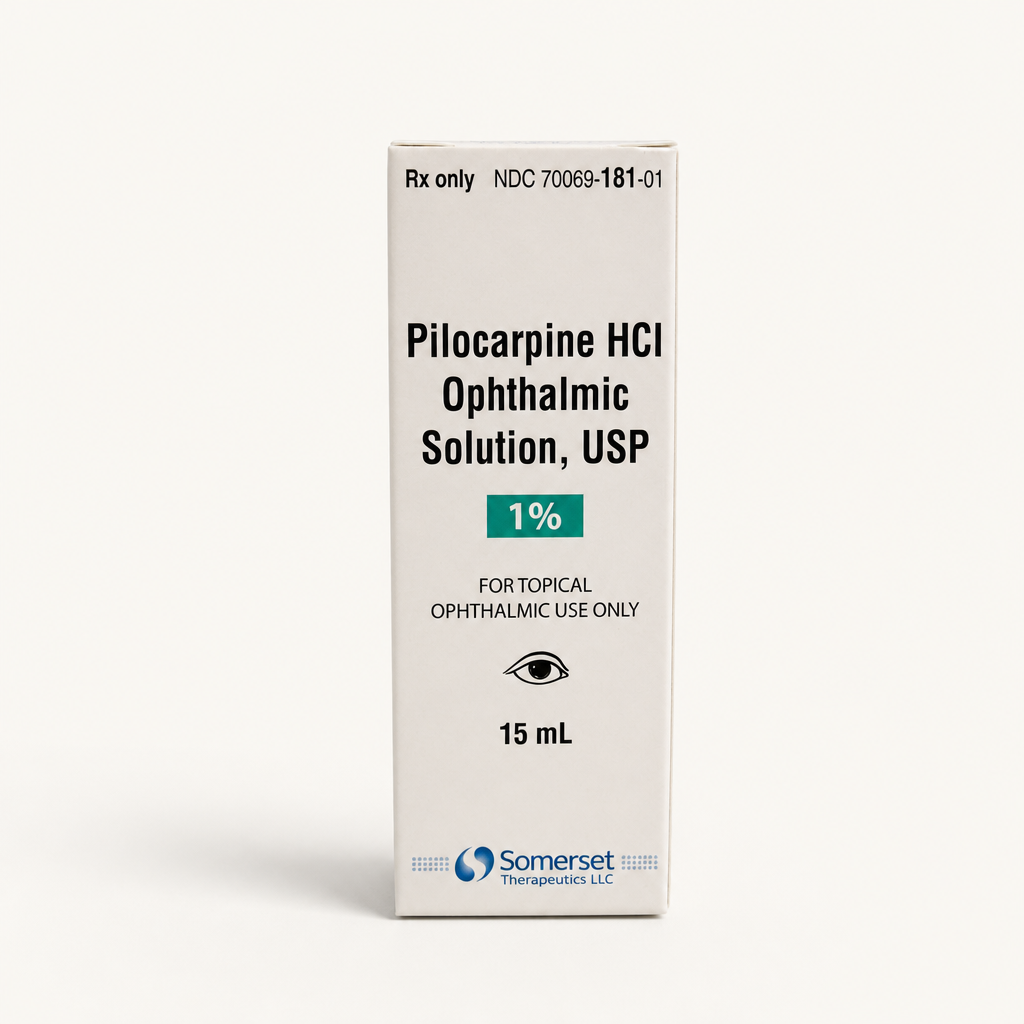
How It Works
The eye constantly produces fluid (aqueous humor) that must drain out at the same rate it is made. If this is inhibited, pressure builds up. Pilocarpine helps promote drainage by:
- Shrinking the pupil: The medication causes the iris (the colored part of the eye) to contract, which makes the pupil much smaller.
- Opening the angle: As the iris pulls inward to shrink the pupil, it physically pulls away from the eye’s drainage channels. This opens the angle, making it easier for fluid to flow out.
- Contracting eye muscles: It also triggers the ciliary muscle to contract. This tension helps stretch the drainage meshwork, further improving fluid outflow.
By promoting this natural drainage, pilocarpine lowers the internal pressure and prevents it from reaching levels that could cause permanent blindness.
| Quick Facts | |
|---|---|
| Common Brands | Isopto Carpine, Vuity, Qlosi |
| Drug Class | Ophthalmic cholinergic agonist |
| Generic Status | Generic version available |
| Availability | Prescription only |
Dosing
Pilocarpine is available in various concentrations, typically ranging from 1% to 4%. The strength and frequency depend on the severity of your condition.
- Standard dosage: For chronic glaucoma, providers typically recommend instilling one drop into the affected eye(s) up to 4 times a day.
- Application technique: Tilt your head back, pull your lower eyelid down, and squeeze one drop into the pocket.
- The corner press: Press on the inner corner of your eye (near the nose) for 1 to 2 minutes after applying the drop. This keeps the medicine in the eye and prevents it from draining into your system, which reduces side effects.
- Spacing other drops: If you use other eye medications, wait at least 5 minutes between different products.
- Missed doses: Standard guidelines generally recommend taking a missed dose as soon as you remember. If it is almost time for the next one, skip it and stay on your schedule. Providers typically advise against using double drops.
Note: Dosing information below is educational only. Your prescribing physician will determine your specific dose based on your individual health needs. Always follow your healthcare provider’s instructions for exact dosing.
Uses
FDA-Approved Uses
The FDA approves pilocarpine eye drops for:
- Reduction of elevated intraocular pressure (IOP): In patients with open-angle glaucoma or ocular hypertension.
- Management of acute angle-closure glaucoma: Often used in emergency settings to lower pressure.
- Miosis induction: To shrink the pupil before or after certain eye surgeries.
Off-Label Uses
You may see pilocarpine prescribed for uses that are not FDA-approved. This is a common and legal practice called off-label prescribing, where a doctor uses their clinical judgment to prescribe a drug for a different (but well-researched) purpose.
Pilocarpine eye drops may be prescribed off-label for the following conditions:
- Adie’s pupil: Some neurologists use diluted pilocarpine to help diagnose or treat this pupil disorder.
- Reversing pupil dilation: While not its primary job, it can sometimes be used to counteract the effects of dilating drops used during an eye exam.
Side Effects
Because pilocarpine causes the muscles inside the eye to work harder, some localized side effects are common, especially when you first start treatment.
Common Side Effects
- Headache or brow ache
- Blurred vision
- Poor night vision
- Burning or stinging
- Eye redness and tearing
Serious Side Effects
Serious side effects are rare, but it’s important to know what to look for if they do occur.
It’s generally accepted that you stop taking the medication and immediately call the doctor if you experience any of the following symptoms:
- Retinal detachment: It is generally advised to watch for sudden flashes of light, a curtain falling over your vision, or a sudden increase in floaters.
- Severe systemic absorption: If too much gets into your body, you may experience sweating, tremors, diarrhea, or difficulty breathing.
- Severe allergic reactions: Providers typically advise seeking help for hives or swelling of the face and throat
Call your doctor immediately if you experience any concerning or prolonged symptoms.
Pharmacist Tips
Be Cautious At Night
Since your pupils will be tiny, your night vision will be significantly reduced. Providers typically recommend avoiding driving at night or operating machinery in low light until you know how the drops affect you.
Remove Contacts
Remove contact lenses before applying pilocarpine. Wait at least 10 minutes after putting the drops in before reinserting your lenses.
Store Correctly
Providers typically advise keeping the bottle at room temperature, away from heat and moisture. If you use a single-use preservative-free version, standard guidelines generally recommend throwing the container away immediately after use.
Avoid Contamination
Do not touch the dropper tip to your eye, fingers, or any other surface to prevent bacteria from getting into the bottle and causing a serious infection.
Stay Hydrated
If you are also taking the oral form of pilocarpine, you may sweat more or urinate more frequently.
Drug Interactions
While systemic (whole-body) interactions are less common with eye drops, it is generally advised that you still inform your healthcare team of all medications you take.
Let your doctor know if you take:
- Antidepressants and antipsychotics: Some medications (like amitriptyline or clozapine) have anticholinergic effects that work in the opposite way of pilocarpine, potentially making the eye drops less effective.
- Beta-blockers: Taking pilocarpine while also taking oral beta-blockers or beta-blocker eye drops (like timolol) can, in rare cases, have an additive effect on your heart rate or rhythm.
- Other glaucoma medications: It is generally safe and common to use pilocarpine alongside other drops, provided you space them at least 5 minutes apart.
Always give your doctor and pharmacist a complete list of all your medications, vitamins, and supplements to check for potential interactions.
FAQs
How does pilocarpine reduce eye pressure in patients diagnosed with glaucoma?
It causes the pupil to shrink and the eye muscles to tighten. This physical change pulls the iris away from the drainage area, allowing the fluid inside the eye to escape more easily.
How many times a day should pilocarpine be used?
For glaucoma, it is usually used 2-4 times a day.
What is the difference between the 1%, 2%, and 4% concentrations of pilocarpine eye drops?
The percentage refers to the strength of the medication. Higher concentrations (like 4%) provide a stronger effect but are also more likely to cause side effects like brow ache or dim vision.
Does pilocarpine interact with antidepressants?
Yes, some older antidepressants can block the receptors that pilocarpine needs to work, potentially reducing the effectiveness of your eye treatment.
What should I do if I accidentally administer too many drops of pilocarpine?
It is generally advised to rinse your eye with lukewarm water or saline solution. If you swallow the drops or experience symptoms like extreme sweating or nausea, standard guidelines typically recommend calling a doctor or poison control immediately.
How long should I wait after applying pilocarpine before inserting contact lenses?
Wait at least 10 minutes. This allows the medicine to absorb and prevents the preservatives in the drops from being absorbed into your contact lenses.
Why is pilocarpine utilized in the emergency treatment of acute angle-closure glaucoma?
Because it physically pulls the iris out of the way, it can sometimes break an acute attack by reopening the drainage angle much faster than medications that simply reduce fluid production.
Is it safe to use pilocarpine with beta-blocker drops like timolol?
Yes. In fact, many doctors prescribe them together. Timolol reduces fluid production, while pilocarpine improves fluid drainage.
Does applying pilocarpine alter depth perception?
It can. Because it changes how your eye focuses and how light enters the pupil, your ability to judge distances may be temporarily affected, especially in low light.
Is pilocarpine approved for use during pregnancy or while breastfeeding?
Standard guidelines suggest it should only be used if the benefit to the mother outweighs the potential risk to the baby. It is not known if it passes into breast milk.
Comparable Medications
Timolol, Latanoprost, Brimonidine, or Vuity?
Below are the potential alternatives to pilocarpine eye drops:
Latanoprost
From $29.99
Latanoprost is usually the first choice for glaucoma because it requires only once-a-day dosing and has fewer side effects. Pilocarpine is often used as an add-on for people who need even lower pressure.
Timolol Eye Drops
From $27.99
Timolol slows the fluid production of the eye, while pilocarpine encourages fluid drainage. They are often used together for a combined effect.
Brimonidine Eye Drops
From $27.99
Brimonidine works on both fluid reduction and drainage. It doesn't shrink the pupil like pilocarpine does, making it easier to see at night, but it may be more likely to cause allergic eye reactions.
Vuity
Vuity is the brand name for a specific pilocarpine concentration used once a day to help patients with age-related near-vision blur (presbyopia).
We Have Pilocarpine Eye Drops in Stock. Get Yours Today!
Important: Information on this page is for educational purposes only. Prescribing decisions are made by independent, licensed providers. TelyRx operates technology-enabled pharmacies and a telehealth platform that connects patients with licensed providers. Prescriptions, when provider-approved and issued, are filled and shipped by TelyRx-affiliated pharmacies. We do not employ physicians or make prescribing decisions. Learn more about our editorial standards here.