How It Works
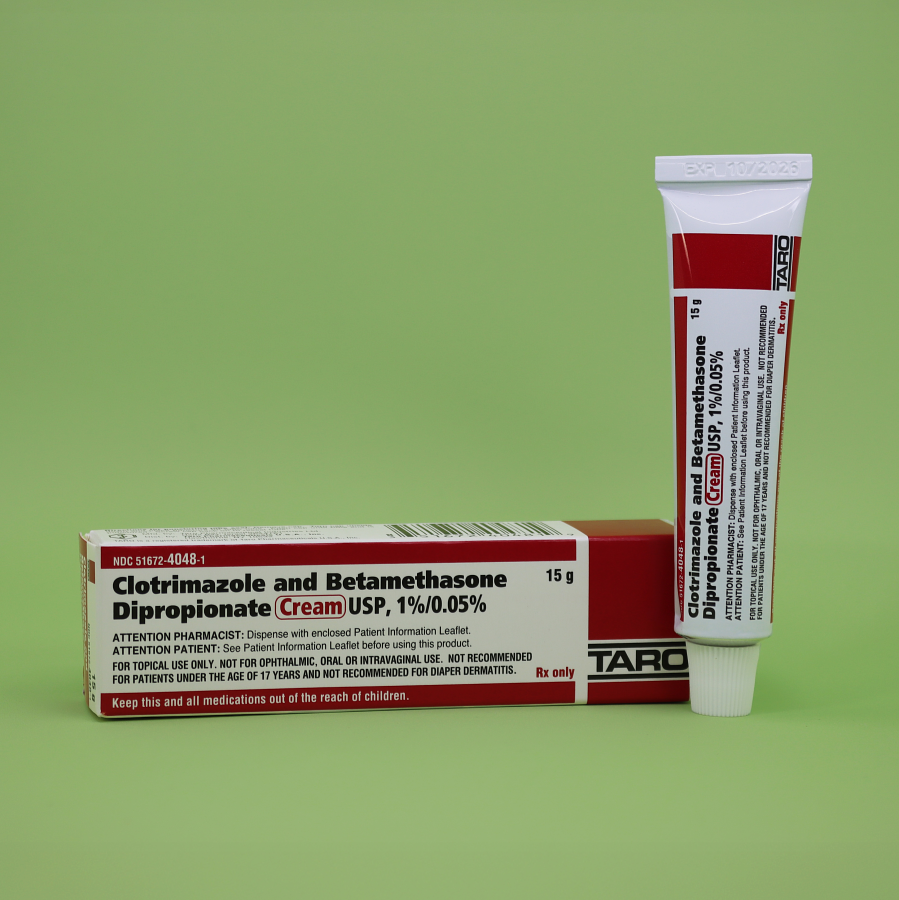
Clotrimazole/betamethasone cream works in two distinct yet crucial ways. Clotrimazole is a powerful antifungal in the imidazole drug class that inhibits the synthesis of ergosterol, a component of viral cell membranes. This causes holes to form in the ergosterol, the fungal cell’s contents leak out, and the cell eventually dies.
Betamethasone, a corticosteroid, suppresses the body’s immunoresponse to fungal infection and prevents the release of substances like prostaglandins and leukotrienes that cause inflammation. This helps reduce redness, swelling, and the burning sensation that often accompany fungal flare-ups.
| Quick Facts | |
|---|---|
| Common Brands | Lotrisone |
| Drug Class | Topical azole antifungal / topical corticosteroid |
| Generic Status | Generic version of Lotrisone |
| Availability | Prescription only |
Dosing
Due to its steroid component, clotrimazole/betamethasone cream is intended for short-term use. Prolonged use can cause serious side effects at both the systemic and local levels.
- Standard application: Standard guidelines suggest applying a thin layer of cream to the affected area and surrounding skin two times per day, once in the morning and again in the evening.
- Duration (jock itch/ringworm): Treatment for jock itch and ringwork is usually limited to 1 week. Per standard guidelines, the drug should not be used for more than 2 weeks to treat these conditions.
- Duration (athlete’s foot): Most providers prescribe a 2-week course of clotrimazole/betamethasone cream for treating athlete’s foot. Standard guidelines state the drug should not be used for more than 4 weeks to treat this condition.
- Maximum quantity: It is not advised to apply more than 45 grams of the cream per week, so patients may need to measure how much they apply for each application.
Note: Dosing information is educational only. Your prescribing physician will determine your specific dose based on your individual health needs. Always follow your healthcare provider’s instructions for exact dosing.
Uses
FDA-Approved Uses
Clotrimazole/betamethasone cream is FDA-approved to treat localized athlete’s foot (Tinea Pedis) and jock itch (Tinea Cruris), localized fungal infections that appear on the feet and groin, respectively. It is also FDA-approved to treat ringworm (Tinea Corporis), a fungal infection that can spread throughout the body.
Off-Label Uses
You may see clotrimazole/betamethasone prescribed for uses that are not “FDA-approved.” This is a very common and legal practice called “off-label” prescribing, where a doctor uses their clinical judgment to prescribe a drug for a different (but well-researched) purpose.
Common off-label uses for clotrimazole/betamethasone cream currently used in clinical practice and research include the following:
- Cutaneous candidiasis: Commonly known as yeast infections, cutaneous candidiasis may be treated with clotrimazole/betamethasone cream as long as the infection is not too inflamed.
- Intertrigo: The cream may be prescribed off-label to treat this condition, which is characterized by inflammation of the skin folds in areas like the breasts and abdomen with a suspected fungal element.
Get Savings Updates for Clotrimazole/Betamethasone Cream
Join our mailing list for exclusive deals and more.
Side Effects
Side effects from clotrimazole/betamethasone cream typically occur due to using the medication for too long or applying it to sensitive areas like the face or skin folds.
Common Side Effects
- Tickling, pricking, or “pins and needles” sensations at the application site
- Mild burning, dryness, or itching on the skin
- Redness or small bumps indicating a mild rash
- Secondary infection “masked” by the medication
Serious Side Effects
Serious side effects are rare, but it’s important to know what to look for if they do occur. Serious side effects that can occur from using clotrimazole/betamethasone cream include:
- Skin thinning: Also known as skin atrophy, this condition causes the skin to become fragile and translucent. Long-term stretch marks may also appear.
- Adrenal suppression: When applied over large areas, the steroidal component of clotrimazole/betamethasone cream can signal to your adrenal glands to stop producing cortisol. This can lead to nausea, extreme fatigue, and low blood pressure.
- Cushing’s syndrome: This condition, which can present after using clotrimazole/betamethasone cream, is characterized by a rounded or puffy face, weight gain in the upper body, and a fatty hump between the shoulders.
- Vision problems: Clotrimazole/betamethasone cream and other steroidal medications can increase the risk of vision problems like cataracts and glaucoma if the topical is applied too close to the eyes.
Call your doctor immediately if you experience any concerning or prolonged symptoms.
Pharmacist Tips
Less Is More – and Ideal
When applying clotrimazole/betamethasone cream, only a thin layer is needed to achieve the desired effects. It is advised to gently rub in the cream until it disappears.
Be Thorough When Washing Hands
Wash your hands thoroughly before and after applying clotrimazole/betamethasone cream. This helps prevent the medication from getting in your eyes and also reduces the chance of the fungal infection spreading to other areas of the body.
Avoid Covering
It is not recommended to cover the application area with bandages, plastic wrap, or tight dressings. By creating a seal around the infection, the medication is forced deeper into the skin and increases the patient’s risk of adverse side effects.
Make Informed Wardrobe Choices
If treating jock itch with clotrimazole/betamethasone cream, it is advised to wear loose-fitting underwear made from natural fibers. Synthetic, body-hugging fabrics can trap heat and moisture, potentially worsening the infection.
Take Caution With Certain Areas
Unless your doctor specifically instructs otherwise, it is not recommended to apply the cream to your face, armpits, or groin for long periods. These areas have thinner skin and will absorb the medication more quickly.
Drug Interactions
The potential for systemic reactions is low when using clotrimazole/betamethasone cream, but topical interactions may still occur. Known interactions with clotrimazole/betamethasone cream include:
- Other topical steroids: Using clotrimazole/betamethasone cream with hydrocortisone, Diprolene, and other topical steroids can lead to a “steroid overdose” in the skin and side effects.
- Topical nystatin: Interactions may also occur between clotrimazole/betamethasone cream and other topical antifungals. It is always recommended to speak to a doctor or pharmacist before using more than one topical antifungal cream at once.
Always give your doctor and pharmacist a complete list of all your medications, vitamins, and supplements to check for potential interactions.
FAQs
Why is there a 2-week limit for using Clotrimazole/Betamethasone?
Betamethasone is the reason behind clotrimazole/betamethasone cream’s 2-week limit. This powerful steroid can cause permanent skin thinning, stretch marks, and systemic hormone suppression if used longer than 2 weeks. In the event your fungal infection persists, your provider will most likely prescribe another antifungal medication.
Can I use clotrimazole/betamethasone for jock itch?
Yes, you can use clotrimazole/betamethasone cream for jock itch – the medication is FDA-approved for this specific purpose. That said, treating jock itch involves applying cream directly to the groin and this area is typically covered with clothing, so it is advised to wear loose-fitting, breathable garments to prevent heat and moisture from building up in and around the infection.
Why did my rash come back worse after I stopped using this cream (“Rebound Effect”)?
A returning rash is common for people who stop taking clotrimazole/betamethasone cream and other high-potency steroidal medications. Since the steroid suppresses your body’s immunoresponse to infection, quitting the medication can cause inflammation to return – often with more intensity than before. Standard guidelines recommend completing your full treatment course of the cream.
Can I apply this cream to my face?
Generally, no, you should not apply clotrimazole/betamethasone cream to your face because the facial skin is very thin and applying a high-potency steroid can cause acne-like breakouts, permanent thinning, and other undesirable effects. Doctors may instruct their patients to apply the cream on their face, but only under specific circumstances and while exercising extreme caution.
Does Clotrimazole/Betamethasone treat eczema?
Clotrimazole/betamethasone cream is not a primary “front-line” treatment for eczema. The drug’s steroidal component can reduce eczema-related inflammation, but since eczema is not fungus-borne, the medication cannot address the condition’s underlying cause.
Can I use Clotrimazole/Betamethasone if I am pregnant?
If you are pregnant, extreme caution is advised. Some clinical studies have linked high-potency steroids like betamethasone to low birth weight. Most providers prescribe the drug to pregnant people for the shortest possible duration, and advise patients to apply the cream in a very small local area.
Should I cover the treated area with a bandage to make it work faster?
No, covering with a bandage – also known as occlusion – is not recommended after applying clotrimazole/betamethasone cream onto a skin infection. Occlusion increases how much of the steroid is absorbed in the body, which can lead to toxicity and permanent skin damage.
How many times a day should I apply clotrimazole/betamethasone?
Standard guidelines recommend applying a thin layer of cream to the infection and its surrounding skin twice per day. Providers generally suggest one application in the morning and another in the evening to maintain consistent medication levels.
Does Clotrimazole/Betamethasone treat bacterial infections?
No, clotrimazole/betamethasone cream does not treat bacterial infections. This medication is only intended to treat fungal infections and will not be effective against bacterial infections like staph or strep.
Can I put moisturizer or lotion on top of Clotrimazole/Betamethasone?
It is recommended to wait at least 30 minutes after using clotrimazole/betamethasone cream before applying moisturizer or lotion on top of the affected area. This helps ensure the medication has been fully absorbed before skin products are applied.
Why do I need a prescription for this if regular clotrimazole is over-the-counter?
Since clotrimazole/betamethasone cream contains a high-potency steroid, it is considered too powerful for over-the-counter use. A doctor must monitor your progress throughout the drug course to ensure you don’t experience hormonal effects or skin atrophy.
Comparable Medications
Nystatin / Triamcinolone Topical
From $29.99
This antifungal and steroidal medication is similar to clotrimazole/betamethasone cream in terms of its formulation, but also gentler and lower in potency. It is primarily used to treat yeast infections, but less effective against ringworm.
Clotrimazole / Betamethasone Cream
From $29.89
This medication, sold under the brand name Lotrimin AF, isolates the antifungal component of clotrimazole/betamethasone cream and does not contain any steroids. Lotrimin AF is sold over the counter, and typically used to treat conditions like mild athlete's foot or jock itch that do not require a high-potency, steroidal topical cream.
Terbinafine
From $57.49
Terbinafine, sold over the counter under the brand name Lamisil, is an antifungal available as a topical or oral medication. It has a high potency and has proven to be very effective at treating athlete's foot, but it lacks a steroidal component to alleviate inflammation and other localized symptoms.
Ketoconazole
From $39.99
Ketoconazole, sold under the brand name Nizoral, is a prescription-strength antifungal medication. It is effective for treating dandruff and persistent ringworm, but does not contain a steroid.
Betamethasone Dipropionate Cream
From $29.99
Also sold under the name Diprolene, this medication isolates the steroidal component of clotrimazole/betamethasone cream and does not include an antifungal. It is a prescription-strength option for treating inflammation related to eczema and psoriasis, but cannot be used to treat fungal infections.
We Have Clotrimazole/Betamethasone Cream in Stock. Get Yours Today!
Important: Information on this page is for educational purposes only. Prescribing decisions are made by independent, licensed providers. TelyRx operates technology-enabled pharmacies and a telehealth platform that connects patients with board-certified licensed providers. Prescriptions, when provider-approved and issued, are filled and shipped by TelyRx-affiliated pharmacies. We do not employ physicians or make prescribing decisions. Learn more about our editorial standards here.