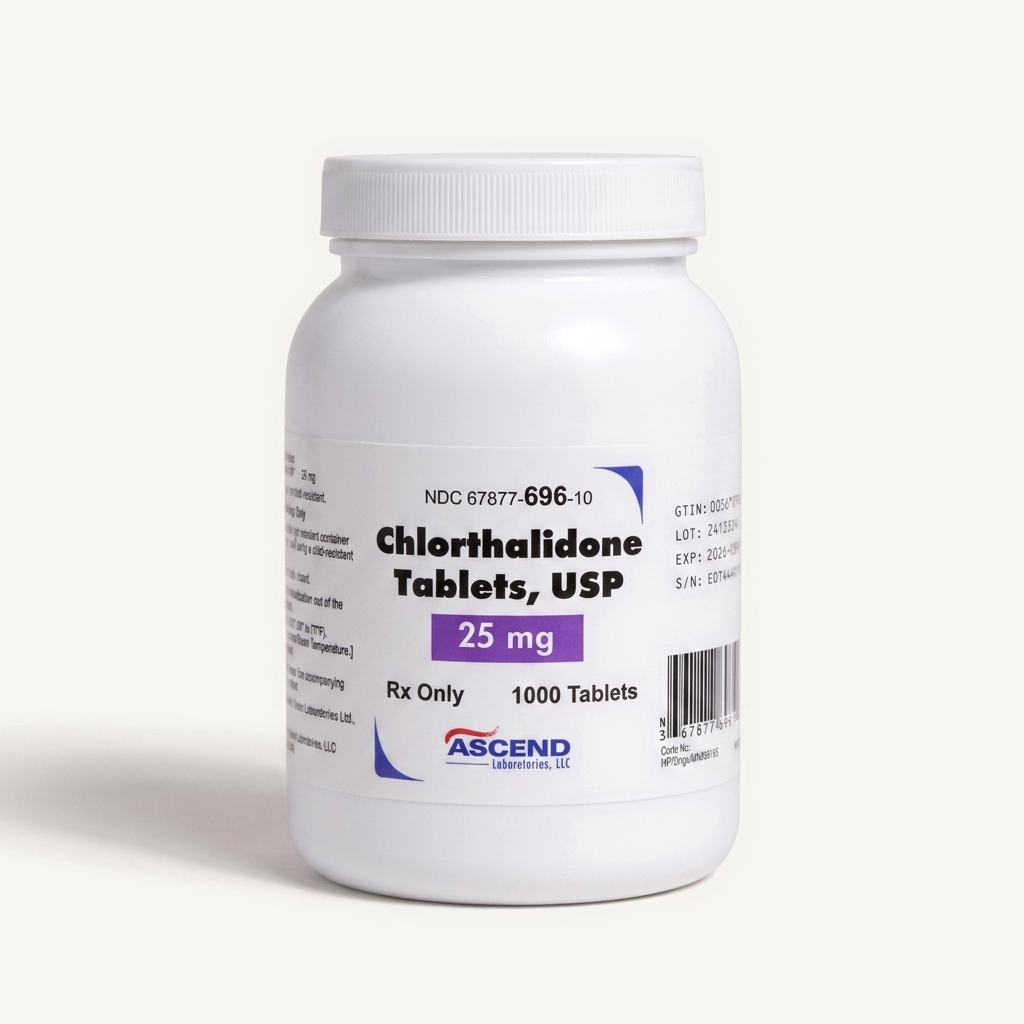
How It Works
Chlorthalidone works by targeting the distal convoluted tubules in the kidneys to minimize how much sodium and chloride are absorbed back into the bloodstream. When sodium and chloride are filtered out through urine instead of reentering the blood, they bring water with them. This process lowers the total volume of fluid circulating in blood vessels.
Over time, the reduction in blood volume helps lower blood pressure and reduce the workload on the heart. Chlorthalidone may also contribute to the relaxation of blood vessels with long-term use, although the exact mechanism behind this effect is not fully understood.
| Quick Facts | |
|---|---|
| Common Brands | Thalitone, Hemiclor, Hygroton (discontinued) |
| Drug Class | Antihypertensive; thiazide-like diuretic |
| Generic Status | Generic version available |
| Availability | Prescription only |
Dosing
Chlorthalidone tablets are available in a handful of different strengths, ranging from 12.5 mg to 50 mg. Your provider will determine your dose based on factors like age, medical history, and severity of hypertension.
- Standard starting dose: For high blood pressure, providers typically start their patients with a low dose of 12.5 to 25 mg per day.
- Edema management: Doses used to treat fluid retention are often higher than those used for high blood pressure. Your healthcare provider will determine the appropriate dose based on the severity of your swelling and your response to treatment.
- Timing: Chlorthalidone increases urination, so many patients prefer to take their daily dose in the early morning to avoid inconvenient trips to the bathroom during the day, evening, or the middle of the night.
- Administration: Per standard guidelines, taking the dose with food can help prevent an upset stomach.
Note: Dosing information below is educational only. Your prescribing physician will determine your specific dose based on your individual health needs. Always follow your healthcare provider’s instructions for exact dosing.
Uses
FDA-Approved Uses
Chlorthalidone is FDA-approved for the following indications:
- Primary or adjunctive treatment for hypertension (high blood pressure)
- Reducing fluid buildup from edema associated with congestive heart failure
- Managing fluid accumulation in the abdomen or limbs from fluid buildup associated with hepatic cirrhosis (liver disease)
- Treatment of edema caused by corticosteroid or estrogen therapy
- Treating fluid retention related to kidney disease
Off-Label Uses
You may see chlorthalidone prescribed for uses that are not “FDA-approved.” This is a very common and legal practice called “off-label” prescribing, where a doctor uses their clinical judgment to prescribe a drug for a different (but well-researched) purpose.
Common off-label uses for chlorthalidone currently found in clinical research and practice include:
- Calcium kidney stone prevention: Since chlorthalidone can reduce the amount of calcium excreted in the urine, doctors may prescribe the drug off-label to prevent the recurrence of calcium oxalate and calcium phosphate stones.
- Osteoporosis management: Because chlorthalidone reduces calcium loss in the urine, some healthcare providers prescribe it off-label to help support bone health in certain patients, though evidence for improving bone mineral density is mixed.
Side Effects
Patients generally tolerate chlorthalidone well, but its effect on fluid and electrolyte balance can lead to some noticeable systemic changes.
Common Side Effects
Common side effects of taking chlorthalidone include:
- Diarrhea and vomiting
- Dizziness or lightheadedness
- Loss of appetite
- Headache
- Muscle spasms
- Weakness
- Nausea, cramping, and constipation
Serious Side Effects
Serious side effects are rare, but it’s important to know what to look for if they do occur. Serious side effects of taking chlorthalidone can include:
- Electrolyte imbalance: Chlorthalidone can lead to significant drops in potassium, sodium, and magnesium levels, which can lead to medical conditions like hypokalemia or hyponatremia. Symptoms of electrolyte imbalance include extreme weakness, muscle cramps, and confusion.
- Dehydration and kidney strain: Taking water-pill diuretics can lead to symptoms like severe thirst, dark urine, and decreased kidney function.
- Gout flares: Chlorthalidone can increase uric acid levels, which in turn can trigger gout flares with painful joint swelling.
- Hyperglycemia: Since chlorthalidone can raise blood sugar levels, providers closely monitor people with diabetes who take this medication.
- Severe skin reaction: While rare, some patients who take chlorthalidone may develop toxic epidermal necrolysis (TEN). Patients are advised to immediately report any unexplained rash or blistering to their provider.
Call your doctor immediately if you experience any concerning or prolonged symptoms.
Pharmacist Tips
Plan For A Morning Dose
Taking chlorthalidone in the morning helps ensure a full night of sleep without trips to the bathroom. The medication’s diuretic effects begin about 2 to 3 hours after administration and can continue for up to 72 hours. Patients are advised to plan their morning routine accordingly.
Get Up Slowly
Chlorthalidone can cause dizziness and lightheadedness, so standing up too quickly can increase your risk of injury from a fall. It is recommended to stand up slowly when rising from a seated or lying position.
Be Safe In The Sun
Chlorthalidone can increase photosensitivity and make you more susceptible to sun-related skin damage. Patients are advised to use high-SPF sunscreen and wear protective clothing when outdoors.
Monitor Electrolyte Levels
Chlorthalidone can lower important electrolytes, including potassium, sodium, and magnesium. Your healthcare provider may order periodic blood tests to monitor these levels and recommend dietary changes, reducing excess salt intake, supplements, or other medications if needed.
Maintain a Healthy Fluid Balance
Continue your usual fluid intake unless your healthcare provider advises otherwise. Excessive fluid loss from sweating, vomiting, or diarrhea can increase the risk of dehydration, dizziness, and low blood pressure, while drinking excessive amounts of water may increase the risk of low sodium levels in some patients.
Drug Interactions
Chlorthalidone can interact with many different types of medication, potentially changing their effectiveness and increasing the risk of side effects. Known interactions with chlorthalidone include:
- Lithium: The interaction between chlorthalidone and lithium is considered critical. Chlorthalidone can reduce the clearance of lithium in the kidneys, leading to dangerously high lithium toxicity levels.
- Nonsteroidal anti-inflammatory drugs (NSAIDs): Common pain relievers like ibuprofen and naproxen can reduce chlorthalidone’s ability to lower blood pressure by promoting sodium and fluid retention, which can counteract the medication’s diuretic action.
- Diabetes medications: Chlorthalidone can affect blood sugar levels, so your healthcare provider may need to adjust your insulin or oral diabetes medications. Blood sugar may increase, decrease, or remain unchanged, so regular monitoring is important, especially if you have diabetes or prediabetes.
- Digoxin: Reduced potassium levels from taking chlorthalidone can significantly increase the risk of both digoxin toxicity and heart rhythm issues.
- Other blood pressure medications: Chlorthalidone is often prescribed with other blood pressure medications like ACE inhibitors or beta-blockers. However, combining these medications requires careful medical monitoring to ensure blood pressure does not drop too much.
Always give your doctor and pharmacist a complete list of all your medications, vitamins, and supplements to check for potential interactions.
FAQs
How long does chlorthalidone take to lower blood pressure?
Patients may notice chlorthalidone’s diuretic effects within 2 to 3 hours of taking their first dose. However, noticeable blood pressure reduction typically occurs within 2 to 4 weeks and the full antihypertensive effect may continue to develop over several additional weeks.
Should chlorthalidone be taken in the morning or at night?
Chlorthalidone is typically taken once daily in the morning, preferably with food. Because it increases urination, taking it later in the day or at bedtime may lead to nighttime trips to the bathroom. If you have questions about the best time to take your medication, talk with your healthcare provider.
How does chlorthalidone affect blood glucose levels in patients with diabetes?
Chlorthalidone can lead to a clinically meaningful increase in blood glucose levels. Patients with diabetes are advised to monitor their blood sugar closely when taking this medication, especially during the early treatment stages.
Is it safe to consume alcohol while taking chlorthalidone?
Alcohol can intensify dizziness and lightheadedness, both of which are common side effects of chlorthalidone. Doctors generally recommend limiting alcohol consumption while taking this medication.
Can taking chlorthalidone cause frequent urination throughout the day?
Yes, chlorthalidone and other water-pill diuretics can cause a frequent urge to urinate throughout the day. Patients typically find the medication’s effects begins 2 to 3 hours after taking their daily dose.
Does chlorthalidone interact with lithium prescribed for bipolar disorder?
Yes, chlorthalidone and lithium share a critical interaction. Chlorthalidone can affect how the body clears lithium, and may lead to lithium toxicity. Close medical supervision is essential for people who simultaneously take both of these medications.
Is chlorthalidone safe for those with a sulfa allergy?
Chlorthalidone is a sulfonamide-derived medication, and the FDA label lists sulfonamide hypersensitivity as a contraindication. However, allergy experts note that true cross-reactivity between sulfonamide antibiotics and non-antibiotic sulfonamides like chlorthalidone is considered unlikely. If you have a history of a sulfa allergy, discuss it with your healthcare provider before starting chlorthalidone.
Comparable Medications
Chlorthalidone, Hydrochlorothiazide, Furosemide, Spironolactone, or Lisinopril?
Chlorthalidone is a prescription-strength water-pill diuretic primarily used to manage high blood pressure and fluid retention from edema. While effective for many and generally well-tolerated, chlorthalidone is not for everyone and your doctor may recommend another medication instead. Alternatives to chlorthalidone include:
Hydrochlorothiazide
From $25.99
This medication, like chlorthalidone, is a thiazide-type diuretic used to treat high blood pressure and edema. One key difference between these medications is how long they remain active in the body. Chlorthalidone has a longer half-life (about 45–60 hours) compared with HCTZ (about 8–15 hours), which may provide more consistent blood pressure control throughout the day. However, studies comparing the two medications have not shown a clear difference in cardiovascular outcomes, and chlorthalidone may carry a higher risk of electrolyte changes such as low potassium. Your healthcare provider will choose the option that best fits your individual needs.
Furosemide
From $26.99
Furosemide is a loop diuretic that removes sodium and fluid from the body more aggressively than chlorthalidone. It is commonly used to treat fluid buildup related to heart failure, kidney disease, or other conditions causing fluid overload. Unlike chlorthalidone, which is commonly used for long-term blood pressure control, furosemide is typically reserved for situations where stronger fluid removal is needed or when thiazide-type diuretics are not appropriate.
Spironolactone
From $26.99
Spironolactone is a potassium-sparing diuretic that works by blocking aldosterone, a hormone that causes the body to retain sodium and lose potassium. Unlike chlorthalidone, which can lower potassium levels, spironolactone helps the body retain potassium but may increase the risk of high potassium levels, especially in people with kidney problems or those taking certain blood pressure medications. Spironolactone is commonly used for conditions such as resistant hypertension, heart failure, and fluid buildup related to liver disease. It also has anti-androgen effects, which may make it useful for certain hormone-related conditions.
Lisinopril
From $24.99
Lisinopril is an ACE inhibitor, not a diuretic. It lowers blood pressure by relaxing blood vessels rather than removing fluid. Doctors often prescribe lisinopril and chlorthalidone together as a two-pronged approach to hypertension management. However, medical monitoring is required to ensure the patient's blood pressure doesn't drop too low.
We Have Chlorthalidone in Stock. Get Yours Today!
Important: Information on this page is for educational purposes only. Prescribing decisions are made by independent, licensed providers. TelyRx operates technology-enabled pharmacies and a telehealth platform that connects patients with licensed providers. Prescriptions, when provider-approved and issued, are filled and shipped by TelyRx-affiliated pharmacies. We do not employ physicians or make prescribing decisions. Learn more about our editorial standards here.